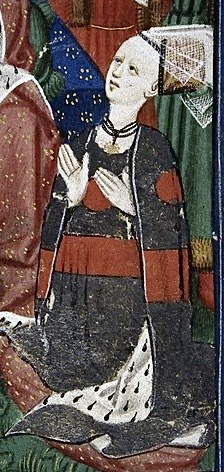
Anne Devereux, John Lydgate’s Troy Book and Siege of Thebes @British Library
Well that old wheel of fortune could certainly whizz around and no more so than in the lives of the women of the nobility from the turbulent times we now know as the Wars of the Roses. An example of one of these ladies is Anne Herbert née Devereux countess of Pembroke. Anne born c.1433 was the daughter of Sir Walter Devereux (1411–1459) and Elizabeth (d. 1438) daughter and heir of John Merbury. In 1449 Anne was married to William Herbert first earl of Pembroke (c.1423-1469) at her family home at Weobley. Anne’s father agreed to pay a dowry of 500 marks, to provide ‘meat and drink’ for Herbert ‘and forty of his men and their horses’, and to pay for Anne’s ‘apparrell competent pertaining to her degree’ (1). However it would all be worth it, the marriage proving to be successful producing a massive brood of at least ten offspring including William jnr and Maud. William jnr, aged about ten, would marry Elizabeth Wydeville’s sister Mary also aged about 10, and after her death, Richard III’s illegitimate daughter Katherine – I will return to William jnr and Katherine later – while instructions were left in her father’s will dated July 16th 1468 that Maud was to marry ‘Lord Henry of Richmond’ ie Henry Tudor:
I will that Maud, my daughter, be wedded to the Lord Henry of Richmond; Ann to Lord Powys; and Jane to Edmund Malafant (2)
As we know this marriage never came about, Henry instead marrying Elizabeth of York and Maud, Henry Percy Earl of Northumberland, yet another Herbert ward. Yet another daughter, Margaret, married the notorious Sir Henry Bodrugan.
William had received the custody and marriage of Henry Tudor on the 12 February 1461 when Henry was four years old and was sent to be brought up in Anne’s household at Raglan Castle with the rest of the Herbert children. She must have been a kind and loving guardian as when Henry Tudor usurped the throne in 1485, as a result of the outcome at Bosworth, one of his earliest actions was to send for her to come to him in London. But we have galloped away here too fast and will return to Anne’s earlier life. Both Anne and her husband although from staunch Yorkist families (both Herbert and his father served in France, his father in Richard Duke of York’s retinue) they had once supported Henry VI but as the tricky situation between the king, who was mentally unstable, and York developed, deteriorated and grew ever more turbulent, Herbert, his loyalties strained, threw his lot in with York – and to be perfectly honest who can blame him – but I digress. Herbert assured York in May 1454 that he was ‘noo monis mon but only youres’ (3) It must have been a worrying time for Anne as she sat in Raglan castle with her brood of children and of course young Henry, as well as other ladies of the nobility, as their menfolk thundered about the countryside, sometimes losing, sometimes winning and sometimes off into exile only to return, invigorated and ready for more. In Anne’s case, at that moment in time, her husband was victorious and although York was to lose his life at the battle of Wakefield on the 30 December 1460 his son Edward would go on to win a decisive victory at Tewkesbury and finally claim the crown as his own. This led to the glory years for Anne and her husband. He was to become a cherished and well rewarded follower to the young king. Rewards were showered upon him including Privy councillor to the new king, Chief Justice of North Wales for life, Knight of the Garter, custody of the Stafford lands during the Duke of Buckingham’s minority and Lordship of Pembroke. Created Baron Herbert he was now an extremely wealthy man, his income amounting to £3200-3300 per annum. Heady days indeed for both William, who had became known as Edward’s ‘master-lock’, and Anne.

Anne Devereux and her husband Sir William Herbert kneel before an unnamed king, presumably Henry VI. John Lydgate’s Troy Book and Siege of Thebes c.1457 with later additions. @British Library
However around the wheel spun and things took a dangerous and downward turn when the earl of Warwick and the king’s brother George duke of Clarence, both increasingly alienated from Edward, enraged by the rise and rise of the voracious, parvenu Wydevilles – and who can blame them – rebelled. Unfortunately for Anne her husband was now as heartily hated by Warwick as much as the Wydevilles – perhaps for somewhat different reasons – and his luck had begun to run out. William’s history with Warwick went back a long way and indeed he had once been Warwick’s Steward and Sheriff of Glamorgan in 1449-53 (4). No doubt one of the reasons for Warwick’s hostility towards his erstwhile friend was when Edward made the decision In 1461 to make William chief Justice and Chamberlain of South Wales as well as transfer to him the offices and custody of the estate all previously granted to Warwick. And so friends that had once rode together, fought together and perhaps even laughed together become mortal enemies with devastating results. This was the tragedy that was the Wars of the Roses. The wheel was spinning and after a skirmish at Banbury in 1469 an argument ensued about billeting between William and Humphrey Stafford Earl of Devonshire. Some have said the argument was about a woman but is it likely a woman would be a priority for them with the battle of Edgcote about to take place the next day? However after Devonshire stormed off in a fit of pique, taking his archers with him, William was left in a vulnerable position. Although stories of how courageously he and his brother, Sir Richard of Colebrook, both fought wielding poleaxes the fight was lost. Sir Richard is said to have twice passed through the ‘battail of his adversaries’ armed with a poleaxe and ‘without any mortal wound returned’ (5). Both were taken prisoner and executed the next day. With his impending death staring him in the face, William wrote out his last poignant will, almost a love letter, to his clearly beloved wife:
‘..And wyfe, thwt ye remember your promise to me, to take the ordre of wydowhood, as ye may be the better mayster of your owne, to performe my wylle, and to help my children, as I love and trust you, &c…. Wife pray for me, and take the said ordre that ye promised me as ye had in my lyfe, my heart and love….’
’’Item, I to be buried in the Priory of Bergavenny under charge; bytwene my fader’s toumbe and the chancell, and the cost that should have be at Tynterne to be set upon the chancell, as my confessor &c. shall say; and you my wife and brother Thomas Herbert, &c.’
It can only be imagined how Ann’s tears fell when she read this. She adhered to her late husband’s wishes and never married again. A famous Welsh poet of the time, Gutor Glyn, dedicated one of his poems to her…
a wife has been equally endowed, possessing a hundred rentsto maintain Gwent after her husband …You are an Isolde fiercely grieving for Tristanafter your husband, Ann,a Martha in the vigour of martyrdom,a mournful Mary after her brother’s death …Gwent has a ring and mantle,never was there a fairer face in black.
William’s wishes in regard to his place of burial were not carried out because for some reason lost to us now, he was buried at Tintern Abbey and not the Herbert Chapel, Priory of Bergavenny (Abergavenny) close to his parents as well as his brother Sir Richard Herbert of Colebrook and his wife Margaret. A large chest tomb near the high altar at Tintern destroyed during the Dissolution is said to be that of William and Anne although William Hampton in his book, Memorials of the Wars of the Roses, goes with Abergavenny being the place of burial as nominated in the will. It must be said that there is no sign of a tomb for William and Anne in the Herbert Chapel at Abergavenny.

Tintern Abbey: The Crossing and the Chancel, Looking towards the East Window 1794. Joseph Mallord William Turner. Tate Gallery. Burial Place of Anne and William Herbert.
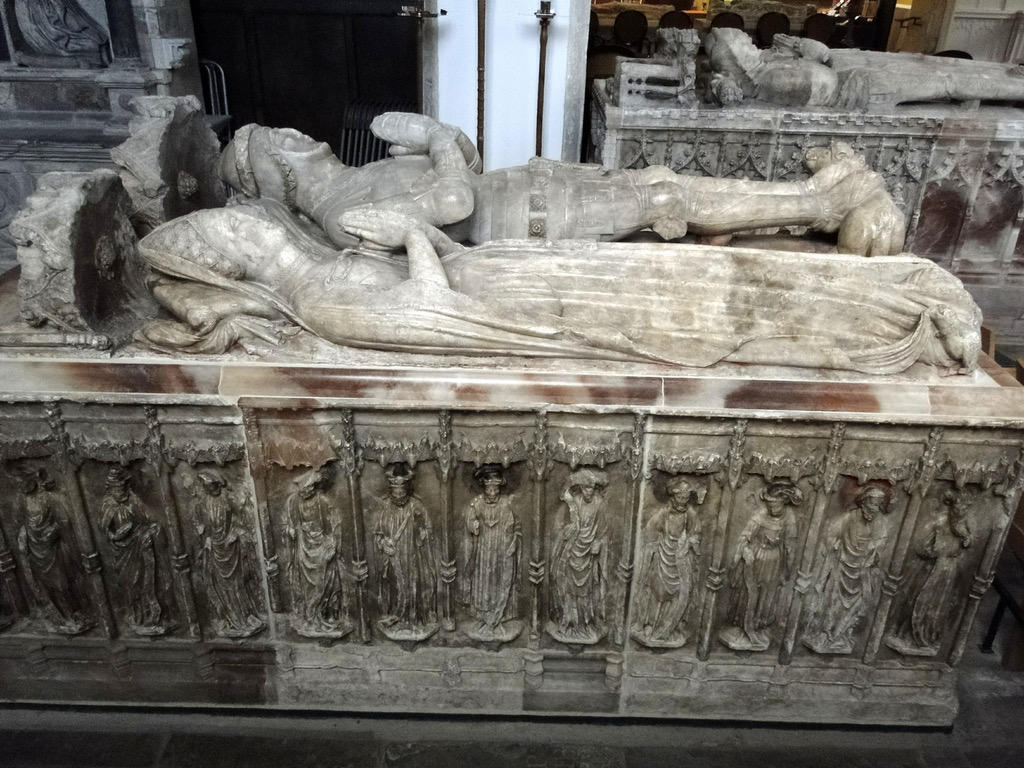
William’s parents, Sir William ap Thomas d.1445 and Gwladus/Gladys Gam d.1454, effigies on top of their tomb in the Herbert Chapel, Priory of Abergavenny, where William requested to be buried. Sir Richard of Colebrook, William’s brother and executed with him also lies buried here with his wife Margaret. Gladys Gam was the daughter of ‘Davy’ Gam made famous by Shakepeare’s mention of his name being among the English dead at Agincourt in his play ‘Henry V’. Photo @Rex Harris
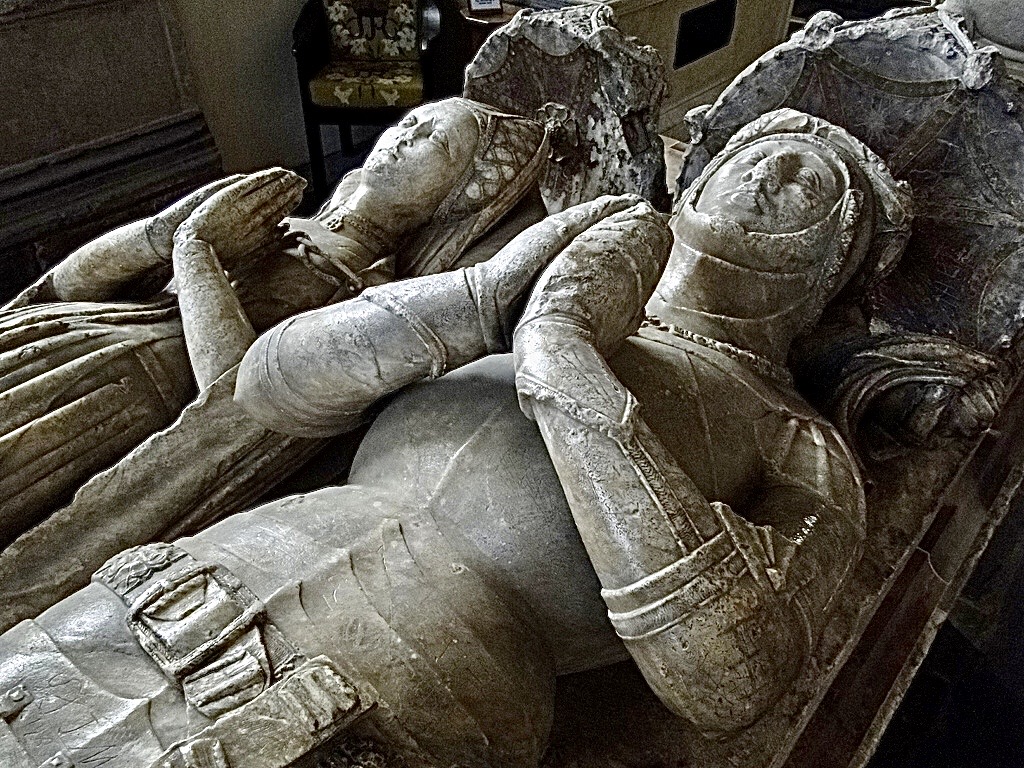
William Herbert’s mother Gwladys/Gladys Gam was a celebrated beauty in her time and known as the Star of Abergavenny. A Welsh poet described her as ‘like the sun – the pavilion of light’. Photo @ Rex Harris
After her husband’s death, which was shortly followed by the death of his nemesis, Warwick, little is known about Anne in her widowhood. However on the death of king Edward IV and Richard III’s arrival on the throne, her son William jnr, now a widower was honoured by Richard when he was given the hand of the king’s illegitimate daughter, Katherine in marriage. This marriage was of short duration as it appears Katherine died young and without issue. What would have become of Anne’s daughter-in-law after Richard’s death at Bosworth is anyone’s guess. At the very least she may have been an embarrassment to the Herberts. Indeed William Hampton posed the question was Katherine Plantagenet the reason why Anne was summoned by Henry Tudor in the aftermath of Bosworth? We know now that Katherine was laid to rest at St Jamesgarlickhythe close to the London home of the Herberts while William was laid to rest in 1491 besides his first wife Mary Wydeville at Tintern Abbey where, it is said, both his parents lay buried together.
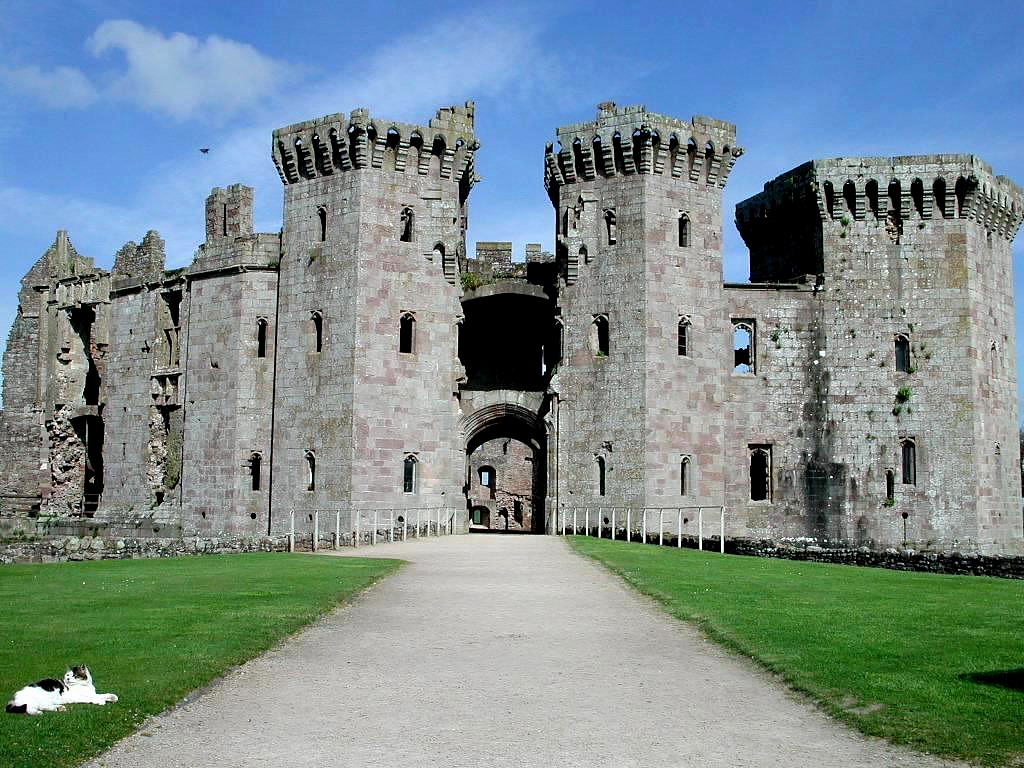
Raglan Castle. Where Anne would have spent most of her time raising her children and the young Henry Tudor. Note the resident cat!

Another artist’s impression of the beautiful ruins of Tintern Abbey resting place of Anne and William Herbert. Artist Thomas Baker, British, 1809-1969.
- Herbert, née Devereaux, Anne, countess of Pembroke (c.1433-1486). Laura Richmond. Oxford DNB.
2. Testamenta Vetusta p.304
3. Herbert, William, first Earl of Pembroke ODNB R A Griffiths. Quoting Pugh, The Magnates p92
4. Warwick the Kingmaker A J Pollard p94
5. Herbert, Sir William, Earl of Pembroke ODNB. Sidney Lee. Published 1891.
If you enjoyed this post you might like my post on Katherine Plantagenet found here

 A MEDIEVAL POTPOURRI
One thought on “Anne Herbert Countess of Pembroke, Yorkist widow & mother in law to Katherine Plantagenet”