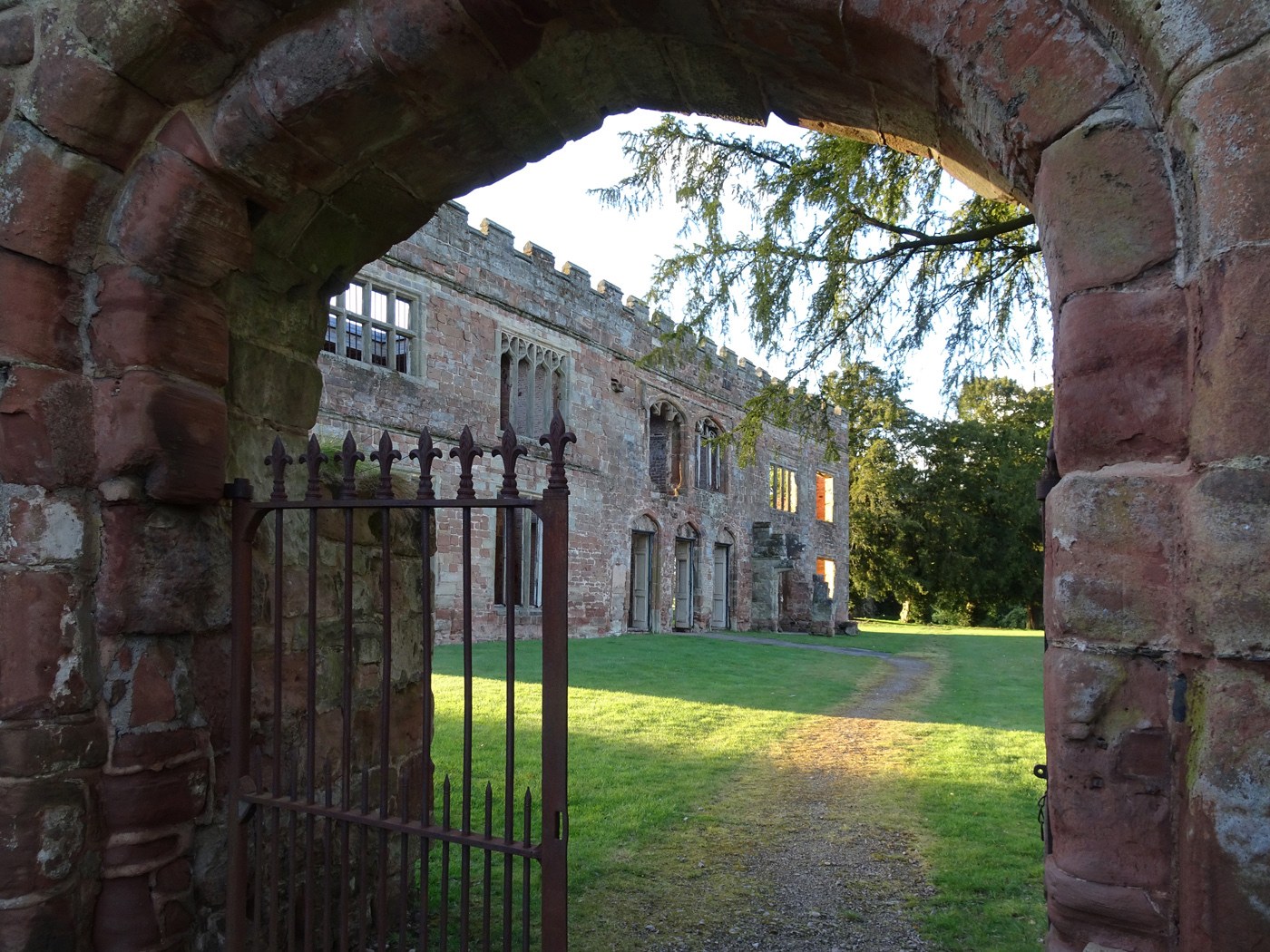
The ruins of Astley Castle, Warwickshire. Think fortified manor house more than rugged castle. One of the homes of Cecilia Bonville and her husband Thomas Grey. The house came to the Grey family via marriage to a member of the Astley family c.1415. They both lie buried in the nearby church of St Mary the Virgin, Astley. The church was built in 1343 by by Sir Thomas Astley. photo William Small RIBA
Cecilia/Cecilie/Cicely Bonville, suo jure Baroness Bonville and Harrington (b.c.1460/61- d.12 May 1529) – an interesting lady who lived in the maelstrom of many significant events in the turbulent period that later became known as the Wars of the Roses A great shame she did not leave a diary! Researching Cecilia has reminded me of the quote by Historian Linda Pidgeon in her Ricardian article Ties That Bind : ‘Trying to uncover the the lives of medieval women, be they queens or members of the nobility can be difficult; they are usually hidden behind the activities of the men who dominated their lives…’ How true! I have however given it my best shot and, here, I have tried to tell as much as I can of the story of Cecilia but have of necessity had to stray much into the lives of her contempories that figured so highly in her life. She was descended from a high status family – her great grandfather, William Bonville, Lord Bonville, c.1393-1461, was executed after the 2nd battle of St Albans on the 19th February 146I after what has been described as ‘mock trial‘ witnessed by Edward, the young Prince of Wales, son of Margaret of Anjou and her rather inadequate husband, the saintly Henry VI. A short time earlier her father, William, Lord Harington b. c.1442 – d.31 December 1460 had fallen alongside his father, yet another William, Lord Harington jure uxoris – b.1420 d.31 December 1460 – at the Battle of Wakefield, fought on the 31 December 1460 for Richard Duke of York (1). These deaths would result in a still infant Cecilia – indeed she may have been born posthumously according to historian David Baldwin – becoming one of the richest heiresses in England (2). Her maternal lineage was equally impressive, her mother being Katherine Neville, whose father was Richard Neville, Earl of Salisbury, and therefore a sister to the Richard Neville who would later become known as the Kingmaker. Katherine was to suffer grievous loss in the tumult of the madness that would later become known as the Wars of the Roses losing both her father and brother as well as her husband and father-in-law at the Battle of Wakefield. With both her young husband and father-in-law dead Katherine would have found herself and her baby daughter in a vunerable position. However a solution was at hand no doubt engineered by her brother Richard. In his book on the sisters of the Kingmaker David Baldwin explains the tricky and precarious position Katherine found herself in describing how ‘Cecilia was heiress to both baronies by the time Edward IV became king and many years of defending the child’s rights against predators stretched before her (Katherine) but few would have dared threaten her after she wed the King’s friend, William, Lord Hastings, only months later. There can be little doubt that Warwick arranged this marriage for his sister, a marriage that provided her with wealth and security for most of the reign’.

Richard Neville aka ‘The Kingmaker’. Cecilia’s powerful uncle who would have arranged the marriage between her widowed mother, Katherine Neville and Lord Hastings. Artist Gilbert Bayes.
Lord Hastings story has been told extensively elsewhere – his rise, rise and rise and sudden fall as well as his close friendship with Edward IV who was the font of all of Hastings vast powers. A member of the Paston household recorded ‘what my seyd lord Chamberleyn may do wyth the Kyng and wyth all the lordys of Inglond I trowe it be not unknowyn to yow, most of eny on man alyve‘(3). It’s therefore not surprising that in 1474 the king and queen, Elizabeth Wydville/Woodville, who had known Hastings prior to her ‘marriage’ to the King, would push for a marriage between the queen’s son by her first marriage, the already widowed nineteen year old Thomas Grey – b. 1455 d. 1501- to Hasting’s immensely rich step-daughter Cecilia Bonville then aged 13. The marriage was negotiated between the queen and Hastings. If in the event that Thomas should expire before consummating the marriage, then all would not be lost for Cecilia would then marry his younger brother Richard Grey. In the event that neither Grey brother lived long enough to consummate the marriage then the queen would be able to choose a husband for Cecilia at her will. Elizabeth would procure the marriage between her son and Cecilia by undertaking to pay 2500 marks – which was never actually handed over because the king cancelled the debt which Hastings owed to him which amounted to the equivalent amount (4). Bearing in mind the young age of the bride, according to the usual custom of the times, the marriage would not have been immediately consummated until Cecilia was older. It was not until June 1477 Sir John Paston wrote to his brother John ‘‘yisterdaye my lady Marques off Dorset, whych is my lady Hastyngs dowtre, had chylde a son’.
As mentioned above Thomas was already a widower, his first wife, Anne Holland – b.c 1461- d. c. 1474 – was another well bred bride. Her father was Henry Holland, Duke of Exeter, d.1475 and her mother was Anne Plantagenet, d.1476, sister to Edward IV and Richard III. The historian T B Hugh noted: Queen Elizabeth contracted to pay 4000 marks to buy this advantageous match for Thomas Grey, and so incurred the enmity of the king’s most powerful supporter, Richard Neville, earl of Warwick (d. 1471) who had intended the infant Holland heir to become the bride of his nephew, George Neville (afterwards duke of Bedford). Thomas Grey’s first marriage took place at Greenwich in October 1466, but his expectations of acquiring the duchess of Exeter’s estates were defeated when Anne Holland died childless, probably early in 1474 (5).
Even David MacGibbon the author of a hagiography on Elizabeth Wydeville – and who seemed a little in love with her – admitted that it was ‘difficult not to sympathise with Warwick who would have found it a ‘bitter blow…’ and who realised that any marriages that had been arranged for his family could in future be ‘broken by a word from Elizabeth‘.
However to return to the marriage of Cecilia and Thomas…. What Katherine’s thought were regarding the marriage of Thomas Grey to her very wealthy daughter, are unknown. Her husband, Hastings would have had the last word on the matter and ‘given the relationship between her husband and the king she was unlikely to have argued‘ (6). Still – he was the king’s stepson after all – although not yet at the time the Marquess of Dorset – so perhaps she was eventually mollified.
And so dear reader they were married. I always find their marriage somewhat puzzling. It appears it must have been successful in some respects, having produced a large brood, seven sons and at least seven perhaps eight daughters (7). However both Cecilia and her mother appear to have drawn short straws with their husbands in terms of faithfulness, both of whom earned reputations of licentiousness and womanising even falling out over the same woman, Elizabeth/Jane Shore/Lambert. To add to the general sordidness of this story More claimed that Elizabeth had, prior to this, been the mistress of Edward IV. Mancini described how Edward ‘In carnal lust, he indulged to an extreme, while his behaviour was also said to have been most insulting to many women after he had possessed them for as soon as his lust was sated, he passed them on much against their will to other members of his court‘ although according to historian John Ashdown Hill there is no contemporary source for this assertion (8). There is however evidence for Elizabeth being the mistress of both Hastings and his step son-in-law. After Edward’s unexpected death in April 1483 things all of a sudden went pear shaped for the rather novel ménage à trois with Hastings being topped on the 13th June. Simon Stallworth wrote to Sir William Stonor on the 21 June 1483 ‘Mastres Chore is in prison; what schall happyn hyr I knowe nott’. Following this the Great Chronicle of London recorded that ‘Shortly afftyr (Richard’s coronation) was a woman namyd Shoore that before days, after common fame, the Lord Chambyrlayn (Hastings) held, contrary to his honour, called to a reconnyng ffor part of his goodys & othyr thyngys…and she lastly as a common harlot put to opyn penaunce’. Thanks to Sir George Buck, who recorded the exact words, we know that on the 23 October 1483, in a public proclamation issued by Richard III, the Marquis of Dorset was denounced in the following words: ‘Thomas Grey, late Marquess of Dorset, not fearing God, nor regarding the peril of his soul, hath devoured, and deflowered many maidens, widows and wives, and holding the unshameful and mischievous woman Shore’s wife in adultery ‘(9).
However Jane may not have been the only woman they quarrelled about. According to Mancini both stepfather-in-law and son-in-law were enemies having fallen out on account of the mistresses they had abducted or attempted to entice from each other… It has also been suggested by the historian W E Hampton that Thomas – motto à ma puissance – how apt! – may have fathered a child with one of the daughters of John Neville, marquess of Montague, Elizabeth, Lady Scrope of Masham. Elizabeth did indeed mention in her will ‘Mary, daughter in base unto Thomas Grey Marquess of Dorset to whom she bequeathed ‘my bed that my Lord Marquess was wont to lie in….’ Hmmm make that of what you will dear reader…(10). Elizabeth was of course Cecilia’s cousin. Thomas did seem to have a thing for John Neville’s daughters for there is also the curious story of how Montague’s eldest daughter, Anne, joined Dorset at Taunton castle immediately after her marriage to Sir William Stoner, which took place towards the end of 1481, where she remained for an extended stay. A letter she wrote to her husband from Taunton is dated 27 February 1482 mentioning how long it had been since she last saw him, as well as requesting certain gowns to be sent to her for Easter. Anne signed herself off as ‘Your new wyf Anne Stonor’. In August of that year Anne duly presented William with a son. This letter mentioning her unexpected long absence from him is still extant in the Stoner papers. ‘Syr, I recomaund me unto you in my most hertly wise, right joyfull to here of yowre helthe: liketh you to knowe, at the writyng of this bill I was in good helthe, thynkyng long sith I saw you, and if I had knowen that I shold hav ben this long tyme from you I wold have be moche lother then I was to have comyn in this ferre Countrey (10). To add to the mystery Anne, despite her words of regret regarding the long absence between herself and her husband, still did not leave Taunton until around the 15th May according to another Stonor letter of that date. To be fair it should be noted that she had mentioned Cecilia had treated her kindly so there may have been a good explanation why she would leave her brand new husband behind to tarry so long at the home of Thomas for what appears to have been a very extended stay. It is now impossible to get to the bottom of this rather strange story but it begs the question did Thomas cruelly conduct an affair under Cecilia’s very nose? Did Thomas’ other known philandering distress her in anyway or was she pragmatic? Who can say – was perhaps Thomas – her husband since she had been fourteen – her lodestar and she willingly forgave him his peccadillos? Did she have no choice?
It has been suggested that Richard III laid much of the blame on Edward IV’s downward spiral and perhaps even early death on the shoulders of Hastings, Cecilia’s stepfather as well as her husband. However that is another story and back to Cecilia and Thomas Grey. It was through his marriage to Cecilia that Thomas gained his vast lands and properties – originally Bonville and Harington holdings. They often appear to have been together so despite her husband’s description by the historian T B Pugh as both ‘slippery‘ and ‘a man of mediocre abilities’ plus his unsavoury reputation for womanising they must have at the very least rubbed along nicely together.
However trouble loomed in April 1483 when the sudden and unexpected death of Edward IV brought about a surge in Wydville activities, when they feverishly sought to gain control of the young King Edward V, circumnavigating Richard, Duke of Gloucester who was by then, according to tradition and because the late king ‘in his will had so directed’ Lord Protector. Thomas, who seemed to lack the ability to read a room boasted at a council meeting that ‘we are so important that even without the king’s uncle, we can make and force these decisions..’ oh dear! (12). We can safely assume from the way things panned out that Hastings had both bridled at the audacity of his despised step son-in-law and grown increasingly alarmed at the way things were going. ‘According to common report‘ he sent messages to Gloucester informing him of the Wydeville shenanagans and the result is history. It may also be assumed that Hastings had no qualms about dropping Thomas into the proverbial and was described by Mancini as having loathed the entire family of the queen on account of the marquess (13 ). Cecilia’s whereabouts, as per usual, are unknown at this time but Thomas being in London, skuttled off into sanctuary at Cheyneygates – the luxurious house of the Dean of Westminster Abbey which stood in the Abbey precincts – with his mother, his small half brother Richard and half sisters in tow including Elizabeth of York. Although the Abbey and the precincts were surrounded and heavily guarded he niftily managed to escape to join Henry Tudor in Brittany where he remained for the next two years, part of them against his will.
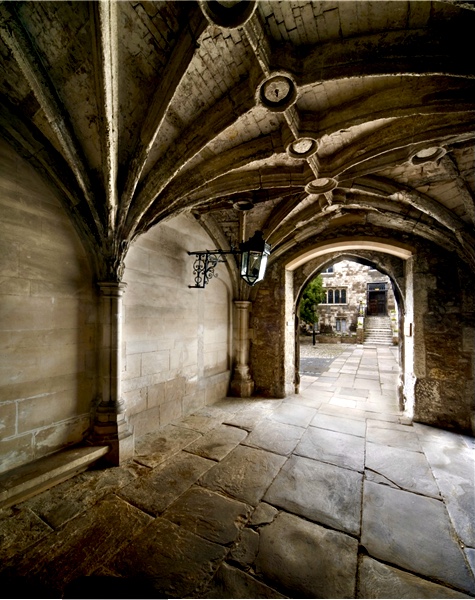
It was through this passageway that Thomas, his mother and half siblings would have approached Cheyneygates, the Deans House at Westminster Abbey where they sought sanctuary in April 1483.
No doubt, now stripped of much of the property that had come to him via his marriage, he and Cecilia managed to maintain some sort of contact but it must have been a worrying time for her – well presumably. However after Bosworth Thomas and Cecilia would be reunited – as well as regaining most of the confiscated properties. Nonetheless, this was not the end of the trauma and worry for Cecilia. In February 1487 her husband would be sent to the Tower of London and Elizabeth Wydville her mother-in-law, to Bermondsey Abbey. What had occurred? Well the ever suspicious Henry Tudor, now king after the death of Richard III at the Battle of Bosworth, had got wind of rebellion – erroneously known as the Lambert Simnel Rebellion – and strongly suspected that Thomas was involved up to his neck.
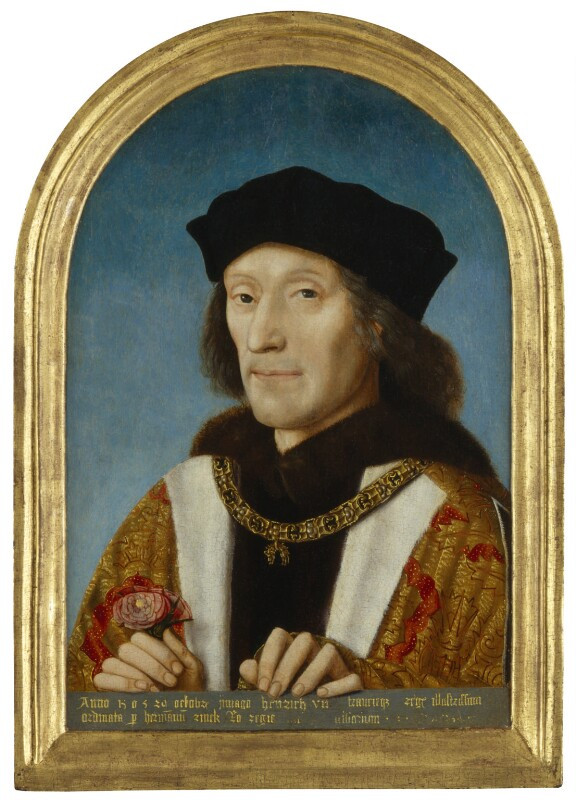 Henry VII. Henry may have been many things but being stupid was not one of them….
Cecilia’s whereabouts, as well as her thoughts, are again unknown. But there is now a strong and credible theory that at least one of Thomas’ half brothers, Edward V, who had been king for such a brief time, was actually still alive, and moreover had been living incognito at one of Thomas’ properties and had now been crowned in a coronation in Dublin by the rebels. This property was Coldridge in Devon, one of the slew of properties that had come to Thomas via his marriage to Cecilia, who may also at that time been living in Devon at one of the other properties she inherited from her Bonville/Harington family. How much Cecilia knew about this plot can only be guessed at but with her wall to wall strong Yorkists familial links it may be she was deeply involved. If so it appears that Cecilia, whose family had suffered so much for the Yorkist cause, somehow escaped punishment, or even suspicion. Perhaps Henry Tudor consider being married to Thomas Grey was punishment enough? It may be more than a coincidence that one of Thomas’ properties, also acquired from the Bonville inheritance, Gleaston Castle, stood conveniently very close to where the Yorkist rebels landed on the Furness Peninsula in 1487 and highly probable the castle was offered to them as a meeting place to reconnoiter. Henry, despite Thomas’ many protestations of innocence ‘suggested’ he should remain out of harm’s way in the Tower until the rebellion was put down. Which was what happened. Eventually Thomas and Cecilia were once again reunited. Cecilia’s mother-in-law, Elizabeth Wydeville was not so lucky remaining in Bermondsey Abbey for the rest of her life. I often wonder if Cecilia was as heavily involved in the rebellion as her husband and whether her close Yorkist links caused her to throw caution to the wind. How much more advantageous for them both to have a Plantagenet posterior on the throne rather than a Tudor one. It is now further surmised that after the failure of the rebellion the young Edward V, who had been captured after the Battle of Stoke was returned to live out his days at Coldridge under the name of John Evans. If this was the case certainly Cecilia would have known and maybe she felt quiet satisfaction that at least one of the sons of the late Yorkist king, Edward IV, survived and with her support was living in safety in what had once been a Bonville family property?
After the excitement of the rebellion, and having survived it, both she and her husband appear to have lived quietly with no further dramas. Thomas, although never entirely trusted by Henry VII, once again appeared at court and for the Feast of St George in 1489 he received a robe of sanguine cloth furred with pure miniver and gross miniver and a silk garter as a gift from the King (14).
Cecilia was widowed in August 1501 when Thomas died at their London home. She married for a second time, aged about 44, probably in late 1504, to the twenty-five year old Henry Stafford – b.1479 d.1523- who was created Earl of Wiltshire in 1510. Henry was the son of Henry 2nd Duke of Buckingham – who had been executed for treason by Richard III in September 1483 – and Katherine Wydeville sister to Queen Elizabeth Wydeville. Nineteen years her junior he seemed of a feckless bent having died in 1523 in heavy debt. Not much is known about this marriage – although it was possibly disappointing depending upon what she was expecting from it – and it proved to be a catalyst for a serious quarrel between Cecilia and her oldest son, and heir, Thomas, who, naturally, became concerned about his inheritance. This argument became so acrimonious the king and his councillors became involved with the aim of resolving it – which they did ensuring that Thomas would receive his fair due. We should maybe therefore not be too surprised she failed to mention Henry in her prayers in her long will dated 6 March 1527, requesting to be buried at Astley next to her first husband: ‘My body to be buried in the chapel within the church of the College of Astley in Warwickshire, in the tomb where the body of the said Lord Marquess, my husband is buried. I will that, soon after my decease, a thousand masses be said for my soul in as convenient haste as maybe. I will that a goodly tomb to be made in the Chapel of Astley, over the said Lord Marquis, my husband, and another over me. I will that my executors provide two priests daily to sing in the said Chapel of Astley, by the space of eighty years, to pray for the soul of the said Lord Marquess, and for my soul , and that each of them have viii 𝒍 yearly stipend for their pains…(15).
Today the monument and effigy of Cecilia survives having been removed from its original site and placed with the effigies of Edward Grey, Lord Ferrers of Groby d.1457 and Elizabeth Talbot, Viscountess Lisle d.1487. The monument of Thomas Grey, Marquess of Dorset has been destroyed.
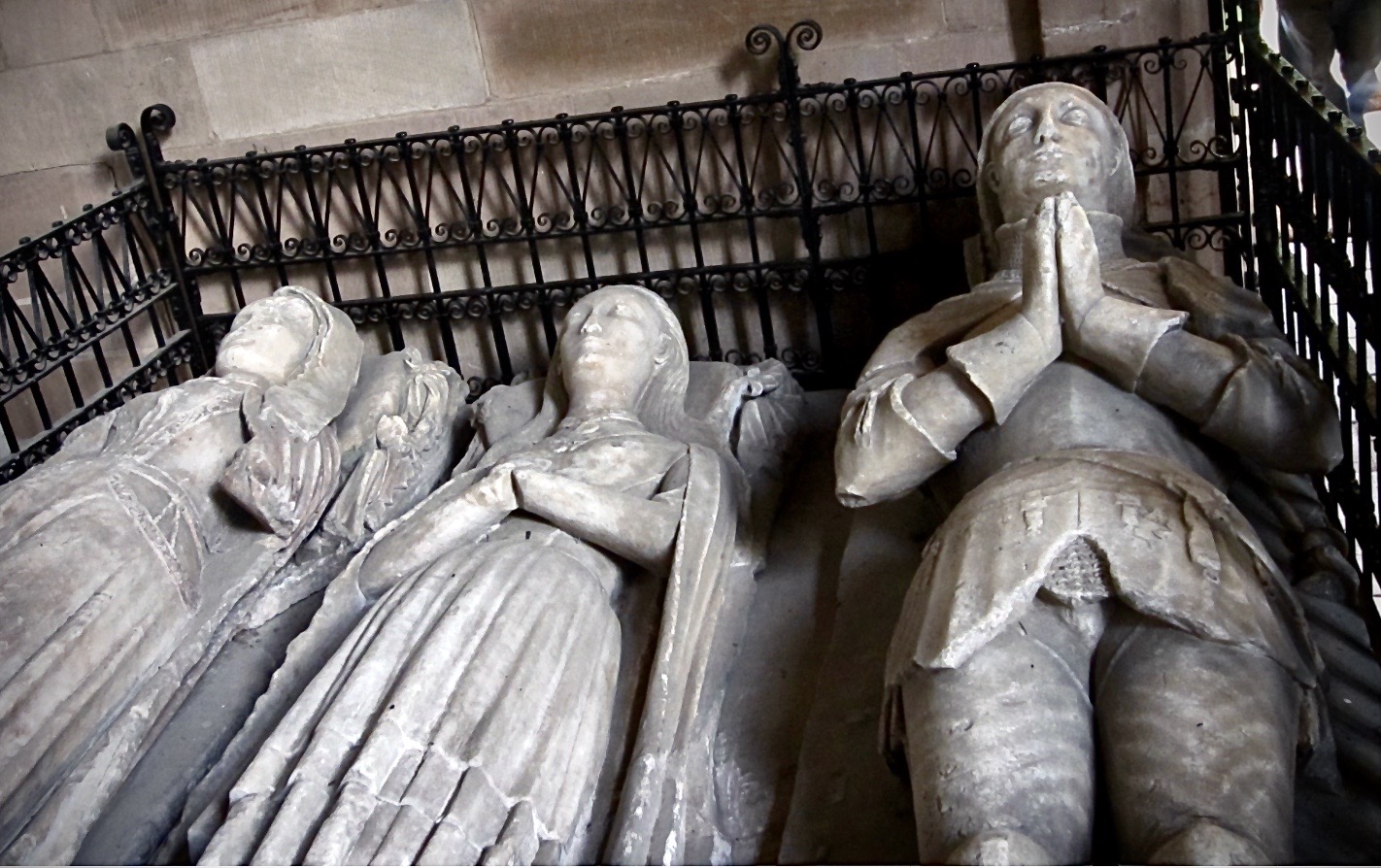
The effigy of Cecilia, seen to the left here, has at some stage been moved from its original site and now lies next to those of Edward Grey, Lord Ferrers of Groby (d.1457) and his daughter-in-law, Elizabeth Talbot, Viscountess Lisle. This Edward Grey was Thomas Grey’s grandfather and not to be confused with his uncle, Edward Grey, Viscount Lisle. St Mary’s Church Astley, Warwickshire. Unknown photographer….
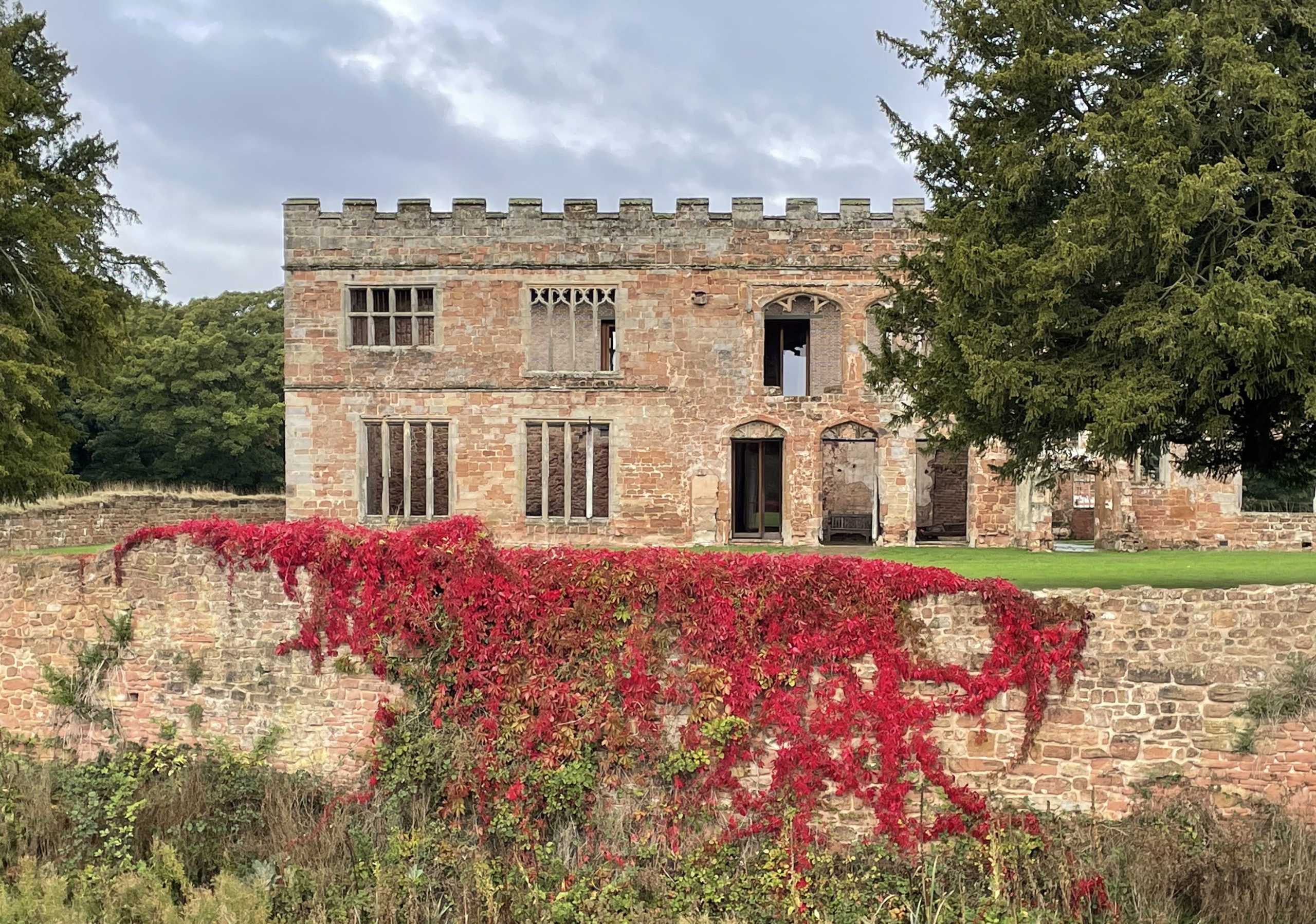
The ruins of Astley Castle, Warwickshire. Astley had been home to Thomas’ parents, John Grey and Elizabeth Grey nee Wydeville and was probably where Thomas Grey spent the early part of his childhood. Photo thanks to Astley Parish Council

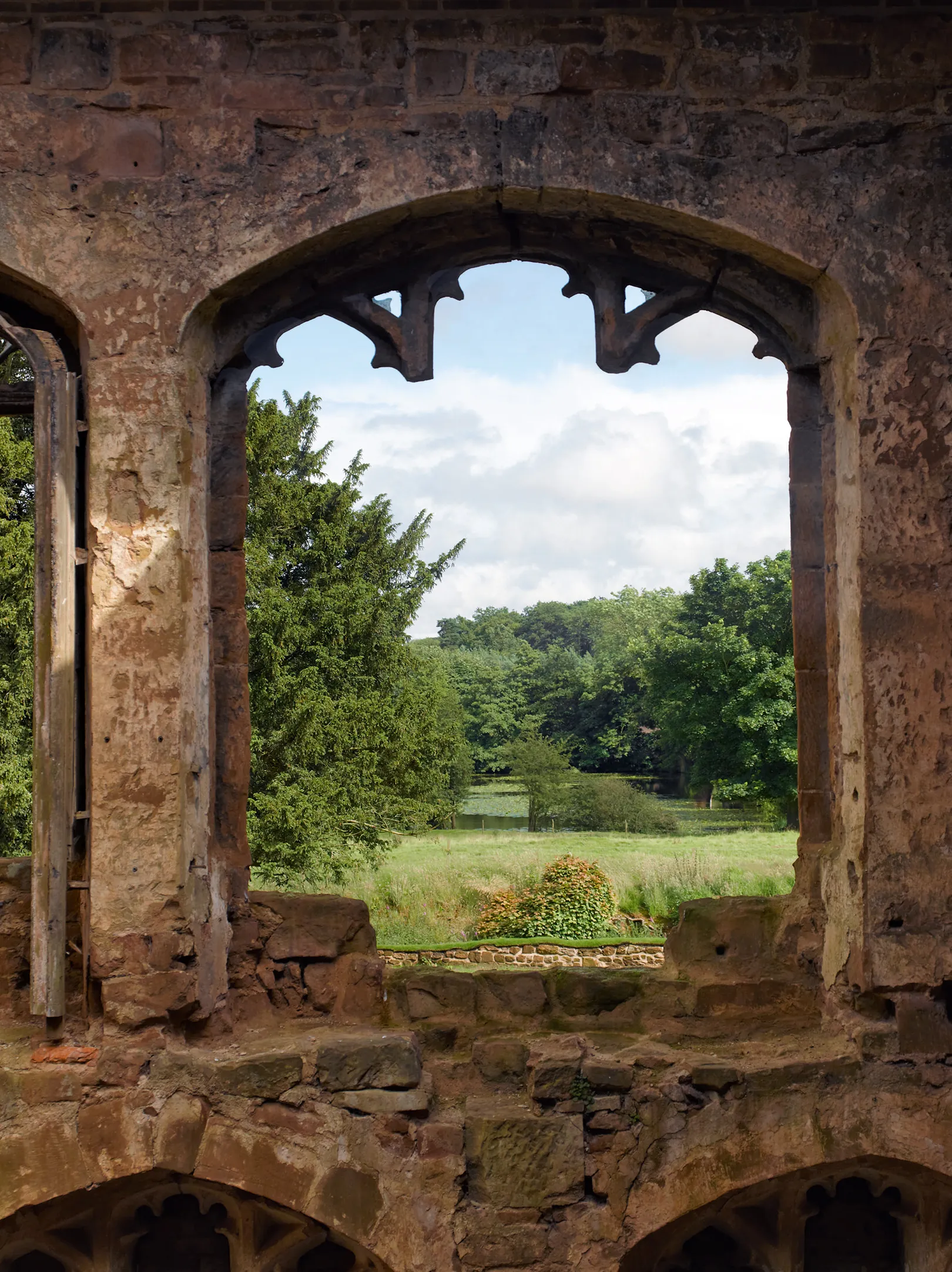
View through a ruined window Astley Castle once the home of Cecilia Bonville and Thomas Grey. Photo Brian Sibley. Windows of Astley Castle blog.
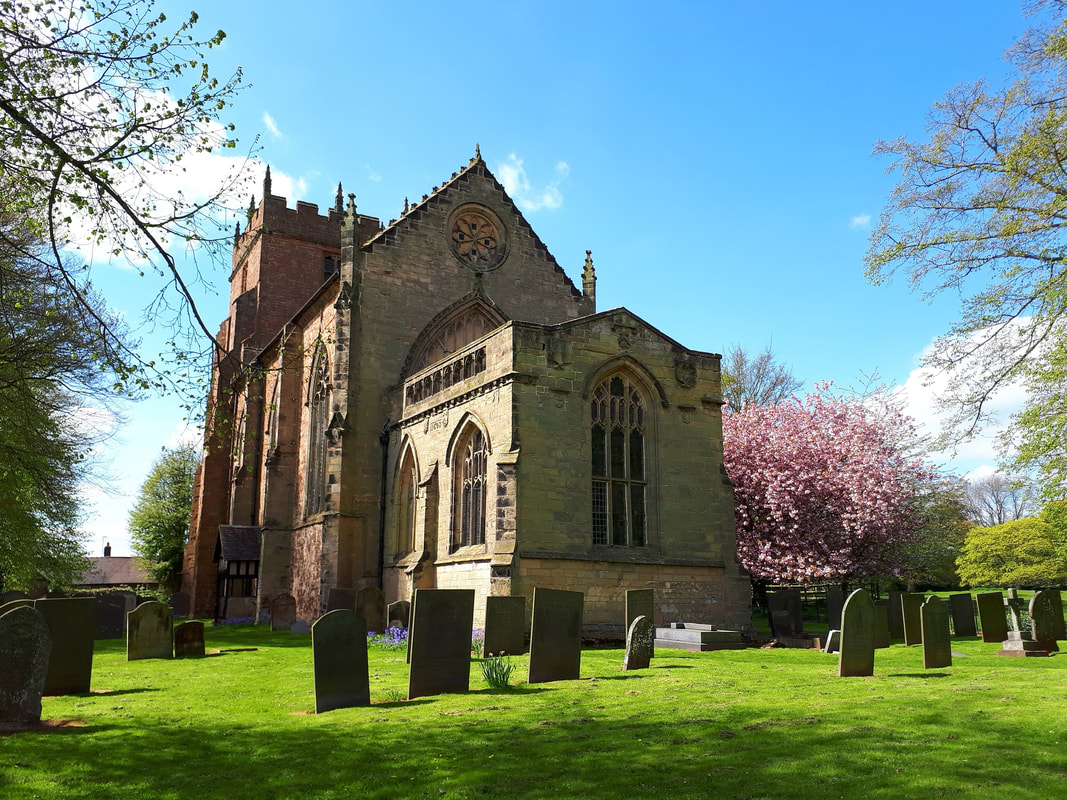
St Mary the Virgin, Astley. Mausoleum of the Grey family. Photo thanks to astleychurch.org
EDWARD, EARL OF WARWICK – HIS LIFE AND DEATH.
A Portrait of Edward V and Perhaps Even a Resting Place?- St Matthew’s Church Coldridge
A PORTRAIT OF EDWARD V AND THE MYSTERY OF COLDRIDGE CHURCH…Part II A Guest Post by John Dike.
SIR JAMES TYRELL – CHILD KILLER OR PROVIDER OF A SAFE HOUSE ?
 A MEDIEVAL POTPOURRI
Thank you for the extensive and detailed account!
LikeLike
Thank you…Im very happy you liked it…
LikeLiked by 1 person