CAN A PICTURE PAINT A THOUSAND WORDS? RICARDIAN ART

800px-Edwin_Austin_Abbey_richard_duke_of_gloucester_and_the_lady_anne_1896.jpg

Richard Duke of Gloucester and Lady Anne, Edwin Austin Abbey, 1896.

It’s said a picture can paint a thousand words.  It certainly can but not always accurately.  It can distort the truth.  Art work based on the Ricardian period is certainly true of this.  Take for example the stunning painting, above,  by Edwin Austin Abbey, Richard Duke of Gloucester and the Lady Anne.

Here we have an angst ridden Anne, while a definitely humpbacked Gloucester offers her a ring.  It just makes you want to shout at the canvas ‘run, run Anne and don’t look back!’ although it should in fairness be remembered the painting is based on a scene from Shakespeare’s version of Richard III rather than the actual facts.

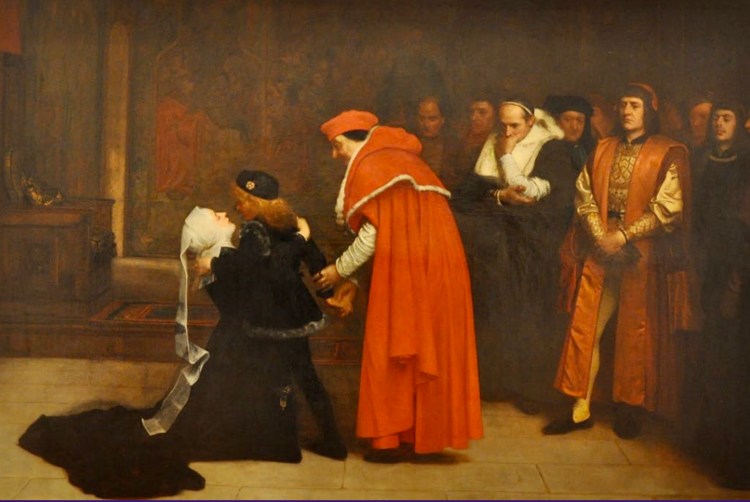
There have been numerous paintings of Richard of Shrewsbury being removed from his mother, a distressed looking Elizabeth Wydeville, and although for all I know Elizabeth may well have been distressed on that day,  it ain’t looking good for the ‘wicked uncle‘  with a small boy being wrestled away from a distraught mother is it?  Oh dearie me….
IMG_7058

This painting is by Philip Calderon.  Young Richard of Shrewsbury gazes tenderly at his mother   while being yanked away by his arm by a portly gentleman in red – poor little blighter.

A couple of paintings of the ‘princes’ do stand out for me.  The beautiful one by Millais (he used his daughter as a model for one of the princes) where he has the boys, standing in a darkened stairway of the Tower (where,  to add poignancy to the scene, some believe their remains were found buried) clinging to each other while a dark shadow lurks ominously at the top of the stairs – Yikes!

SRY_RHU_THC0044.jpg

The Princes in the Tower,  John Everett Millais 1878. The model for Richard  was Millais’ daughter…. 

Another one,  this time by Paul Delaroche –  King Edward V and the Duke of York in the Tower –  depicts the two young boys, gazing into the middle distance, unaware, hopefully,  of their impending doom, while their spaniel’s attention, tail between his legs, is drawn to the door.  These artists certainly knew how to twang on the old heart strings!  Great stuff but  maybe not very helpful to those trying to bring about positive perceptions of Richard’s character.

eMuseumPlus.jpeg

King Edward V and the Duke of York in the Tower, Paul Delaroche 1831. Wallace Collection.

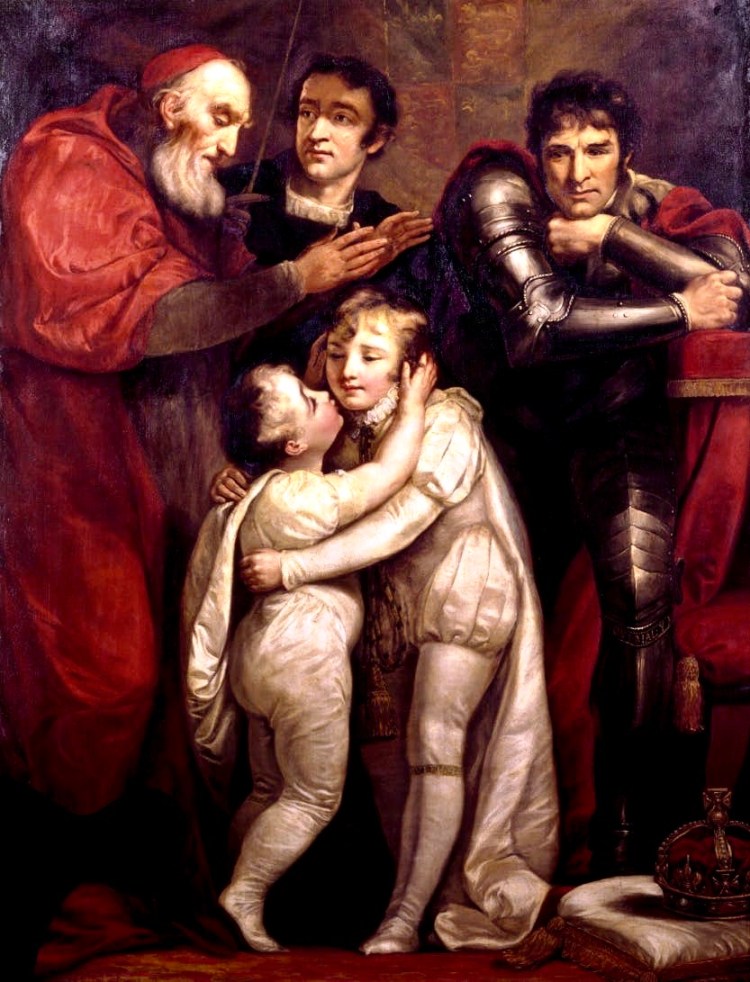
Here below we have the brothers depicted much younger than they were to add to the pathos.  Richard  Duke of Gloucester gazes at them contemplating they are all that stand between him and the crown shown at the bottom right hand corner.  Hmmm…you can see his brain ticking over here..
IMG_7064.JPG

The Meeting of Edward V and his Brother Richard Duke of York Contemplated by King Richard III.  Artist James Northcote @National Trust Images/Derrick E Witty

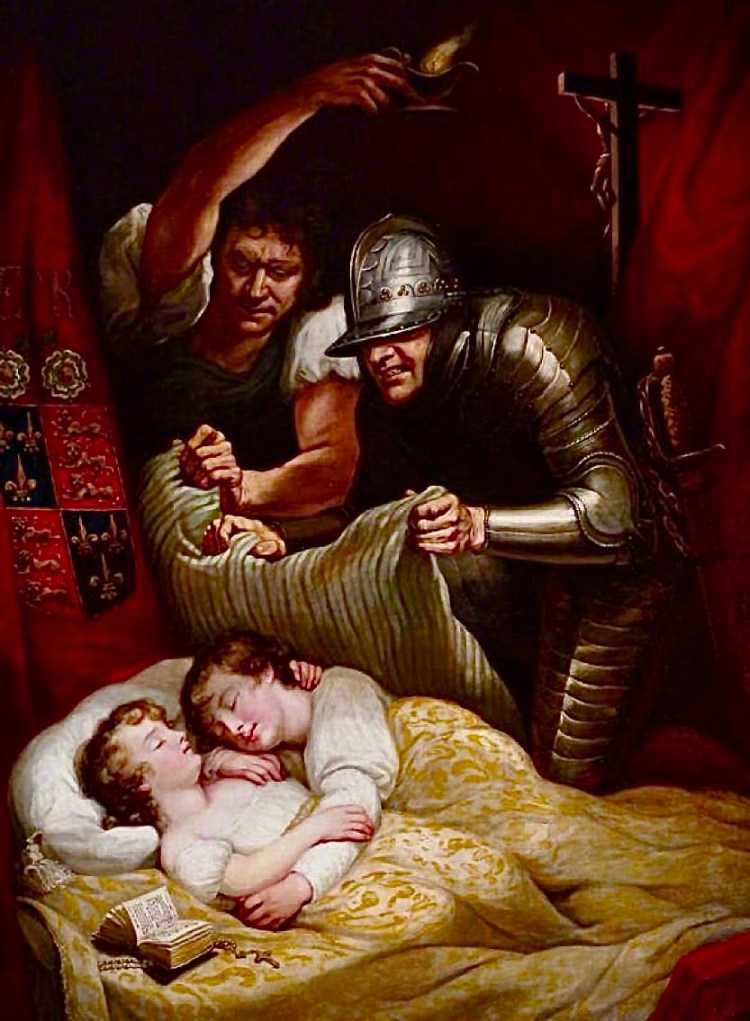
Here is another good one and has no doubt terrified many small children over the years as they  read their history books.  The two small cherubic princes sleep, cuddling each other, unaware of two ruddy great men, one clanking around in a suit of armour,  as you do when you want to creep up unaware to pounce on sleeping victims, just before the heinous act of smothering them to death – Yikes!
IMG_7065

The Murder of the Princes.  Artist James Northcote @ National Trust images
IMG_7051.JPG

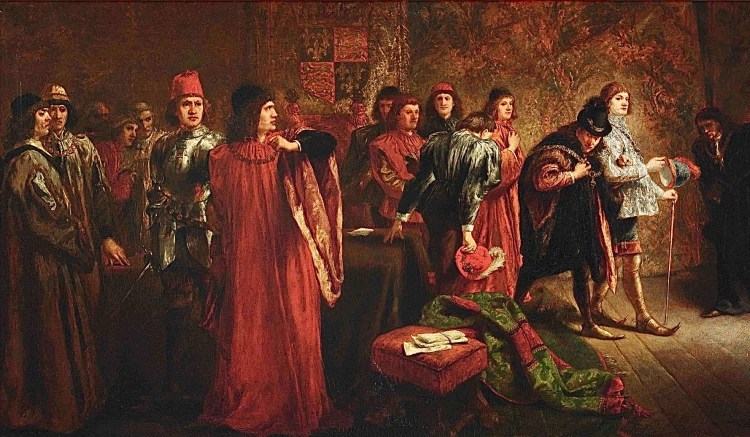
The Arrest of Hastings 1871.  Sir John Gilbert.

I really do not like this painting at all.    A shortly to be executed Hastings, depicted rather younger than he actually was, looks aghast and shocked at an evil and hunchbacked Richard who is making his departure on the arm of a young and foppish man (Buckingham?).  As he sidles out of the door Richard glances back at the doomed Hastings,  his face a picture of malevolence and a  ‘take it outta that‘ look!   Truely a devil incarnate.  Did these painters ever stop to figure out how their version of Richard ever fitted into a suit of armour and fought unto death so bravely at Bosworth.  Still why let truth get in the way of great fiction.

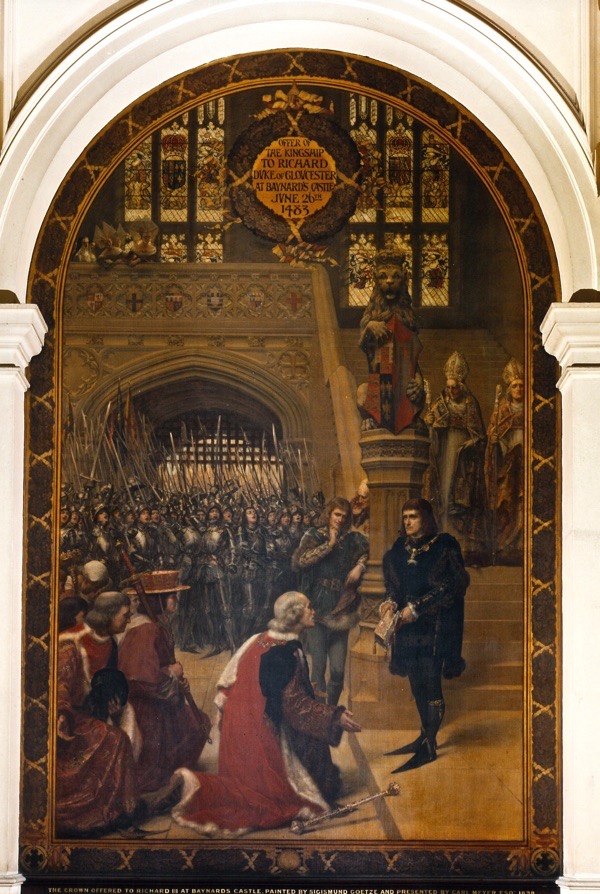
But finally, one that is actually closer to the truth, from a mural in the Royal Exchange by the artist Sigismund Goetz, and one I can clearly remember, as a small child, from its inclusion in Cassell’s History of the English People.  I would gaze at it, not properly understanding what it actually represented, but nevertheless entranced.  It was not until years later that I could understand what was going on and who the people were in the painting.  A grave, noble,  and rather handsome humpless Duke of Gloucester being offered the Crown at Baynards Castle.  Beautiful ladies in butterfly headdresses look down at the scene from the top of the stairs….its Cicely and Anne!.  A rather frivolous looking young man, leaning nonchalantly against the stairs,  as an elderly man, almost hidden from sight, leans over and surreptitously whispers in his ear..ah!..tis Buckingham and Morton..meanwhile in the background Gloucester supporters , in harness, roar their approval.  Splendid stuff and about time too.
image

Mural in the Royal Exchange,  Offer of the Kingship to Richard Duke of Gloucester at Baynards Castle June 26 1483 Sigismund Goetz

So at least one of these extremely gifted artists managed to get it right in terms of accuracy as to what actually happened.    What gifts for the art world but for the greater part, I do wonder if in the past,  these paintings have proved for some people  to be rather a hindrance for the rehabilitation of Richard’s character.

THE MEDIEVAL DOGGIE AND EVERYTHING YOU EVER WANTED TO KNOW ABOUT THEM

IMG_5999.jpg

Illustration from Livre de chasse c.1387-1389.  Gaston Phébus,  Count de Foix 

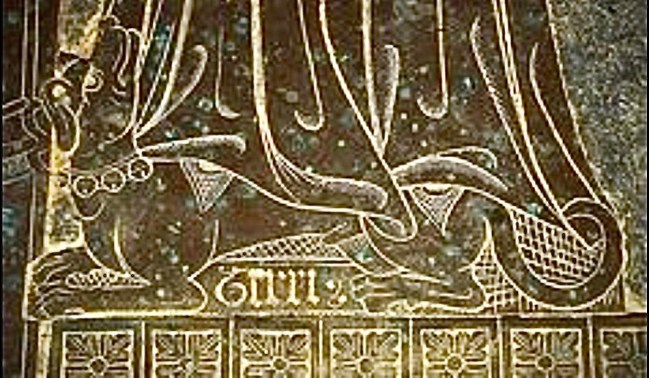
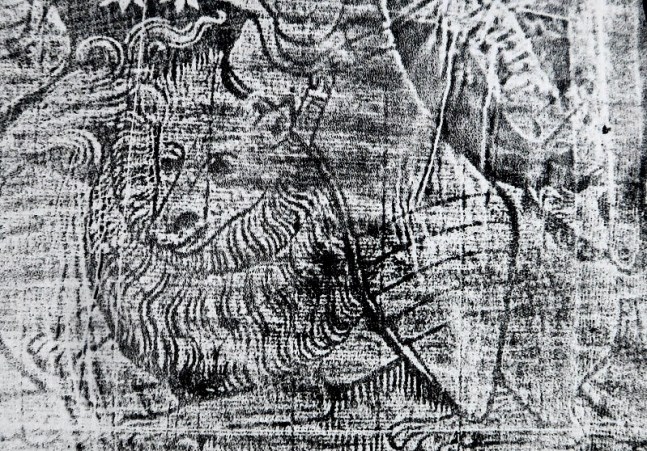
It’s obvious from the amount of depictions of dogs from the medieval period they were highly prized by our ancestors, both for work and play. They are everywhere!  Their delightful little figures pop up on tombs, heraldry and manuscripts regularly.  When depicted on a tomb effigy of a lady especially, they are thought to represent fidelity.  Of course that seems plausible  but casting that aside,  I believe that often actual pets were being represented, and remembered,  unlike the lions, representing strength,  that were found at the feet of the effigies of males.  Indeed some of their names are on the tombs.  Lady Cassy’s little dog ‘Terri was shown and named on her brass at Deerhurst, Gloucestershire and since the brass was commissioned by Lady Cassy after the death of her husband it is likely that the name of the dog represents personal initiative on her part‘( 1 ).  Another dog named on an effigy at Ingham was “Jakke“.

IMG_7093

Lady Cassy’s little dog, Terri, wearing a collar of bells.  Deerhurst, Gloucestershire.

IMG_7095.JPG

Here is ‘Jakke’.  He lies at the foot of Sir Brian de Stapleton Holy Trinity Church Ingham Norfolk.  Rubbing of a stolen brass.   Photo jmc4 Church Explorer

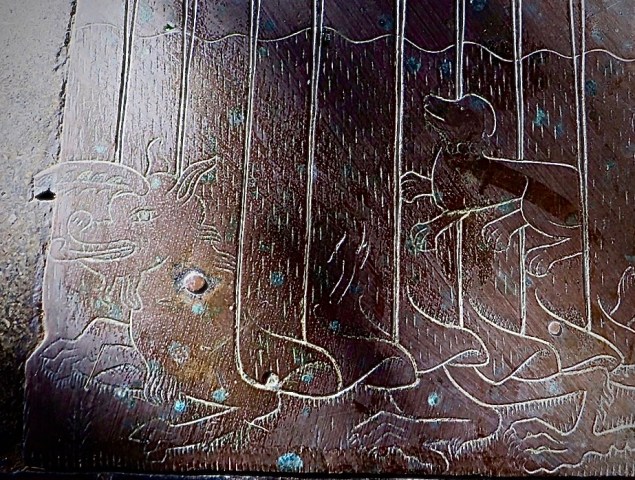
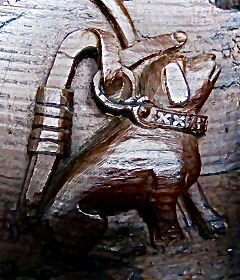
Quite often the dogs on the monuments to their owners wore collars festooned with bells such as those on Bishop Langham’s tomb who opted for dogs instead of the usual lions found on a male’s tomb.  Richard Willoughly specifically requested that bells adorn the collar of the dog at the bottom of his wife’s gown on her effigy at Wollaton, Nottinghamshire.

IMG_7094.JPG

Richard Willoughby specifically requested the dog at the bottom of his wife’s gown on her effigy to be adorned with bells.  Wollaton, Notts.

Blanche Mortimer’s effigy has a little dog, now sadly headless, peeping out from beneath  her spread gown on her tomb at Much Marcle, Herefordshire.

image.png

Blanche Mortimer’s s little dog, still with her on her monument.  Much Marcle, Herefordshire.  

And there they are, for all posterity at their mistresses and masters feet, looking for all the world as if they are about to roll over for a belly scratch at any moment.

15450405001_25713d9c2c_c.JPG

Numerous dogs can be found on misericords  – this one on a leash from the Church of St Botolph, Boston, Lincolnshire, c.1390.  Photo @Spencer Means

image

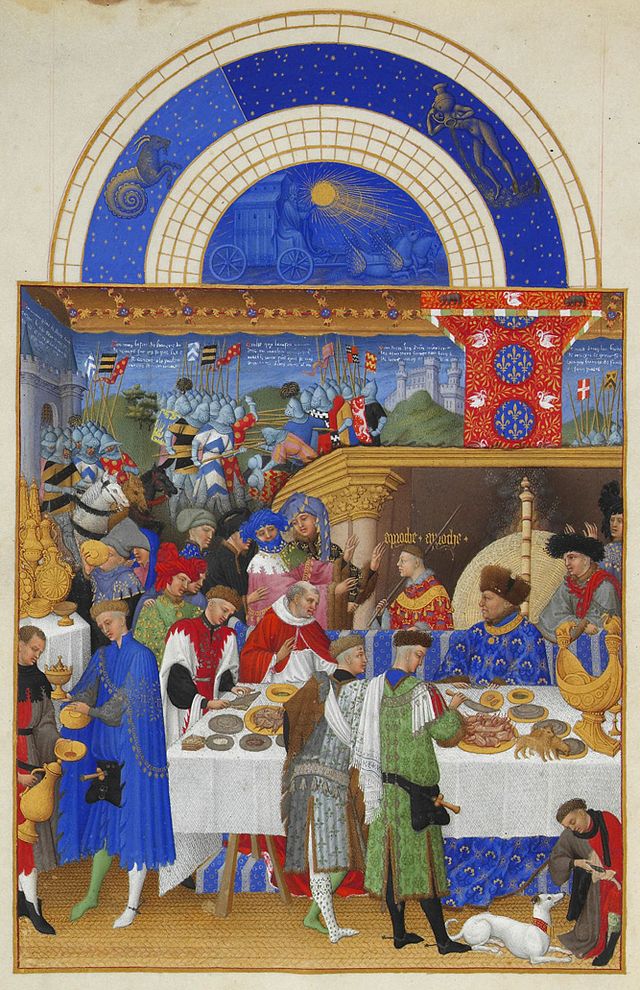
January, from Les Très Riches Heures du Duc de Berry, 1413-16. Herman, Paul and Jean de Limbourg.  Note the white greyhound, wearing a wonderful collar, being hand fed and the two little white dogs allowed on the table to help themselves…

Lucky were the dogs that ended up living in a rich man’s household where they led the most pampered lives their diets better than the poor people.  John Bromyard, a 14th century preacher complained how the wealthy provided for their dogs more readily than for the poor, more abundantly, and more delicately to, so that whereas the poor are so famished, they would greedily devour brown bread, dogs turned up their noses at the sight of wafer-bread, and spurn what is offered to them, trampling it under their feet. They must be offered the daintiest flesh, the first and choicest portion of every dish. If full, they refuse it then there is a wailing about them,  as though they were ill (2)’.  But hopefully even the poorest households valued their dogs or ‘mungrell curres‘  as a 13th century writer put it…  These loyal dogs, it was noted,  would rather die by the hand of a stranger in defending their master’s belongings that let them be stolen: ‘the mungrell curres, which serve to keep the bottles and bags, with vittell, of ditchers and hedgers will be sooner killed of a straunger than beaten off from their masters apparell and victuall’.

IMG_7086.JPG

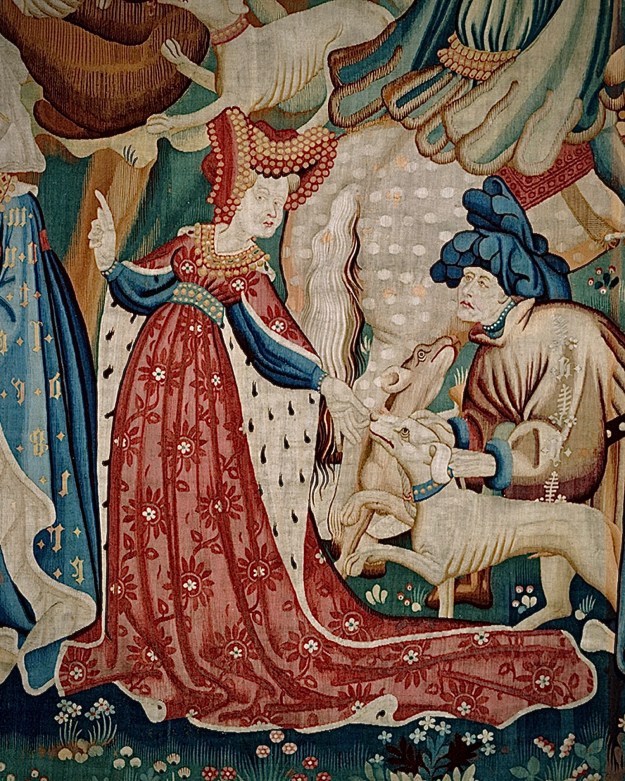
Detail from the Devonshire Hunting Tapestry showing a noble lady with her hunting dogs.

Hunting dogs were especially highly valued and it seems treated like pieces of Dresden china.   Their owners were given such advice as “alway bi nyght and bi day I wil þat some childe lye or be in þe kenel wiþ þe houndes for to kepe hem from fyghteng’ .  However if the worse come to worse there was also helpful advice on how to treat a wound that had been caused by a bite from another dog, to wit, an ointment made from leeks, garlick, chives and rue should be applied to the effected part (3).   Further advice, should you require more, was that the Kennelmen who looked after the dogs should be ‘gracious, very courteous, and gentle, loving dogs by nature… ‘ with helpful advice on how to build the correct type of kennel to ensure the dog’s well being and comfort:  ‘þe hidre door of þi kenel shuld alway be opyn by cause þat þe houndes may go withoute to play hem whan hem likeþ, for it is a grete likyng for þe houndes whan þei may goon in and out at here lust … And in þe kenel shuld be picched small stonys … in to þe nombre of vi stonys þat þe houndes myght pisse þeraȝenst; also a kenel shuld have a gootere or ii wherby al þe pisse of þe houndes and alle [oþer] waters may renne out þat noon abide in þe kenel … Also in þe kenel shuld be a chymene for to warme þe houndis, whan þei ben a cold or whan þei ben wete or for reyne or for passyng and swymmyng of reuers’ (4).

image

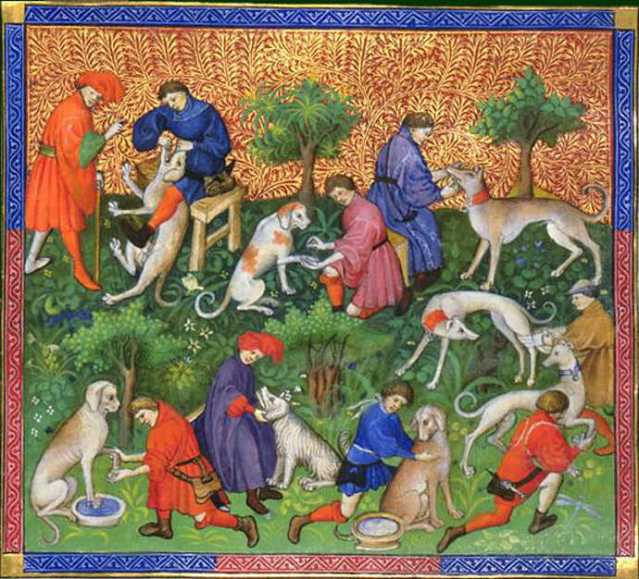
Hunting dogs and their various needs being tended to.  Gaston de Foix’s Book of the Hunt.  Gaston de Foix would later lose his life in a bear hunt.  

Guicennas, a German knight, explained how to raise a good ‘limer’ (tracking hound):  Be kind to him, and stroke his head gently, and then give him a piece of cheese – not over much, but a little at a time — and take care not to make him quest (after game) so as to tire him, but let him rest and show him that you are good and kind towards him … And whoever does as I have said will have a good limer.  Because of this medieval love of hunting hounds lists were drawn up of suitable names which have survived.   These names total to 1065 so you will excuse me if I just limit here to a few: Plumstede, Puffyne, Lufkyn, Mabbe, Nero, Perkyn, Alberte, Ector, Olyuere,  Offa, Persyvale, Pompeye, Rowlande, Romulus, Dygger, Merymowthe, Sable, Amyable, Cherefull, Plodder, Synfull, Lusty, Wrecche, Garlik, Juell, Nightingale, Merlyon, Florense, Tynker, Beste-of-all, Boy, Joliboye, Baby, Malaperte, Nedy, Pastey, Tullymully, Marmyn,  Mouse, Go-bifore and Go-hyhynde.

The full list of names can be found in David Scott-Macnabb’s excellent article The Names of All Manner of Hounds: A Unique Inventory in a Fifteenth Century Manuscript.  

image.pngPiero della Francesca – beautiful detail of dogs from St Sigismund and Sigismondo Pandolfo image.png

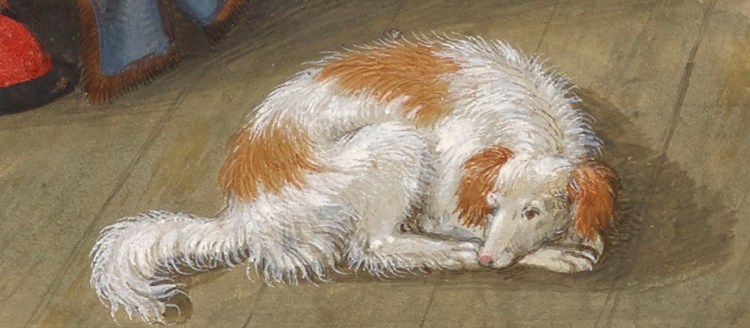
Dogge eyeing up a cat from a 14th century manuscript..

image.png

Alaunt with a posh collar…

The Author in his Study
Detail from The Author in his Study.  Artist Simon Bening (c.1483-1561).  Belgium.

Perhaps we should leave the last word about medieval dogs and their modern counterparts to Gaston de Foix who lamented in his book that ‘the moost defaute of houndes is that thei lyven not longe inowe’?

IMG_9575

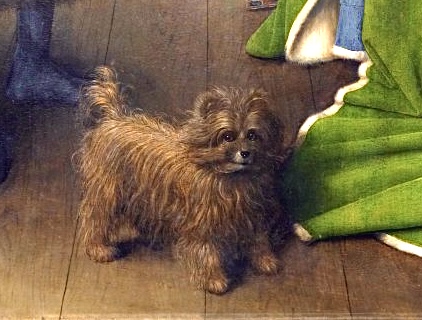
The family pet was not left out in the wonderful The Arnolffini Portrait c.1434. Jan Van Eyck.  National Gallery London..

To read about Blanche Mortimer’s tomb click here.

  1. English Church Monuments in the Middle Ages p307 Nigel Saul
  2.  Dogs in Medieval Manuscripts p.39.  Kathleen Walker-Meikle.
  3. The Master of Game. A translation by Edward Duke of York of Gaston Phoebus’ Livre de la chasse. 
  4. Hunting Book of Gaston Phébus.  See The Names of all Manner of House: A Unique Investory in a Fifteenth Century Manuscript.  A paper by David Scott-Macnabb.

If you have enjoyed this post you might also like:

  1. Ranulph Lord Dacre of Gilsland – The Lord who was buried with his horse.
  2. A COLLECTION OF REVOLTING REMEDIES FROM THE MIDDLE AGES
  3. THE RAVENS OF THE TOWER OF LONDON
  4. THE MEDIEVAL BED – A PRIZED POSSESSION
  5. RICHARD III, WHITE SURREY AND HIS OTHER HORSES

LONDON’S LOST AND FORGOTTEN RIVERS

Stewart.jpg

Jacob’s Island formed by a loop in the River Neckinger c1860.  Formerly known as Folly Ditch. Watercolour  J L Stewart 1829-1911 @Museum of London

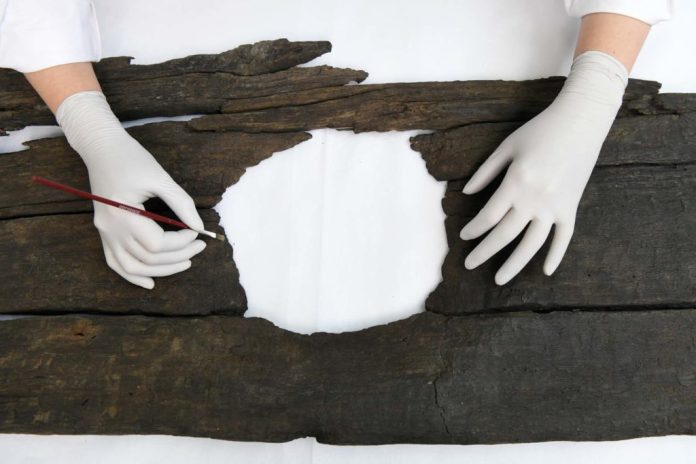
Here is a link to a very interesting article on London’s Lost and Forgotten Rivers with details of  some interesting finds recovered from the Thames including, my favourites , a 12th century triple toilet seat,  a Roman bracket cast in the shape of a thumb, Bronze Age and medieval swords and  a dog collar  finally engraved with ‘Gray Hound’

f759a38f-ad9f-4d8a-b46b-b74609477a97.jpg

Dog Collar inscribed Gray Hound

Conservator-Luisa-Duarte-works-on-a-12th-century-triple-toilet-seat-before-it-goes-on-display-as-part-of-the-Secret-Rivers-exhibition-which-opens-to-the-public-on-May-24th-at-Museum-of-London-Dock-2-1024x683.jpg

12th century triple toilet seat

As The London Museum curator Kate Sumnall succinctly puts it “They are still there, and they’re flowing.  Some of them you can still see, others are beneath our feet, but the little clues around London survive.  Once you start paying attention to them the rivers jump out at you and you realise that you know far more about them than you think’.

Copperplate_map_Fleet-1.jpg

The River Fleet shown on the ‘Copperplate’ map of London c 1553.  

The Fleet  rose on Hampstead Heath,  flowed  beneath Fleet Bridge , now the site of Ludgate Circus,  and Holborn Bridge past Bridewell Palace, built by  Henry VIII and into the Thames.

IMG_5731.jpg

Bridewell Palace and Blackfriars Monastery at the entrance to the River Fleet.  From a model by John B Thorp 

Archaeologists still argue about the exact route of the River Tyburn but it is agreed that it flowed from the Hampstead Hills,  across Regents Park to form an eyot which was called Thorney Island whereupon stood Westminster Abbey and the old Palace of WestminsterWesteminster_Abbey.jpg

Westminster Abbey and the Palace of Westminster once stood on the eyot  formed from the  River Tyburn known as Thorney Island..

tyburn.png

The eyot known as Thorney Island 

The River Walbrook is short,  but as it was the only watercourse to flow through the City it was both an important source of water as well as a conduit to remove sewerage.  It may have come by its name because it flowed through London Wall.  The source of the Walbrook is still argued over but one plausible suggestion is that it begun its life near St Leonards Church, Shoreditch,  meandering down and under what is now The Bank of England and entering the Thames close to where  Cannon Street Station now stands.   As time passed it was vaulted over, paved and made level to the streets and lanes and thus built over  – alas.IMG_5735.jpg

Map of London c.1300 with the River Walbrook shown 

6.jpg

The River Walbrook, as it now flows beneath the Bank of England.  Photograph taken by Steve Duncan 2007

The River Wandleone of the longest of London’s rivers,  passed through the boroughs of Croydon, Sutton, Merton,  Wandsworth and Lambeth to join the Thames on the tideway. It flowed through the grounds of Croydon Old Palace, sometime residence of Margaret Beaufort, the mother of Henry VII and where the  young widowed Katherine of Aragon lived for a time prior to her marriage to her one time brother in law, Henry VIII, when that place was but a quiet village and at one time renowned for its fish, particularly trout.  However eventually becoming an open sewer leading to outbreaks of cholera and typhoid ,  it too was culverted over in the 19th century.

pair-1.-croydon-church-surrey-exterior-view-of-croydon-church-surrey.-the-river-wandle-flowing-in-the-foreground.-water-colour-by-james-biourne-1024x731-2.jpg

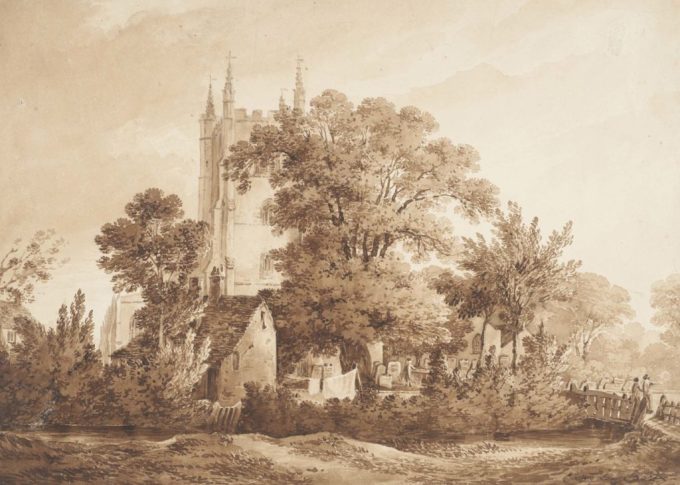
Croydon Church with the River Wandle flowing past . Water colour by James Biourne.  Courtesy to both Museum of London and museumcrush.org

The Neckinger is believed to have risen close to where the Imperial War Museum now stands, crossed the New Kent Road and flowed either past or through Bermondsey Abbey where  disgraced Queens were sent to languish and die.   A loop in the Neckinger became known as Jacob’s Island.  The Neckinger met the Thames via St Saviours Dock which was created by the Cluniac monks of the Abbey in the 13th century who named it after their patron saint and built a watermill there.

Are there any South Londoners out there?  You have your very own river – the Effra.  Now culverted it once flowed, roughly,  from the hills of Norwood, once part of the Great North Wood, Upper Norwood,  Dulwich,  Brixton and Kennington until it met the River Thames at Vauxhall.

I have only touched upon the copious amount of information that is readily  available on London’s lost rivers.  Its amazing to think that these historic rivers survive beneath the feet of thousands of Londoners as, totally unaware,  they go about their business…

If you enjoyed this post you might like :

SIR PAUL PINDAR c.1565-1650. AND HIS HOUSE IN BISHOPSGATE

RICHARD WHITTINGTON c.1350-1423. MERCER, MAYOR AND A MOST BENEVOLENT CITIZEN OF LONDON

L’Erber – London Home to Warwick the Kingmaker and George Duke of Clarence

THOMAS CROMWELL’S HOUSE IN AUSTIN FRIARS

THE ORANGE AND LEMON CHURCHES OF OLD LONDON

THE ANCIENT GATES OF OLD LONDON

GREENWICH PALACE – HUMPHREY DUKE OF GLOUCESTER’S PALACE OF PLEAZANCE

CLATTERN BRIDGE -A MEDIEVAL BRIDGE – KINGSTON UPON THAMES

CROSSRAIL – A PORTAL INTO MEDIEVAL LONDON

“THE MEMORY OF KING RICHARD STILL LAID LIKE LEES AT THE BOTTOM OF MENS HEARTS’ Sir Francis Bacon

image

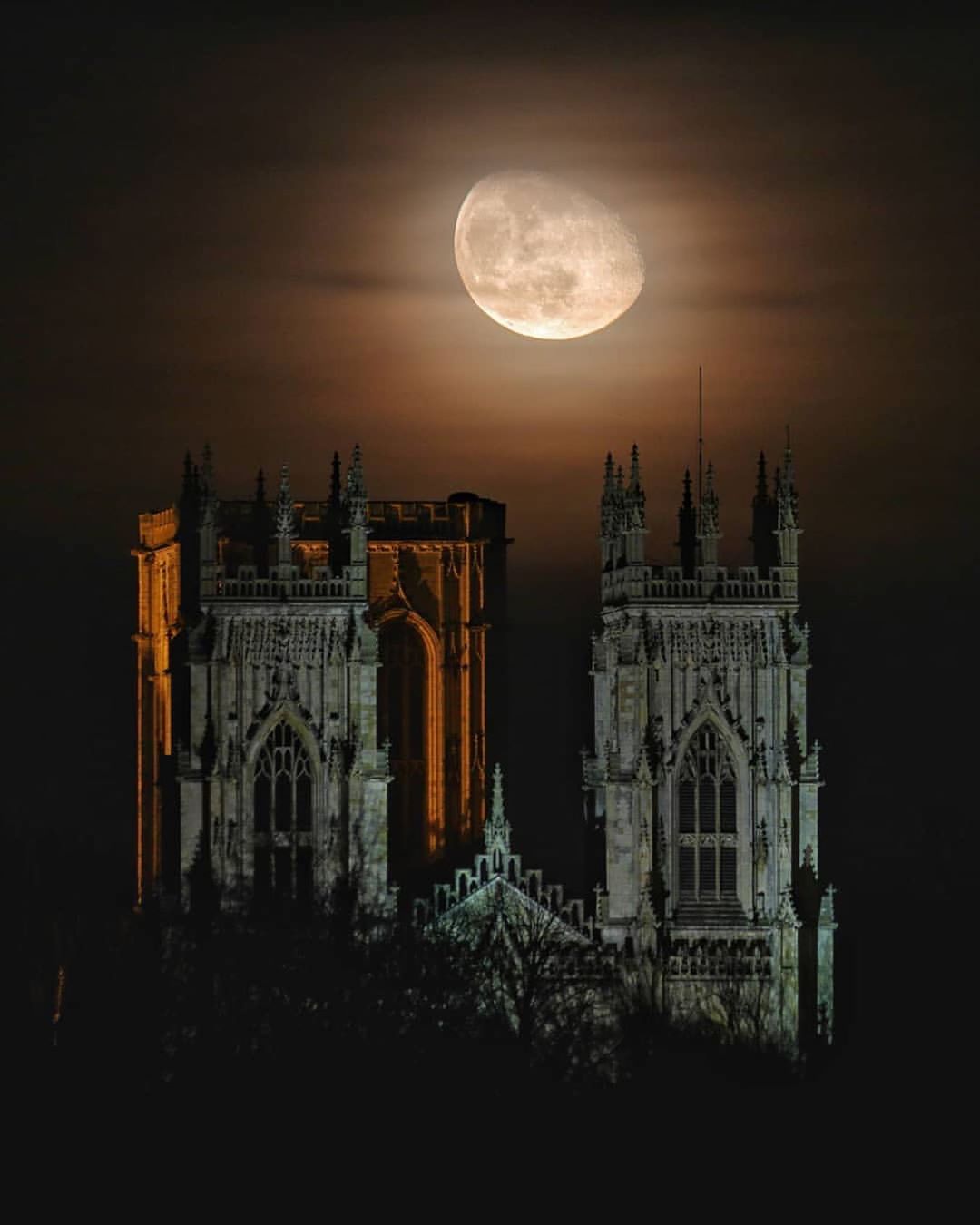
YORK MINSTER –  Yorkist Citizens long held the memory of Richard dear after his death. Photo @ Association of English Cathedrals

rotate2.jpg

Entry from the York City House book…’King Richard late mercifully reigning upon us was thrugh grete treason of the duc of Northefolk and many othre that turned ayenst hyme, with many othre lordes and nobilles of this north parties, was pitiously slain and murdred to the grey hevynesse of this citie’ (1)

“The memory of King Richard was so strong it  laid like lees at the bottom of mens hearts and if the vessels were once stirred it would come up” –

thus wrote Francis Bacon in his History Of Henry VII.  He was writing about the North Of England, particularly Yorkshire and Durham but no doubt this could have applied in particular to the City of York and its stout citizens although of course,  in many other places memories of the good and fair reign of King Richard still endured but lies unrecorded.

However York’s constancy to Richard’s memory has been well documented and snippets can be found in the surviving York House Books. In the aftermath of Bosworth it was recorded that Tudor’s messenger , Sir Roger Cotam,  was so in fear of his life to enter the city – despite the offer of a gift of ‘ii.gallons of wyne  –  that it was thought prudent that the ‘maire and his brethe shuld goo unto him instead.  Which they did, meeting with the snivelling  coward at the ‘sign of the boore‘.   Shame on you Sir Roger (2)

This affection and loyalty for Richard dates from the time he was Duke of Gloucester – 

24 June 1482

John Davyson, a tailor, was sent to appear before the Mayor,  Richerd Yorke.  Davyson said he and  others had heard Master William Melrig say that he, in turn, had heard Master Roger Brere   say regarding ‘my lorde of Gloucestr’   ‘What myght he do for the city?  Nothing bot grin for us (2).   Oh dearie me, big mistake Master Roger!   As Shakespeare was later to write “Give thy thoughts no tongue‘ especially if they are daft.   Melrig was sent for that very day and demands made as to what seditious words he had ‘at any time’ heard Master  Roger utter against Gloucestr.  Whether in truth or to pour oil on troubled waters Melrigh replied ‘noon‘.  The words ‘Nothing bot grin for us‘ were repeated to him in an attempt  to jog his memory. But Melrig stuck to his story – deftly batting the ball back into their court by assuring them he would not have stood for such words to be used unchallenged against the Duke.  And that ended the matter.  The truth is lost in time but begs the question did Master Roger utter those word or was a lie made up knowing that a very dim view would be taken over such utterances and  would land him in deep and muddy waters?

Tellingly,  years later,   it was still  remained  hazardous  to malign Richard,  for  on the 14 May 1491   an argument between a man called John Payntour and a schoolmaster William Burton/Burtan was recorded in the Municipal Records.  Payntour alleged he had heard the said Master  Burton  call Richard ‘an ypocryte and furthermore a ‘crochebake and  who had ended up buried in a ditch like a Dogge‘.   John Payntour, skilfully avoided getting into trouble with the new King (clearly it was not wise to be seen to stick up for Richard too  stoutly) by adding that Burton had lied, obviously, because the Kynges (Tudor) good grace had beried hym like a noble gentilman’! (3). Take it outta that Master William!    I really, really   like the sound of this man, Payntour, who earlier, in 1490,  had to deny slandering the Earle of Northumberland by saying he was a traitor who had betrayed King Richard.  .  Kudos to you John Payntour and I hope, when you finally  popped your clogs,  you got to join good King Richard in Heaven…

P9158679.jpg

The medieval Guild Hall in York where Richard  and his consort Anne Neville were entertained at a great banquet in 1483.

Finally here are a selection of artworks, which I find preferable to photographs for catching the ethos of Old York from the time of King Richard, John Davyson, William Melrig, Roger Bere and the indomitable John Payntour.  Their names live on…

fill.jpegPetergate, York.  A painting by C Monkhouse 1849

image.png

Monk Bar.  William Etty date unknown.

IMG_5920.JPG

Bootham Bar Anonymous c.1800

IMG_5924.jpg

The Shambles Ernest Haslehurst 1920

IMG_5928.jpg

Bootham Bar and the Minster c.1920 Noel Harry Leaver

YHB.jpg

The York House Books in two volumes.  Editor Dr Lorraine C Atreed.

  1. York House Books Vol.1. p368.9  Edited Lorraine C Atreed
  2. Ibid Vol.2 p734
  3. Ibid vol .2 p707
  4. York Records: Extracts from the Municipal Records of the City of York 1843. R Davies.pp220.221

THE PRIVY PURSE ACCOUNTS OF HENRY VII 1491 to 1505

Is there anyone else like me who enjoys a good nosy around someone’s privy purse accounts.  They can tell us so much about that person.  For example, Henry VII’s Privy Purse Accounts.  From them we can glean, for example,  how did Henry spend his time relaxing , after doing a hard day’s usurping?    Well it would seem Henry liked dancing.   Not himself , of course, but watching others – for example:

September 5th 1493.  ‘To the young damoysell that daunceth £30’ .   She must have been good.  £30 being an outrageously inflated amount, and,  indeed,

IMG_4634.jpg

this young lady fared rather better than a litelle madden that daunceth who received a mere  £12 on the January 7th 1497 – but still, nice work if you can get it,  considering that on June 8th ‘the maydens of Lambeth for a May received a measly 10s to share out between themselves.  Henry’s enjoyment of watching dancing was just not limited to  damsels and maidens for he also enjoyed Morris dancing – well if you can call it dancing – for on January 4th ‘for playing of the Mourice dance earned the participants £2.

MUSIC – Another favourite way of whiling away the time for Henry.  Numerous payments for ‘mynystrels‘ are recorded including on February 4th 1492 including  a childe that played on the record received £1 and  the mynystrels that played in the Swan’ received 13s and 4d.  Interestingly Richard III ‘s mother, Cicely Neville’s minstrels, received the sum of £1 and to ‘children for ‘singing in the gardyn’ at Canterbury 3s and 4d.

BLING BLING! Henry evidently was a man who loved bling –  paying out £3800 for ‘many precyous stones and riche perlis bought of Lambardes for  the ‘garnyshing of salads, shapnes and helemytes’, 27th May 1492.   Henry certainly had a thing for decorating his armour and helmets for in June 30th 1497 £10 was paid to the Queen to cover her costs of ‘garnyshing of a salet’.   Now whether the Queens attempts were not up to scratch or perhaps she tired of the project for a few days later on August 9th John Vandelft, a jeweller was paid £38.1s.4d for the ‘garnyshing of a salett‘.  Was this the same salet, I  know not, and how many salets would one man require?  No doubt he looked a sight for sore eyes unfortunately no details survive of said salets however may they have looked something on these lines except more blingy..

helmet studies albrech durer 1503.jpg

or this….IMG_4002.JPG

or perhaps something more  modest ?

images.jpeg

Your guess is as good as mine dear reader.

JEWELS

Of course Henry liked jewellery in general and not just  for adorning his armour.  This would have been silly  because it could have got damaged if he had found himself in the midst of a battle without a convenient pike wall to hide behind as well he would have stood out like a sore thumb but I digress… ….  On June 12th 1495 a further payment of £2560 was made to ‘Lumbards‘  for ‘diverse juels‘. In June 1498 a payment of £2000 was paid for Delivered and sent over the see for sertayn juels of gold, £2000′.  On 30 July of the same year a further payment of £2648.9s ‘for sertayn jules bought in France’.    However he was not always so extravagant paying out smaller sums now and again, for example, June 24th an ouch sett with Perle and stone £100 and May 16 to Robert Wright for a ring with a diamond £20′.

PETS

Henry, it is said, loved greyhounds.  He had two favourites…IMG_3998.JPG

 a descendant of one of Henry’s favourite greyhounds..Morton 

banner-5.jpg

 Bray – from the same litter – these dogs predecessors liked nothing more than fawning around their Master – as dogs do.

Henry loved his greyhounds so much so he would pay damages for any destruction caused by said pets – hence on 13 March 1495,  4s was paid to ‘Rede for a colt that was slayn with the Kings greyhounds’.  Details of greyhounds purchased include a payment of 14s 4d to ‘Cobbe of the stable for a grey hounde’.  And ‘to the one that brought the king a whit greyhound from Brutan, £1′.

Henry also liked birds.  Popinjays are mentioned several times so they must have held a certain appeal for him paying Richard Dekon for a popyngchey £6 13s 4d’ on 14th January 1498.

Unknown.jpeg

A popinjay descended from Henry’s favourite bird  who was known as Buck.  Buck was not very bright but brightly coloured and flamboyant..

SENSE OF FAIR PLAY

Henry, despite what his traducers say, did possess a sense of fair play.  Yes he did.  For example he paid out in February 27th 1495 , £15.19s for Sir William Stanley’s burial at Syon.  This was as well as the  £10 that was given to Sir William ‘at his execution on the 20th February.  You cannot say fairer than that.   It should also be remembered that he paid for a ‘tombe for King Richard III on the 11 August 1495,  the not to be sneezed at amount of £10 1s.  This was only a third of what had been paid to the young damoysel that daunced its true,  but why be petty?  On Dec 8th 1499 ‘Payed for the buriell of therle of Warwick by  iiij bills, £12.18s 2d’.  I can find no trace of a payment for the burial of Warbeck, perhaps he was simply cast in a hole or mass burial site (1).   Henry could hardly have been expected to shell out for every traitors burial.

38636.jpg

Austin Friars from an original study by John Preston Neale 1801

THE QUENES DEBTS

Another misconception is that Henry was an indifferent and cold husband.  This is not on.   Perhaps he was merely cross having regularly to either pay off the Queens debts, mostly incurred through gambling or give her loans. On November 30th 1493 ‘delivered to Master Chaderton by thanks of William Hungate to pay the Quenes detts £1314 lls 6d’.  He also lent her £100 at Shene on the 2 April 1494.  A further £2000 was ‘delivered to the Queen’s grace for to pay her detts which has to be repayed’ on 1 February 1497.  I should think so too!.

FASHION SENSE.  

Several mentions are made of purchases of clothing.  January 6th 1494 ‘for an ostrich skin for a stomacher £1 4s.  This is the only mention of an ostrich skin being used for that purpose. So Henry was definitely a fashion guru.  No depiction survives, unfortunately, of the said stomacher but I have found a picture of an ostrich skin hat which may provide a clue as to what the garment may have looked like:

s-l1600.jpgAll the above I have gleaned from Excerpta Historica Samuel Bentley.  There are many  interesting examples of the expenses, too many to mention here.  Having said that that I cannot close without mentioning:

January 6 1494 for ‘clothing mad for Dick the fole £1.15s.7d’  (Dick or Dikks the foule gets several mentions)

February 10 1492 ‘to a litell feloo of Shaftesbury £1

January 20th 1495 the ‘immense bribe’ of £500 that was ‘delivered to Sir Robert Clifford by thand of Master Bray ‘(who else!) for basically payment for the betraying of Sir William Stanley.  Further to this £26 13s 4d paid to William Hoton and Harry Wodeford ‘for the bringing of Sir Robert Clifford in rewards i.e. this was a reward given to the persons who had so successfully negotiated with Clifford (2)

And finally I would love to know what happened regarding the 6s 8d  paid for ‘the burying of a man that was slayn in my Lady Grey Chamber’ 27th May 1495?

MISSTRESS GREYS ROOM.jpg

The mind boggles…..

(1) Perkin Warbeck’s body after it had been separated from its head, was taken to Austin Friars Church, where it was buried with ‘other gallow birds on the west side of the nave’ Perkin, a Story of Deception Ann Wroe p499. (Austin Friars Church was later destroyed by a bomb during the 2nd World War and hardly any traces remain save for a small garden area).

(2) Excerpta Histórica: or, Illustrations of English History Samuel Bentley pp 100.101

QUEEN ANNE NEVILL – HER BURIAL IN WESTMINSTER ABBEY

luton-guild-register-f13-verso-detail-luton-culture-1.JPG

Anne Neville – possible portrait of her from the Luton Guild Book (1)

IMG_7100.JPG

Arms of Queen Anne Neville @ British Library

Richard III’s queen, Anne Neville’s death at the Palace of Westminster on the 16th March 1485, followed not long after the death of their only child, Edward of Middleham in April 1484.    Anne – who was the daughter of the famous Richard Neville, Earl of Warwick –  later known as the Kingmaker  – and Anne Beauchamp who was the daughter of Richard Beauchamp, Earl of Warwick and Isobel Despenser –  had been queen for less than two years and was given a magnificent funeral in Westminster Abbey ‘with honours no less than befitted the burial of a queen‘ (2).

Those wishing to visit the Abbey to pay their respects at her grave will be unable to find it, although the general location is known.  The Westminster Sacrist’s Roll record the payment of ₤42.12 for her burial but no further accounts of the funeral have survived nor a monument.  The Great Chronicle of London, written in the 1530s records that Anne was buried south of the high alter ‘by the South dore that does ledyth Into Seynt Edwardys Chapell’.  A late 16th century list of Westminster burials also records her burial on the south side of the Sanctuary.  According to Stow,  Anne was buried  south of the Westminster Vestry while Crull claimed her grave stood in the south choir aisle (3).

image

Magnificent Westminster Abbey where Queen Anne Neville was laid to rest following her death at the Palace of Westminster on the 16th March 1485.

The lack of a gravestone or monument might be explained by either Richard’s own death a short  five months later at the Battle of Bosworth on the 22 August 1485 or perhaps due to the confined space between the high altar and the sedilia (priests seats) (4).

A lead coffin was discovered in 1866 south of the high altar but was not disturbed. However it is unclear whether this was Anne’s coffin or that of another queen Anne, Anne of Cleves,  who was also buried south of the altar (5).

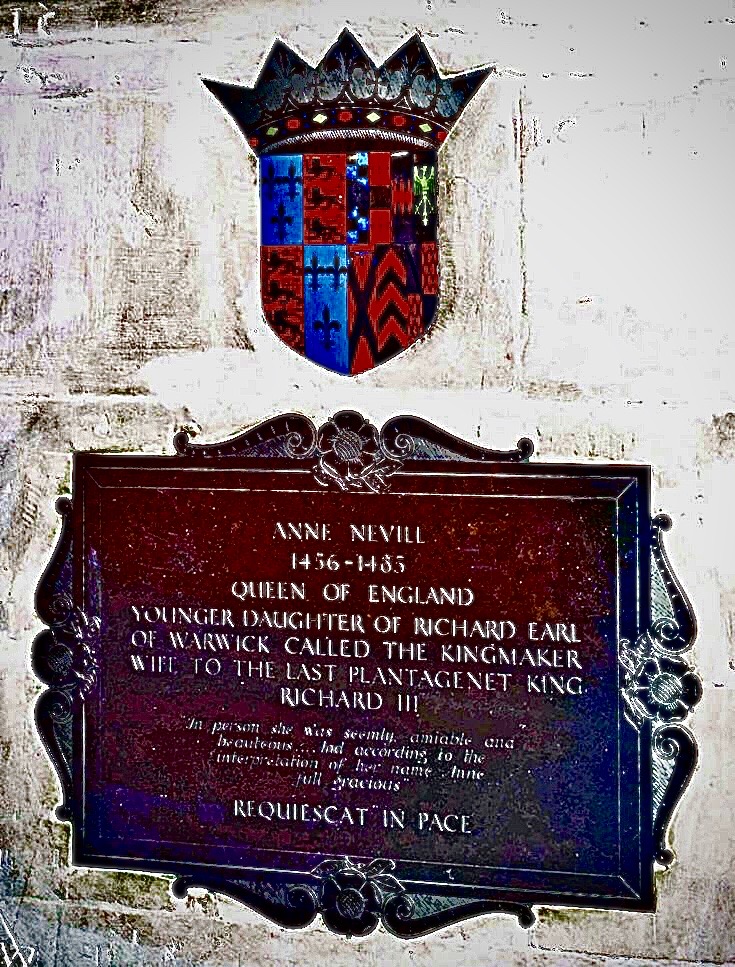
in 1960 an enamelled shield of arms with a brass plate was placed on the wall of the south ambulatory as near to the grave site as possible, by the Richard III Society.    The brass plate is  inscribed with the words

ANNE NEVILL

1456-1485

QUEEN OF ENGLAND

YOUNGER DAUGHTER OF RICHARD EARL OF WARWICK CALLED THE KINGMAKER WIFE TO THE LAST PLANTAGENET KING RICHARD III  

 ‘In person she was seemly, amiable and beauteous and according to the interpretation of her name Anne full gracious’

REQUIESCAT IN PACE.  

This beautiful quotation is taken from the English Version of the  Rous Roll.

IMG_7101

Brass plate and enamelled shield of arms given by the Richard III Society Westminster Abbey

Neville-Rous-Roll.jpg

Anne from the  English version of the Rous Roll in royal robes, wearing  Queen Edith’s crown and carrying an orb and sceptre.  Hands emerging from the clouds proffer her the crowns of Lancaster and York.  British Library.

Maybe it will be a comfort to those that travel to Westminster Abbey only to find they cannot find Anne’s grave to consider that perhaps the inability to trace it may  have saved her mortal remains from  the disturbance,  desecration and resulting loss that befell the remains of her sister, Isobel Duchess of Clarence and her sister-in-law, Queen Elizabeth Wydeville .

1. An interesting theory that this could be Anne’s Portrait is discussed  @ https://thedragonhound.com/2015/03/20/anne-nevilles-portraits/

2. Crowland Chronicle p.175

2. Royal Tombs of Medieval England.  Mark Duffy.p.264

3.  Royal Tombs of Medieval England. Mark Duffy p.265

4. Memorials of the Wars of the Roses.  W E Hampton p.117

If your enjoyed this post you might also like:

ANOTHER PRECIOUS FIND TO ADD TO THE MIDDLEHAM JEWEL AND RING.

The Sisters Neville – Isobel, Duchess of Clarence and Queen Anne Neville, Daughters to the Kingmaker.

Anne Beauchamp Countess of Warwick – Wife to the Kingmaker

THE ETON CHAPEL WALL PAINTINGS – A PORTRAIT OF QUEEN ANNE NEVILLE?

EDWARD OF MIDDLEHAM ‘SON TO KYNG RICHARD’ & THE MYSTERIOUS SHERIFF HUTTON MONUMENT

ELIZABETH WYDEVILLE, JOHN TIPTOFT AND THE EARL OF DESMOND

256417-1330622773.jpg
Elizabeth Wydeville. British School 16th century artist unknown.Did pillow talk between her and Edward IV seal the Earl Of Desmond’s fate?.

I like to be fair.   I really do.   Even when I find it hard.  Take Elizabeth Wydeville ..or not if you prefer. Although I am not and never will be a fan of this lady… ‘wife’  to Edward IV, illustrious Son of York, a golden warrior but a man prone to  keeping  his brains in his pants..I try to remain open minded.  Of course the fact that Elizabeth swiftly skedaddled  across the road from the Palace of Westminster into the sanctuary of Westminster Abbey upon hearing of the approach of Richard Duke of Gloucester, after he had taken her son, the uncrowned Edward V into his care following a failed assassination plot on the Duke’s life, looks extremely suspect.  Taking her younger son, Richard of Shrewsbury,  his sisters and Thomas Grey, her eldest surviving son , plus the royal treasure, Elizabeth prepared herself for a long stay.

The outcome of all that is well known and I won’t go into it here. Later,  Elizabeth, sent into ‘retirement’ into Bermondsey Abbey, by an unforgiving son in law, paid a very high price for her propensity for plotting. But are other stories about her true..as they say give a dog a bad name..and one I have often wondered about is the story that Elizabeth was behind the judicial murder of Thomas Fitzerald,   Earl of Desmond – and not only that – his two small sons.  The story goes, which is oft repeated in both fact and fictional accounts, is  that she was mightily  offended by a casual comment made by  Desmond to Edward, which Edward foolishly and naively repeated to her (this was in the early days of their marriage and would imply he was not yet fully aware of the nastier and vindictive side to her nature)  that he believed Edward had made a ‘mèsalliance‘ and that he should have chosen a more suitable bride‘ and thus consumed by  malicious spite, she misappropriated her husband’s privy seal, removing it from Edwards ‘purche’ while he slept, and sent instructions to John Tiptoft, first earl of Worcester, then Chancellor and Lord Deputy of Ireland, to have Desmond executed on trumped up charges including a ‘ridiculous and groundless allegation that he sought to make himself king of Ireland’.

Later Edward on finding out the terrible truth was not best pleased..as the late Rosemary Hawley Jarman put it  so succinctly in her novel The King’s Grey Mare …‘I fear Madam,  he said very slowly,  I very much fear Bessy,  that you have become unkind’  and set out to pour oil on troubled waters for the execution caused much uproar, turmoil and rebellion in Ireland.  Surely this story is too horrid to be true even for those violent times.  I was thus pleased to discover an excellent article by Annette Carson and the late John Ashdown-Hill which they co-wrote for the Ricardian back in June 2005, for surely these two know their onions and would be able to discern truth from fiction.  After reading the article I came away a little shocked for  their in-depth investigation did not put this story to rest but rather made it seem more probable that Elizabeth Wydeville, with the connivance of Tiptoft,  did indeed bring about the execution of a man merely because of words spoken that she took umbrage to.

The article can be found here for those of you who wish to explore more fully this unedifying story of Edward’s queen and a man who would be known as the Butcher of England and who himself was executed in 1470 by Desmond’s friend, Warwick the Kingmaker, Tiptoft’s former brother-in-law, and good riddance to him. Perhaps Warwick had another, more personal “axe to grind” – could it be that Tiptoft treated his first wife Cicely, Warwick’s sister, coldly for he requested in a letter to Henry Cranebroke, monk of Christchurch, Canterbury,  following the death of  his 2nd wife, Elizabeth Greyndour,  prayers with special remembraunce of her soul whom I loved best‘(1) surely an unnecessarily slight to the memory of his first Neville wife.  Tiptoft has been described as a man of culture, erudite and a reader and lover of books! Whoopi doo dah!  More specifically he was a man who thought it perfectly acceptable to have impalement added to the already awful sentence of hanging, drawing and quartering.  This was the fate 20 of Warwick’s men suffered at Southampton on Tiptoft’s command  and  which caused much revulsion in an already cruel age.  No wonder he was described by a contemporary chronicler as ‘that fierce executioner and horrible beheader of men’ (2).

p13-Harvey.jpg

John Tiptoft’s memorial, Ely Cathedral.  Effigy of Tiptoft with two of his wives probably Cicely Neville and Elizabeth Greyndour..

Nevertheless it would appear that Elizabeth Wydeville may have asked Tiptoft to aid and abet her undaunted by his reputation for harshness. The most appalling part of this story is the accusation that Tiptoft also executed  Desmond’s two young sons. Another possibility is that Tiptoft was fooled by the forged letter. But in any event ‘this yeare the Earle of Desmond and his two sonnes were executed by ye Earle of Worcester in Drogheda‘(3) the youngest one asking the executioner to take care as he had a boil on his neck.IMG_5765.JPG

MAGDALENE TOWER –  ALL THAT REMAINS OF THE DOMINICAN FRIARY AT DROGHEDA.  DESMOND WAS REMOVED FROM THE FRIARY AND SUMMARILY EXECUTED.

And so dear reader, do take time to read this most interesting article if you would like to explore the matter and draw your own conclusions.   The authors of the article in-depth examination of the sources, some of which have been ignored by previous writers on the subject is compelling and persuasive.  Among the somewhat damning points made are that Desmond was in fact in England, to give Edward his account of the  coin and leverage accusation being made against him, at the precise time that the Wydeville marriage became public. Edward found in Desmond’s favour and gave him a grant of manors.  Furthermore the other two men accused along with Desmond, including Kildare, his brother, only escaped execution because they managed to evade Tiptoft long enough until the matter reached the ears of Edward, who extended clemency to the pair, which implies that Tiptoft had acted without the ‘knowledge or consent of the king’. Edward went on to quell the rebellion begun by Desmond’s oldest sons who ‘raised their standards and drew their swords , resolved to avenge their father’s murder by promising them pardon if they lay their swords down ‘protesting at the same time Desmond had been put to death, without his order, nay his consent’. The king would later go on to ‘clearly acknowledge’ Thomas’ son, James’, title to the earldom despite Tiptoft’s act of attainder against his father.

IMG_5769.JPG

The nave of Holy Trinity Cathedral, Dublin..Thomas Fitzgerald Earl of Desmond was finally laid to rest somewhere in the Cathedral (now known as Christ Church Cathedral).

Later Richard III wrote a conciliatory  letter,  which has survived,  to Desmond’s son, James,  followed up with instructions that his messenger, Bishop Thomas Barrett, was to ‘amplify’ the message that Richard’s brother, Clarence, had suffered a similar  fate as Desmond in that his death had been brought about by ‘certain persons’.  It must be concluded that the ‘certain person’ alluded to was Elizabeth Wydeville for according to Mancini writing in 1483  contemporary opinion at the time held her responsible for the death of Clarence… ‘the queen concluded that her offspring by the king would never come to the throne unless the duke of Clarence was removed and of this she easily persuaded the king…’

IMG_5768.jpg

King Richard III sent a conciliatory message to Desmond’s son, James 8th Earl of Desmond comparing the judicial murder of his brother Clarence to that of Desmond. 

And so there we have it dear reader..if this indeed be the case, its very hard to feel pity for Elizabeth when fate’s fickle finger finally gave her the prodding she so richly deserved.

If you enjoyed this post you might like :

https://sparkypus.com/2020/06/08/elizabeth-wydeville-serial-killer/

:https://sparkypus.com/2020/07/01/bermondsey-abbey-and-elizabeth-wydevilles-retirement-there/

Edward’s Mysterious Death https://wordpress.com/post/sparkypus.com/594

https://sparkypus.com/2020/07/06/mary-plantagenet-daughter-of-edward-iv-elizabeth-wydeville-a-life-cut-short/

https://sparkypus.com/2020/07/09/margaret-gaynesford-gentlewoman-to-elizabeth-wydeville/

(1) W A Pantin, ( 3.103-4)

(2) Gairdner, (183)

(3) The Register of the Mayors of Dublin records (erroneously under the date 1469)

Edmund, Earl of Rutland, a life cut short – His burial at Fotheringhay.

UK_BM_291507001.jpg

Fotheringhay Church and Yorkist Mausoleum 1804.   Watercolour by unknown artist. Described by Simon Jenkins as ‘The church that seems to float on its hill above the River Nene, a galleon of Perpendicular on a sea of corn…’

Edmund, son of Richard Duke of York and Cicely Neville was born on the 17th May 1443 at Rouen, France and  would die at the Battle of Wakefield,  just outside Sandal Castle,  with his father on the 30 December 1460.   A short life… 

Had he lived longer Edmund may well have become a significant member of the Plantagenet family and his early death,  at the age of 17,  leads to a poignant ‘what if?’   It goes without saying that had Edmund not lost his life that day historical events would have evolved quite differently  and perhaps, for the family, less tragically.   But it was not to be and it’s easy to imagine the grief that must have overwhelmed his mother when the news reached her of the terrible outcome of Wakefield on 2 January:

‘cam hevy word and tidings …. that the duke of york, the Erle Rutland his sone and the Erle Salesbury wer trayterously and ageinst lawe of armes be taking of Tretys graunted, mordred and slain in the north beside pountfreite in a feld called wakefield’. (1).  

Not only had she lost Edmund but her husband, who had been her rock and mainstay throughout most of her life.  However Cicely was to carry on and was destined to suffer even more tragedy later including having to endure the judicial murder of another son,  George duke of Clarence in 1478 and the violent death of her youngest surviving son Richard III at Bosworth in 1485.    But that is another story.

To focus back on Edmund –   he shared much of his childhood with his older brother, Edward,  Earl of March,  as can be seen by the entertaining letters written by the pair of them while at Ludlow to their father, which always make me smile. The date of this letter is June 1454:

‘Also we thonke your noblesse and good ffadurhod of our grene gownes nowe late sende unto us to our grete comfort; beseching your good lordeschip to remembre our porteux, and that we myght have summe fyne bonetts sende un to us by the next seure messig, for necessite so requireth. Overe this, ryght noble lord and ffadur, please hit your highnesse to witte that we have charged your servant William Smyth berer of thees for to declare un to your nobley certayne things on our behalf, namely coicernyng and touching the odieux reule and demenyng of Richard Crofte and of his brother. Wherefore we beseche your graciouse lordeschip and full noble ffadurhood to here him in exposicion of the same, and to his relacion to yeve ful feith and credence. Ryght hiegh and ryght myghty Prince, our ful redoubted and ryght noble lorde and ffadur, we beseche almyghty Jhu yeve yowe as good lyfe and long with as muche contenual perfite prosperite as your princely hert con best desir. Writen at your Castill of Lodelowe on Setursday in the Astur Woke.

I wonder if their little plan succeeded and the ‘odious’ Richard Crofte was removed?   It would not be the last time they would complain about ‘staff’ and attempt some type of swop.  A second letter exists assuring their Lorde and Fader of their ‘wilfare‘ at the writing of the letter, they tell him:

‘We were in good helth of bodis thonked be God‘ and ‘beseche your good Lordeschip that hit may plaese yowe to sende us Harry Lovedeyne grome of your kechyn whose svice is to us ryght agreable And we will sende yowe John Boyes to wayte on your good Lordeschip

Nice try boys!   Sadly we don’t know if they were successful (2).

2018_11_11 7-21-45 pm.jpg

Edmund and Edward’s signatures on a letter to their father c. 1454.

But  the  madness that became known as the Wars of the Roses was to end Edmund’s life in the cruellest way.   Edmund, at 17 considered old enough to go into battle, fought alongside his father and his maternal uncle, Richard Neville Earl of Salisbury at Wakefield on the 30 December 1460 with tragic results.  It’s sad to contemplate how different things would have evolved had he instead chosen to travel east with his brother Edward.  But stay – and die – with his father he did.  Lurid tradition says after Edmund made a failed attempt to flee,  the death blow was dealt by Lord Clifford in vengeance for his father’s death at St Albans or at the very least on his orders. We will never know. After the battle their bodies were taken the short distance to Pontefract for burial.    There is some confusion as to where their remains were buried at Pontefract.   It has been suggested it was at the Cluniac Priory of St John the Evangelist although the Crowland Chronicler clearly stated that it was at the House of the Mendicant Friars at Pontefract.

IMG_8694

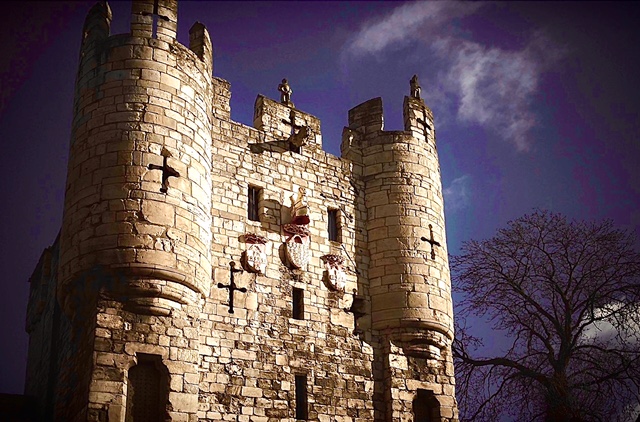
Micklegate Bar, York.  The heads of Edmund,  his father, Richard Duke of York and his uncle Richard Neville, Earl of Salisbury were displayed on spikes on top of this gate until the Yorkist victory at Towton three months later.  Thanks to Jon Ward for this atmospheric photo of the gate.

However prior to their burial at Pontefract,  Edmund and his father’s bodies were treated in  a dishonourable manner, their heads being sent to York to be placed upon spikes atop  Micklegate Bar. This ignoble act while no doubt adding to Cicely’s heartache only served to spur the Yorkists on.  A terrible reckoning would follow.  Determined to avenge the deaths of his father and brother Edward would decisively crush the Lancastrians at Towton a short three months later on the 29 March 1461.  One of the first acts by Edward after his victory at Towton was to have the heads of his father and brother retrieved from their terrible display and sent to Pontefract to be interred with their remains.   There then followed a puzzlingly long lapse of  time that has never been explained,  as far as I know, until in July 1476, York and Edmund were both ceremoniously reburied in the family mausoleum at  Fotheringhay in the chancel of St Mary’s Church,  although it is unclear whether Edmund was buried in the same vault as his father or in the Lady Chapel.  I will return to this later.

IMG_8582

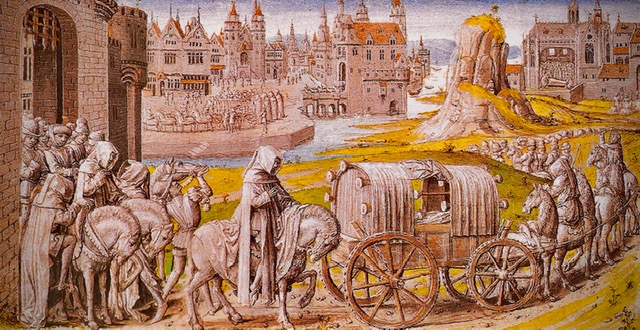
This depiction of the Funeral Cortege of Richard II leaving Pontefract Castle leaves us a clue as to how the cortege of Edmund and Richard Duke of York may have appeared. Berlin State Library’s Prussian Cultural Heritage Department.  Wikimedia.  

Nineteen years later, when Cicely’s time came,  she was interred, a papal indulgence on a ribbon around her neck,  presumably in her husband’s vault on the north side of the high altar and  according to the request in her will : beside the body of my most entierly best bloved Lord and housbond’.   Leyland’s account written before the destructions wrought during the Dissolution and final demolition of  1572  states that Edward IV had instructed that his father’s tomb was ‘to be layid on the north side of the highe altar adding where  ‘also is buried King Edward the 4. mother in a vaulte over which is a pratie chapelle(3).    However In 1573 on the instructions of Elizabeth I,  Edmund’s parents remains were moved together into a new joint tomb built to replace the by then badly damaged original,  where they rest to this day.  The Lady Chapel, where it is thought Edmund was buried, was destroyed during the reign of Edward VI and it is not known whether Edmund was found and  re-buried with his parents – no mention of it was made – or found and lost again or still remains undiscovered.     It would appear, sadly, that his remains were forgotten about at the time and are now lost.   Hopefully whether his remains were found or not, they still lay not far from his parents.

IMG_8588

Plan showing the present parish church to the left and the destroyed collegiate church  to the right.    The Lady Chapel where Edmund was believed to have been buried is shown to the east.  Edmund’s parents were  originally interred to the north of the altar which is marked by a cross and between the quire (choir) and the Lady Chapel.   The badly damaged collegiate church was finally  demolished in 1572 and while Edmunds parents were reinterred in a new tomb north of the new altar it is unclear whether Edmund’s remains were discovered when the Lady Chapel was demolished.  Unless he was interred with his parents in the new tomb sadly his remains have been lost.   They may well still be in the original burial place, perhaps a vault which was undisturbed when the demolition was taking place.  

Untitled.png

The tomb of Edmund’s parents Richard Duke of York and Cicely Neville.  It is unknown whether Edmund was reburied with his parents.  Tomb erected at the instruction of Elizabeth I.  

  1. Cecily Duchess of York p.80.  J L Laynesmith.
  2. Excerpta Histórica: Or, Illustrations of English History p.p 8.9, Samuel Bentley
  3. Creating and Recreating Yorkist Tombs in Fotheringhay online essay Sofija Matich and Jennifer S Alexander.

Continue reading “Edmund, Earl of Rutland, a life cut short – His burial at Fotheringhay.”

Elizabeth of York – Her Privy Purse Expenses

Henry_VII_in_Mourning-1.jpgHenry VII and his children in mourning for Elizabeth of York.  An idealised presentation of Henry, his children ,  Margaret and Mary  sitting in front of the fire while a young Henry jnr weeps into his mother’s empty bed.  From the Vaux Passional, a 15th century manuscript.

Elizabeth gave birth to her son Arthur on the 20 September 1486.    Arthur’s life was destined to be short and he died on 2 April 1502.  And so the fickle wheel of fortune turned once more with Arthur’s parents feeling the same pain, despair and shock that are recorded as having engulfed Richard lll and his Queen, Anne Neville on the death of their small son Edward.  Perhaps Henry’s pain was cushioned somewhat by the knowledge that he had a spare heir, Henry Jnr.

Elizabeth is often quoted as having said, an in attempt to comfort Henry that they were young enough to have another child. (1)   Whether she said this or not – how would such a personal conversation be known to others?  –  as sure as eggs are eggs –  Elizabeth did indeed become pregnant soon after , a pregnancy that we all know resulted in her death.  So thus in another strange coincidence Henry also lost his wife a few short months after the death of their son as did Richard.

IMG_5064.JPG

Elizabeth’s  bronze effigy on her tomb, Westminster Abbey, Torrigiano

image

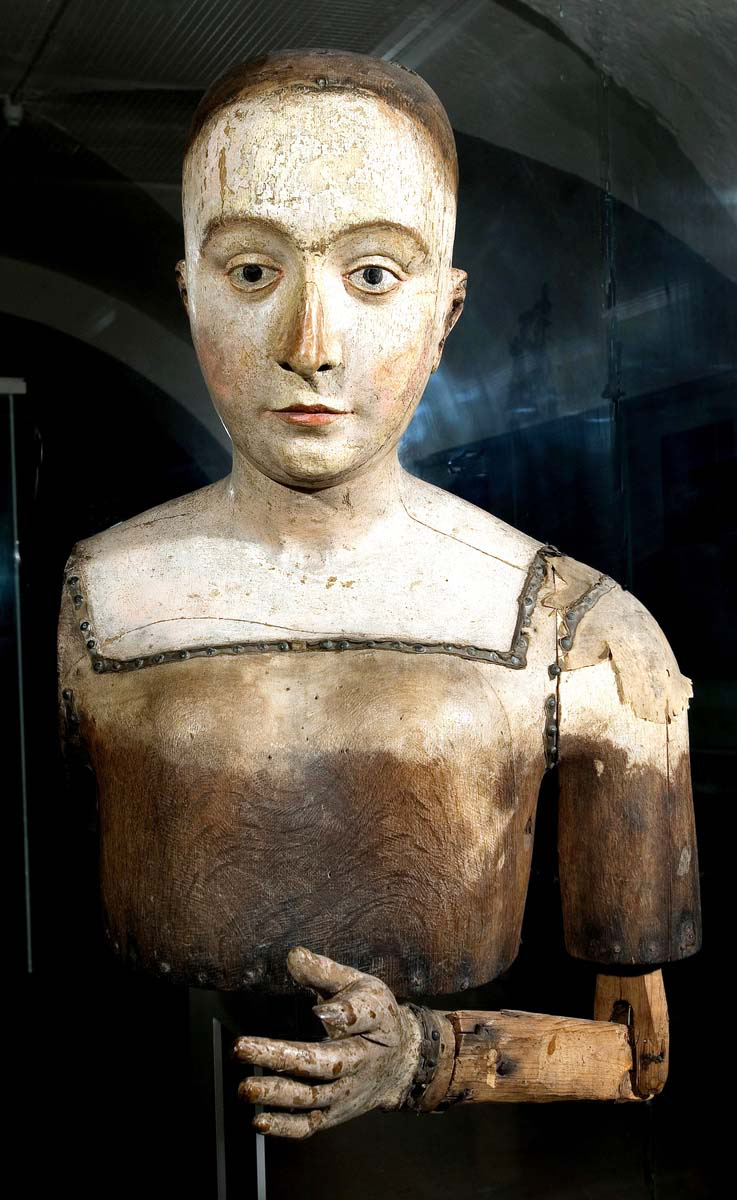
Elizabeth’s funeral effigy probably modelled on her death mask @Dean and Chapter Westminster Abbey

It is said by some that Henry and Elizabeth’s marriage was a happy one, they both growing to love one another over the years.  Alternatively you will read that she was considered by some to have been kept subservient and that Henry was not uxorious.  You will have to form your own opinions over that  one dear reader.   Either way she has my sympathy with regard to her mother-in-law,  the formidable Margaret Beaufort,  to whom Henry remained close.   Indeed a certain yeoman of the crown John Hewyk ‘grumbled that he would have spoken more to the Queen  had it not been for that strong whore, the King’s mother ‘.(2)  with a Spanish observer  writing that ‘she is kept in subjection by the mother of the king. (3).  

However there are some examples that demonstrate that Elizabeth was not entirely a  push over  nor totally ‘eclipsed’ by her mother-in-law    Rosemary Horrox gives us one such example where a Welsh tenant appealed to Elizabeth over an injustice involving the king’s uncle,  Jasper Tudor, which led to Elizabeth ‘responding with a firm letter to the said Jasper. (4)    Bravo Elizabeth!

1466-1503 by unknown artist c.1502 the royal colle tion.jpg

Portrait by an unknown artist c 1503

Although much  has been written about her death and funeral ,  and I won’t go into that here,  interesting as it is,  nothing much is known about her personal feelings towards her husband,  the demise of the House of York,  the treatment of her mother, Elizabeth Wydeville,  and Elizabeth’s  ‘retirement’ in to Bermondsey Abbey,  the fates of her brothers or the identity of Perkin Warbeck.   However her Privy Purse Account have survived and perhaps some thing of her nature and true feelings may be gleaned from them.

Sir Nicholas Harris Nicholas, writing in 1830, was  editor of  The Privy Purse Expenses which also include   a memoir.  Sir Nicholas seems to have been a little in love with Elizabeth,  whose motto was ‘Humble and Reverent’ attributing to her most if not all of the virtues which adorn the female character’.   He notes that her expenses consist chiefly of rewards to persons who brought her presents with often the reward being of greater value.  Nothing was too contemptible to be received, nor was any person deemed too humble..Among the articles presented to Elizabeth were fish, fruit, fowls, puddings, tripe, a crane, woodcocks, a popinjay, quails and other birds, pork, rabbit, Llanthony cheeses, pease cods, cakes, a wild boar, malmsey wine, flowers, chiefly roses, bucks, sweetmeats, rose water, a cushion, and a pair of clarycords’.   The bearers of these gifts would never go away empty handed.

There were disbursements for servants wages, for preparing her apartments when she removed from one place to another,  which she did frequently, for conveying her clothes and necessary furniture, for messengers, for the repairs of her barge and the pay of the bargemen, for her chairs and litters, the purchase of household articles, for silks, damasks, satins, cloth of gold, velvet, linen, gowns, kirtles,  petticoats for her own use or for the ladies she maintained;  for jewellery, trappings for horses, furs, gold chains and for the charges of her stables and greyhounds;  for the support of her sister Lady Katherine Courtney and her children, including the burial of some of them;  for the clothing and board of her Fool, gambling debts and so much more.  Sir Nicholas notes that ‘her Majesties revenue was not adequate to cover all these demands and she was ‘not infrequently obliged to borrow money‘.  A look at Henry’s Privy Purse accounts shows that he, perhaps  being a good egg or because it was the least he could do under the circumstances,  frequently bailed his wife out although it was expected  these loans were to be repaid.

The accounts which cover the last year of Elizabeth’s life are too detailed to go into her but I list here a few :

MAY 1502 Item to Frary Clerc of St Johns for the buryeng of the men that were hanged at Wapping mylne  8 shillings

There are several examples of money being given to servants of her father, King Edward, who had perhaps fallen on hard times such as ;

JUNE 1502 Item ..and to a pore man in aulmouse somtyme being a servant of King Edwards IV   2s. 4d.  as well as cloth to a woman who had been nurse to her brothers –

Help was also given to people who had served other members of  her family :

DECEMBER 1502 item 3 yards of cloth delivered by commandment of the Queen to a woman what was ‘norice’ to the Princes brothers to the Queen grace

DECEMBER 1502 Item to a man of ‘Poynfreyt saying himself to lodge in his house Therl Ryvers in tyme of his death in almous  12 shillings’

For herself, other than her gambling debts , Elizabeth seemed to keep an eye on the purse strings with numerous mentions of her gowns being repaired.

DECEMBER 1502 item to the Quenes grace upon the Feest of St Stephen for hure disport at cardes this Cristmas 100 s.

She appeared to wear a lot of black during the period these accounts cover when  presumably the court were in mourning for Arthur –  an example being

NOVEMBER 1502 Item ..to Henry Bryan for 17 yards of black velvet for a gown for the Queen at 10 shillings 6d the yard.    13 yards of black  satin  delivered to Johnson for a riding gown and a yard  of black velvet for an edge and cuffs for the same gown.  Item black bokeram for lining  of the same gown, sarcenet for ‘fentes’ for the same gown and an elle of canvas for lining of the same gown –   although on a lighter note in

JUNE 1502 Item ..to William Antyne coper smyth for spangelles settes square sterrys dropes and pointes after silver and gold for garnisshing of jakettes against the disguysing lvj viiij d.

AUGUST 1502 ..to my Lady Verney for money by hur delivered by commaundement of the Queen to Fyll the Kinges paynter in reward   3s. 4d.  Item to John Reynold payntour for making of divers beestes and othere pleasires for the Quene at Windsore 10 s.

A short, interesting appraisal of Elizabeth including her expenses were included by Ann Wroe in her biography of Perkin Warbeck.  ‘The queen seems to have been a gentle passive creature.  Her world was one of frugally mended gowns, wicker baskets and works of charity.  She had little money of her own her allowance being one eighth of the king’s and she often gave it away. On Maundy Thursday she distributed new shoes to poor women but her own shoes cost no more than 12d each and had cheap latten buckles…Ayala writing in 1498 thought her’ beloved because she is powerless’ and believed as many did that her formidable mother in law kept her in subjection. Although Margaret  Beaufort showed her kindness she was undoubtedly a stronger character.  A citizen of Nottingham once tried to speak to Elizabeth when she visited that city, their pleasant conversation was stopped by that ‘strong whore’, Henry’s mother,  and Elizabeth acquiesced .(5)

Later it is poignant to read about the costs of trying, vainly,  to save her life when she was stricken  after giving birth to her last child, Katherine.

Itm To James Nattres for his costes going into Kent for Doctour Hallysworth phesicon to comme to the Quene by the Kinges commaundement.  Furst for his bote hyre from the Towre to Gravys ende and again iiij s, iiij d.   Itm to twoo watermen abiding at Gravys ende unto suche tyme the said James came again for theire expenses viij d.    Itm for horse hyre and to guydes by night and day ij s.iij d.and for his awe expenses xvj d.’

Elizabeth’s midwife Alice Massy was not forgotten; her wages being 12 shillings.

And thus Elizabeth,  with exemplary timing,  died on the anniversary  of her birthday, 11 February.  Its said that Henry took her death badly and it would seem that his behaviour and attitudes took a turn for the worse after he had been widowed but that is another story.   Perhaps theirs was not a passionate love,  duty having bound them together,  but I do get the impression from their Privy Purse accounts that they did rub along together quite nicely.

The inscription on her tomb reads –

‘Here lies Queen Elizabeth, daughter of the former King Edward IV, sister of the formerly appointed King Edward V, once the wife of King Henry VII, and the renowned mother of Henry VIII. She met her day of death in the Tower of London on the 11th day of February in the year of Our Lord 1502, having fulfilled the age of 37 years’

54af3563478c8df0d0e704730308ac7a.jpg

  1. Collectanea v.373-4 Leland
  2. Records of the borough of Nottingham 1882-1956 W H Stevenson and others.
  3. CPS Spain 1485-1509, 164
  4. Elizabeth of York, Oxford Dictionary of National Biography, Rosemary Horrox
  5.  Perkin Warbeck: a Story of Deception Ann Wrote pp 458.9

THE TOMB OF BLANCHE MORTIMER, LADY GRANDISON. ST BARTHOLOMEW CHURCH MUCH MARCLE

image

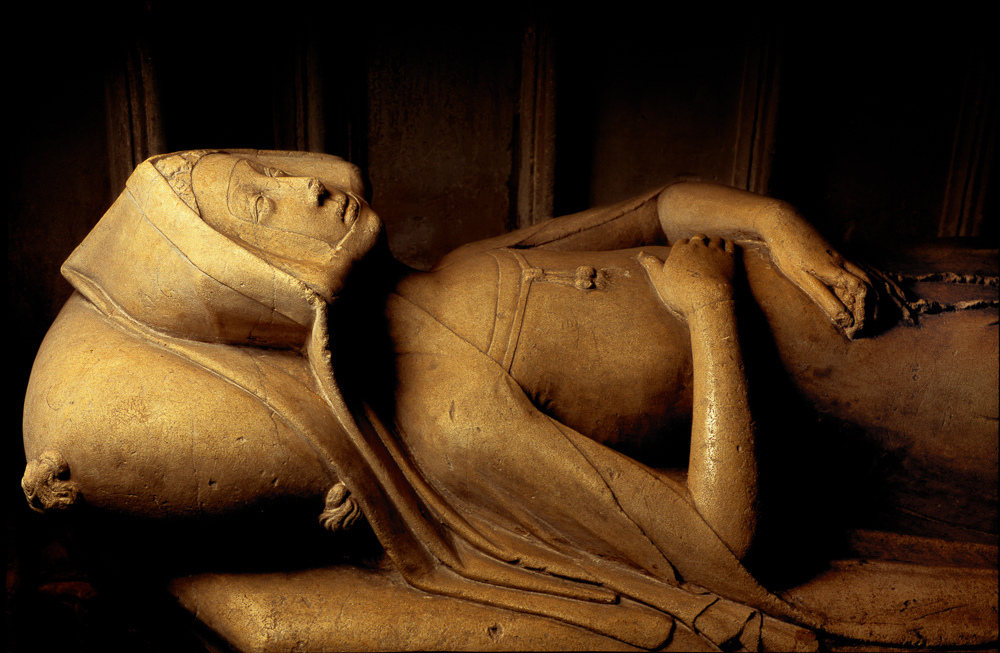
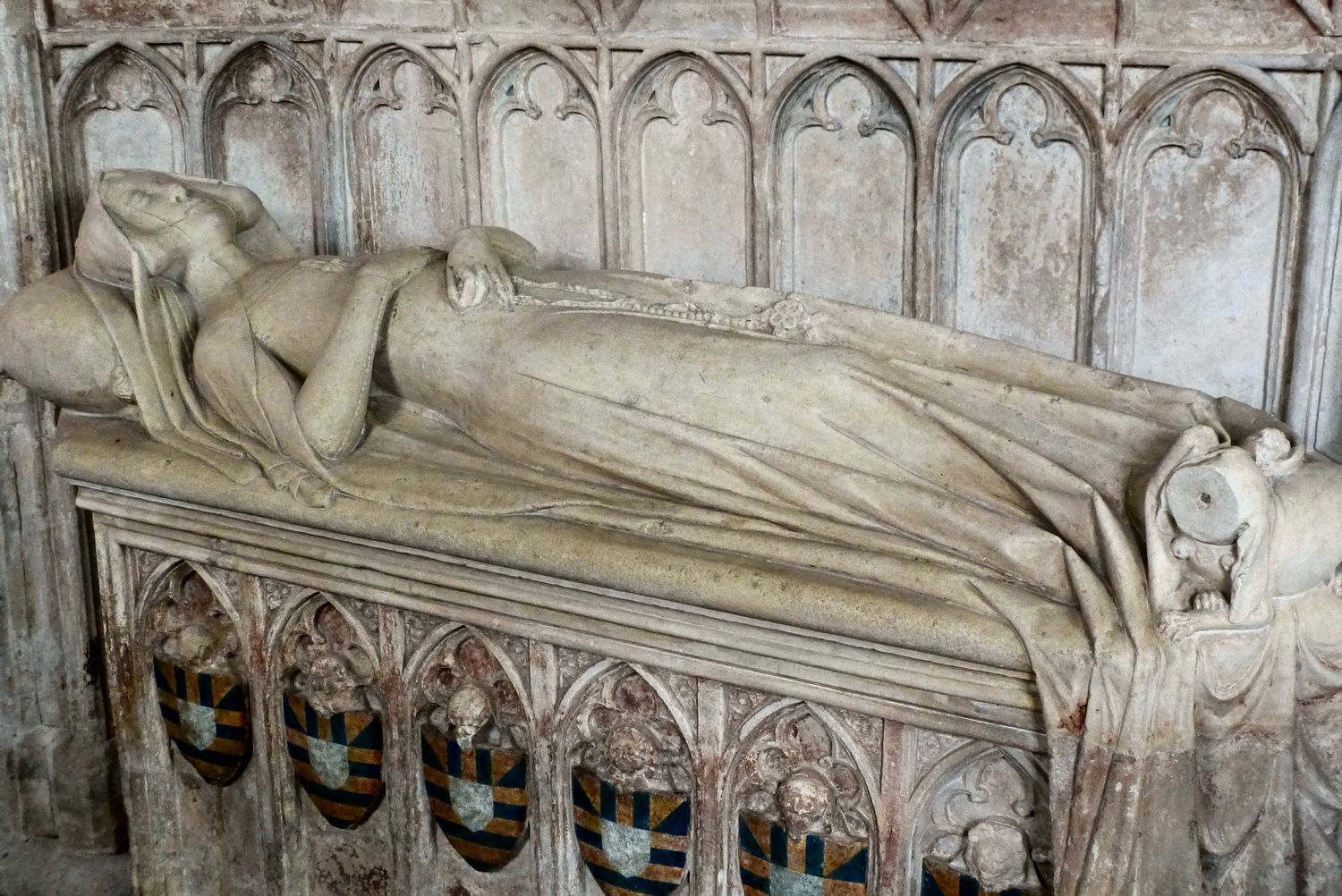
The graceful effigy of Blanche Mortimer atop her tomb her head resting on a tassled cushion.St Bartholomew Church,  Much Marcle, Herefordshire.  Photo with thanks to Bill Jewitt @ Flikr. 

In the chancel of the church of St Bartholomew,  Much Marcle, Herefordshire can be found one of the most beautiful tombs chests in England, that of Blanche Mortimer, lady Grandison.  I happened by chance on this lovely monument  some years ago.  I stood there entranced, unwilling to leave.  Blanche’s tomb has been described by Nikolaus Pevsner as follows “The head is strikingly beautiful, eyes closed and lips slightly parted.  Beautiful hands with long fingers..moreover the most surprising demonstration of realism in the way of her long skirt hangs down over the tomb chest“.   Simon Jenkins in his book “England’s Thousand Best Churches describes the monument as “An image as lovely as any bequeathed by a medieval church….the effigy might be the original for Sleeping Beauty‘.    English Heritage describe it as one of the finest of its date in England.

IMG_3649.JPG

Close up of the attention to detail in the tightly buttoned sleeves of Blanche’s gown. Photo Pam Walker/Clothing Lexis Project

image

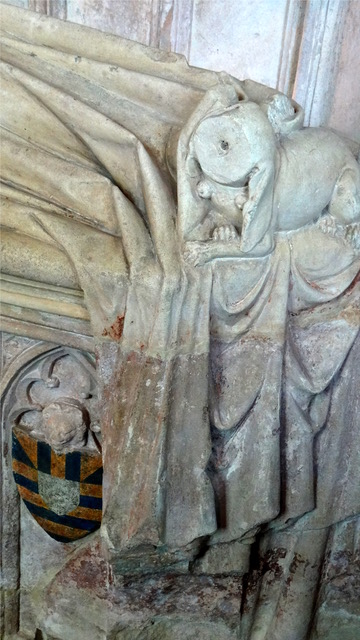
Note the little dog lying at the bottom of Blanche’s feet.  His face is missing but he has still kept hold of his collar adorned with bells and his long floppy ears.Photo thanks to richardiiiworcs.co.uk 

IMG_9952

The tomb shown with its heraldic badges after renovation.  Photo Medieval Pembridge.

Blanche (c.1316-1347) was probably born at Wigmore Castle and was the daughter of Roger Mortimer, Ist  Earl of March (1287-1330)  and Joan de Geneville, Baroness Geneville (1286–1356).   Roger would go on to famously rebel against King Edward II.  He and Queen Isabella were lovers and it has been speculated they may have arranged the murder of Edward whose death to this day is ‘shrouded in mystery’(1).  Roger  was eventually overthrown by Edward’s son, Edward III and executed, but that is another story.    Blanche was married to Sir Peter Grandison (d.1358) when she was 14.   I was rather disappointed to find out he is not buried beside her but lies in Hereford Cathedral.  Little is known of their relationship but the meticulous care, craftsmanship and attention to detail lavished on the design  and building of the tomb would indicate that Peter Grandison loved and missed his wife. And there, atop her tomb, lies Blanche to this day.  Her face, serene and lovely, her long gown hanging down gracefully in folds over the front of the tomb chest and her hands, beautifully carved, hold her rosary, although alas her little dog is missing his head although he still retains his collar adorned with bells and his long floppy ears.

IMG_3664.JPG

img_9942

Heraldic shield above the tomb.  Note the little floppy earred dog – very similar to the little dog that lies at the bottom of Blanche’s feet.   Is it in fact a carving of the same dog – perhaps one of Blanche’s favourite pets?  Photo thanks to richardiiiworcs.co.uk

51377343716_4fb70b70ba_5k

Blanche’s faithful dog, damaged but still wearing his collar bedecked with bells.     Photo thanks to Rex Harris @ Flikr.

IMG_3674.JPG

Blanche’s husband,  Sir Peter Grandison’s  tomb in the Lady Chapel,  Hereford Cathedral, Hereford. Photo Church Monuments Society.

But that is not the end of the story for Blanche.  For while her monument was being restored, Blanche’s lead coffin was found resting within the tomb chest.   This was most unusual as it has been thought that tomb chest monuments were either built on top or nearby the burial which was usually in vault or on occasion beneath the church floor.    It is now known, through this discovery,  that some coffins were placed inside the tomb chest itself.  After the restoration was completed, led by sculpture conservator Michael Eastham, the coffin was returned to the tomb chest with new steel supports to provide future protection.  The lead coffin was briefly examined but the decision was made not to disturb it.

IMG_3645.JPG

Blanche’s lead coffin.  Photo with thanks to English Heritage.

IMG_3646.JPG

Blanche’s effigy prior to replacement on top of the tomb chest. Photo English Heritage.

IMG_3673.JPG

St Bartholomew’s very own ‘Sleeping Beauty’.  Unknown photographer. 

IMG_3644.JPG

Blanche’s effigy after renovation – her little dog, although damaged,  still lying at her feet..Photo with thanks to David Ross/Britain Express

And so we leave Blanche, serene and lovely,  with her little dog nestling in the folds of her gown for perpetuity –  St Bartholomew’s very own Sleeping Beauty.

  1. Mortimer, Roger, first earl of March. (1287–1330). R R Davies ODNB January 2008.

If you enjoyed this post you might also like THE MEDIEVAL DOGGIE AND EVERYTHING YOU EVER WANTED TO KNOW ABOUT THEM

St Andrews, Wingfield and the tombs of the de la Poles

The de Berkeley Heart Burials St Giles Church , Coberley

Ranulph Lord Dacre of Gilsland:  The Lord who was buried with his horse.

THE MONUMENTAL EFFIGIES OF GREAT BRITAIN : CHARLES A STOTHARD