
Warwick Castle birthplace of both the Neville sisters. Photo with thanks to Scotty Rae @Flkr.
Richard Neville and Anne Beauchamp, Earl and Countess of Warwick had in their long marriage just two daughters. If this led to initial disappointment there was always Plan B, that illustrious marriages be eventually arranged for them and strong links forged with other noble families. This is indeed what happened with both sisters marrying Edward IV’s brothers, George and Richard Plantagenet. Isobel, the elder sister, was born 5 September 1451 at Warwick Castle, her sister Anne on the II June 1456 also at Warwick. The two sisters are often described as ‘tragic’ perhaps because they both died in their 20s. That being said it’s undeniable that, as members of one of the most powerful noble family of the time, they would both have enjoyed a sumptuous lifestyle that could only have been dreamt about by the majority of the population of the time.

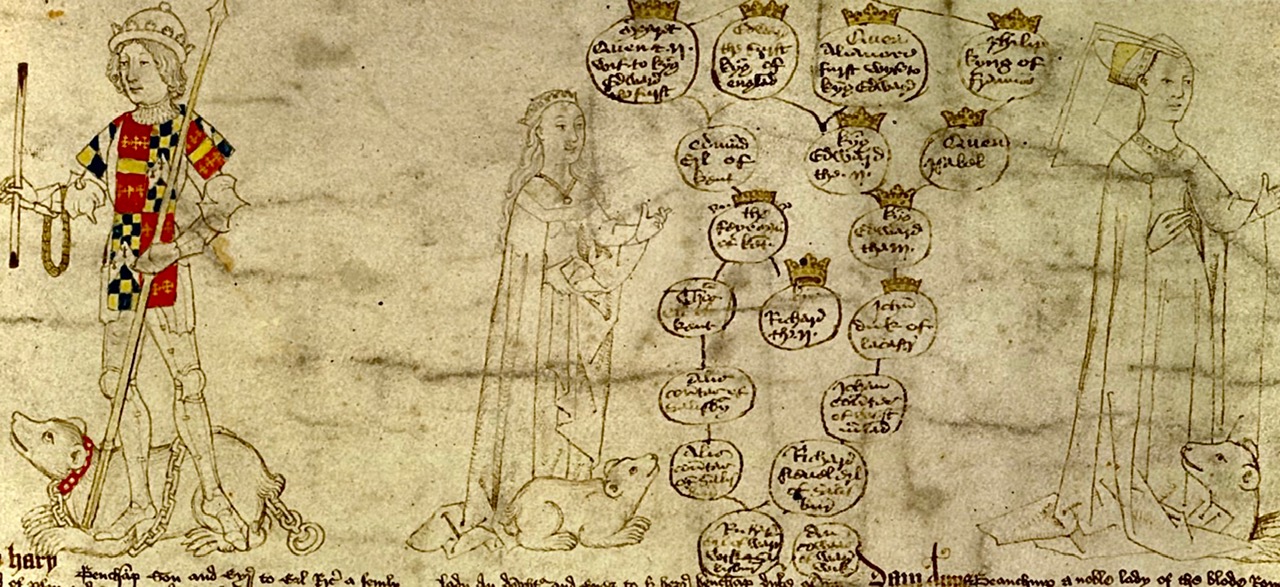
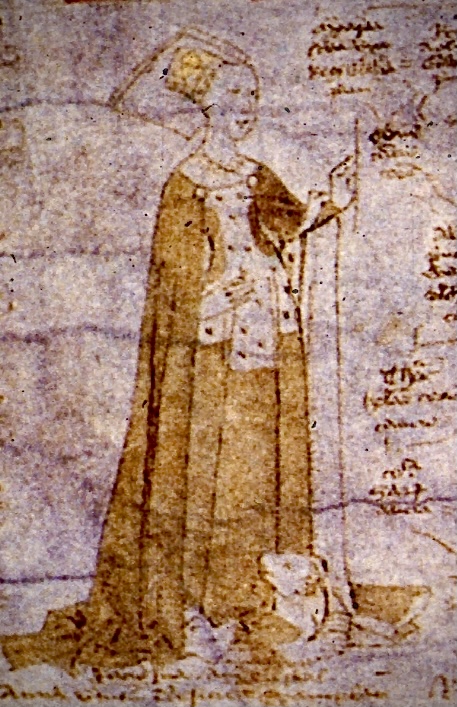
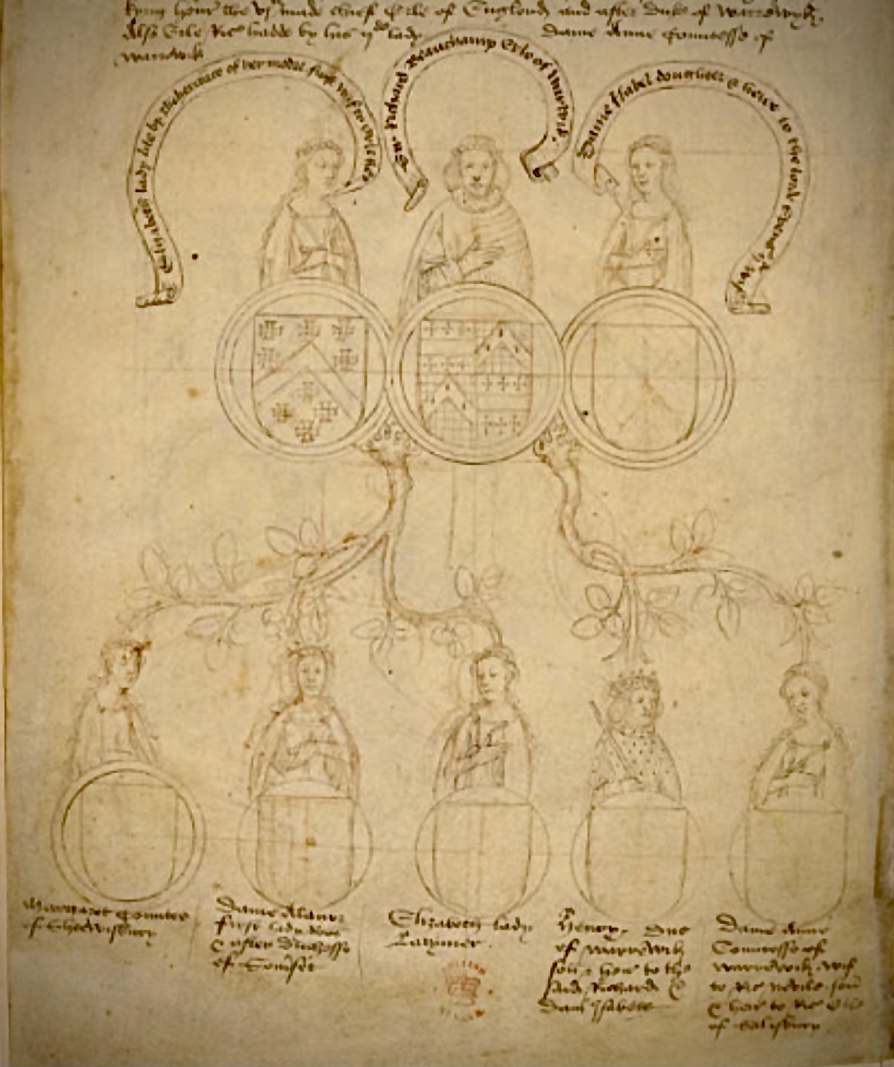
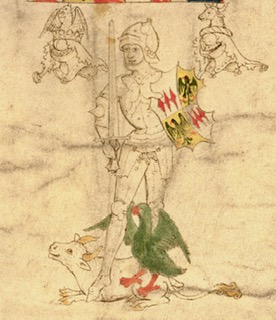
The Neville sisters parents, Richard Neville ‘The Kingmaker’ and Anne Beauchamp. Rous Roll Latin edition. Donated to the College of Arms by Melvyn Jeremiah.
As promised by her father, Isobel aged 18, was married to 19 year old George, Duke of Clarence, thus making her a young and very probably highly attractive Duchess of Clarence. Isobel is often depicted in popular fiction in a never ending tedious trope as being rather brow beaten by an oafish and alcoholic husband. And yet there is absolute nothing in primary sources that implies anything like this at all. In fact primary sources tell us that George was handsome, ‘right witty‘, a very loyal friend who protested passionately about the execution of one of his followers, extremely eloquent, pious, possessed a sense of humour, according to Rous a great almsgiver as well as being a ‘grete bylder‘ and nothing at all to suggest he was an alcoholic. The late historian John Ashdown-Hill pointed out in his biography of George that the belief he was an alcoholic is a myth spawned from the traditional story that he was executed by drowning in a butt of malmsey (1). That George did not, as far as is known, have any illegitimate children, something rather unusual for a 15th century nobleman, would indicate that George was true to Isobel. There are also indications that he may have gone to pieces on her death and rightly or wrongly believed that she and their baby son had been poisoned. This led to the Ankarette Twynyho affair but that is another story for another day.
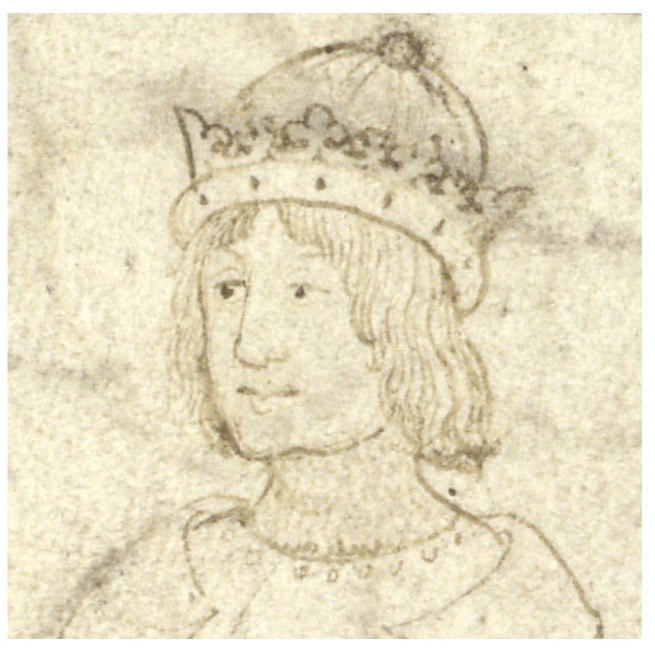
George Duke Clarence. Rous Roll. Motto ex Honore de Clare.
Details of Isobel are rather scant. But we know that on Tuesday 11 July 1469 life begun to change for her in a dramatic way when she and George were married in Calais, her father being Captain of that place, a marriage that had been furiously vetoed by Edward IV, his relationship with her father having grown more and more hostile. The papal dispensation that was required – they were blood relations in the second and third degree – had been granted on 14 March 1469. The ceremony had been performed by the bride’s uncle, George Neville Archbishop of York, and was followed by five days of festivities. However soon after the celebrations were over her father and husband sailed to Sandwich while the new duchess, her mother and sister remained in Calais no doubt in states of high anxiety (2). Warwick and his new son-in-law’s plan was to oust the voracious and annoying Wydevilles once and for all – denouncing them in public for their ‘disceyvabille covetous rule‘. At the battle of Edgcote, on the 24 July 1469, the results went their way. Earl Rivers and his son John Wydeville were captured and both executed at Kenilworth on the 12 August. Edward, although not disposed, was in their custody. Rumours were circulating at the time that Edward was a bastard. If this were the case then George would be the rightful king and Isobel queen. What’s not to like? They appeared to be on a roll. Although the precise date is not known it was around this time that the Countess, Isobel and Anne returned to England. However man makes plans and the gods laugh as they say and Warwick and George’s plan soon went pear-shaped. Warwick had no choice other than to release an uncooperative Edward. It seemed an uneasy peace was made between the trio for the time being at least, forced upon them somewhat by the Council. It’s highly unlikely given the personalities involved that any of the men were happy bunnies and things may therefore have been a bit sticky for the ladies who no doubt had to put up with some melodramatics in what must have been a period of more intense worry in their lives. They didn’t have to wait too long for things to implode. In March 1470 a rebellion in Lincolnshire led by Sir Robert Welles, but highly likely fermented by Warwick, led to Edward marching northwards to suppress it. Warwick and George struck while the iron was hot. Leaving their family at Warwick, they travelled eastwards to attack Edward. Failing in that endeavour they returned to Warwick to pick up the ladies with Isobel now being well advanced in her first pregnancy and made their escape to Calais. Approaching Calais they were shocked to be refused entry by Warwick’s deputy, Lord Wenlock. To add to their woes Isobel went into labour. Lord Wenlock relented, albeit only slightly, and sent two flagons of wine to help alleviate Isobel’s agony. In what must have been a nightmare scenario probably witnessed by the fourteen year old Anne, Isobel’s baby was born on the 16th April but died almost immediately, the little body being buried at sea. The beleaguered and no doubt bedraggled band, led by Warwick and Clarence, were now no more than ‘defeated traitors’ and life must have suddenly seemed very bleak for the two sisters. Arriving in Honfleur they were welcomed by representatives of King Louis XI, who was no doubt tickled pink to see this welcome turn of events with the relationship between Edward IV and Warwick now completely unravelled. But Warwick was not quite ready to capitulate. His back against the wall, a meeting was arranged between him and his once arch enemy Margaret of Anjou. Although at first the ‘Quene was right dificle’ a marriage was now suggested between Margaret’s son, Edward of Lancaster and Anne (3). We will never know what Anne or the young bridegroom-to-be thought about this – nor what the Clarences thought about it either – but it can be easily surmised. Isobel now understood it was not she who would be queen in the fullness of time but her younger sister instead. George was downgraded to Duke of York and only in the event that the marriage between Anne and Edward remained childless would he ever become king. It must have stung mightily and Paul Murrey Kendall goes so far as to suggest that George was now demoted to an embarrassing encumberance (4). On the 25 July 1470 in the cathedral of St Maurice at St Angers Anne and Edward were formally betrothed. On 9 September and before the marriage, on or about the 13th December at Amboise, had been celebrated, Warwick and George headed back to England, leaving their ladies once again although Isobel would leave France and join George by the end of the year (5). On their arrival back in England Edward was forced to hastily take ship at Bishop’s Lynn (now King’s Lynn) and flee to the low Countries for a short time whereupon on his return – known as The Arrivall – an understandably miffed George would abandon his father-in-law and be welcomed back into the bosom of his family. George has been accused of being disloyal, a turncoat etc., but yet if thought about, his actions become understandable and no worse than the actions by other noblemen of the time including Edward IV. However it should not be forgotten that George, according to The Historie of the Arrival of King Edward IV 1471 did attempt to bring about a rapprochement between Edward and Warwick. I will return to this below. No doubt these travails impacted on his marriage but perhaps Isobel, who was closest to him, fully understood the angst he was experiencing especially as it mostly emanated from the actions of her own father. This is not meant as a criticism as clearly Warwick found himself between a rock and hard place as result of the extremity of the situation he found himself and his family engulfed in. The root cause and catalyst of all this turmoil was Edward’s cataclysmic marriage and cavalier attitude toward Warwick who, according to historian A J Pollard, he ‘progressively marginalized’ despite his long history of loyal service to Edward’s father, Richard Duke of York and also to Edward himself. Pollard also makes it clear, should there be any doubt, that ‘Edward IV owed his throne to Warwick and his kinsmen’ (6). Paul Murrey Kendall in his biography of Warwick wrote that George ‘eager to try to refurbish his honour by reconciling his royal brother and father-in-law’ tried to bring Warwick back to the Yorkist fold sending a messenger to him (7). The author of the Arrivall of King Edward IV 1471 wrote
‘Sone aftar this the Duke of Clarence, beinge right desyrows to have curyd a goode accorde betwyxt the Kynge and th’Erle of Warwyke ; not only for th’Erle, but also for to reconsyle therby unto the Kyngs good grace many lordes and noble men of his land, of whom many had largly taken parte with th’Erle and this for the weale of peax and tranquilitie in the land, and in advoydynge of cruell and mortall were, that, of the contrary, was lykly, in shortyme, to enswe ; he made, therefore, his mocions, as well to the Kynge as to th’Erle, by messagis sendynge to and fro, bothe for the well above sayde, as to acquite hym trwly and kyndly in the love he bare unto hym, and his blood, whereunto he was allied by the marriage of his dowghtar (8).
This offer Warwick, that larger than life warrior, scornfully spurned and went on to lose his life at Barnet on the 14th April along with his brother, John, Marquis of Montague, a loyal man but yet another caught between a rock and hard place. Such were the times. On the same day as the death of her husband the Countess of Warwick arrived in Southampton where she immediately took flight into sanctuary at Beaulieu Abbey, Hampshire. We know that Anne remained with her mother-in-law until after the Battle of Tewkesbury.

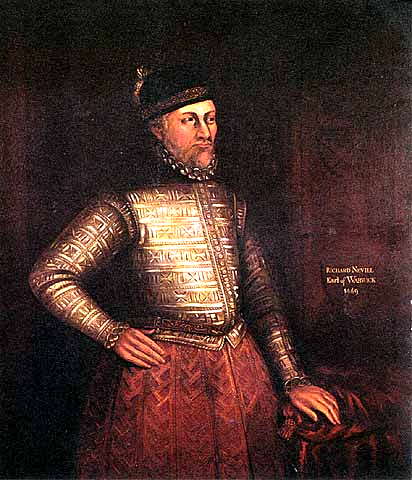
Isobel and Anne’s father Richard Neville, Earl of Warwick, later known as the ‘Kingmaker’. Artist’s impression Gilbert Bayes.
It was in the aftermath of Tewkesbury that Isabel and George resided at their London house, L’Erber, once the home of her father. Perhaps George decided it would be prudent to be close to Westminster, the epicentre of where arguments and decisions were being made about the Warwick inheritance. Anne would be sent to live with them and it was at L’Erber that Richard of Gloucester, with marriage in mind, attempted to find her. According to the Croyland Chronicler George hid her in an attempt to thwart his brother’s marital plans and thus prevent him from obtaining half the Warwick inheritance. There is the charming story related by the Croyland Chronicler that he eventually found Anne disguised in the garb of a cookmaid:
‘Verum astutia dicti ducus Gloucestriae tantum praevaluit quod filiam ipsam in habitu coquinario intra civitatem Londoniarum repertam ad sanctuarium Beati Martini transferri fecerit’.
In other words, an astute, and no doubt determined Richard tracked Anne down whereupon he took her to the safety and sanctuary of St Martin’s-le-Grand until the arguments regarding the inheritance were concluded and resolved by Edward himself. This story is rather extraordinary and yet rings true as it’s highly unlikely the Croyland Chronicler writing so soon after the event would neither have made it up nor got the wrong end of the stick quite so badly. But I do wonder however if there was a slight modification to the story because I can’t for the life of me see how George could have forced Anne, against her will, into remaining incognito, labouring in a kitchen, in a kitchen maid’s dress, if she had not been compliant. And why would she be compliant to that? Surely there would have been more appropriate places to hide her than a hot and greasy kitchen where she, the daughter of an earl, would have stood out like a sore thumb? It makes little sense. Could the truth be that Anne, a true daughter of her father, resolved to take her fate into her own hands and decided herself to run away from L’Erber, disguising herself until she got word to Richard of her whereabouts?
We hear little of Isabel for a while but we do know that while living at Hungerford Farleigh Castle, Somerset, she gave birth to their daughter whom they named Margaret on 14th August 1473. A son, the ill fated Edward, was born at Warwick Castle on the 25 February 1475.
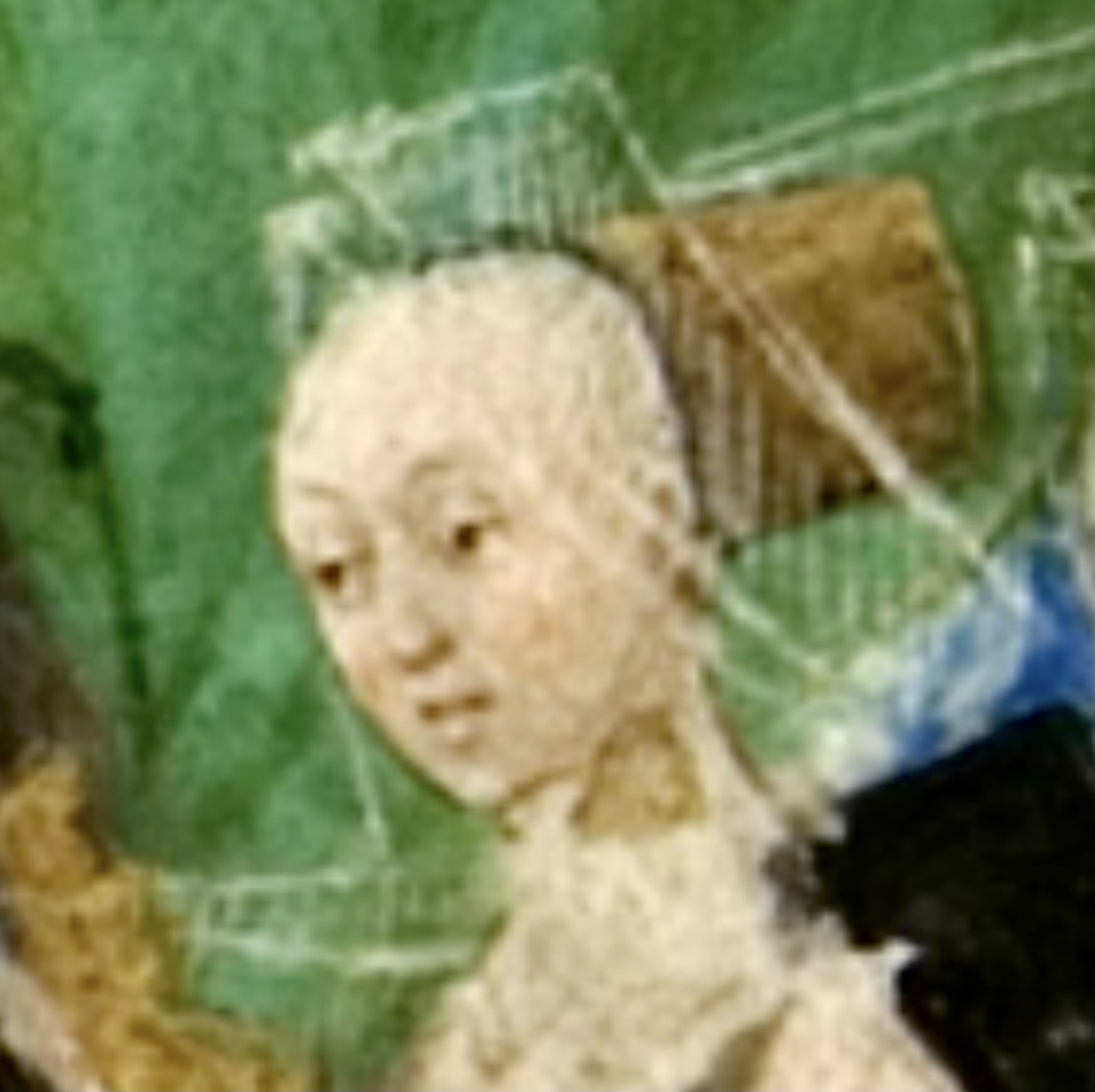
A possible portrait of Isobel from the Luton Guild Book. See The Dragonhound’s interesting post here
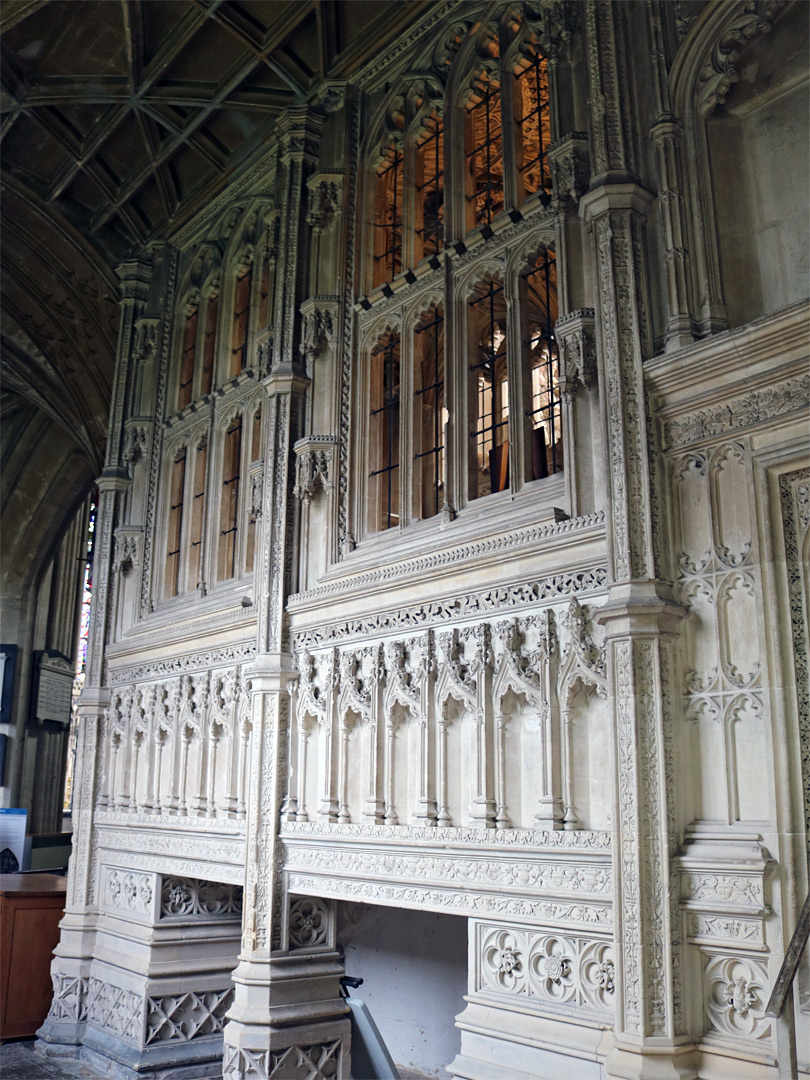
The 5th October 1476 found Isobel in the new infirmary of Tewkesbury Abbey where she gave birth to another son, Richard. Why she gave birth in the infirmary rather than in one of her very comfortable homes remains a mystery. It begs the question was she already ill, perhaps suffering from a problematic pregnancy or maybe even something else entirely? After the birth of her son Isobel was not taken home to Warwick until November 12th. Presumably she must still have been very ill as she died on the 22 December 1476 aged 25. Alternatively she may have recovered somewhat and George’s belief that she was poisoned was correct. Baby Richard followed his mother to the grave a short time later. The body of Isobel was returned to Tewkesbury for her burial where she lay in repose on a decorated hearse in the midst of the choir for 35 days while a new vault was built for her south of the altar where she was finally laid to rest on 8 February 1477. Tragedy upon tragedy was to follow with the execution of George aged 28 – described by historian Michael Hicks as a judicial murder – just over a year later on the 18 February 1478. This left the couple’s two young children orphans and after the death of their aunt and uncle, Anne and Richard, basically unprotected or at the very least in the hands of perhaps uncaring people. This especially applied to young Edward, now the Earl of Warwick, whose wardship was given at one time to none other than Thomas Grey, his father’s old enemy. His tragic story is told elsewhere. George was laid to rest besides Isobel in the vault which later became known as the Clarence Vault. The opening to the vault was later fitted with iron gates, and in the pavement above a brass inserted engraved with two suns in splendour, the badge of the House of York. with the inscription, composed by a Mr. J.T.D. Niblett:
Dominus Georgius Plantagenet dux Clarencius et Domina Isabelle Neville, uxor ejus qui obierunt haec 12 Decembris, A.D. 1476, ille 18 Feb., 1477.
Macte veni sicut sol in splendore, Mox subito mersus in cruore.
Which translates thus..
‘Lord George Plantagenet, Duke of Clarence, and Lady Isabelle Neville, his wife, who died, she on Dec. 12, 1476, he on Feb. 18, 1477.
I came in my might like a sun in splendour, Soon suddenly bathed in my own blood’
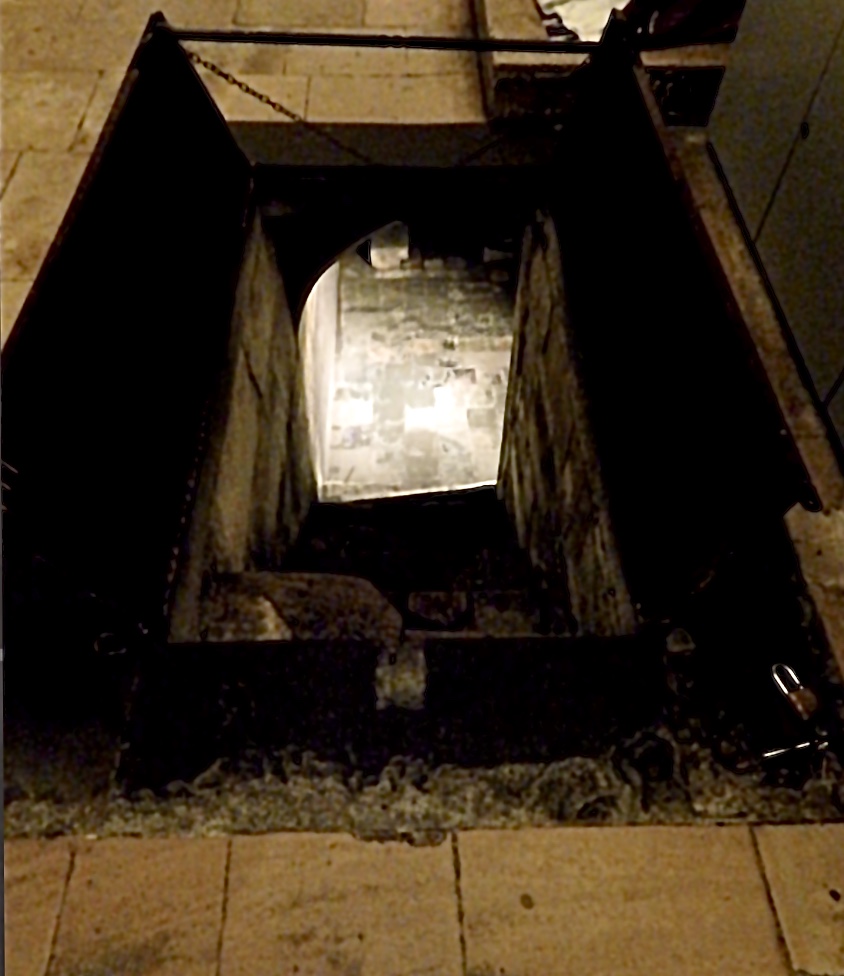
The entrance to the Clarence Vault, Tewkesbury Abbey. Photo with thanks to the Wars of the Roses Catalogue
George’s death warrant was signed by his own brother Edward IV who was later said to have regretted it, having been persuaded by his wife, Elizabeth Wydville, that George must go. Mancini wrote that Elizabeth was worried to her very bones – ‘her fears intensified’ – that if George was not ‘removed’ her children would never receive their inheritances, which, despite George’s execution was precisely what happened.
It’s unknown whether the heated quarrels that had taken place regarding the Warwick inheritance between the two brothers, George and Richard, infringed on the sisterly relationship between Anne and Isobel. If it did it may be that time healed any wounds and they remained amicable. Anne did take into her household her nephew the orphaned young Earl of Warwick (and presumably his sister Margaret) and for the young Edward it was, as it transpired, the last stable and happy period he was to experience.
After Tewkesbury, the death of her first husband and the inheritance problems being sorted, not to everyone’s liking it should be said, the papal dispensations necessary for Anne and Richard to be married were secured. Presumably if Anne was in London at St Martin-le-Grand, as mentioned above, Richard may have stayed at his mother’s home, Baynard’s Castle until the marriage took place which may have been in St Stephens Chapel, Westminster. Afterwards they turned northwards to Middleham, which they both knew so well, and where they were to spend most of their married lives. They also gave a home to Anne’s mother, the widowed countess of Warwick, although it is uncertain where. They were only to have one son, Edward of Middleham. There is some confusion about his date of birth but Annette Carson has suggested it was between mid June and early September 1476 (9). It was probably for Edward that the countess had the Beauchamp Pageant, the pictorial history of her father’s life created. The years spent at Middleham may have been among the happiest years of the married life of the Gloucesters but of course all this changed virtually overnight with the sudden death of Edward IV in April 1483. Richard travelled to London and at first gave his support to his nephew, the thirteen year old Edward V. In a story that is well known and covered at great lengths elsewhere Richard found out the shocking truth about his brother’s bigamous marriage probably via Bishop Robert Stillington (d.1491). As we know the result of all this was that it was Richard and Anne who were crowned king and queen. The Kingmaker’s hopes that one of his daughters would become queen were realised although probably not in quite the way he had envisaged.
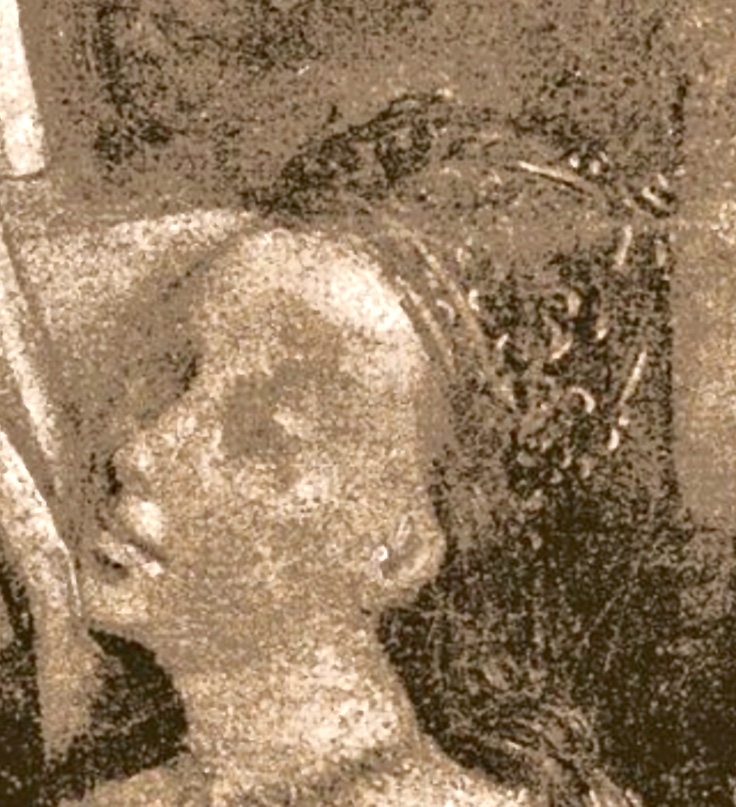
A possible portrait of Queen Anne Neville. Eton Wall painting.
The end of the story reads like a tragic novel. Richard and Anne’s small son died some time in April 1484, gone before he had scarce been here. Rous tells us that he was ‘taken with honour to a grave at Middleham’. Anne and her husband were described as being besides themselves with grief and she was to follow her son to the grave less than a year later on the 16th March 1485. Richard gave her a magnificent funeral ‘befitting a queen‘ in Westminster Abbey before scarce five months later Richard too lost his life at Bosworth. He was not given the time needed to consolidate his rule but he showed signs of being one of the most forward thinking kings of the medieval period making good laws for the benefit of the poorer classes including those covering bail.
And so passed away the Kingmaker’s last daughter. The sisters were survived by their mother, Anne Beauchamp. Anne would spend the last years of her life at Sutton Manor which at that time was in Warwickshire and a part of the Beauchamp estates (10). Her burial place has been lost to us but it’s possible that Anne was laid to rest in Sutton Parish Church. As her burial has never been discovered hopefully that is where she still lays undisturbed.
- False, Fleeting, Perjur’d Clarence p.80 M A Hicks
- Collection of Ordinences 98. See Anne Neville Queen to Richard III notes p.226. M Hicks
- False, Fleeting, Perjur’d Clarence p.80 M A Hicks.
- Warwick the Kingmaker and the Wars of the Roses p.269 Paul Murrey Kendall.
- False, Fleeting, Perjur’d Clarence p.104 M A Hicks
- Neville, Richard, sixteenth earl of Warwick and sixth earl of Salisbury (1428-1471). A J Pollard. Oxford Dictionary of National Biography.
- Warwick the Kingmaker and the Wars of the Roses p.313. Paul Murrey Kendall.
- Arrival of King Edward IV p.p 11.12
- The Birth of Edward of Middleham, Prince of Wales. © Annette Carson and Marie Barnfield, 2016
- ‘Of lordis lyne & lynge sche was Ricardian Vol.XXX 2020 p.24. Anne F Sutton and Livia Visser-Fuchs.
If you enjoyed this post you might also like :
QUEEN ANNE NEVILL – HER BURIAL IN WESTMINSTER ABBEY
EDWARD, EARL OF WARWICK – HIS LIFE AND DEATH
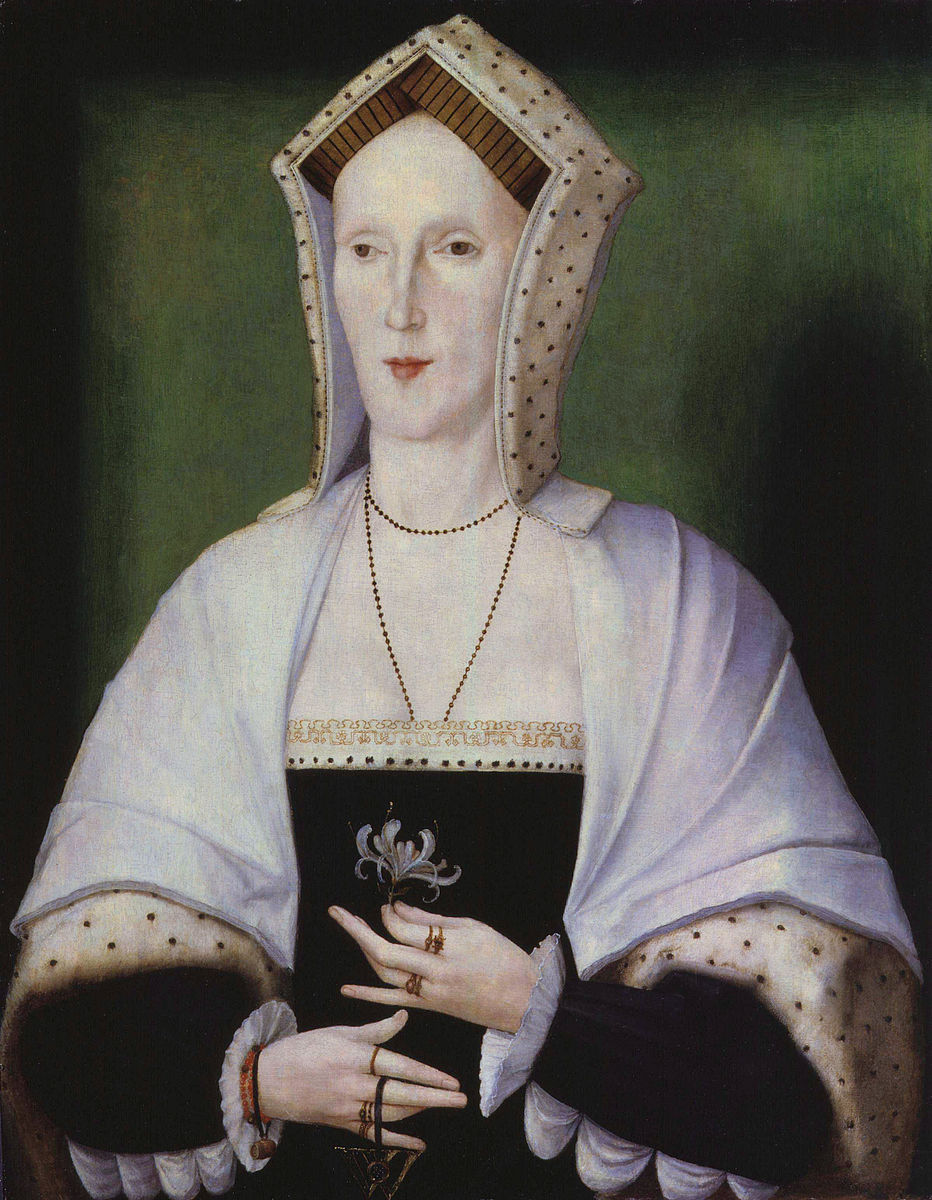
Margaret Pole Countess of Salisbury 1473-1541 Loyalty Lineage and Leadership by Hazel Pierce.
THE CHILDREN OF JOHN NEVILLE, MARQUIS OF MONTAGU and EARL OF NORTHUMBERLAND d.1471
GEORGE DUKE OF CLARENCE, ISOBEL NEVILLE AND THE CLARENCE VAULT
IS THIS THE FACE OF GEORGE OF CLARENCE’S DAUGHTER

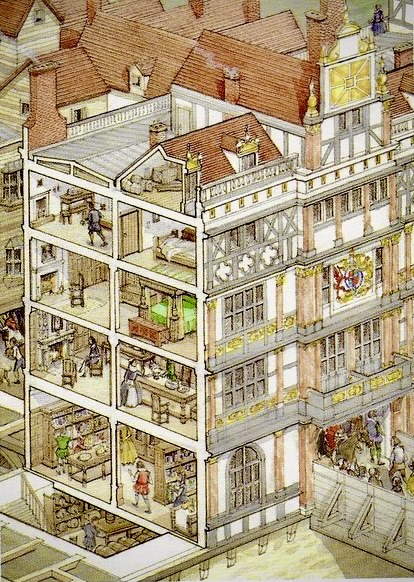
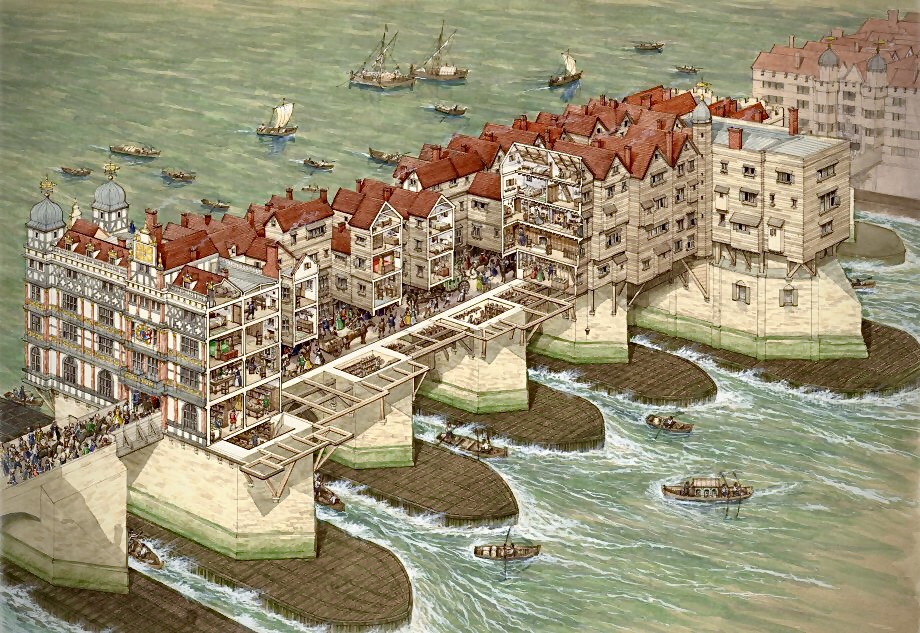
 A view of Old London Bridge by an unknown artist. The area just to the south of the Stone Gate was known as Bridge Foot. Getty Images.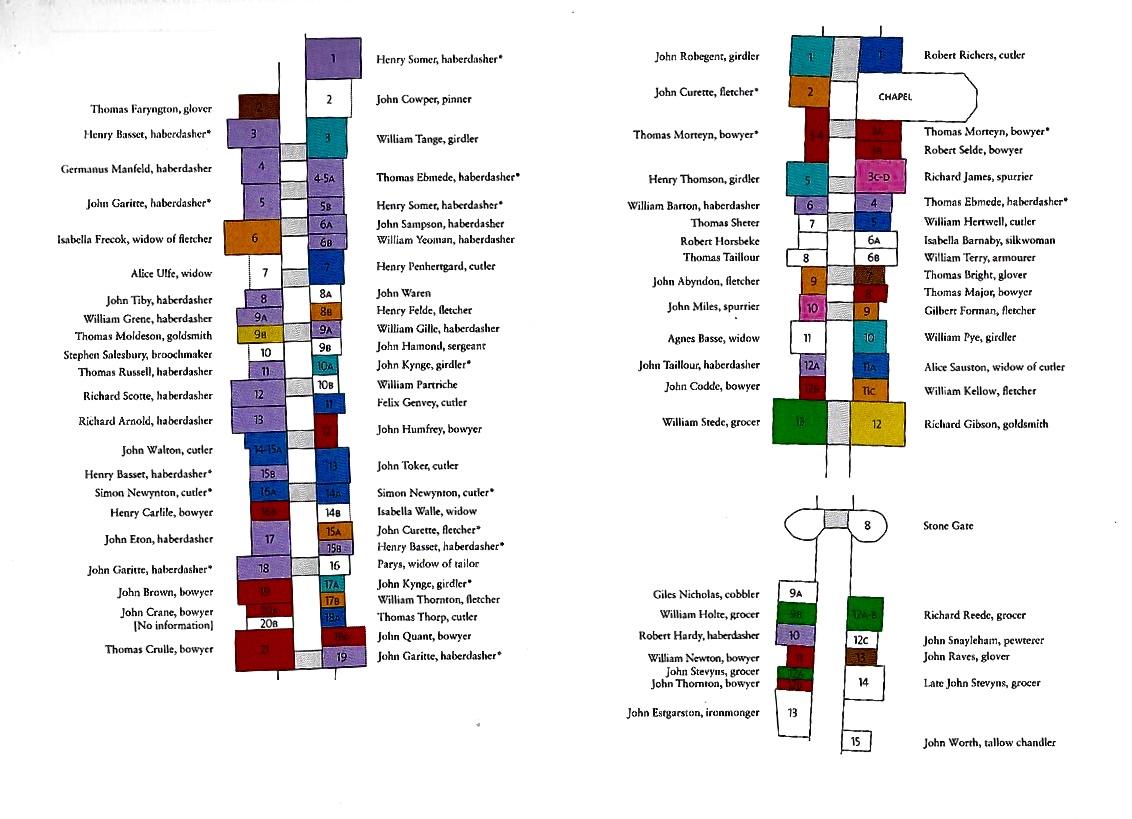




 ,
, 























 A MEDIEVAL POTPOURRI