CARDINAL JOHN MORTON’S TOMB IN THE CHAPEL OF LADY UNDERCROFT CANTERBURY CATHEDRAL

moretonarms

On Friday 13th June 1483 Cardinal Morton (c.1420-d.1500) along with others, was arrested at the Tower of London.  The role Morton played in the downfall of Richard III is well documented.  Morton could be counted among Richard’s most dangerous enemies and his deviousness, cunning and powers of manipulation being  well known,  there is no need to go into them here in detail,  only to recap briefly on his enforced stay at Brecknock castle where he latched on to the flawed Harry Stafford (1455-1483) duke of Buckingham.   Buckingham’s shallow and vainglorious character made him fair game for Morton’s artful manipulation.   What were you thinking of Richard?!  Morton inveigled Buckingham to rebel and desert Richard with the ensuing rebellion culminating in Buckingham being swiftly defeated,  captured and ignominiously executed, while he, Morton, legged it to the Fens and his ‘see of Ely, where he found both money and friends’ (1)   It should be noted that Margaret Beaufort’s estate at Collyweston was but  a short distance of forty miles  from Ely.   Morton then  ‘sailed into  Flanders, where he remained,   doing good service to the the  Earl of Richmond until the scheme at Brecknock had been realised and the Earl had become king of England‘ (2 ).  As Bishop of Ely Morton would have been very conscious of the sanctity of the Coronation ceremony but this did in no way deter him from playing a prominent role in the betrayal of King Richard.  How he came to terms with his treachery is difficult to understand,  and is of course something we will never know,  but manage it he did somehow and the rest is history.

moretonarms

His achievements are likewise well known and numerous,  including  Henry Tudor promoting him to the see of Canterbury and  Lord Chancellor in 1487,  eventually prevailing on the Pope to make him a cardinal,  the conceiving of the infamous Morton’s Fork although to be fair some attribute this to Bishop Fox – and his patronage of the young Thomas More who served in his household as a page (3).  Morton was without doubt an enormously malign influence in poisoning the young More against Richard.  More  later went on to write his ‘History’ which has proven to be extremely  damaging to Richard’s memory as it is oft quoted by ‘historians’ who should know better.  It is believed by some that it was in fact Morton who was the original  author including the late Professor A F  Pollard who opined Morton wrote a latin version which More translated later  into English (4).

moretonarms

It is easy to imagine, as he lay dying, after achieving what was an extremely good age in those harsh times, that Morton felt rather pleased with himself for had he not been instrumental in achieving practically the impossible – the slaughter of a rightful king and replacing him with someone with very tenuous claims to the throne?  He had already made elaborate plans for where he wanted to be buried.in the Chapel of our Lady in the crypt of Canterbury Cathedral beneath the pavement of the western bay.

He had chosen the spot himself as a quiet and retired one, “non in tumultu sed in secreto subterraneoque loco in criptis nuncupato, lapide duntaxat coopertus marmoreo coran Imagine Beatissime Virgin Marie, quam ex intimo diligebat sepulture locum elegit ubi ipsius corpus felicissimum jam quiescit” ‘ (5)

Which translates as he had chosen for his burial ‘not an ostentatious place but rather a secret one with a simple marble cover before an image of the most blessed Virgin Mary., whom he held in very high esteem and where his most fortunate body might rest in peace’

moretonarms

A splendid  altar tomb – now a cenotaph –  was built which incorporated Morton’s rebus of a bird (a mort) and a barrel (a tun), and the Tudor badges of  portcullis and rose.  And here he was laid to rest.

jxYYrTSomLyDdYoq6l3AOcK2eeA.png

Morton’s rebus, a bird (a mort) and a barrel (a tun)

IMG_3630.JPG

Morton’s cenotaph in the western bay of the Chapel of our Lady.  Crypt Canterbury Cathedral.

IMG_3631.JPG

Alabaster effigy of Morton on his tomb.  Canterbury Cathedral.

However, this is where his plans finally went awry.   The crypt became a ‘repository for scaffolding poles and building material, and rendered unfit for sacred purposes‘ (6)

1798 Turner.jpg

Turner’s painting of the Crypt, Canterbury Cathedral showing Morton’s tomb amid building rubble.  18th Century.

 The slab covering the tomb was eventually broken and smashed and the remains in their cere cloth  revealed   Over a period of time these were gradually stolen until none were left except his skull which a Ralph Sheldon rescued in 1670 leaving it to his niece on  his death.    Eventually the head  found a final resting place  at Stonyhurst College, where  it still is to this very day.   It is both ironic and just that the king that Morton callously betrayed,  and whose remains were given a cut-price burial in Leicester,  has now been reburied with the honour that he deserved,  while all that remains of Morton is his head in a box in a cupboard.   As they say man makes plans and the Gods laugh…

moretonarms

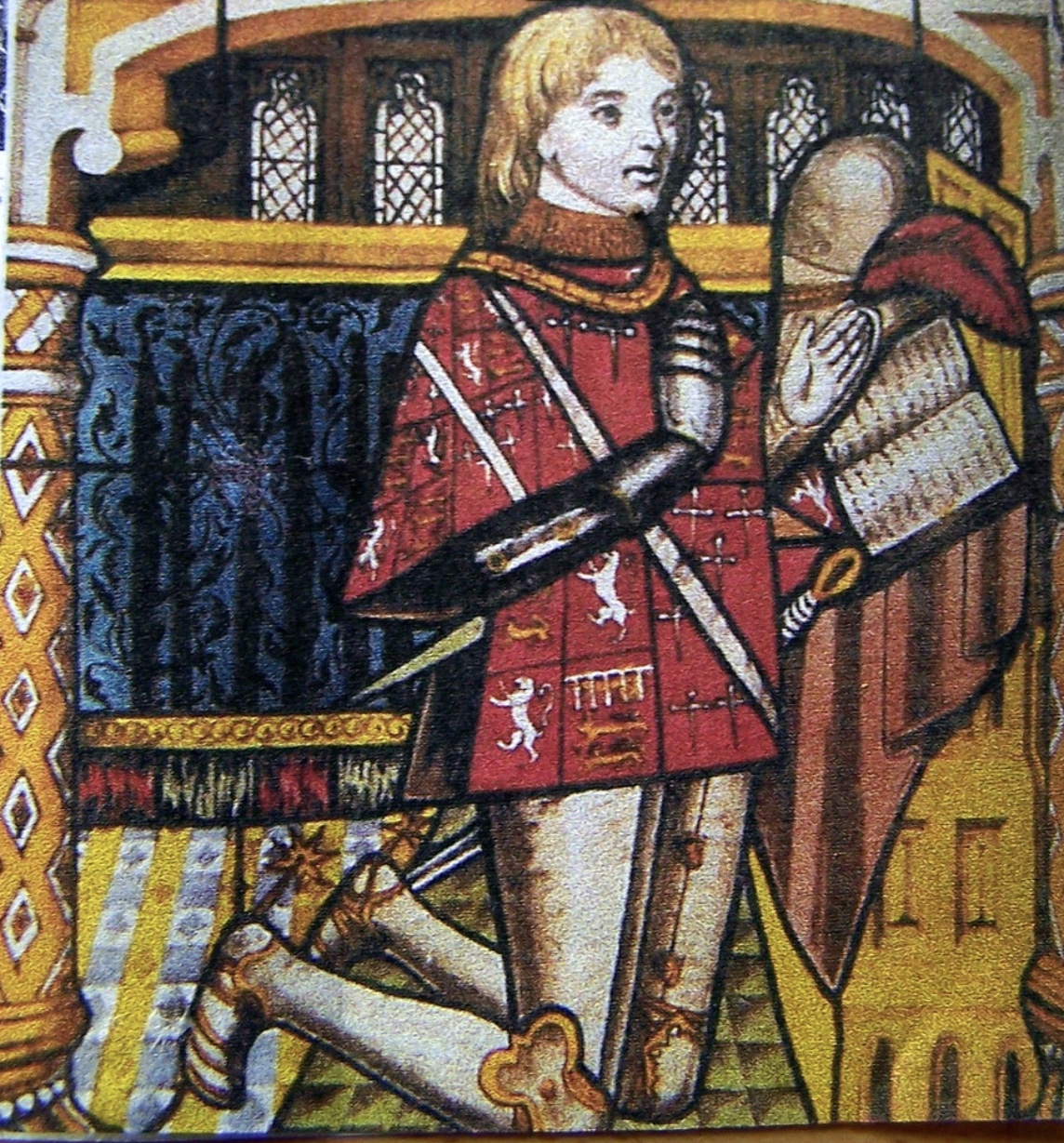
As a footnote to this story in my delving around I think I may have come across a ‘secret’ portrait of Morton in the wonderful medieval windows of St Mary’s Church, Fairford, Gloucestershire.  These windows have survived it is believed because they show hidden portraits of the Tudor royal family and important members of Henry VII’s court.  One portrait is described as being that of Wolsey – but I believe this is erroneous – why would an elderly Wolsey’s portrait being included with those of Henry VII and his family including Henry VIII as a child?  I have since compared it with that of the wooden bosses thought to represent Morton at Bere Regis Church.  I show them here for comparison.  Any thoughts?

FullSizeRender copy.jpg

The portrait in the nave of St Mary’s Church said to be of Wolsey…But could it possibly be Morton?

FullSizeRender 3.jpg
One of the bosses on the roof of Bere Regis Church thought to represent Morton for comparison.

moretonarms

(1) R L Woodhouse The Life of John Morton Archbishop of Canterbury p.75

(2) Ibid

(3) W E Hampton Memorials of the Wars of the Roses p96.

( 4) A F Pollard Luminarium Encyclopedia.  On line article.

(5) C Eveleigh Woodruff.M.A. The Chapel of our Lady in the Crypt of Canterbury Cathedral p. 158.

(6) Ibid

(7) I am most grateful for this information kindly given to me by Mr J Reed,  Assistant Curator of the  College Collections and Museum by the Association, Stonyhurst College.

BERMONDSEY ABBEY AND ELIZABETH WYDEVILLE’S ‘RETIREMENT’ THERE

IMG_3835.JPG

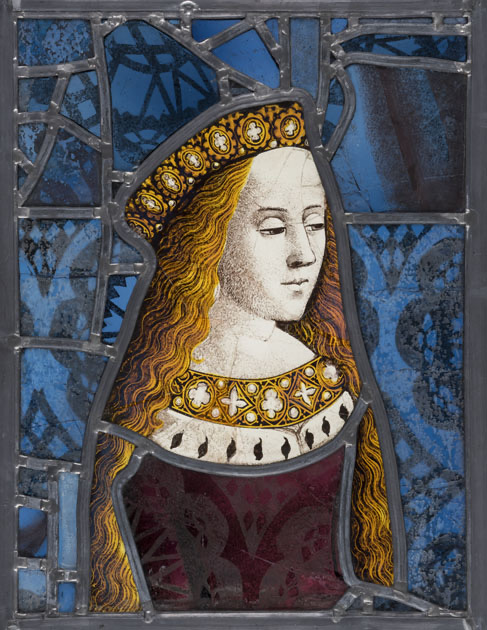
Elizabeth Wydeville, unknown artist, Royal Collection.

If anyone today wandering around Bermondsey, South London, should find themselves in redeveloped Bermondsey Square they may be surprised to find that they are standing on the spot where once stood the quadrangle of Bermondsey Abbey, the entrance  to the square being the site of the Abbey gatehouse.

IMG_3846.JPG

Very little remains today above ground (after the archaeologists had completed their study of the Abbey remains in 2006 they were once again covered over)  other than some remnants of the south western tower which can be seen below the glass floor of a restaurant and nearby houses on Grange Walk, 5, 6 and 7 which incorporate in their structure remains of one wall of the Abbey’s stone eastern gatehouse, particularly No.7,  where the chamfered south jamb with two wrought iron gate hooks still project.

2243859_orig.jpg

5, 6 and 7 Grange Walk, Bermondsey incorporating the remains of the Abbey’s eastern  gatehouse seen in 18th century engraving below with remains of hinges. Note the roof line still recognisable today and windows still in original positions. 

FullSizeRender.jpg

FullSizeRender 3.jpg

18th century prints of the Abbey Gatehouse.  The gate has already gone but note the surviving hinges.

AN00832676_001_l.jpg

Drawing by C R B Barrett 1906 where the two Gatehouse hinges can clearly be seen with the remains of a third one still visible.

It is intriguing to remember that in this Abbey,  Elizabeth Wydville/Woodville, Edward IV’s widowed queen lived out the last five years of her life,  dying in the Clare guest suite on 8 June 1492.  She was the second queen to both ‘retire’ and die there, the first being Katherine of Valois, Henry V’s widow.  Elizabeth commenced her ‘retirement’ there in February 1487 and debate still rages as to whether she retired there willingly or unwillingly with some good reason to be believe that her withdrawal there was forced upon her by her peeved son-in-law, Henry VII who had reached the end of his rope with her and her penchant for plotting.    Her sudden and extreme change in circumstances, as well as Thomas Grey’s incarceration. followed hot on the heels of the news of the outbreak of the Yorkist rebellion –  which has became erroneously known as the Lambert Simnel rebellion  – and occurred in the immediate aftermath of a council meeting at Sheen so that it might be reasonable to deduce that mother and son were implicated in that plot.  MacGibbon, Elizabeth’s biographer, who seems to have been slightly in love with her,  wrote Henry is reported to have deprived Elizabeth of all her lands and estates, conferring them on her daughter, his queen, on the Ist May 1487, and finally to have induced her to spend the rest of her days in seclusion in Bermondsey Abbey in very reduced circumstances ‘(1).  Vergil, the Tudor historian, was later to say that this was because Elizabeth had reached an understanding with Richard III three years earlier, upon which,  she removed herself and her daughters from sanctuary and placed the eldest ones into his care.  This is absurd.  Vergil wrote his ‘English History’ well into the Tudor regime after being requested to do so by Henry VII.   It’s therefore highly likely that Vergil knew full well that Elizabeth’s retirement was not as a result of her earlier rapprochement with Richard and that he knew exactly the precise circumstances but chose not to repeat them, it being unwise to record that Elizabeth and Grey had got themselves involved in the Yorkist rebellion of 1487 because they knew that Edward V and Richard of Shrewsbury were both still alive and well. Certainly it does seem a strange decision on Elizabeth’s part if she herself decided at that point on a move to Bermondsey as she had only in the previous year taken out a 40 year lease on the Abbots House, known as Cheyneygates, in the precincts of  Westminster Abbey, conveniently close to the Palace of Westminster (2).

IMG_1661

The entrance of Dean’s yard where the abbot’s house, Cheyneygates once stood.  Mostly destroyed by a bomb in May 1941.

Ah, man makes plans and the Gods laugh as they say.  MacGibbon also opines,  that ‘It is possible, if not probable, that Henry disliked his mother-in-law and in this he was no means singular, for there never was a woman who contrived to make more personal enemies’ which seems a rather contradictory statement for someone so besotted with her.   However he adds as an afterthought ‘but he ever deprived her of either property or dignity, remains to be proved’.  Furthermore, ‘far from being exiled from her daughter’s court, she was in that same year chosen as Prince Arthur’s godmother and attended at the font’ ( 3).  Finally, he plucks his ripest plumb from the tree, that on the 28 November 1487 Henry and James III of Scotland agreed that the latter should marry Elizabeth as well as two of her daughters marry James’ sons.  However it must be remembered that at the time of James’ death in June 1488 none of these marriages had actually taken place and so it cannot be taken as a given that either King, particularly Henry,  ever fully intended these marriages to materialise.    Indeed David Baldwin points out that the proposed marriages had been mooted before the ‘Simnel rebellion’,  at least as early as the Three Years Truce signed on the 3 July 1486‘ (4).

It has been said that it is unlikely that Elizabeth would have involved herself in the Yorkist rebellion, which would have culminated not only in the eviction of Henry, her son-in-law.  from the throne,  but also her daughter, as well as robbing her small grandson, Arthur, of his future inheritance.  Which is true.  However on the other hand if she believed that the true intention of the rebellion was to return Edward V to the throne, then it is highly likely that this is indeed the very course she would have taken.  This may also explain any coolness that Elizabeth of York may have felt towards her mother and explain why she appears to have acquiesced in her mother’s removal to Bermondsey.   However to be fair we cannot say for certain what Elizabeth of York’s feeling were towards her mother although it’s difficult to believe, under the circumstances,  they were warm and fuzzy.  Certainly from Henry’s point of view Bermondsey must have seemed the perfect solution.  The accommodation itself, the Clare Suite, may have been deemed suitable by some  for an ex-queen although to Elizabeth, who had lived a life of luxury in many sumptuous properties, it must have seemed a massive case of downsizing,  as we call it today,  with a close watch on her movements and an occasional outing to keep any murmuring or speculation down.

FullSizeRender 4.jpg

Interior of Great Gatehouse as it was in the 17th century.

FullSizeRender 5.jpg

18th century print of one of the Abbey rooms before demolition

In summary

1485.  Elizabeth is treated with deference by Henry and her title of Queen Dowager being restored to her in Henry’s first parliament which met a week after his coronation on 7 November 1485.  Acted as godmother to her grandson Arthur.

1486.  Titulus Regius declaring the invalidity of Elizabeth’s marriage to Edward IV was repealed in Henry’s first parliament and on the 5 March 1486 she received annuities and a life interest in a raft of properties in southern England in full satisfaction of her dower.  All is going swimmingly well for her.  What’s not to like? (5)

1486.  July 10th.  Elizabeth takes out a 40 year old lease on the Abbot’s House, Cheyneygates, at Westminster Abbey and just over the road from Westminster Palace where she can remain in the bosom of her royal family.

 1487.  February.  Immediately following the news of the outbreak of the Yorkist rebellion reaching Henry VII and his council Elizabeth was retired to Bermondsey Abbey and her son Thomas Grey is arrested and put into the Tower of London for the duration of the rebellion.   Elizabeth’s biographer David Baldwin wrote Henry ‘deprived Elizabeth of all her properties, and confined her to Bermondsey on the unlikely grounds that she had imperilled his cause by surrendering her daughters, including his bride, to King Richard three years earlier’.

1487 November 28th.  An agreement between Henry and James III of Scotland for the latter to marry Elizabeth.  However, James died in June 1488 without this proposed marriage taking place.

1489 November.  Elizabeth is present when Francois, Monsieur de Luxemboug, head of a visiting French embassy, met Elizabeth of York and her mother-in-law, Margaret Beaufort.  Although this might appear prima facie to indicate that all was well within the royal family – as it was surely intended to do –  the possibility exists that Francois, her kinsman,  had insisted on meeting Elizabeth and to avoid suspicion and gossip the meeting was duly arranged with the presence of Margaret stiffling any chance of a private, and awkward,  conversation taking place which might have occurred had he met her in private at Bermondsey.

 1492 April 10th.  Elizabeth makes her will in Bermondsey Abbey.  There can be no dispute, with her will still extant, that her condition was, for a dowager queen, extremely impoverished.  I will not go into the entire content of the will which is well known other than to repeat the words I’tm where I have no worldly goods to do the queens grace, my dearest daughter, a pleasure with, neither to reward any of my children, according to my heart and mind, as is to me possible….’

 1492 June 8.  Elizabeth dies at Bermondsey Abbey.

It could be said that Elizabeth Wydeville and Edward IV’s bigamous and clandestine marriage was the human rock that the House of York foundered and finally crashed upon, taking with it their two young sons, although to be fair it is Edward IV with whom the buck must surely stop.  It was certainly upon his early and unexpected death that the situation imploded.  Perhaps at the time of his ‘marriage’ to Elizabeth he had been giddy with his triumphs but certainly raging testosterone overcome common sense.  Edward seems to have kept his brains in his pants and the ensuing problems and tragedy that this later caused is well documented elsewhere and I need not go into it here.  Perhaps it would be mean hearted not to feel some glimmer of compassion when reading the pitiful will made at Bermondsey.  Elizabeth asked for a humble funeral and that is exactly what she got – even the herald reporting the funeral was shocked – and so she was laid to rest in a cheap  wooden coffin without the usual inner lead one so that when the vault in which she and Edward were interred was opened in 1789 all that remained of Elizabeth was a pile of bones and a skull, the remains of the coffin having rotted away.  When the vault was resealed once again there appears to have been nothing left of Elizabeth, her bones having been stolen by Georgian souvenir collectors.  Elizabeth remains an important  footnote in history, taking any secrets she may have had to her grave , including perhaps the whereabouts/fates of her two young sons.  She died knowing that her daughter was queen and that her blood would run through the future Tudor monarchs and perhaps she gained some comfort from that, but I wonder, did she ever muse on what might have been and what had been lost.  I leave you dear reader to make your own mind up about that.

FullSizeRender 7.jpg

Remains of the Abbey revealed in 2006 prior to the Square being redeveloped

FullSizeRender 8.jpg

Abbey staircase. Photo Museum of London.

1. David MacGibbon, Elizabeth Woodville, a Life p.134

2. J Armitage Robinson The Abbots House at Westminster pp22-23

3. David MacGibbon, Elizabeth Woodville, a Life p 135

4.  David Baldwin Elizabeth Woodville Mother of the Princes in the Tower p115

5. Ibid  p109

If you have enjoyed this post you might be interested in :

Elizabeth Wydeville – Serial Killer?

MARY PLANTAGENET; DAUGHTER OF EDWARD IV & ELIZABETH WYDEVILLE; A LIFE CUT SHORT

THE MYSTERIOUS DEATH OF EDWARD IV

MARGARET GAYNESFORD: GENTLEWOMAN TO QUEEN ELIZABETH WYDEVILLE

A NEW KING, A NEW REIGN – KING RICHARD III, LOYAULTÉ ME LIE

M221726.jpg

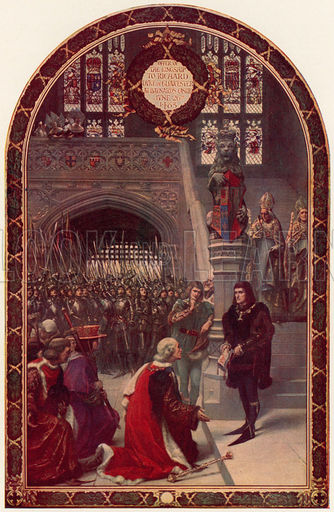
Mural in the Royal Exchange,  Offer of the Kingship to Richard Duke of Gloucester at Baynard’s Castle June 26 1483 , Sigismund Goetz

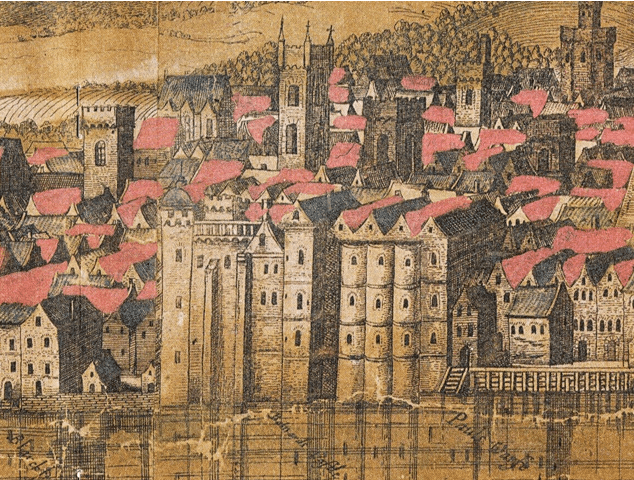
On this day 27 June 1483 no doubt King Richard, and his wife Anne, both awoke shell shocked.  Perhaps they had slept little as they no doubt took in the significance of these life changing events.  For their lives would never be the same again and  the years at Middleham, where perhaps they had been their happiest  were over.   This was the first complete day of his reign having been asked to take the crown by the Three Estates on the previous day at Baynard’s Castle, the London home of his mother Cicely Neville.   Accept he did and perhaps with mixed feelings for as we know it meant putting aside his nephew, Edward V,  the heir of Edward IV.  The events that led up to this momentous day and the tragic outcome three years later at Bosworth Field are well known but lets focus on that wonderful and joyful  day, when Richard’s and his closest followers hopes were fresh, new and brave.

image

Baynard’s Castle.  Cicely Neville’s London home and where Richard Duke of Gloucester accepted the offer of the throne from the lords and commons.    17th century artists impression.

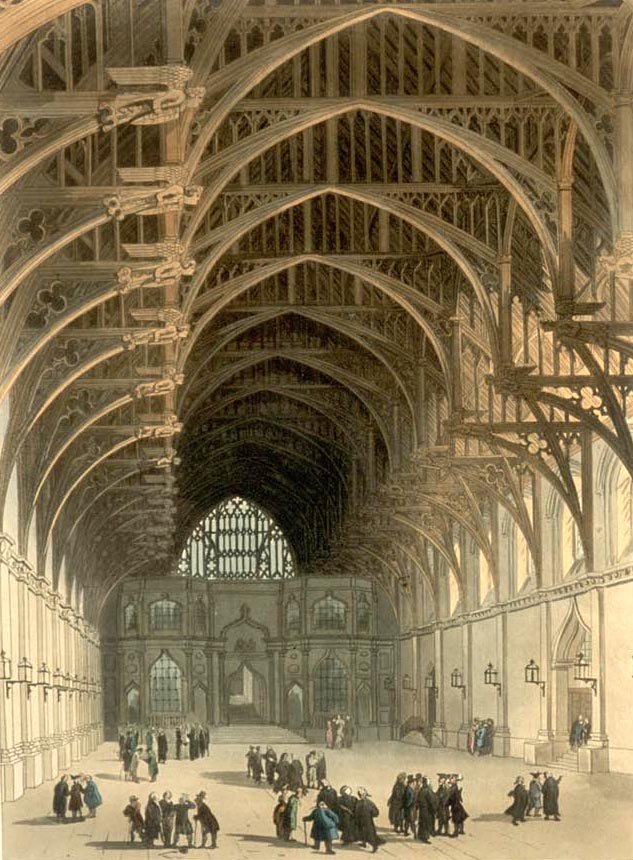
After formally accepting the throne, the next day 27th June  he went on foot and with a ‘great traine‘ to Westminster Hall where he sat himself on the marble throne and addressed the assembly.  With his loyal friend John Howard on his right hand side and the Duke of Suffolk on his left, Richard called before him ‘the Jugys Commaundyng theym in Rigth streygh maner that they Justly & duly shuld mynystir his lawe withowth delay or ffavour, Afftyr which commandement soo to theym govyn and othyr Ceremonyes there ffynsshid, he then good in to the abbay, where at the chirch dore he was mett wyth procescion, and by the abbot or his depute there delyverd to hym the Ceptre of Seynt Edward, he then yood ynto the Shryne and there offyrd..”(1)

And so begun the reign of one of the most enlightened kings ever to sit upon the throne of England –  LOYALTIE ME LIE.

image.png

WESTMINSTER HALL

image

WESTMINSTER HALL

image

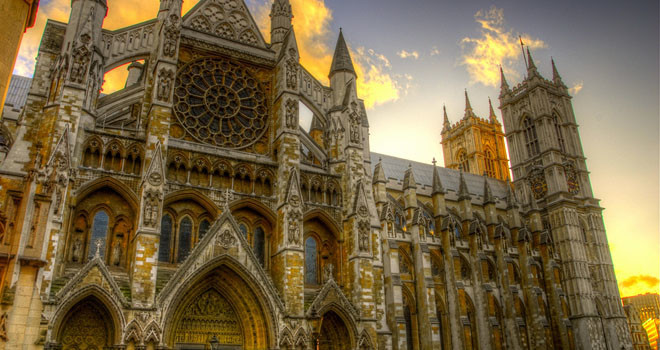
Westminster Abbey..

1) Great Chronicle p232 Richard III The Road to Bosworth P W Hammond & Anne Sutton

If you liked this post you might be interested in:

The Coronation Chair and the Stone of Scone..

the Coronation feast of Richard III and his Queen, Anne Neville.

CROSBY PLACE HOME TO THE DUKE AND DUCHESS OF GLOUCESTER 1483

SIR WILLIAM STANLEY – TURNCOAT OR LOYALIST?

image

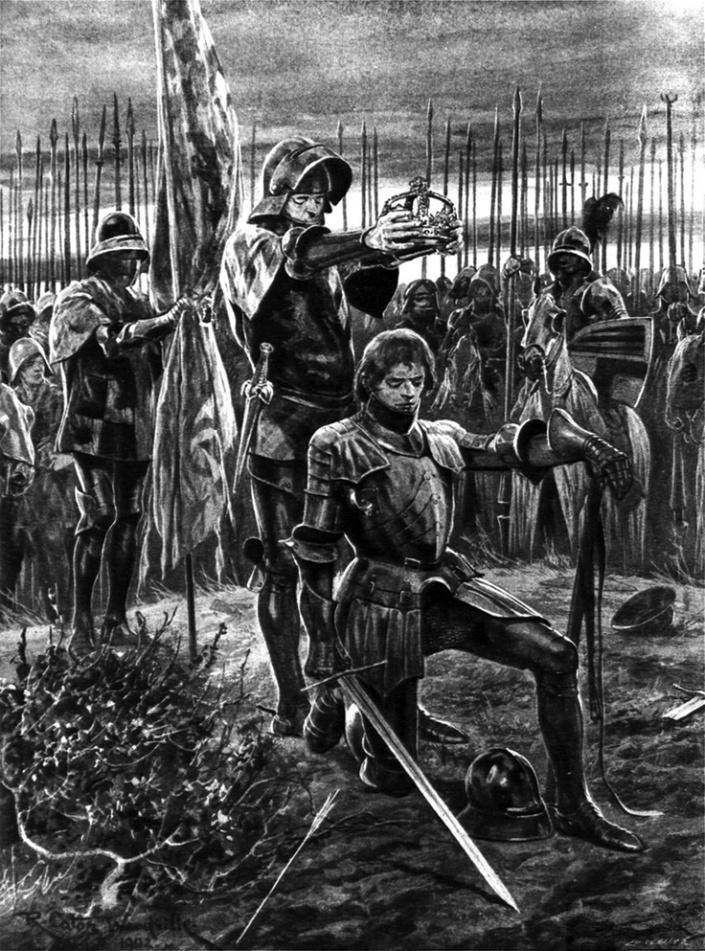
Sir William Stanley crowning Henry Tudor with the fallen King Richard’s crown in the aftermath of the Battle of Bosworth.  Unknown artist..

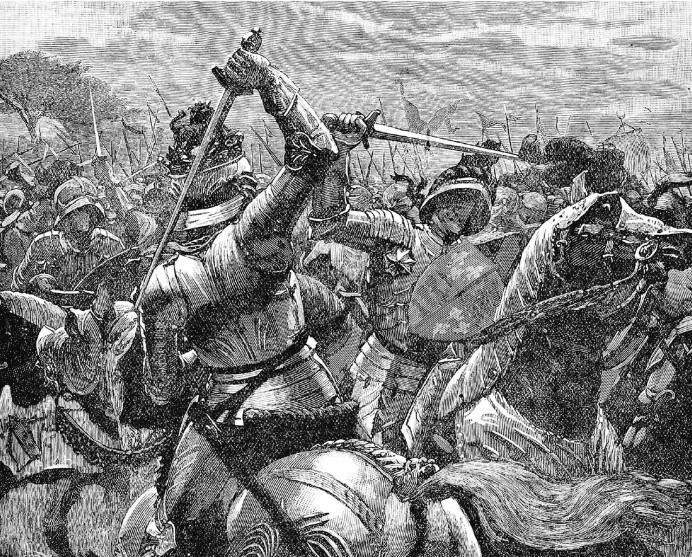
It is well documented how, through the treasonable and treacherous actions of Sir William Stanley at Bosworth, Richard III lost his crown and his life. He was hacked to death after Sir William, who it is said, brought three thousand men with him, intervened at the crucial point when Richard, with his household cavalry in a heroic charge, came within a hair’s breadth of reaching Henry Tudor and despatching him.  According to the Great Chronicle of London after the  coronet Richard wore on his sallet was found under a hawthorn bush, it was Sir William who utilised it to crown Henry Tudor then and there on the battlefield.   There may be an element of truth in this story as a hawthorn bush and crown was one of Henry Tudor’ s badges.

image

19th century engraving of King Richard hacking his way through the enemy ranks in an attempt to reach Henry Tudor.  Artist unknown

Sir William came from a high status family being the second son of Thomas Stanley, first Baron Stanley (1406-1459) and Joan Gousill,  daughter of Sir Robert Goushill and his wife, Elizabeth Fitzalan, dowager duchess of Norfolk.  He seems to have been one of those people who can run with the hounds and play with the foxes, doing well under both the Yorkist kings as well as Henry Tudor.   Edward IV made him Chamberlain of Chester,  Constable of Flint Castle, Sheriff of Flintshire and, interestingly,  Steward of the Prince of Wales’ Household while Richard III made him Chief Justice of North Wales and finally Henry VII  made him Lord Chamberlain and Knight of the Garter (1).   It is said that Sir William – step-uncle to Henry and brother-in-law to Margaret Beaufort – was one of the richest men in England.  Bacon estimated his income at £3000 a year and when his castle at Holt was searched after his arrest,  money and jewels to the value of £9000 were found.     Sir William seemed to have been on a never ending  roll until it all went pear shaped, his chickens finally  came home to roost and disaster overcame him. But we have galloped too far ahead and should  backtrack a little.   Sir William had done well in the marriage market and made advantageous matches.    In 1465 he married his first wife Joan, Lady Lovell nee Beaumont, daughter of John, Viscount Beaumont, and widow of John,  Lord Lovell which made him of course step-father to Francis Lovell,  at that time a ‘very valuable 12 year old heir’.   Francis was  said to have been Richard III’s closest friend since they spent time together during their youth (2)  William and Joan’s marriage was of short duration –  Joan dying in August 1466 –  although an article in the usually reliable Ricardian Bulletin has August 1469 as her death date (3).  This confusion in the date of Joan’s death has led to some confusion as to which wife had which children.  Sir William’s second marriage in 1471 was to  Elizabeth Hopton (d.1498) countess of Worcester,  widow of John Tiptoft,  earl of Worcester and Constable of England who,  having earned himself the sobriquet of The Butcher of England,  had been  executed October 1470.   This lady was either very brave or very unlucky to have a predilection for choosing husbands that were to end their lives on the chopping block – maybe a combination of both –  but I digress.  As mentioned above it’s difficult to be definitive about Sir Williams’s children and by which wife had he had them by depending upon which account you prefer to go with.    However the consensus seems to be that Sir William had his children with Elizabeth.  Indeed it’s difficult to see how he could have had children by Joan whom he married in 1465 if she was indeed  dead by August 1466 although it’s possible she could have had one child which survived infancy.  Could this have been William Jnr?     Some accounts say that Elizabeth was the mother of all of William’s three children including William Jnr and two daughters, Joan and Catherine.  Yet another article in the Ricardian Bulletin states that William Jnr (born c.1471)  would succeed his father in several offices but  days before William Snr’s execution Henry VII  appointed a commission, on 8 February 1495, under Arthur, Prince of Wales, to enquire of the lands and possessions in North Wales and the marches thereof, and the counties of Chester, Flint and Salop of William Stanley, knight and to take charge of the same and these were kept in the king’s hands.  If this account is accurate although the glory days were over and this branch of the Stanley family seemingly destined to wither and die  – his son William Jnr ‘relegated to the status of a minor country gentleman’ –  all three children made marriages with local gentry so all was not entirely lost (4).   Other accounts do not mention any children at all.   

Fast forward and  ten years after the betrayal of King Richard,  the bitch  that is karma paid Sir William a visit.   It all ended ignominiously at Tower Hill, where William was beheaded on 16 February 1495 for the treasonable act of communicating with the Yorkist claimant, Richard duke of York.  He had been found guilty of treason in a trial which had taken place on the 6-7 February at which his brother, Thomas Lord Stanley,  earl of Derby,  had presided as Constable of England.   He pleaded guilty but his behaviour was said to be arrogant (5).   Oh dear. … at the precise moment he should have  been eating humble pie! Annoyingly Thomas’ thoughts have not come down to us regarding the part he played in the downfall of his brother nor those of his wife – but I would have thought that Margaret would not have been feeling exactly  warm and fuzzy towards Sir William after his betrayal of her man cub.  However Henry VII’s accounts show he coughed up £10 for William, thought to have been used towards ‘tipping’ the executioner possibly in the hope he wouldn’t mess things up,  as well as the not inconsiderable  amount of £31.0s.1d to William’s servaunts for ther houshold wages and ther horse mete.  William’s buryall at Syon set back Henry a further £15.19s. (6).    

What led to Sir William’s downfall?  In  what has been  described by historian Michael Bennett as ‘a most spectacular fall from grace‘  which shocked his contemporaries,  Stanley was accused of telling Sir  Robert Clifford,  who may have been acting as  an agent provocateur, and who would, indeed, go on to  inform on him , that if he was sure the Yorkist claimant was indeed Edward IV’s son ‘he would never take  arms against him‘ (7). W E Hampton suggests Clifford may also have held a  personal grudge against William, who since 1464  had been in possession of lands and the lordship of Skipton, Yorkshire,  which had been forfeited by Sir John Clifford in 1461.   Clifford’s betrayal  also caused the ruination of his own  father-in-law William Barley/Barlee who had the misfortune to be  present when Sir William uttered those fatal words.  What is certain is that Clifford was inexplicably arrested and rewarded practically simultaneously  – the immense sum of £500 being handed to him by Reginald Bray for his services.    Those few catastrophic  words, spoken by a man who, his brother being the step-father of Henry Tudor,  one  would have thought would have  been in a position to know the truth, even if only partially,  opened up a massive can of worms for Henry.  They made it clear that someone who should have been in the position to know the truth admitted the possibility that at least one of the sons of Edward IV had survived.  This  would have  proven both awkward  and irksome for Henry Tudor at a time when it was important that it was believed that  Richard III  was responsible for the heinous murder of his  nephews and indeed up until this present day it is a point often raised to demonstrate the strong possibility that at least one of the sons of Edward IV had survived.   From then on William was a dead man walking in much the same way as Catesby had been ten years previously in the aftermath of Bosworth.   Those whom Henry could not trust had to be gone…

4859721026_89f2262e30_b

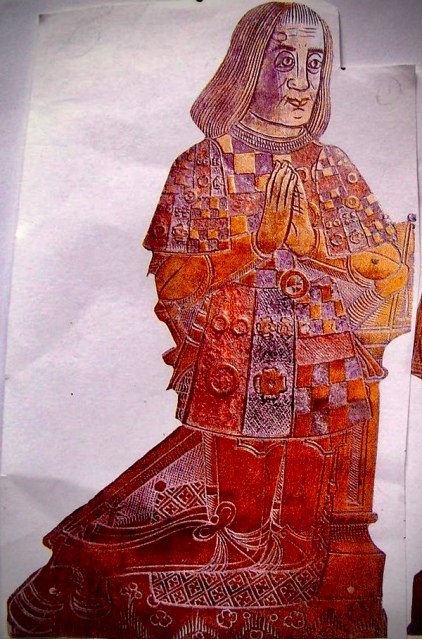
Brass rubbing of Sir Robert Clifford c.1508. – the man who betrayed Sir William Stanley.   Aspenden Church Hertfordshire.  Inscribed   “knight for the body to ye most excellent prince & king Henry ye VII and maister of hys ordynaunce also”.  There appears to have been some attempt at a true likeness here.  Photo thanks to jmc4 Church Explorer @ Flkr.     

The question I am raising here is not so much about Sir William’s  penchant for interminable fence-sitting  – a family trait he shared with his brother Thomas – but rather, did he, an apparent dyed-in-the-wool turncoat, capable of the greatest treachery , actually possess a latent streak of honour, perhaps dating from the time when he was Steward to the Princes of Wales’ Household?  Did his time there give birth to a fierce loyalty to Edward’s sons that later emerged with such a passion that he risked all, absolutely all,  when he joined the Perkin Warbeck plot?  Did he grow fond of young Edward, later focusing this affection on Edward’s brother, Richard of Shrewsbury, whom Warbeck purported to be?  OR, was he, as the historian Gairdner suggested, merely attempting to secure his position with both sides in the event of an invasion? (8).  I will leave that to you dear reader to make your own mind up. 

(1)  Ramsay, Lancaster and York, ii 482

(2) The Wives and Children of Sir William Stanley of Holt Jean M Gidman.  Ricardian article March 1992

3) For Joan’s  death date being 5 August 1466 see Cokayne The Complete Peerage Volume 2 p.65

4) The Wives and Children of Sir William Stanley of Holt Jean M Gidman.  Ricardian article March 1992.  Referencing Michael K. Jones, Sir William Stanley of Holt: politics and family allegiance in the late fifteenth century, We‘lshHistory Review, vol. 14(1988), p.7, n.2L

5)  Stanley, Sir William (c. 1435–1495Michael J Bennett oxforddnb.com. 3rd January 2008

6) Excerpta Historica; or Illustrations of English History p. 101.  Edited by Samuel Bentley 1833

7)  Stanley, Sir William (c. 1435–1495Michael J Bennett oxforddnb.com. 3rd January 2008

8)   W A J Archbold ‘Sir William Stanley and Perkin Warbeck’ English Historical Review 14 (1899) pp 529-534. ‘On 14 March (year unknown) Gairdner suggested in a note to Archbold that Stanley may simply have wanted to secure his position with both sides in case of an invasion‘.  I am grateful for this information which I have gleaned from Helen Maurer’s ‘Whodunit – The Suspects in the Case’.

If you have enjoyed this post you might also like:

WILLIAM CATESBY, GOOD GUY, BAD GUY, TRAITOR? CLUES IN HIS WILL…

SIR JAMES TYRELL – CHILD KILLER OR PROVIDER OF A SAFE HOUSE ?

MINSTER LOVELL HALL, HOME TO FRANCIS LOVELL VISCOUNT LOVELL

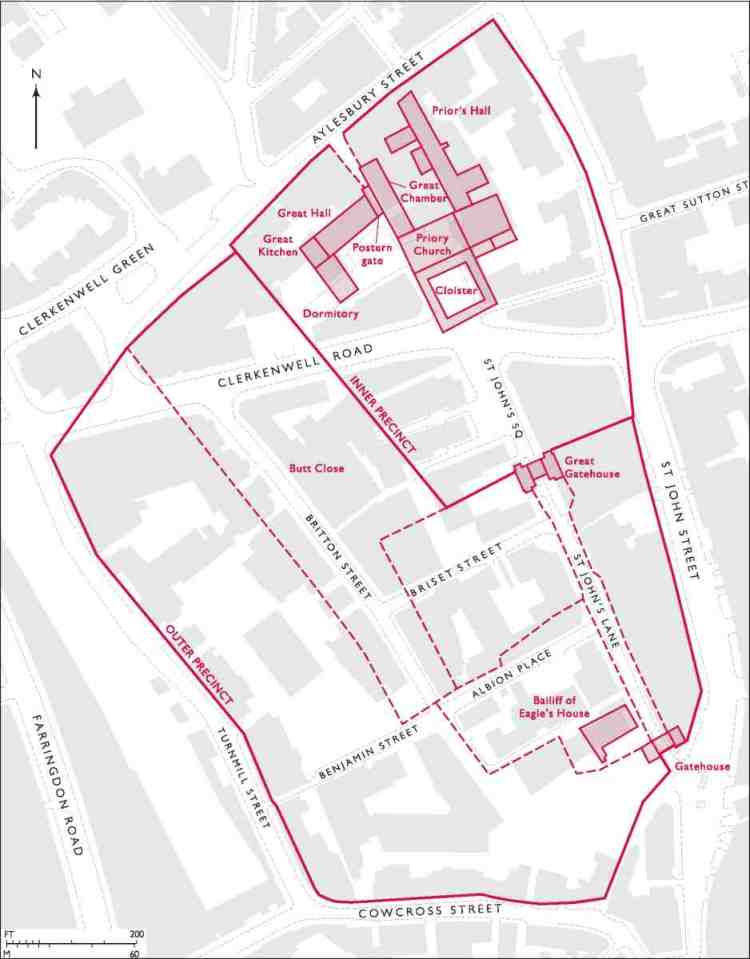
The Priory of St John at Clerkenwell and a visit by Richard III

IMG_3523.JPG

The Great South Gate now known as St John’s Gateway as it is today 

Shortly after the death of his wife, Anne Neville on the 16th March 1485 Richard rode to the Priory of the Knights Hospitaller of St John at Clerkenwell.  .  On the 30 March 1485,  which fell on a Wednesday (1)  King Richard III stood in the great hall of the Priory and addressing the Mayor, Aldermen and others gathered there denied in a ‘loud and distinct voice’ he had never intended to marry Elizabeth of York (2).   We know this thanks to the Croyland Chronicler.  The Chronicler never one to  miss out on an opportunity to throw some mud at Richard spitefully added that many supposed he made the denial,  to suit the wishes of those who advised him to that effect, than in conformity with his own’...yes because of course when one is lying and dissembling before a large crowd one always speaks in a loud and distinct voice!   The rest is history and it is the Priory which is my subject here today.

View_of_the_south_front_of_the_St_John's_Gate_Clerkenwell_by_Thomas_Hosmer_Shepherd.jpg

Steel engraving of St John’s Gate by Thomas Hosmer Shepherd 1829-83.  Note the inscription as described by Stow appertaining to the rebuilding completed by Prior Docwrey 1504.

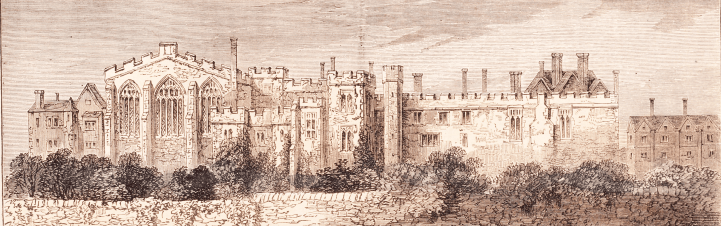
The original Priory  founded about 1100, by Jorden Briset (3)  on a site which covered 10 acres of land, had  a chequered  history,  being burnt down by a mob in the 1381 Peasants’ Revolt , who caused it to burn for seven days allowing noone  to quench the flames,  being  rebuilt,  and  not being finished until 1504 by Prior Thomas Docwrey.   However it must have been sufficiently grand enough in 1485  for Richard to hold  his  council there.   The Priory’s troubles were not yet over,  later being  suppressed by order of Henry VIII . Still,  according to Stow   the priory church and house were ‘preserved from spoil of being pulled down’ and were ’employed as a storehouse for the kings toils and tents for hunting and wars etc.,’ (4) .  Don’t hold your breath though,  for moving on,  in the third year of Henry’s son,  Edward VI, reign, ‘the church for the most part, to wit, the body and the side aisles, with the great bell tower, a most curious piece of workmanship, graven, gilt and enamelled, to the great beautifying of the city, and passing all other I have seen, was undermined and blown up with gun powder.  The stone thereof was employed in the building of the Lord Protector’s house at the Strand.  That part of the choir which remaineth, with some side chapels, was by Cardinal Pole, in the reign of Queen Mary, closed up at the West End and otherwise repaired.  Sir Thomas Tresham, knight, was then made lord prior with restitution of some lands” (5). me: the first Somerset House and also the porch of Allhallows Church, Gracechurch Street, which sadly was lost in the Great Fire of London)  Unfortunately this revival of fortunes did not last as the priory was again suppressed in the first years of Elizabeth l’s reign.

image

Watercolour by John Wykeham Archer 1842 showing the poor condition the Gate was in.

joseph-pennell-american-1860-1926-st-johns-gate-clerkenwell.jpeg

An engraving by Joseph Pennell 1860-1926 in which some the vaulting of the gateway can be seen.

As late as 1878  some of the remains of Prior Docwrey’s church had survived in the south and east walls and the capitals and rib mouldings underpinning  the pews (6)  The church was gutted by bombing in 1941 and what we see today is more or less after that date being rebuilt in the 1950s.    The outline of the original round church,  consecrated in 1185,  is marked out in St John’s Square in front of today’s church(7)

circular-outline-of-old-church.jpg

Outline of the old church which stands in front of today’s church

Today all that  remains of this once magnificent  range of buildings are the Grand South Gate now known as St John’s Gate,  largely reconstructed in the 19th century  and the crypt which has survived beneath the nearby parish church of St John.

8707109416_bc4f13114e_c.jpg

Closeup of the badges.  Photo Rob@SONICA

So sadly we may not be able today to  stand in the Great Hall as Richard did when his voice, strong and steady, rung out to deny the insidious rumours – for we now know they were indeed just rumours as plans were afoot for him to marry a Portuguese princess and Elizabeth a Duke – but we can most certainly walk through the Great Gateway which Richard rode through that day.

fig130

ST JOHNS PRIORY SUPERIMPOSTED ON A MODERN STREET PLAN @BHO

image

THE PRIORY ENGRAVING BY WENCESLAUS HOLLAR 1656

If you have enjoyed this post you might like:

Crosby Place a temporary home for Richard and Anne

https://sparkypus.com/2020/05/18/crosby-place-home-to-the-duke-and-duchess-of-gloucester/

A Good Beginning to Richard’s reign

https://sparkypus.com/2020/06/27/a-new-king-a-new-reign-king-richard-iii-loyalte-me-lie/

Richard’s love for his consort

https://sparkypus.com/2020/05/20/did-richard-iii-love-anne-neville/

Anne’s burial place

https://sparkypus.com/2020/05/14/queen-anne-nevill-her-burial-in-westminster-abbey-2/

(1) The Itinerary of King Richard lll Rhoda Edwards p34 Mercers Court Minutes pp 173-4

(2) Croyland p.499

(3 ) Stow A survey of London p363

(4)  Stow A Survey of London p 364

(5)  Stow A Survey of London P364

(6)  Also spelt  Docwra

(7) St John Clerkenwell Wikipeda

(8) Survey of London: Volume 46, South and East Clerkenwell.


MINSTER LOVELL HALL, HOME TO FRANCIS LOVELL, VISCOUNT LOVELL

sunset

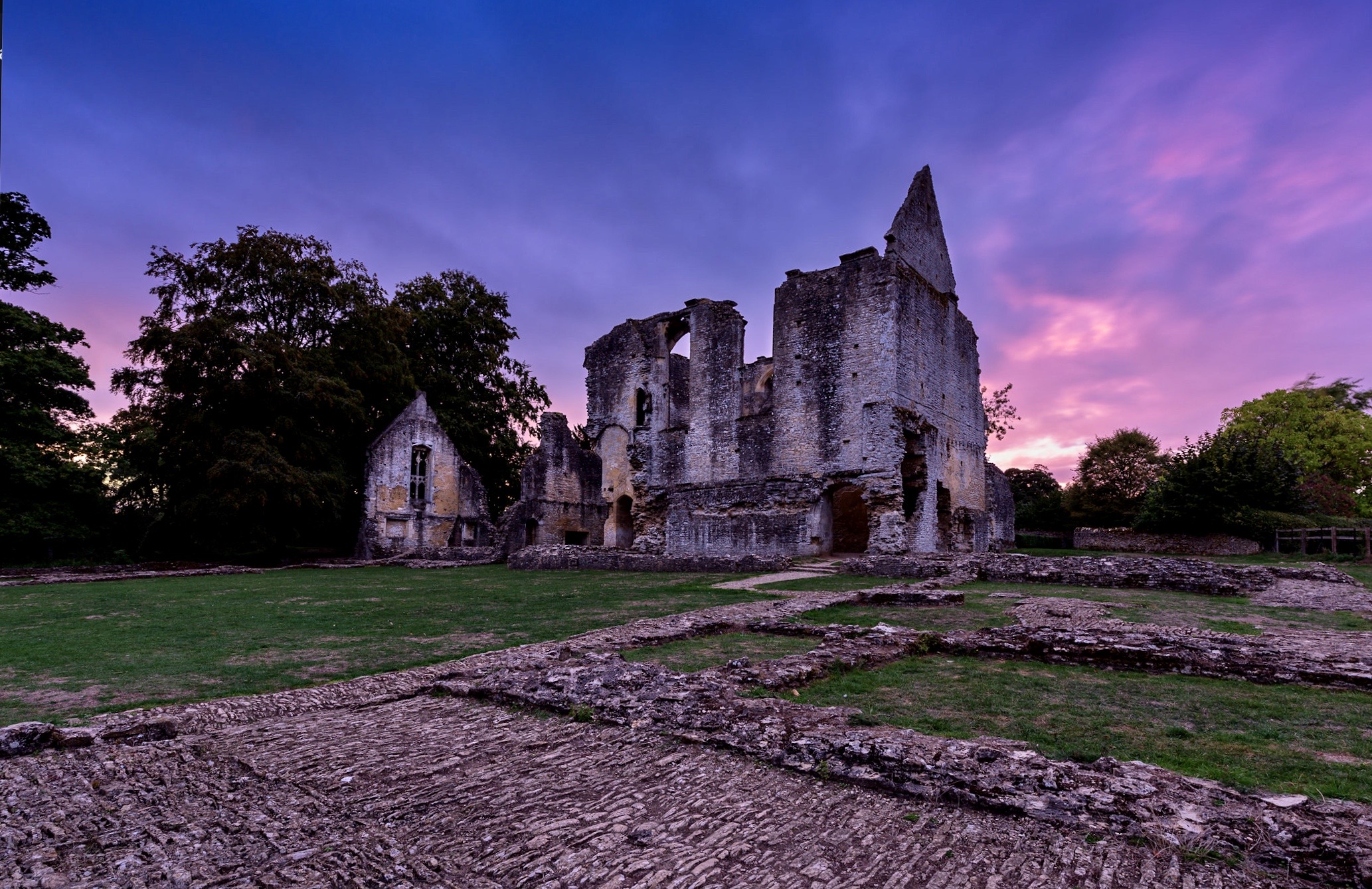
Minster Lovell at sunset.  Photo with thanks to Colin Whitaker

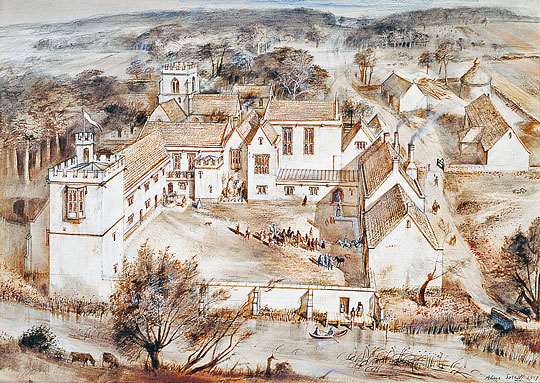
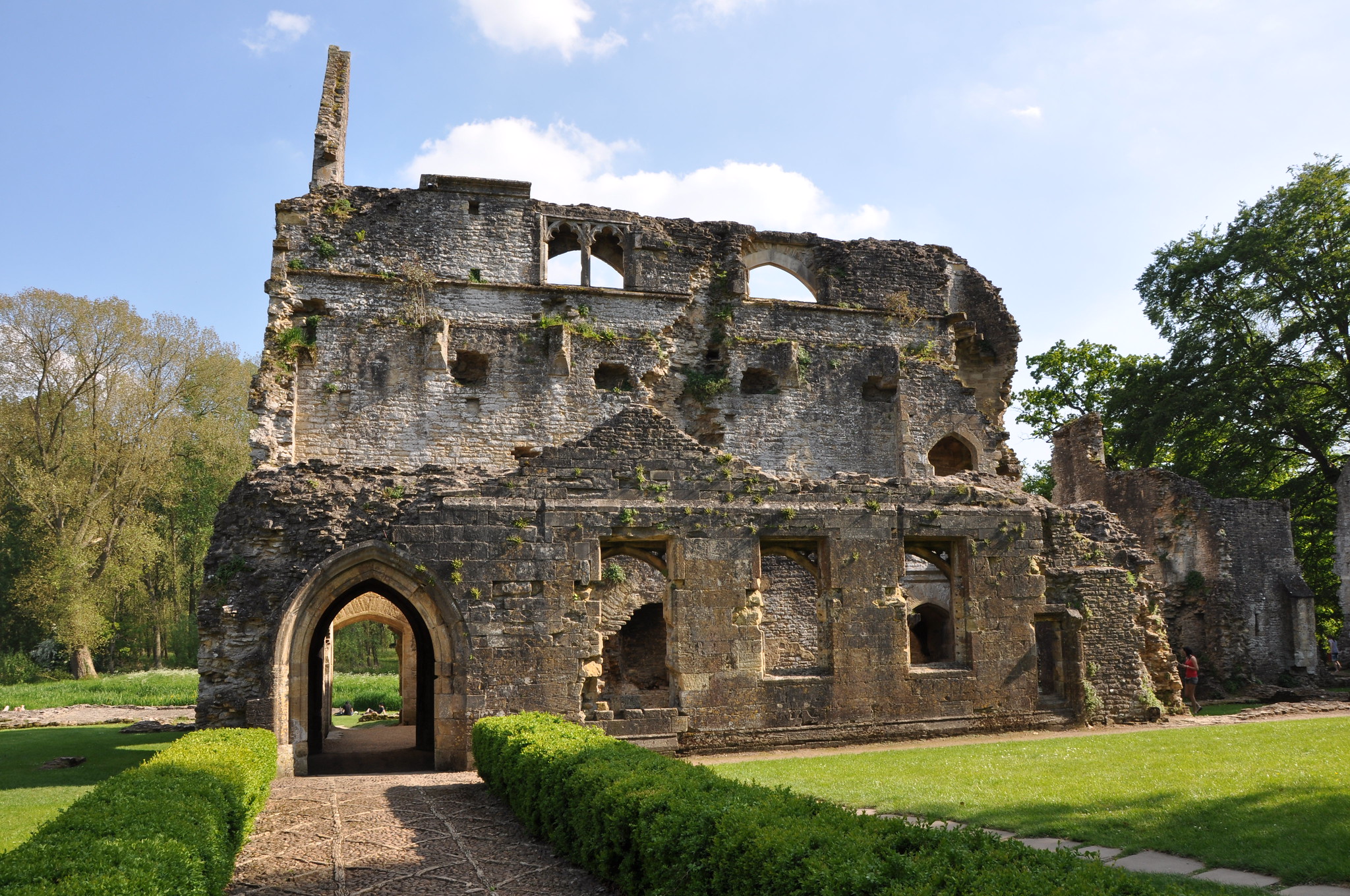
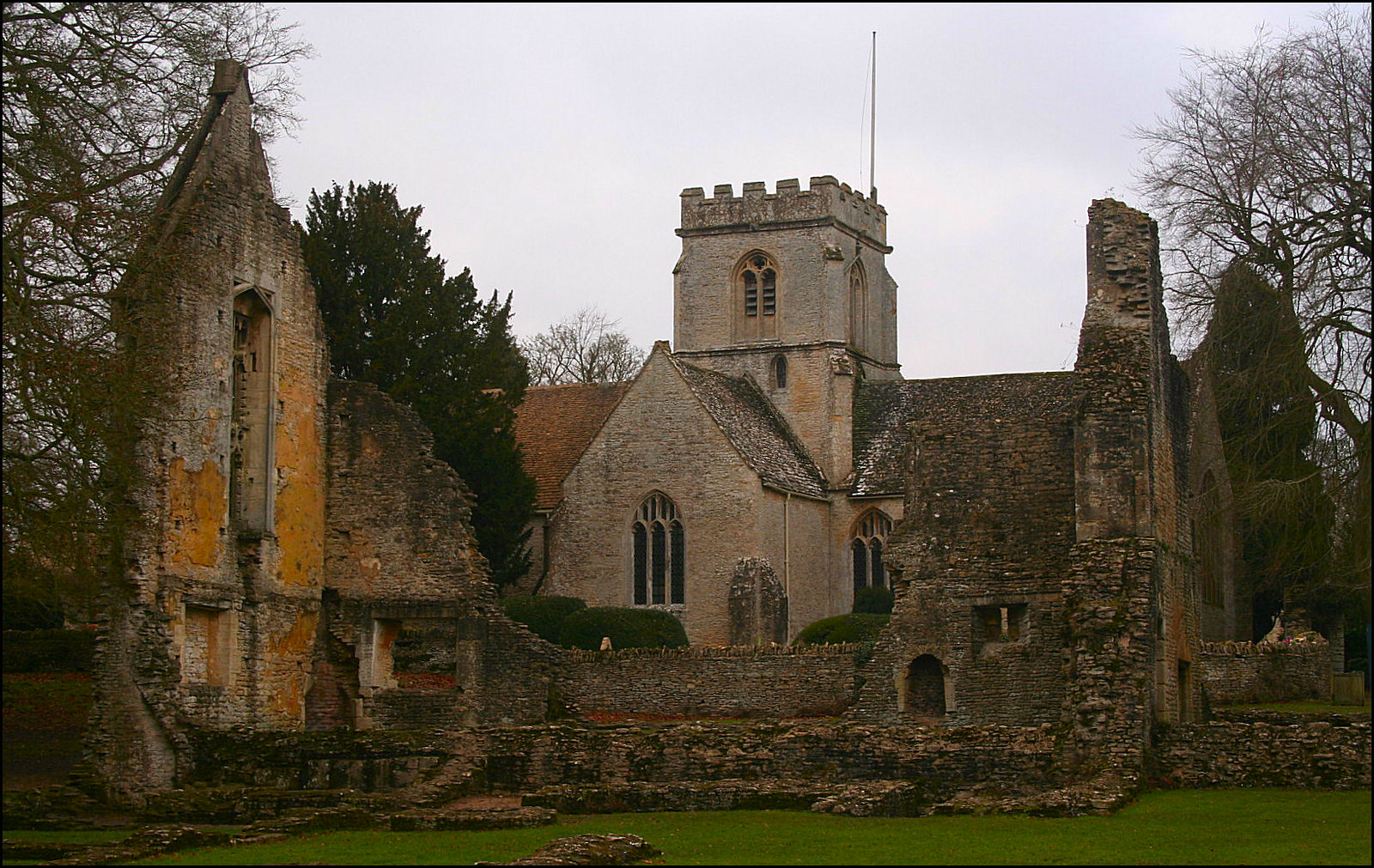
Minster Lovell Hall, Oxfordshire lies in beautiful,  atmospheric ruins set amongst trees besides the River Windrush in the heart of the Cotswolds.     Pevensey describes these ruins to be ‘still the most picturesque  in the country’.   It was at least the second manor house to be built by the Lovells on that site, the first having been built in the 12th century.  William Lovell,  Baron Lovell and Holand (d.13 June 1455) already rich and having  increased his wealth by a  very advantageous marriage,  built the second Hall  some time after his return from the wars in France in 1431(1).  It’s unclear whether part of the earlier buildings were incorporated into the new one, as Pevensey suggests, or the old buildings were entirely demolished.  But undoubtedly  materials from the older buildings would have been recycled in the new build.   The foundations of the earlier house were discovered beneath the east and west wings in the 1937/39.   It remained  home to the Lovells up until the Wars of the Roses.
image

A drawing of the Hall as it may have appeared in the 15th c.  Alan Sorrell
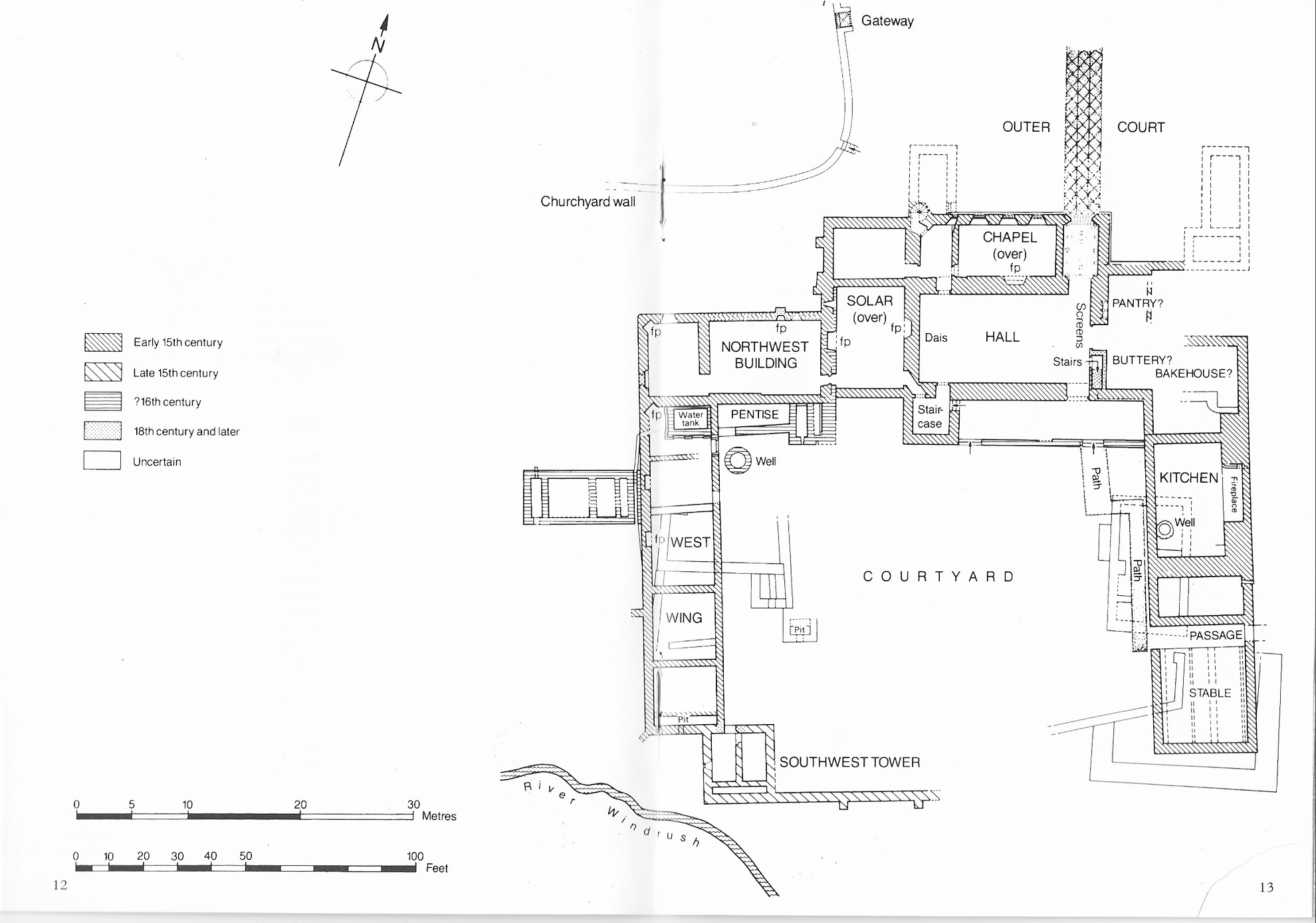
DIAGRAM MINSTER LOVELL

Site plan.  Minster Lovell Hall English Heritage Guide Book. Photo A J Taylor. 
14219189412_bb2268e280_k

The porch and  Hall from the north.  Photo @ Guy Thornton
Untitled

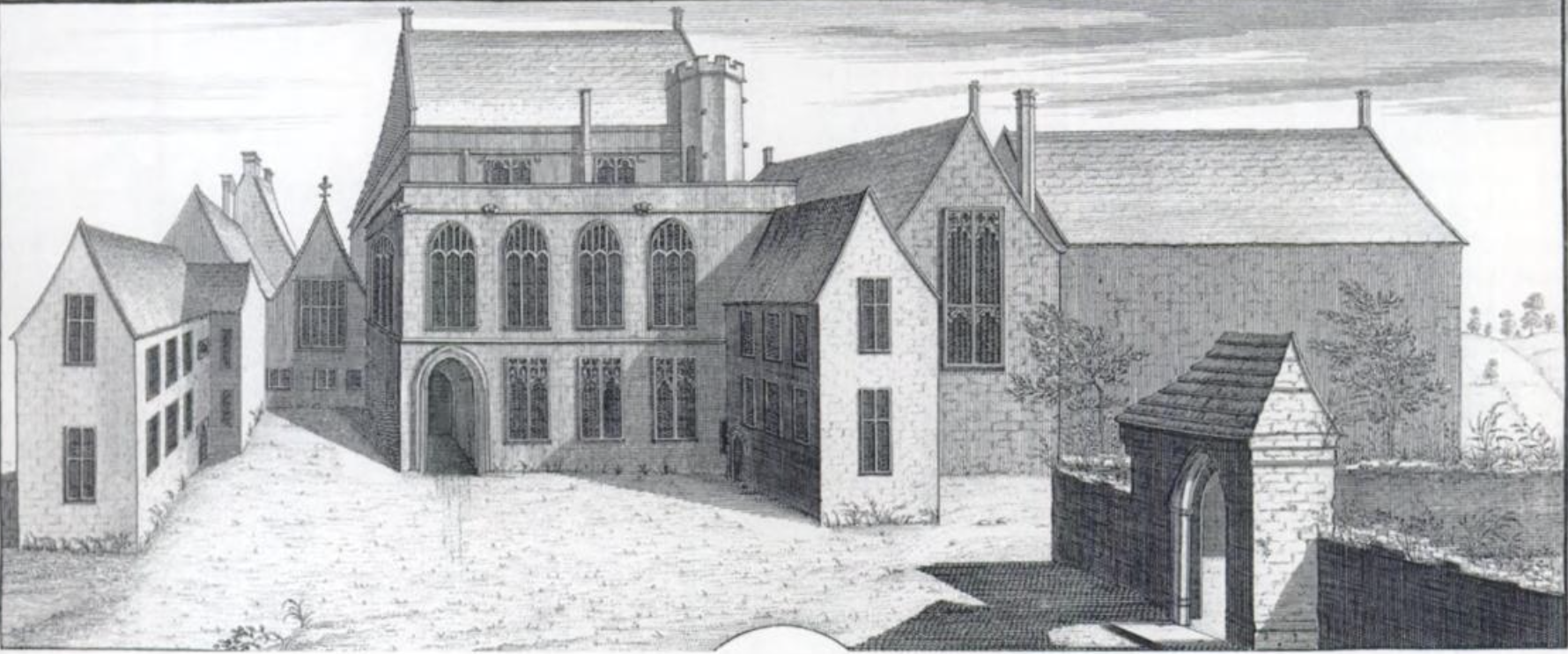
Same view of the porch and Hall from an engraving by Samuel and Nathaniel Buck 1729

Undoubtedly one of the best known of the Lovells – sometimes spelt Lovel –  is Francis Lovell, Viscount Lovell b.1457.  Francis was the son of John Lovell,  Lord Lovell, who died in January 1464 and his mother was Joan Beaumont.  By one of those strange quirks of fate,  Joan, following the death of her husband in January 1464 had married none other than Sir William Stanley in 1465, dying in the following year.   It would later transpire in 1485 at the Battle of Bosworth that Stanley would play a pivotal role in the defeat and death of  Richard III to whom Francis was a close friend.   But we skip too far here so back we go.   Francis’ and Richard’s friendship dated back to their childhoods.     Both had been wards of Richard Neville, Earl of Warwick, known as the Kingmaker,  with both spending part of their childhoods at Middleham Castle in Yorkshire although possibly not always at the same time.    Francis’ life is well documented elsewhere and I don’t want to go into it too deeply here but suffice to say history has judged him rather kindly.  He seldom fails to get a mention in any fictional work about Richard and as far as I can tell he generally comes over as a good egg.  Of course there is the infamous rhyme that was pinned to the door of old St Paul’s : The Cat, the Rat and Lovel our dogge, Rule all England under an Hog‘.  The author of the rhyme, William Colyngbourne, was later to get the chop, or hung drawn and quartered to be precise, under a charge of treason for another matter, although I should imagine the rhyme was well and truely burnt into everyones memories present at the trial.  Strangely enough Colyingbourne was once employed by Cicely Neville, Richard’s mother and its been suggested he may have copped the needle when Richard wrote to her on the 3 June 1484 requesting Colyngbourne’s position be transferred to someone of Richard’s choice –  ‘my lord Chamberlaine..be your officer in Wiltshire in such as  Colynborne had (2 ).

It was from Minster Lovell on Tuesday 29th July 1483 very soon after his coronation and while on royal progress that Richard III wrote to John Russell, Lord Chancellor of England and Bishop of Lincoln concerning a plot that had been uncovered in London:

‘Certaine personnes of such as of late had taken it upon thaym the fact of an enterprise as we doube nat ye have herd be attached and in ward we desir’ and wol you that ye doo make our letters of commission to such personnes as by you and our counsaille shalby advised forto sitte upon thaym and to procede to the due execucion of our laws in that behalve.  Faille ye nat hereof as our perfect trust is in you….’

Moving on to August 1485 it’s unclear whether Francis was present  at Bosworth Field as Richard had sent him to guard the south coast against Henry Tudor’s threatened invasion.    Attainted of high treason after Bosworth in 1486 Francis’ lands were granted to Jasper Tudor, Duke of Bedford, uncle to Henry,  who was of course now Henry VII.   Jasper would  hold them until his death in 1495 after which they reverted back to the Crown.  Whether he was at Bosworth or not,  June 1487 found Francis definitely at the Battle of Stoke, where, as the story goes, he was last seen making his escape swimming across the River Trent on horseback (3).  Confusingly there is a rather vague story attached to some accounts of Francis’ disappearance regarding a letter of safe conduct issued to him and four others  on the 17th June by James IV of Scotland permitting them to enter Scotland and stay for a year.  Whether Francis took this offer up or not no evidence has survived of his presence in Scotland at that time other than a rather woolly story told by a ‘simple and pure/poor person’ from York to the Mayor of that city in 1491 stating that he/she had seen him there (4).    However, to backtrack a little,  in 1466 Francis had married the  Earl of Warwick’s niece, Anne Fitzhugh, the daughter of Henry, Lord Fitzhugh, and Alice, daughter of Richard Neville, earl of Salisbury.   It was Anne and her mother,  who made strenuous and brave efforts to try to find Francis sending Sir Edward Franke, northwards in search of him.   Clearly neither Anne nor Alice,  the sister of the great Richard Neville the Kingmaker, were pushovers.   Alice wrote to Sir John Paston 

‘Also my doghtyr Lovell makith great sute and labour for my sone hir husbande.  Sir Edward Franke hath bene in the North to inquire for hym; he is comyn agayne and cane nogth understonde wher he is.  Wherfore her benevolers willith hir to continue hir sute and labour; and so I can not departe nor leve hir as ye know well; and if I might be there, I wold be full glad, as knowith our Lorde God, Whoo have you in His blissid kepynge (5). 

These attempts as far as we know were sadly futile.  Francis had disappeared into the mists of time.

This leads to the 18th century tale that during  the process  of a ‘new laying‘ of a chimney,  a  secret underground room was discovered at Minster Lovell,  wherein  a skeleton assumed  to be that of Francis was found.  Some accounts have the corpse still whole and richly clothed.  Either way the remains, so the story goes,  were found ‘sitting at a table, which was before him, with a book, paper, pen etc etc; in another part of the room lay a cap, all much mouldered and decayed.  Which the family and others judged to be this Lord Lovell, whose exit hath hitherto been so uncertain’ (6).   It is said the skeleton conveniently disappeared into a puff of dust upon the room being opened  –  which is highly unlikely.    The underground room or cellar has never been found according to the English Heritage Guide Book written by A J Taylor but why let facts stand in the way of a good story.   The conversation which followed, if it ever happened, which I doubt,  can well be imagined  ‘What happened to the body dolt?’ – ‘It disappeared into a cloud of dust sir‘.  It certainly would seem a strange place for Francis to head to as a hunted fugitive because as noted above it was now in the ownership of Jasper Tudor although to be fair he may not have lived at the Hall much.   Hopefully this old chestnut has now been well and truly put to bed.

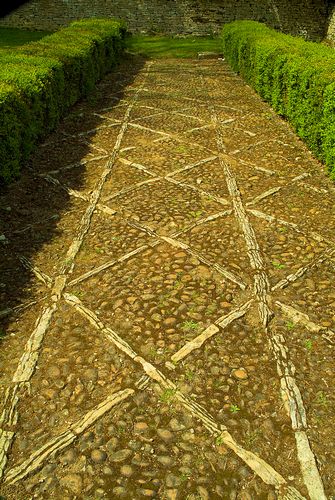
To return to the house itself.  It was built around a quadrangle with the southern side facing the River Windrush.  It’s hard to imagine a more idyllic site.  Approached from the north an impressive diaper patterned cobbled  path leads up to the entrance porch which leads into the  hall.  The solar and private apartments are grouped to the west, the kitchen and service quarters to the east.  There was a chapel to the north of the hall above the entrance porch.  Nothing remains of the chapel today, the four windows of which can be seen in Buck’s engraving.
image

The diaper patterned cobbled  path leading up to the Porch
IMG_6950

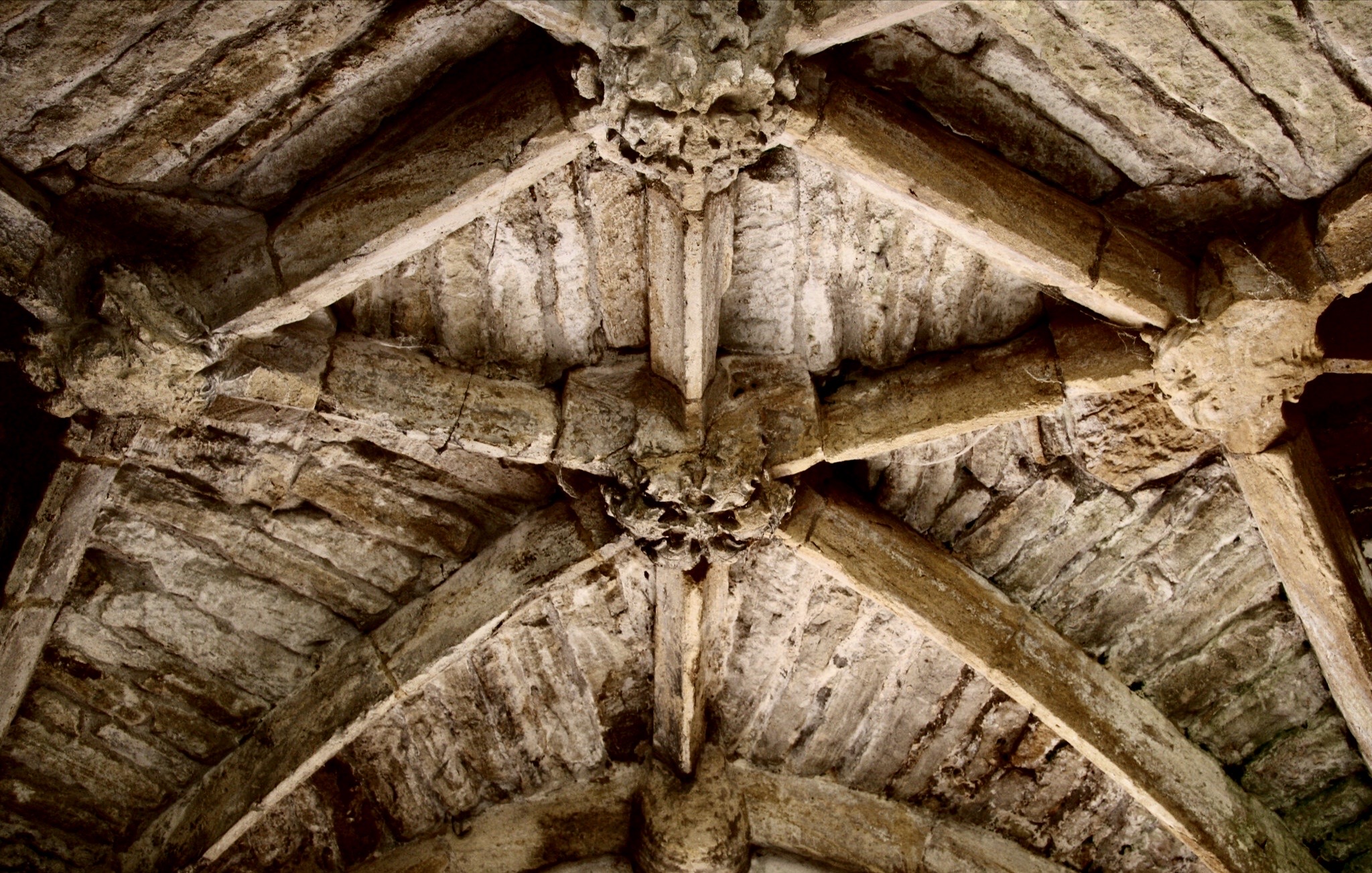
Vaulting on the ceiling of the porch

image

Interior of the Hall.  Photo thanks to Martin Beek

In 1602 the Hall was sold to the Coke family who owned it until 1812.  It was during the ownership of the Cokes that the Hall was dismantled about 1747.  The remains were then left to fall into decay although part of them were used as farm buildings (7). It then passed through several owners until finally in 1935, the then owner, a Mrs Agnetha Terrierre passed the ownership into the hands of the state.

THE SOLAR

The solar was accessed by a staircase south of the dais in the Hall.  Lit by two large transomed windows, both with tracery, it had a fireplace, traces of which can still be seen, and set of stairs leading up to the chapel.  The solar would have been the personal and private  chamber for the family.  Perhaps it was in this room that Francis spent time with his friend, now King Richard III, when Richard, and possibly Queen Anne Neville, Warwick the Kingmaker’s daughter,  stayed at the Minster Lovell in 1483 during his Progress  after his Coronation.

North West Building

This once two storied building, which probably contained further private apartments of the Lord and his family initially survived the  destruction of the 17th century and was being used in the mid 19th century as a barn –  a door being cut into one of the walls to enable carts to be driven in.  This unsurprisingly led to the roof collapsing.   Then a small cottage was built in that area, the foundations of which have now been removed.  All that remains of this cottage is a small fireplace built into the north wall and a window that was partially blocked up.   The upper floor had transomed windows with window seats on the west side.

WEST WING

There were five room in this wing which led to the South West Tower.

South West Tower

The tower consisted of 4 floors, the top floor having battlements.  Its slightly later than the rest of the buildings being later 15th Century.  On the ground floor were garderobes, the pit being on the side nearest the river.  A external staircase led to the first floor and access to the remaining floors.

On the East Side of the courtyard were situated the kitchens, bakehouse and stables.

ST KENELMS CHURCH
18367397790_4f66cede60_k

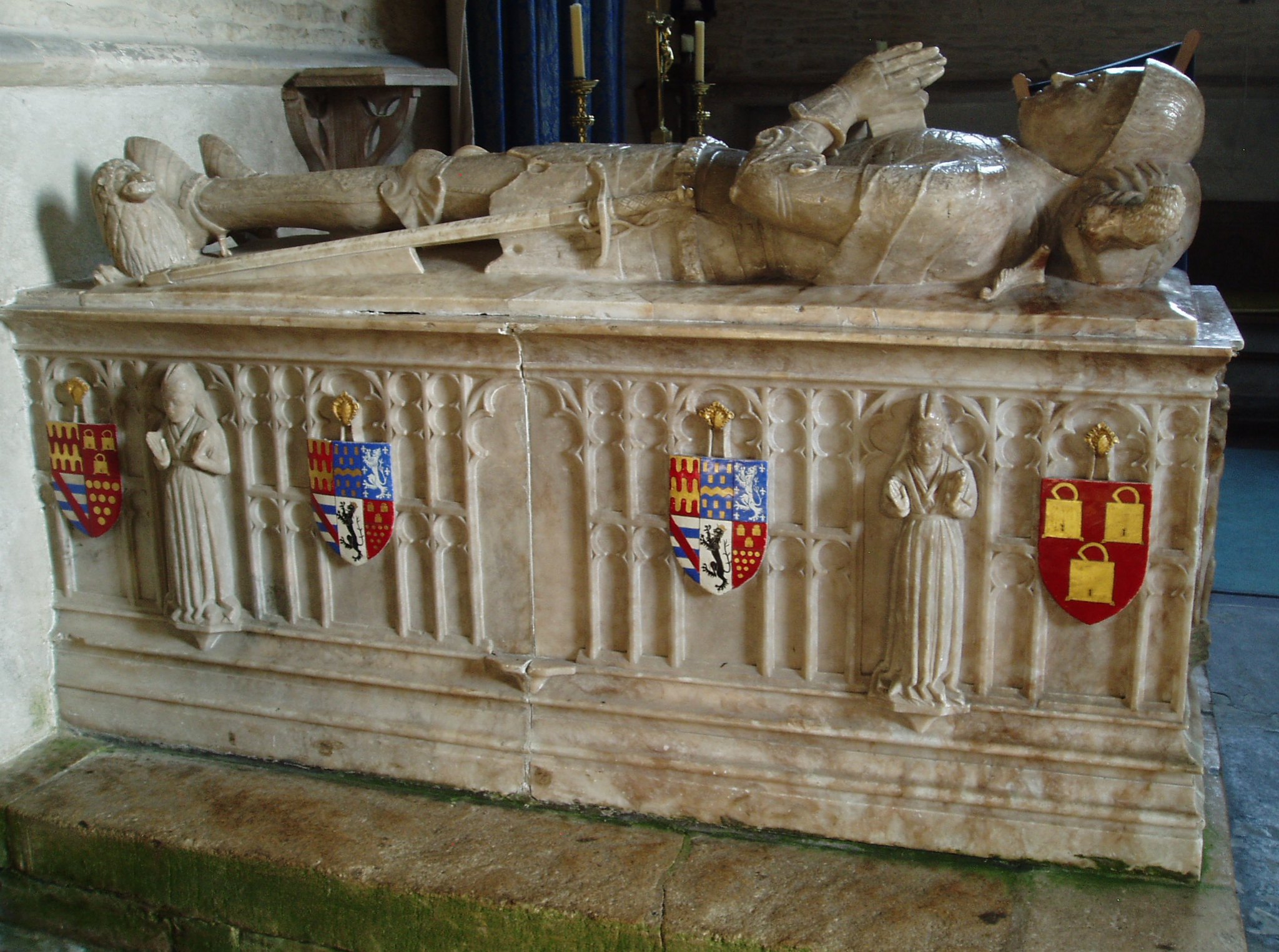
‘Lovell’ tomb in St Kenelm’s church.   Photo thanks to Aidan McRae Thomson

We cannot depart the Hall without a look around St Kenelm’s Church which stands close by.    Most of the church that can been seen today is 15th century built on earlier foundations.  In the transept can be found a fine alabaster tomb chest with the effigy of a knight.  The effigy’s armour and the costumes of the weepers dates it to the mid 15th century.  Traditionally a member of the Lovell family it could be either William Lovell (1397-1455) or more probably his son John (d.1465) (8).  Unfortunately  due to the lack of an inscription it cannot be said with certainty whose monument it is.
16419339547_aa3f026578_h

St Kenelms Church seen beyond the ruins of the North West building.  Photo @Canis Manor

Entry into this wonderful place, now in the care of English Heritage, is free of charge.  If you should ever fancy a wander around these evocative ruins I would suggest you wrap up and go in the quieter months.  The summer months  can be  rather busy with families picnicking and children splashing in the River Windrush.  And who can blame them – there are not many places that can match Minster Lovell for being quite so magical.

For an interesting article on the tomb click here

1) BHO Minster Lovell: Manors and other estates pp184-192

2) Richard wrote a letter to his mother 3 June 1484 requesting ‘my lord Chamberlaine..be your officer in Wiltshire in such as  Colynborne had’  Richard III Crown and People p105 Kenneth Hillier

3) According to Francis Bacon ‘there went a report that he fled and swum over the Trent on horseback but could not recover the other side and so was drowned.  But another report leaves him not there but that he lived long in a cave or vault’.

4) Lovell, Francis, Viscount Lovell Rosemary Horrox Oxford DNB and Last Champion of York. Francis Lovell Richard III’s Truest Friend p.8. Stephen David.  Neither Horrox or David have given the primary sources for this story.

5) Stoke Field p.86. David Baldwin.   Source The Paston Letters A.D. 1422-1509. Ed.James Gardiner (1904).  

6) Letter written by William Cowper, clerk of the Parliament to Francis Peck, an antiquarian 1737.

7) Minster Lovell Hall p3 A J Taylor

8) Memorials of the Wars of the Roses p151 W E Hampton

If you liked this post you might also like:  

JOHN DE LA POLE EARL OF LINCOLN AND ELSTON CHAPEL – A POSSIBLE BURIAL PLACE?

SIR THOMAS BURGH c.1430-1496 AND GAINSBOROUGH OLD HALL

STAINDROP CHURCH – A NEVILLE MAUSOLEUM

Ashby de la Zouch Castle – Home to William Lord Hastings

SIR WILLIAM STANLEY – TURNCOAT OR LOYALIST?

CROSBY PLACE HOME TO THE DUKE AND DUCHESS OF GLOUCESTER 1483


JOHN HOWARD, DUKE OF NORFOLK – HIS WEDDING GIFTS TO MARGARET CHEDWORTH

IMG_5207.jpg

JOHN HOWARD, PAINTING OF A STAINED GLASS IMAGE FORMERLY AT SOUTH  CHAPEL, STOKE-BY-NAYLAND CHURCH, NOW LOST..

John Howard, what a colossus of a man – Admiral of England, member of the King’s  Council, Earl Marshal, Knight of the Garter, Treasurer of the Royal Household, High Sheriff , a great shipowner and much  more.  Described by Anne Crawford as ‘an extremely versatile royal servant, as a soldier, administrator and diplomate he had few equals among his contemporaries(1).  A valiant soldier and loyal friend to King Richard III, dying with him at Bosworth in 1485.  Much has been recorded about him and there are good biographies to be had by both Anne Crawford ‘Yorkist Lord‘,  and John Ashdown-Hill’s ‘Richard III’s Beloved Cousyn‘ with the bonus of his household books surviving edited by Crawford.  The well known comment written, regarding an incident in Howard’s life,  by a John Jenney describing Howard as being ‘as wode as a Wilde bullok‘ indicates that he was neither  a pushover nor one to get the wrong side of (2).   There is also the remark made by Howard’s first wife, Catherine, aimed at John Paston and helpfully forwarded on to Paston by his brother Clement,  who wrote urgently advising  that he should get to where he had been summoned without delay and with a good excuse  as:

‘Howard’s wife made her bost that if any of her husbands men might come to yow ther yulde goe noe penny for your life: and Howard hath with the Kings a great fellowship’ (3).

John Paston did indeed get himself to London and was promptly thrown into the Fleet prison for a short while.  Perhaps this move saved him from Howard’s ire so every cloud as they say.    But it’s not Howard’s professional life I want to focus on here but rather his private life for he was, it would appear,  both a  caring father and a loving husband and Crawford has noted that when he was in London at his house in Stepney for any length of time his family and household would move there too.(4)   stoke-by-nayland-k-howard-1.jpg

Brass of Catherine Howard nee Molines at Stoke by Nayland.  Engraved in 1535 with a Tudor headdress.  Catherine’s mantle has her husband’s arms on one side with the Molines on the other.  

Although little is known about his relationship with his first wife, Catherine Moleyns (died November 1465) there are indications that his second marriage to Margaret Chedworth was a love match as the long list of valuable bridal gifts Howard ‘showered‘ on her has happily  survived and been included in the Paston Letters. The pair were married in unseemly‘ haste six months after the death of Margaret’s second husband, John Norris of Bray,  and before Norris’ will, leaving most of his lands to his young widow provided she did not remarry, was proved.  Crawford writes  ‘Now a wealthy and eligible widower, Howard could well have looked for a second wife among the ranks of aristocratic widows or those who had personal connections, but his choice was at once more personal...’ (5).   Margaret was cousin to Anne Crosby nee Chedworth, wife to Sir John Crosby, builder of Crosby Hall  and  brought with her to Tendring Hall two daughters from her previous marriages.  Here is just a selection of the many gifts Lord Howard gave to his bride…

Ferst ij rynges of gold set with good dyamawntes, the wyche the quene yaff my master

Item, a nowche (brooch) of gold set with a fine safyre,  a grate balyse and v perles

Item, a ring of goolde with a fine rubye.

Item, my master gaff her a longe gowne of fyne cremysen velvet furred with menyver and purled with ermynes.

Item, my master gaff her vij scynnes  of fine ermynes.

Item, my master gaff her vij yerdes and di.of fyne grene velvet

item, my master gaff here a devyse of goolde with xiiii.lynkes and the ton halffe of the lynkes enamelled set with iiij rubyis and vij perles

Item, my master gaff her a lytell gerdyll of silk and goolde called a demysent and the harneys of goolde

Item, my master gaff here a coler of gold with xxxiii.roses and tonnes set on a corse of blank silk with an hanger of goolde garnished with a saphyre.

Item, my master gaff her iii. Agnus Dei of goolde.

Item, my master gaff her a cheyne of gold with a lock of gold garnished with  rubye.

Item, my master gaff her a long gown of murrey furred with menever and purfeled with ermyns

Item my master gaff her iiij.owches of goolde garnyshed with iij.rubyis, a saphyre, an amytes, an emerawde and xv.perles   (an owche was a brooch)

mom

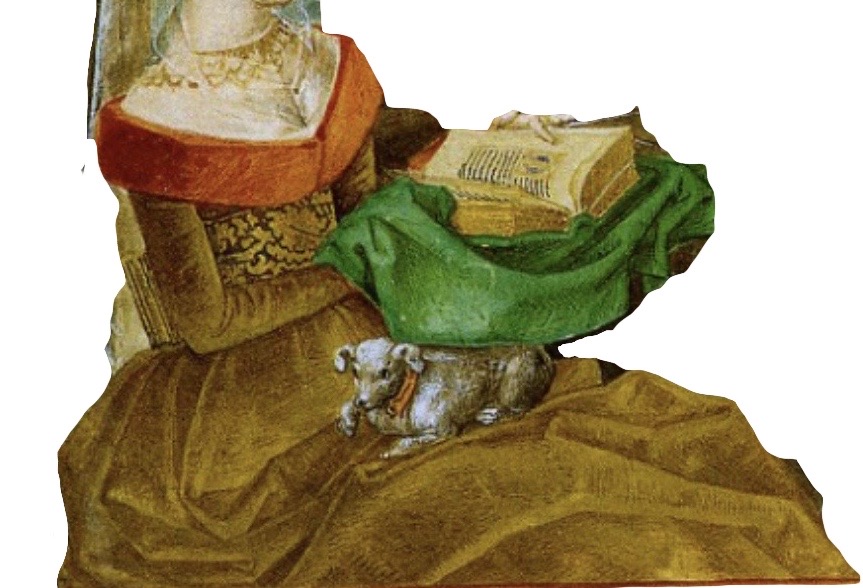
A Burgundian gown, possibly velvet, with broad highly decorative girdle (belt).  This would have been typical of the  type of gown Lord Howard gave to his wife..

image

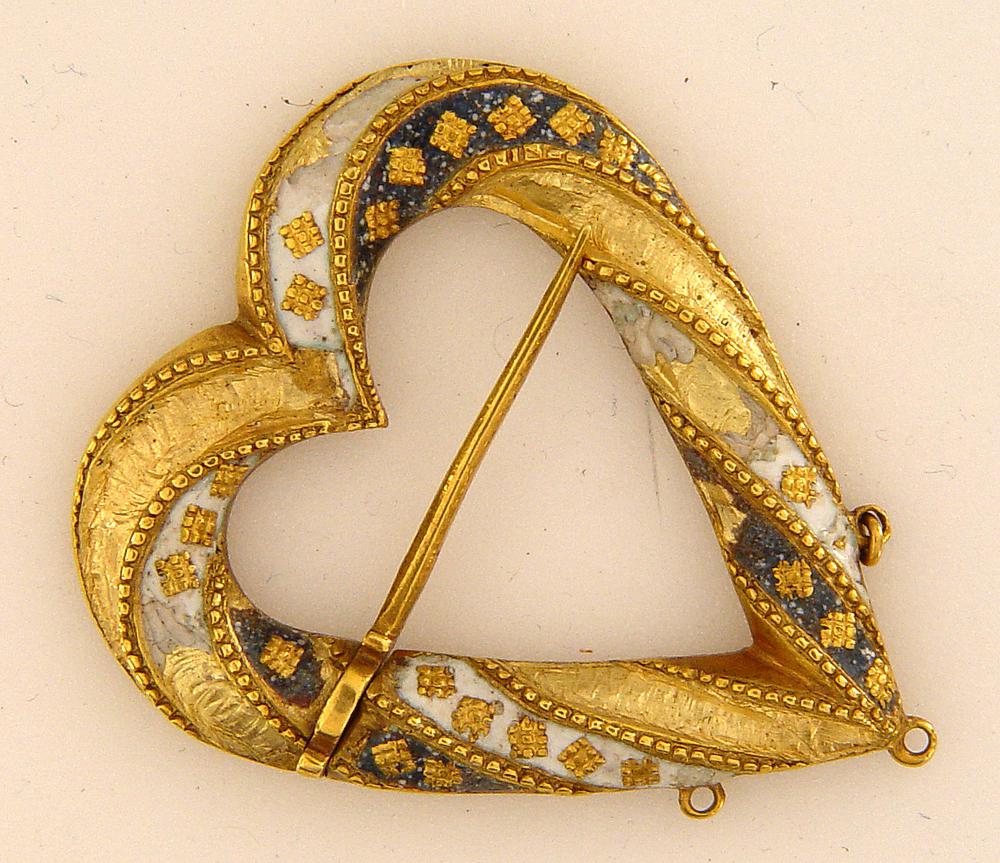
Gold and enamelled brooch from the 15th Fishpool Hoard

image

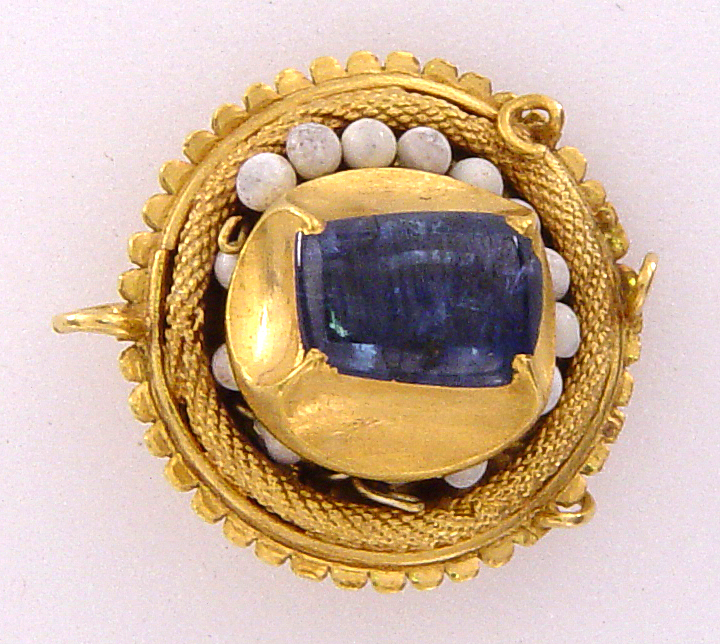
Pendant from the period Fishpool Hoard @British Museum

IMG_1820

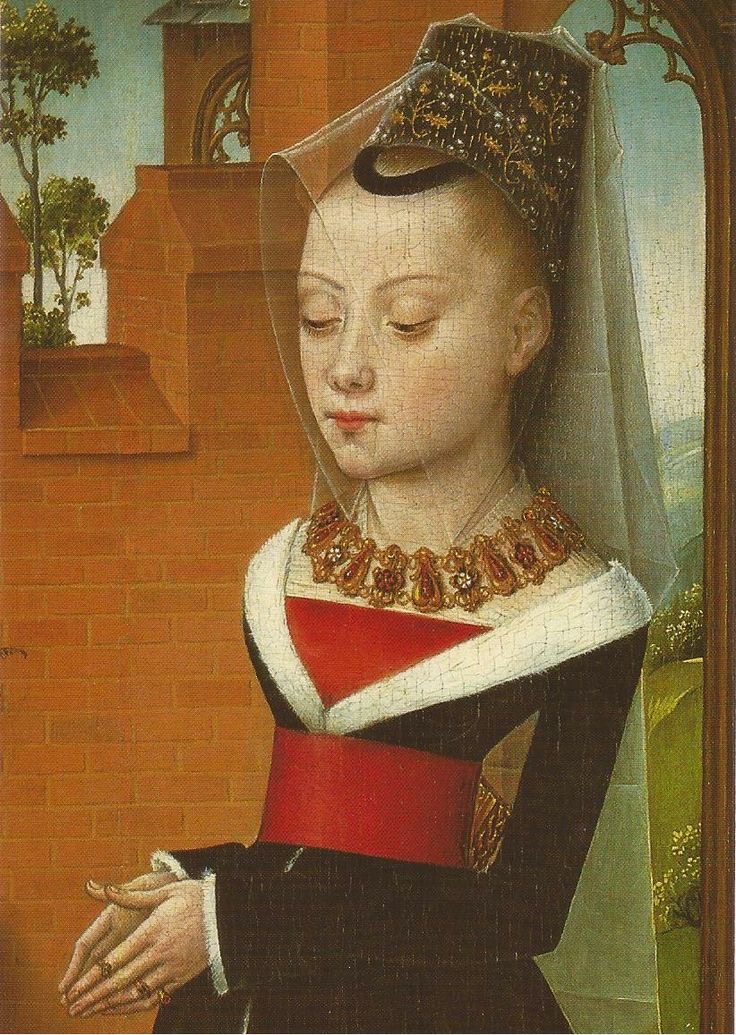
An English lady from the period.  Note the jewelled collar, the wide belt (girdle) and the numerous rings… 

jewllery

A belt (girdle) from the period..

Added in Sir John Howard’s own hand – And the vij.zere of the Kynge  and in the monithe of Janever I delivered my wyffe a pote of silver to pote in grene ginger that the Kynge  gaffe.

These are only a selection of the gifts, too numerous to mention here in full.    Also included were  several more gowns, rings,  gyrdles, holand clothe, Aras, cushions, silver spones, a bed with covers of cremysen damask and more..

IMG_5229.JPG

Lady Howard’s jewellery box..no not really!..this is the Cheapside Hoard but no doubt Margaret’s jewellery collection looked very similar.  

The Howards marriage endured until he fell,  loyally fighting for his king, at Bosworth.   Anne Crawford writes that ‘despite his age (he was sixty, an old man for his time) he was there in the middle of his infantry line‘ and that ‘there is no doubt that if he had chosen to do so Howard could  have to terms with Henry before the battle as others did.  He could have despatched his force while remaining at home himself on the grounds of age and sickness.    The rhyme supposedly pinned to his tent the night before the battle warned him what to expect.. ‘Jockey of Norfolk be not so bold, for Dickon thy master is bought and sold‘.  For Howard these considerations were irrelevant: ‘He owed his dukedom to Richard and if the house of York was threatened, then the house of Howard would be in arms to defend it.  He died as he had lived, serving the Yorkist kings’.(6)    Crawford also wrote ‘Howard had no need to participate in the actual battle.   He was nearly 60 years old and having brought up his forces he could have delegated command to his son and remained in the rear and nobody would have thought the worst of him for it,  given the sheer physical effort and stamina required to fight on foot and in armour.  He fought of course’.(7)   As to how Margaret felt about her husband’s insistence to fight —  did she scold, did she plead, cajole  or did she accept nothing would stop her husband from what he perceived as his duty is not known.  As I wrote, at the beginning of this article, what a colossus of a man.  John Howard, bravo, you did well!.

IMG_5232.jpg

Thetford Priory Gate House – Howard’s funeral cortege would have passed through this gateway…

51815911_1438269039.jpg

John Howard’s remains were eventually removed from Thetford Priory to probably Framlingham Church at the Dissolution of the Priories.  See John Ashdown-Hill’s ‘The Opening of the Tombs of the Dukes of Richmonds and Norfolk, Framlingham 1841’  The Ricardian vol. 18 (2008)

image

St Michaels Church, Framlingham.  John Howard’s body was removed here following the destruction of Thetford Priory (8) See John Ashdown-Hills article The Opening of the Tombs Ricardian Vol 18 2008

If you liked this post you might also like 

MINSTER LOVELL HALL, HOME TO FRANCIS LOVELL VISCOUNT LOVELL

THE RISE AND FALL OF WILLIAM LORD HASTINGS AND HIS CASTLE OF KIRBY MUXLOE

CROSBY PLACE – HOME TO THE DUKE AND DUCHESS OF GLOUCESTER 1483

“THE MEMORY OF KING RICHARD STILL LAID LIKE LEES AT THE BOTTOM OF MENS HEARTS’ Sir Francis Bacon

  1. John Howard first Duke of Norfolk Oxford Dictionary of National Biography, Anne Crawford.
  2. Paston Letters Original Letters….ed. J Fenn p.111
  3. Yorkist Lord John Howard Duke of Norfolk  p.33 Anne Crawford
  4. Howard Household Books p.xiii ed Anne Crawford
  5. Ibid p.xxi
  6. Ibid p.xxix
  7. Yorkist Lord John Howard Duke of Norfolk p132 Anne Crawford
  8.  See  John Ashdown-Hills article The Opening of the Tombs ..Ricardian Vol 18 2008

WADDINGTON HALL – REFUGE FOR HENRY VI

Gateway,_Waddington_Hall.jpg

 THE GATEWAY HAS A CARVING OF A HAND CARRYING A LANCE AND BATTLE AXE WITH THE INSCRIPTION “I WILL RAISE UP HIS RUINS, I WILL BUILD IT AS IN THE DAYS OF OLD”

18260754-0-image-a-14_1568045678655.jpg

image.png

Waddington Hall was the one time refuge for Henry VI after the battle of Hexham, 1464. Parts of this beautiful house dates from the eleventh and thirteen centuries with a room named after its royal guest,  ‘King Henry’s Chamber‘.  Whether this is the very room where Henry stayed for 12 months before being rumbled is anyone’s guess but stay  at the Hall he did, until one day, just about to sit down to dinner he was taken by surprise by an armed  raid on the house who arrived with the intention  of taking him prisoner.   He managed to escape,  yet again, but did not remain at large for long before his capture and removal to London where he was met at Islington by Warwick the Kingmaker who escorted him to The Tower. The rest is history.

image

A bedroom fit for a king?

image

Door in the master bedroom….

image

The hall today..

The Hall is now in private hands.

ANNE MORTIMER AND RICHARD OF CONISBURGH , A LOVE MATCH?

IMG_4798.jpgTHE TOMB THAT  IT IS BELIEVED ANNE MORTIMER SHARES WITH HER IN-LAWS, EDMUND OF LANGLEY AND ISABELLA OF CASTILE.  CHURCH OF ALL SAINTS, KINGS LANGLEY

Some time during the month of May 1408 , were married Richard III’s paternal grandparents, Anne Mortimer and Richard of Conisburgh. She was just 16 and he was in his 20s, it being thought that he could have been born circa 1375 but there is some uncertainty about this and it could have been later.  It must have been a love match for it was without parental consent but validated by papal dispensation two years later on the 23 May.   There was certainly no material gains from the marriage for either of them as Anne and her sister, Eleanor, were both living in straitened circumstances and being described as ‘destitute‘ on the death of their mother..  Conisburgh was destined to suffer on going cash flow problems being described at the time as ‘the poorest of all the earls‘ and struggling to maintain the lifestyle appropriate for his rank (1) when he was promoted to Earl of Cambridge in 1414.

Sadly the marriage was short-lived, Anne dying shortly after giving birth to Richard III’s father, Richard of York,  on the 22 September 1411 at Conisburgh Castle.  The future was to bring  further tragedy with the execution of Conisburgh as a result of the Southampton plot in 1415 leaving their small son an orphan.

test.jpg

CONISBURGH CASTLE

But I digress , and returning to Anne, it is believed that she was finally reburied once again with her paternal inlaws, Edmund of Langley and Isabella of Castile in All Saints Church, Kings Langley after their original burial place, Convent Chapel, Kings Langley fell into disrepair after the Dissolution of the Monasteries.    In 1877, this tomb and its contents were examined by  Dr George Rolleston.     In a third lead coffin was found the remains of a woman of ‘about’ 30 years old with some of her auburn hair still remaining.  These are believed to have been the remains of Anne Mortimer.

Kings_Langley_Palace_ruins.jpg

Some of the remains of Kings Langley Palace, home to Edmund Langley, are thought to have been incorporated in this old farm building.

Here is a link to an interesting article on  “Anne Mortimer, the forgotten Plantagenet”

1) Richard Duke of York, King by Right p35 Matthew Lewis.

DR JOHN ARGENTINE – PHYSICIAN TO THE PRINCES IN THE TOWER.

KINGS COLLEGE CHAPEL CAMBRIDGE 1845.jpg

King’s College Chapel.  Dr Argentine is buried in a chantry chapel on the south side close to the altar.

In Kings College Chapel, Cambridge, just south of the altar can be found the chantry chapel where Dr John Argentine, c1443–1508, Provost of Kings College from 1501 until his death in February 1507/08, physician, astronomer and collector of books, lies buried.  A fine memorial brass covering his tomb depicts Dr Argentine in his doctor’s robes.

image029.jpg

Dr John Argentine’s funeral brass

Dr Argentine, who spelt his name variously as Argentem or Argentein (1) was born in Bottisham, Cambridgeshire into a family that were prominent supporters of the House of York and he is remembered mostly,  thanks to Dominic Mancini, as being physician to Edward V, and, it could be assumed, also physician to Edward’s younger brother, Richard of Shrewsbury.  Mancini described Dr Argentine,  Argentinus medicus  as being among the last of those to visit Edward and Richard in the Tower of London before their mysterious disappearance around June/July 1483.  Mancini who spoke little if any English would no doubt have been mightily relieved to meet someone who having spent a long time in his homeland, could converse easily with him in either his native Italian or Latin.

Mancini is responsible for passing on the learned doctor’s recollections of those visits to the Tower i.e. that the young Edwardlike a victim prepared for sacrifice sought remission of his sins by daily confession and penance  in the belief that death was staring him in the face (2).   Alternatively Edward  may have been merely suffering from low spirits and angst due to the fact that his  imminent Coronation had been cancelled and the crown firmly removed from his grasp.  Tellingly Dr Argentine omitted any mention that Edward was suffering from a raging toothache which puts to bed any likelihood that the infamous urn in Westminster Abbey actually contains the bones of Edward and his brother, as the jaw bone of the oldest child shows clear signs of ‘a chronic and painful condition which led to deformities in the jaw bone  – possibly either osteitis or osteomyelitis‘, a horrible disease which no-one would have failed to notice, especially his doctor , but why let common sense stand in the way of a good myth – but I digress (3).

Dr Argentine, having served successfully under both Edward IV and Richard III went on to become physician to Henry VII’s son, Arthur, Prince of Wales and dean of the chapel of the Chapel of Windsor.  It should also be noted that  after 1485 Argentine was also presented to with a ‘series of lucrative benefices, prebends, and canonries by his friends Archbishop John Morton and Bishop John Alcock of Ely as well as enjoying the fruits of royal patronage (4) .  Didn’t he do well!  We should bear  this in mind when we ask the otherwise unfathomable question why he was not asked, as far as we know, to examine that most convincing and troublesome of all the pretenders to the throne, Perkin Warbeck.

arthur c 1500.jpg

                                                Arthur, Prince of Wales c1500

1) The Library of John Argentine, Transactions of the Cambridge Bibliographical Society Vo.2 (1956) pp 210-212.  Dr Argentine wrote in his own hand in several of his books..’Questo libro e mio Zouan (Giovanni) Argentein’ ‘ Questo libro e mio Johan Argentem’.

2) The usurpation of Richard III Dominic Mancini C A J Armstong p.93

3) Richard III The Maligned King Annette Carson p.219

4) Argentine, John (c. 1443–1508) Peter Murray Jones Oxford DNB

If you enjoyed this post you might like:

The Bones in the Urn again!…a 17th Century Hoax?

‘RECENT INVESTIGATIONS REGARDING THE FATE OF THE PRINCES IN THE TOWER’ by L E Tanner and William Wright 1933

CARDINAL JOHN MORTON’S TOMB IN THE CHAPEL OF LADY UNDERCROFT CANTERBURY CATHEDRAL