THE RAVENS OF THE TOWER OF LONDON

image

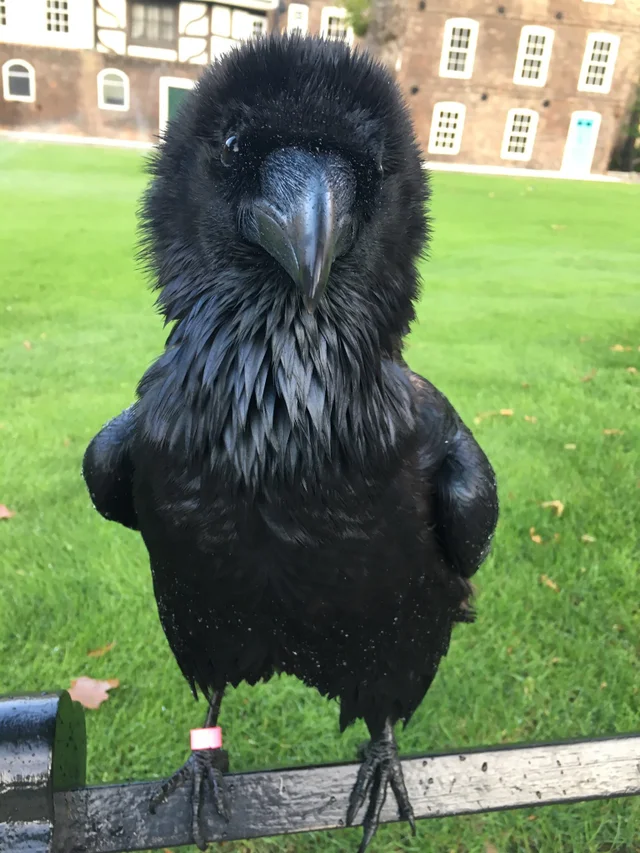
The beautiful and irreplaceable Merlina…

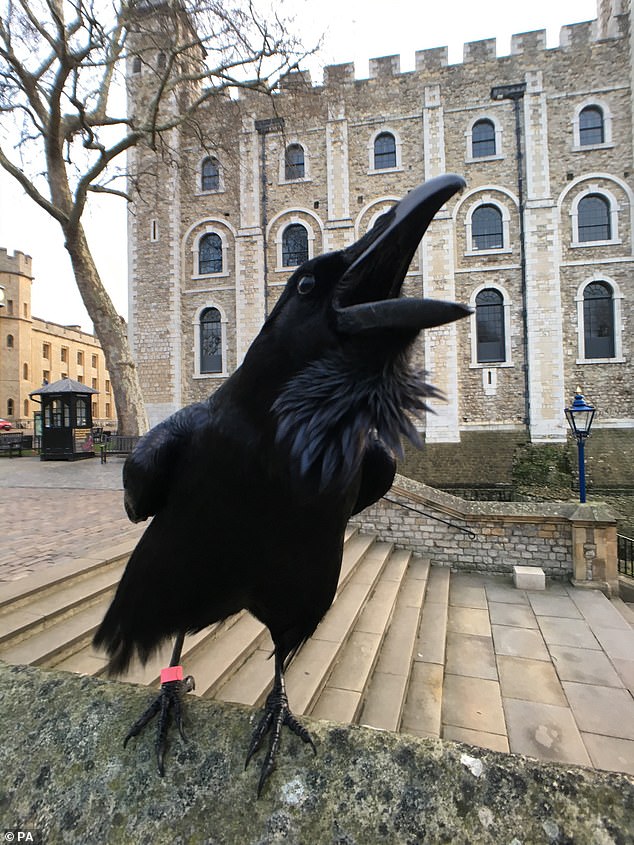
It was sadly reported on the 13 January 2021, that one of the famous Tower of London ravens has gone missing and presumed she had passed away. Merlina or Merlin as she was first known arrived at the Tower in 2007 after being found by the side of a Welsh road aged about a year old and later went on to become the favourite raven of Chris Skaife, present Ravenmaster of the Yeoman Warders – well one of them. She had originally been taken care of by the Swan Rescue Centre in Barry where she became well known for ‘throwing tantrums and mimicking the other birds‘. A strong character she refused to sleep with the rest of the ravens at night in their purpose built enclosure (thought to be built on the site of the Grand Hall where Anne Boleyn was imprisoned prior to her execution 1536) and instead had her ownprivate night box behind an old window on the ground floor of the Queens House on Tower Green where she graciously allows the Constable of the Tower and his family to live where she would return to most nights. Along with the other ravens she was free to leave the Tower and tootle around the perimeter , their flight feathers not being so harshly cut as in previous times thanks to Chris Skaife who prefers a more gentler approach, the idea being that with good plentiful food and accommodation the ravens would choose to live at the Tower of their own free will. This unfortunately entails some risk and give some ravens an inch they will take a mile as the old saying goes – However, some ravens have gone absent without leave in the past and others have even been sacked. Raven Munin flew off to Greenwich and was eventually returned by a vigilant member of the public after seven days. Raven George was dismissed for eating television aerials and Raven Grog was last seen outside an East End pub‘. (1)

The full, and amusing, story of the retaking of Raven Munin is in Chris Skaife’s book The Ravenmaster: My life with the Ravens at the Tower of London which is full of funny anecdotes and recommended if anyone wants to go more fully into the story of the Ravenmaster and the Tower Ravens.

Merlina and the other ravens are fed twice a day, the official diet being  6oz of fresh meat daily, including chicken, lamb and pig hearts, liver, kidney, peanuts in their shells, defrosted rats, mice, day old chicks, hard-boiled eggs, biscuits soaked in blood, and the occasional road kill rabbit. However her favourite food was crisps or Pringles if she could get hold of any i.e. purloin from unsuspecting tourists which she would soften by dipping into water. One of her favourite tricks was to lie on her back, legs sticking in the air, faking dead to the distress of passing tourists. What a girl!

Chris informs us in his book for ease of identification the ravens wear coloured anklets: Munin lime green, Jubilee Gold, Gripp Light blue, Harris purple, Rocky brown, Erin red and Merlina bright pink and quotes Charles Dickens who described their walks as ‘like that of a very particular gentleman with exceedingly tight boots on, trying to walk fast over loose pebbles’. (2)

image

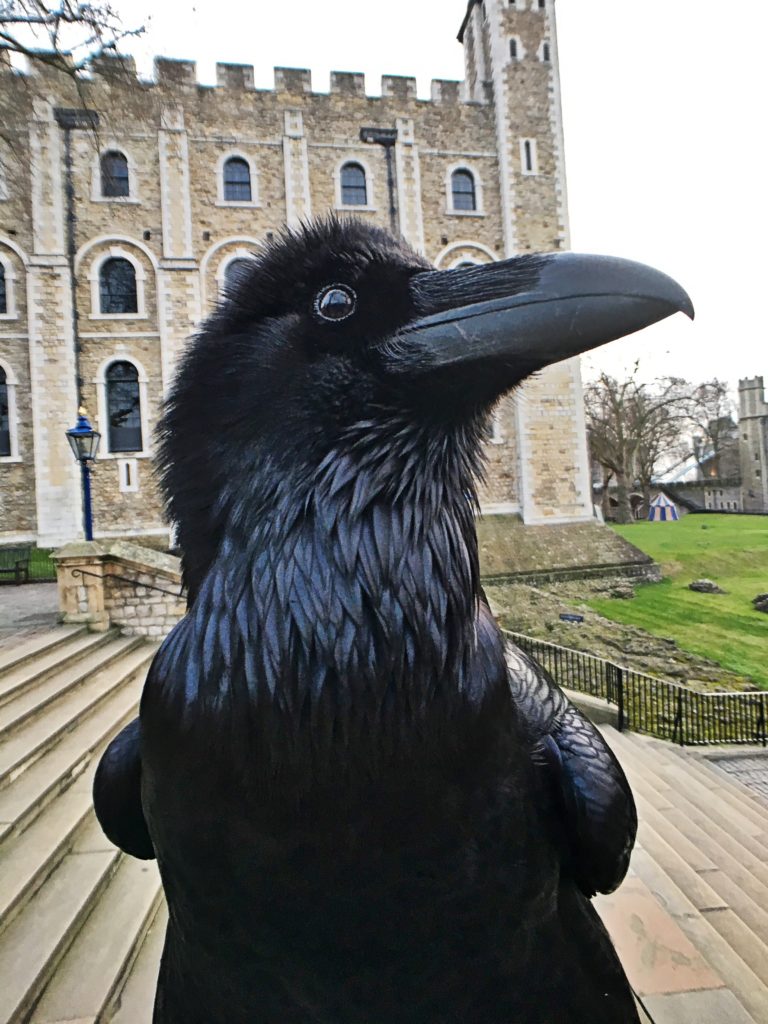
A watchful Raven on the lookout for unsuspecting tourists and their sandwiches,  especially the ham version, sausage rolls and Pringles..

image

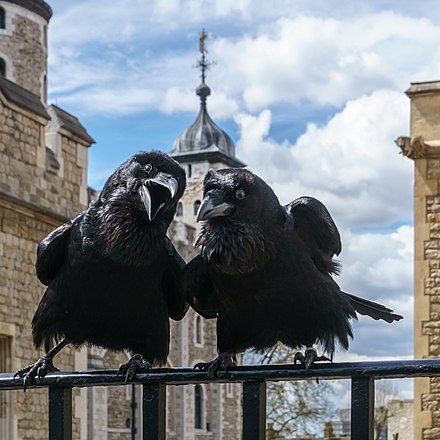
Jubilee and Munin  conspiring – Whats not to love?   photo wikipedia.org

There is a legend that says Charles II initially ordered the ravens removal from the Tower following complaints from the Royal Astronomer,  John Flamsteed (1646 – 1719) that they were ‘flying in front of his telescope’ and interfering with his observations‘.  However,  after someone brought to his attention the story that if the Ravens ever left  the Tower, a great disaster would come about and both the Tower and the monarchy would fall,  a rattled Charles had a change of heart –  the ravens stayed  at the Tower and the Royal  Observatory found a new home Greenwich. I should think so too.  It is said that it was also Charles who decreed that the number of ravens should not fall below six and indeed at least seven are kept there just in case.

“History and prehistory, legends, fables, and stories, they’re everywhere here. I sometimes think that the Tower is just a vast storehouse of the human imagination, and the ravens are its guardians….” Chris Skaith Ravenmaster 

A spokesperson from Historic Royal Palaces said “Since joining us in 2007, Merlina was our undisputed ruler of the roost, Queen of the Tower Ravens.   She will be greatly missed by her fellow ravens, the Ravenmaster, and all of us in the Tower community.”

thevintagenews

38025490-9149317-image-m-115_1610666655709

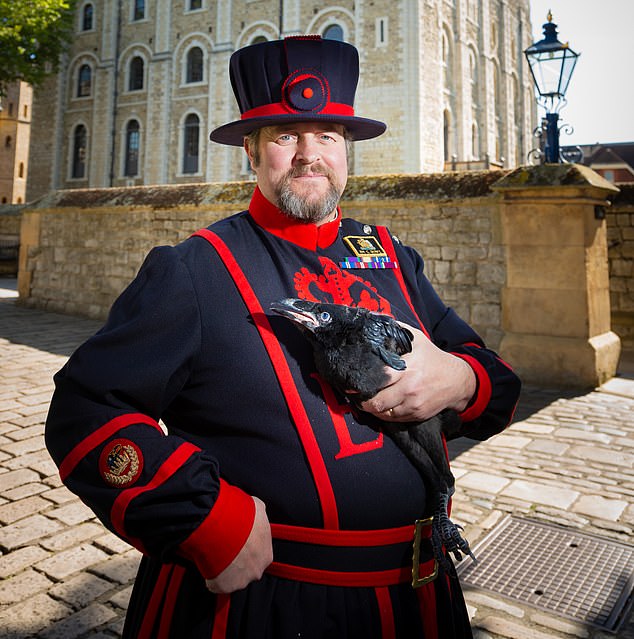
Ravenmaster Chris Skaith and raven38025486-9149317-image-a-113_1610666607254

Queen Raven Merlina..much missed and a very hard act to follow.  

  1. Historic Royal Palaces – The Tower of London On line article.
  2. The Ravenmaster: My Life with the Ravens at the Tower of London p.63 Christopher Skaith

If you have liked this post you might also like

The Ancient Trees of Greenwich Palace Hunting Grounds

London’s Lost and Forgotten Rivers

The Old Doors of Old England

Old London Bridge – a Medieval Wonder

ASTLEY CASTLE – HOME TO SIR JOHN AND ELIZABETH GREY nee WYDEVILLE.


x-default

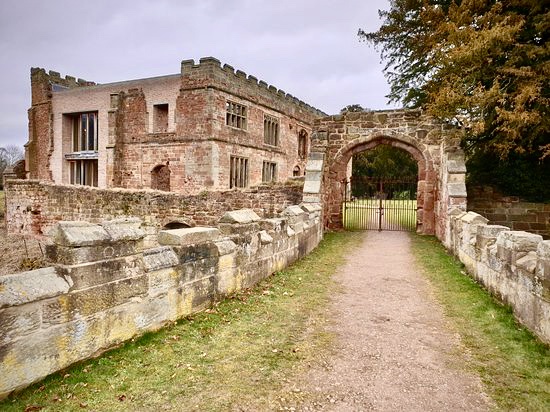
Ancient Gateway at Astley Castle.  Photo tysallsphotography.org.uk

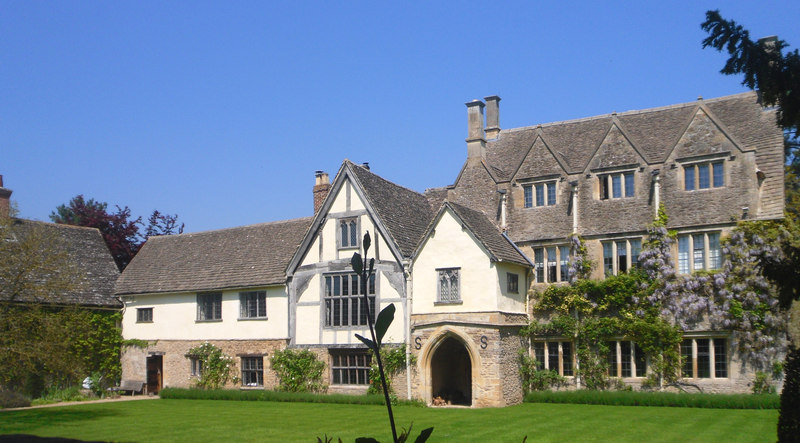
Astley Castle, Warwickshire, was the marital home of Sir John and Elizabeth Grey nee Wydeville.  Sir John has somewhat been cast in the shadows by the eminence of his wife.   He fought and died for Lancaster at the Second Battle of St Albans in 1461 and his widow would go on to catch the eye of a king with tragic results.   This story is of course well known and documented and I won’t go into it here but rather focus on Astley Castle itself.  Astley has a long and rich history.  Beginning life as a Manor House in 1266, the then owner, Warin de Bassingbourne was given a licence to crenellate and enclose with a moat.    The medieval house was much added to during the 17th century but I’m sure John and Elizabeth would still have been able to recognise the old original rooms and features.

astley-castle

IMG_5974.jpg

Medieval fire place Astley Castle

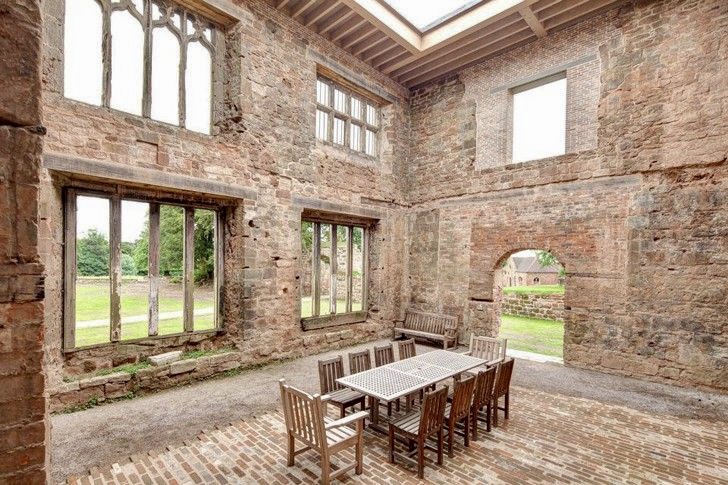
In the 1960s the parts that had survived the centuries were in use as a hotel and perhaps the very rooms used by John and Elizabeth deployed as rooms for paying guests.  Alas in 1978 a disastrous fire took hold and Astley, reduced to a shell , was abandoned.  Various proposals to rebuild proved to be too financially prohibitive and the ruins were declared a Scheduled Ancient Monument.  However in 2005 the Landmark Trust came forward with a solution and what was left of Astley was saved by the novel idea of building and incorporating modern accommodation within the ruinous walls.  Astley arose, like a Phoenix out of the flames, as they say, and today its possible to stay in what was once the marital home of the Greys.

astley-1900-1.jpg

An old photo date 1900 showing the stone archway.

Untitled

The same view during renovation work

IMG_7700

The Great Hall today in use as a dining room.  Note the remains of the lovely 14th century windows and brickwork incorporated into the renovated castle.

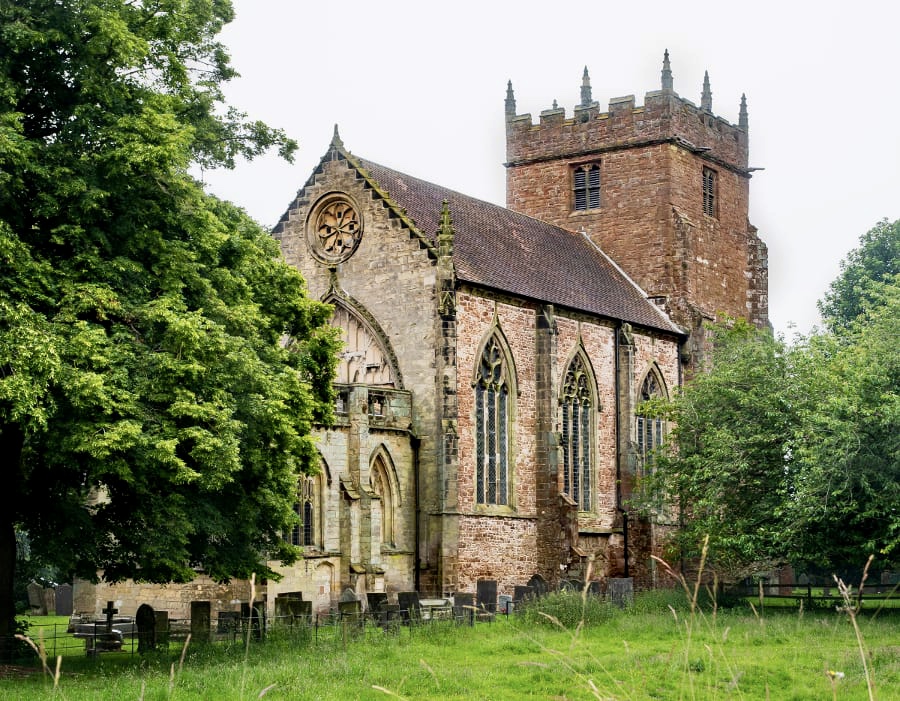
But that is not all.  In one of those strange quirks of history in the nearby church of St Mary the Virgin, a Talbot lies buried.   No other than  Elizabeth Talbot,  later Viscountess Lisle,  who was niece to Eleanor Butler nee TalbotElizabeth Wydeville’s very own nemesis,  who married John Grey’s brother Edward.   This Elizabeth Talbot was to become the heiress to John Talbot, lst Viscount Lisle.  John Talbot was the son of that staunch warrior, John Talbot lst Earl of Shrewsbury, Eleanor’s father and known in history as Great Talbot. Both father and son perished at the Battle of  Castillion 17 July 1453.   Elizabeth Talbot, having married our John Grey’s brother, Edward, was  thus also Elizabeth Wydeville’s sister-in-law. Elizabeth Talbot, having lived until 1487, saw the disastrous outcome of  her former sister-in law,  Elizabeth Wydeville’s bigamous ‘marriage’.  What her thoughts on the matter were,  frustratingly we will never know.

image.png

Elizabeth Talbot Viscountess Lisle.  John Ashdown-Hill suggests this portrait was painted in Flanders during the wedding ceremonies of Margaret of York (1).   Certainly the likeness is very similar to Elizabeth’s effigy in the church.  See below.  Staatliche Museen Preussischer Kulturbesitz Gemaldegalerie, Berlin. (no.532)

x-default

St Mary the Virgin Church, Astley,  Mausoleum of the Grey family.  Photo http://www.tysallsphotography.org.uk

x-default
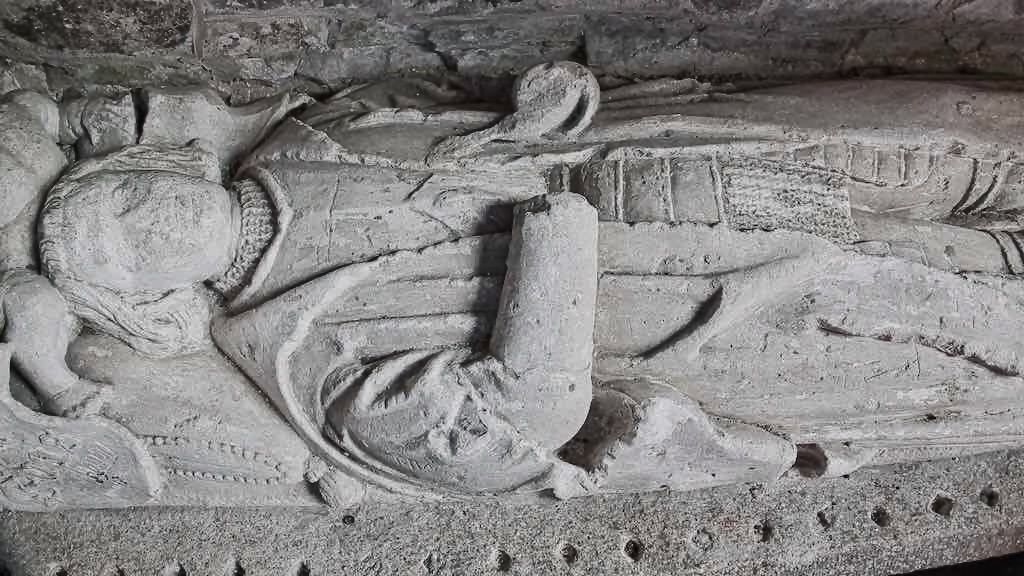
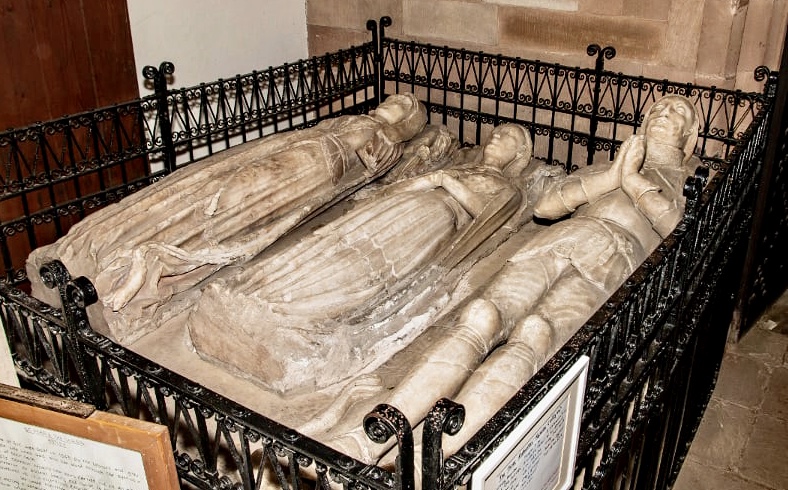
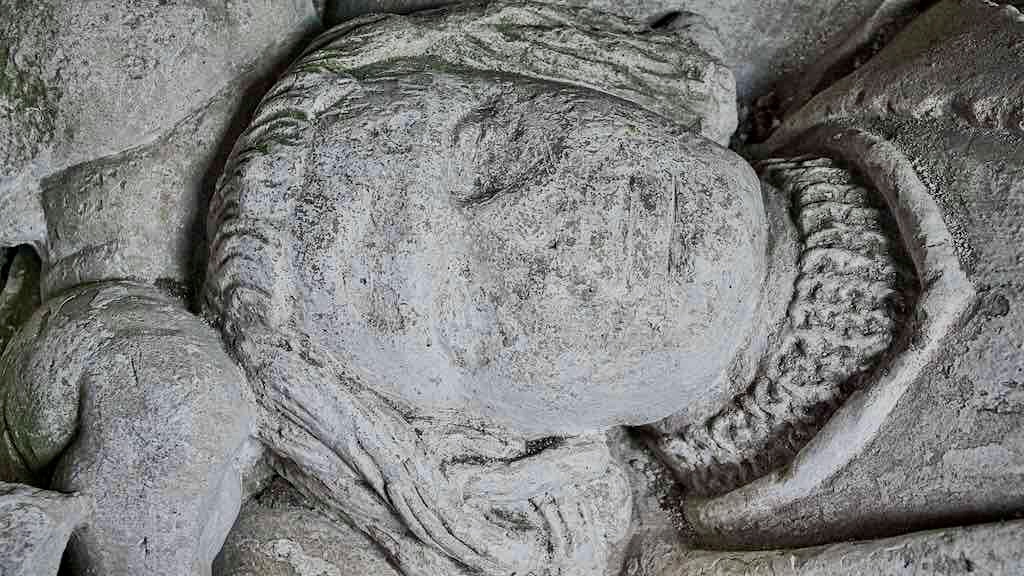
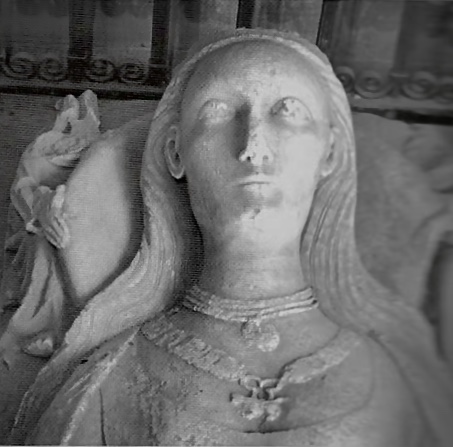
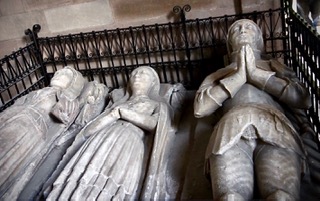
The effigy of Elizabeth Talbot Viscountess Lisle now lies between those of Cecilia Bonville, Marchioness of Dorset (wife to Thomas Grey, son of John and Elizabeth Grey nee Wydeville) and her husband Edward Grey.  These effigies were not originally one monument and have been unfortunately moved together at some time (2).   Photo http://www.tysallsphotography.org.uk
  1. Eleanor the Secret Queen p.8.  John Ashdown-Hill

    2.  Memorials of the Wars of the Roses p.188.  W E Hampton.

If you enjoyed this post you might also like ELIZABETH TALBOT, VISCOUNTESS LISLE, LADY ELEANOR BUTLER’S NIECE

THE ETON CHAPEL WALL PAINTINGS – A PORTRAIT OF QUEEN ANNE NEVILLE?

*temp*
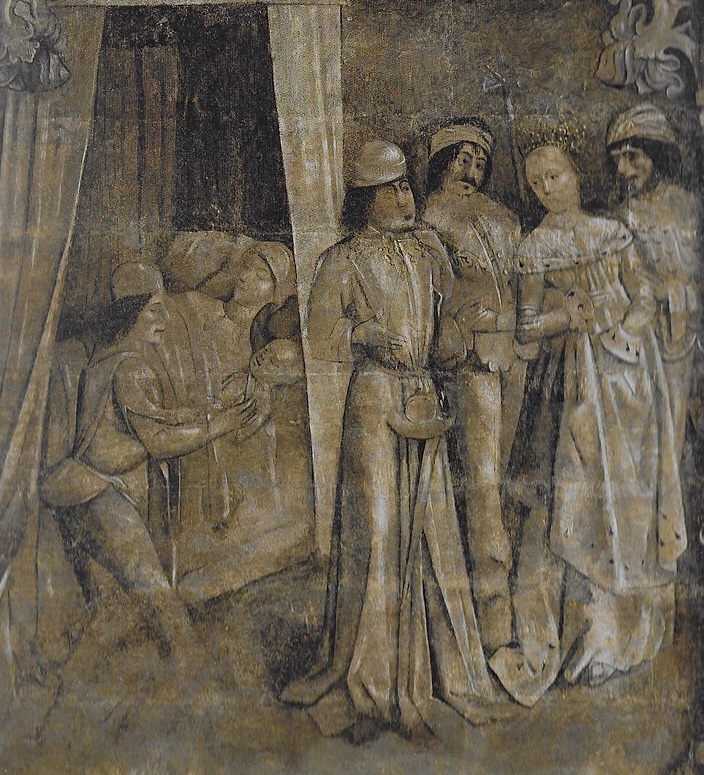
The Emperor and Empress – South Wall Eton Chapel

REVERSE

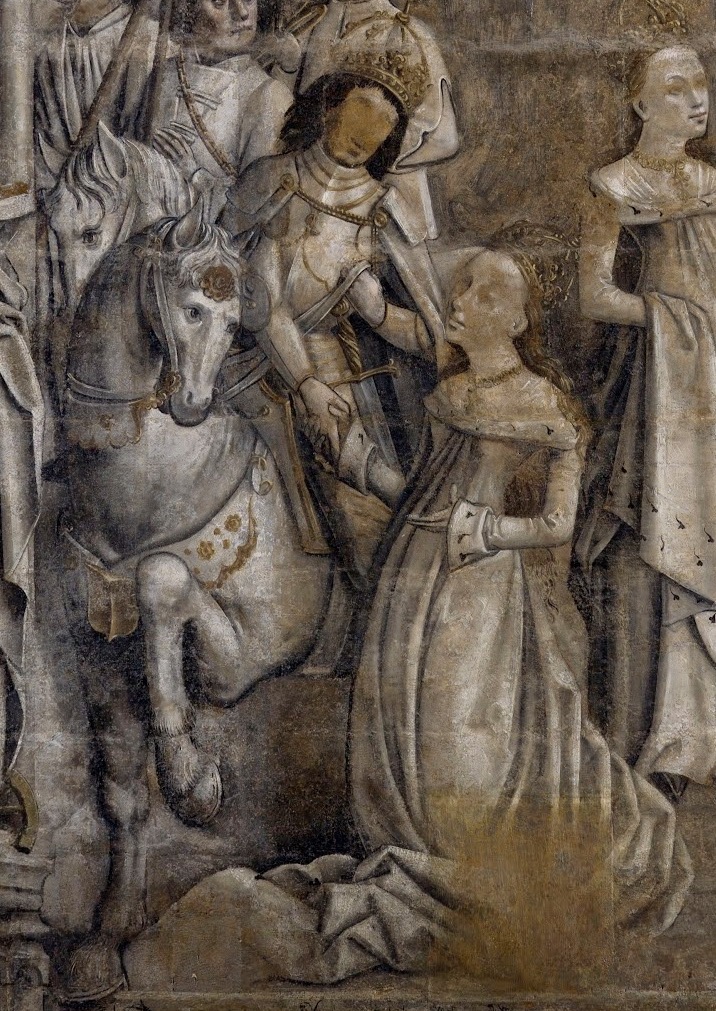
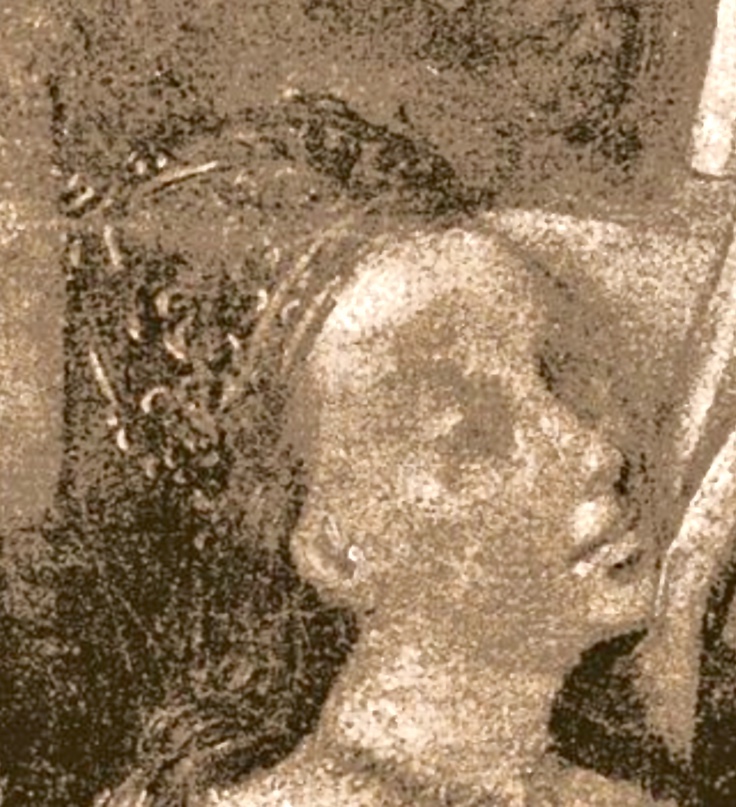
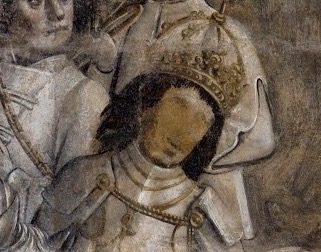
The Empress from the Eton Wall Paintings.  Her eyes have been deliberately damaged. 

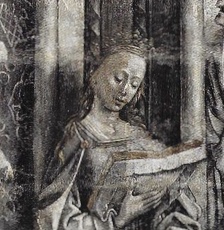
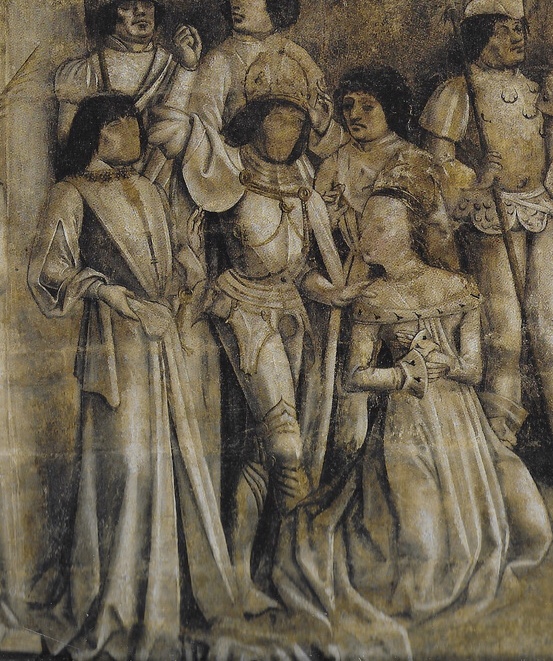
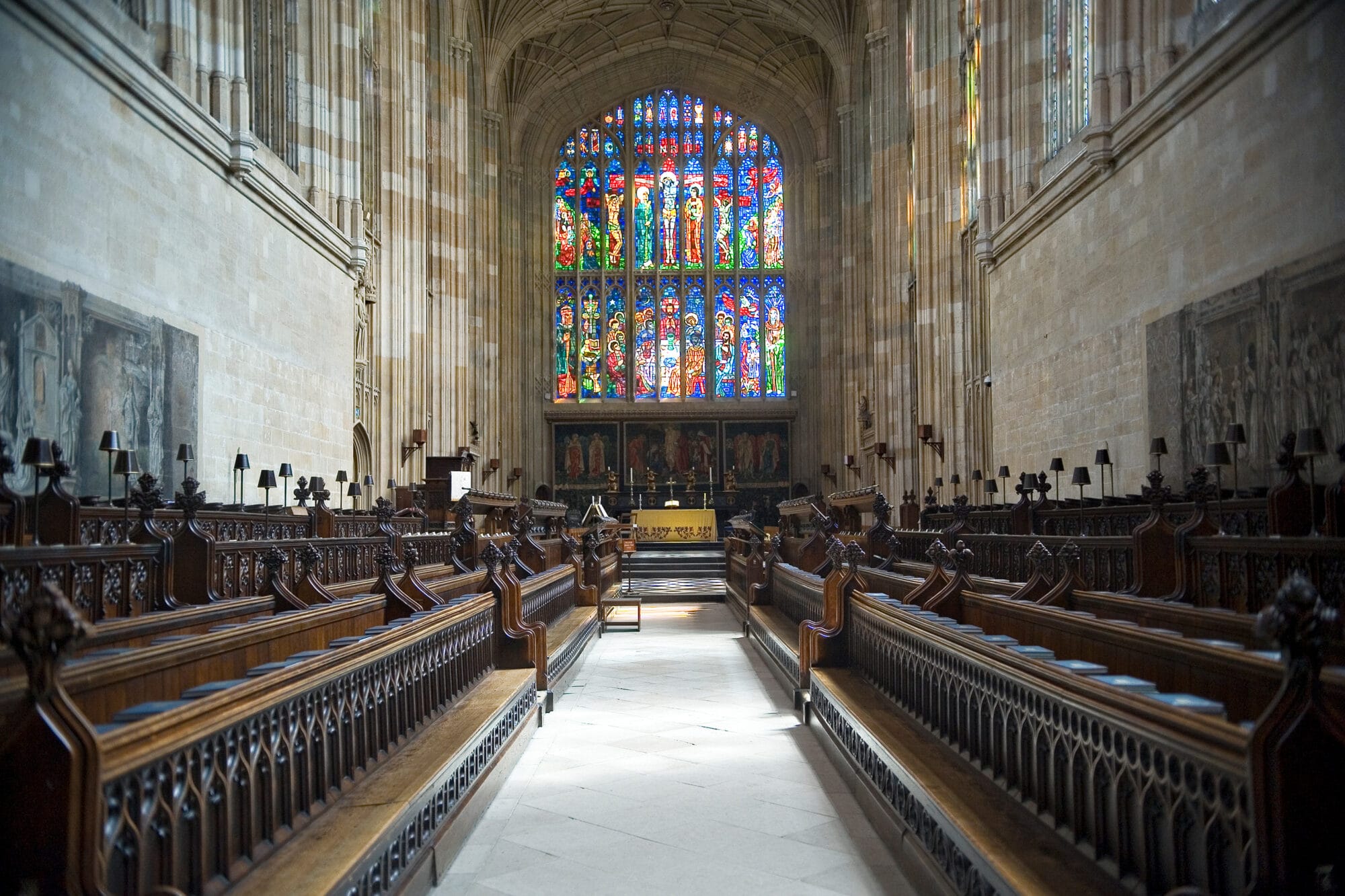
If you should happen to visit Eton College and enter the chapel there you will find the glorious range of medieval murals now known as the Eton Chapel Wall Paintings.  Painted between 1479-87 and thought to  be the work of at least four different artists they were whitewashed over by the College barber in 1560 as part of the drive by the Protestant Church to ban pictures of apocryphal miracles and largely forgotten until 1847 when they were discovered and finally, with the removal of stall canopies making it possible,  restored in 1923.   

The paintings on the north side of the chapel tell the story of the miracles of the Virgin Mary while those on the south the popular medieval story of ‘The  Empress Falsely Accused‘  (for a synopsis of this story see below).   It’s the latter paintings I find the most intriguing not the least because I believe some of the portraits, particularly the Empress and the Emperor were  based on actual members of the royal family at the time – namely Queen Anne Neville and King Richard III.  Interestingly the Emperor and Empress have been painted  wearing the closed crowns of Edward the Confessor and Queen Edith which are so recognisable in portraits of our medieval monarchs. It is this which caused me to take a closer look at the portraits.  

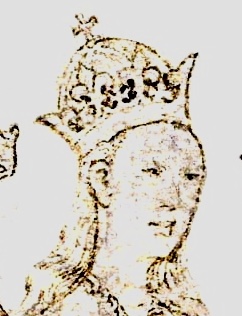
The first facial representation of the Empress is the most detailed and with more of her personality shining through.    Could this be a portrait of Queen Anne Neville?  Compare it with the drawing of Anne from the Rous Roll.  Rous’ drawing should be a good likeness as he would have known Anne by sight.  Is it just wishful thinking on my part but I can see a resemblance particularly around the mouth although the eyes have been obliterated. REVERSE

IMG_3719

Queen Anne Neville from the Rous Roll wearing the closed crown of Queen Edith –  almost identical to the crown in the Eton Mural.

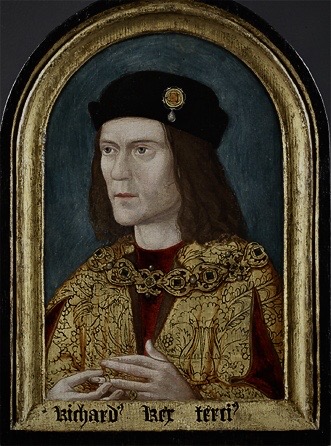
Sadly the portrait of the Emperor has been deliberately defaced.  But we are still able to discern the hairstyle is one very similar to the hairstyle worn by Richard in his portraits.

*temp*

Portrait of the Emperor from the Eton mural,  Note the strong chin.

IMG_7028

Portrait of Richard III  Society of Antiquaries.

We do know Richard –  no doubt sometimes accompanied by Anne –  visited Windsor, which is but a short distance from Eton,  on numerous occasions ranging from 19th July 1483 to 16th May 1485 – the last visit shortly after Anne’s sad death on the 16th March 1485.  Did they also visit Eton on some of their visits?   If they did they would have seen the murals which were then a work in progress having been begun in 1479.  Did the royal couple give their permission and were indeed pleased to see their portraits featured in the mural?  OR was the legend tweaked and the portraits added after Richard’s death at Bosworth in 1485 to be used as another fine piece of mud to be thrown at the now dead king and his queen.     Of course if this were the case then the likelihood of the portraits being those of the Yorkist King and his Queen grows more certain.   It does seem a little odd that Richard would have no objections to being depicted as the Emperor who, to be honest comes across as a bit of a plonker and is portrayed assaulting his wife.    Of course the legend predates the reign of Richard III and it’s just an unfortunate coincidence that it contains a couple of  similarities with the traditional and false story – given out by Richard’s enemies and hostile historians –  including a wicked brother who committed infanticide.  

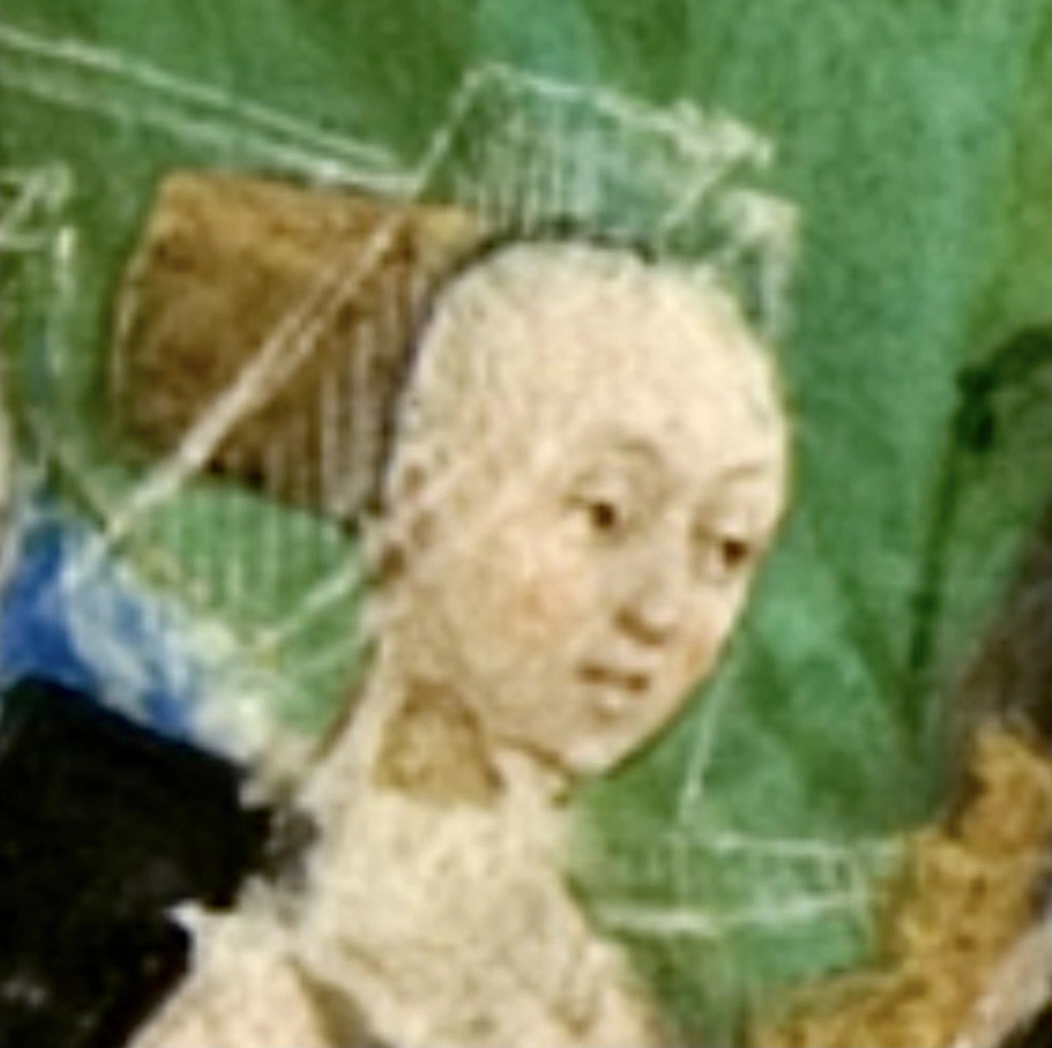
Furthermore I believe at least one more of the portraits may have been based upon another member of the Plantagenet royal family, that of Anne’s sister, Isobel.  An interesting and plausible article found here has suggested that one of the ladies in the Luton Guild Book could be Isobel Neville, sister to Anne and wife of George Duke of Clarence.  Can anyone else see the quite remarkable similarity between that portrait,  shown below,  and that of St Catherine in the Eton mural?

img_4543.jpg copy

Possible portrait of Isobel Neville Luton Guild Book – thanks to The Dragonhound for their very  persuasive article on this theory..scan 1

St Catherine Eton Wall Painting.  A  resemblance to the possible portrait of Isobel Neville in the Luton Guild Book?

Finally to summarise the legend – An Emperor goes on a pilgrimage leaving the running of his realm to his chaste and beautiful wife.  After his departure his gittish brother,  whom  fancied her, tried to pursude her to be unfaithful to her husband.  She indignantly refused and morever imprisoned him in a tower.  After five years the Emperor returned.  His brother who had been released just prior to his return went to the Emperor and accused the Empress of infidelity and treason.  Whereupon the Emperor whacked his wife in the face when she came to greet him and ordered that his guards take her away into a forest and slay her.  Just in the nick of time a noble knight who happened to be passing rescued her and took her to his castle although he was unaware of who she was.  She took up the vacancy of the knight’s baby son’s nurse.  The knight’s brother, another evil git – where do all these evil brothers come from? – tried to have his mucky way with her.  She was having none of it and said evil brother, thwarted, plotted her ruin. He crept into her bedchamber, which she shared with baby, cut the infant’s throat and left the blood stained knife in the hand of the Empress.   However instead of putting her to death, the knight took pity on her and put her on a ship whereupon the captain and the whole crew were tempted by her great beauty.  So they marooned her on a little island just to be on the safe side.   Here the Virgin Mary appeared before her in a dream and assured her all her travails would soon come to an end and showed her where a herb grew that was capable of curing leprosy.  Gathering a supply of it she returned to the mainland where she proclaimed she was able to cure lepers.  Her fame spread although no-one recognised her as to her true identity. The knight on hearing of this wonder  took her back to his castle where none other than his gittish brother had contracted the disease.  However despite the great harm he had done to her the Empress still agreed to cure him on the condition that he owned up to the heinous crime he had committed.  This he did and was cured.  Then the Empress returned to her homeland only to find that none other than her brother-in-law had also become a leper.  Posessing a great heart she agreed to heal him if he too confessed to his sins.  Which he did.  Thereafter she revealed her true identity but,  presumably really hacked off by men and their silliness refused to return to her old life/husband and took herself off into a convent to live out her life in perpetual chastity.  

scan 8 2

The Emperor draws his hand back in order to strike the Empress..lawks!

scan 6 2

The Knight’s evil brother creeps into the bedchamber of the Empress to slit the throat of the baby..Yikes!

Religious-Provision-2-240ppi-2000x1333

Eton Chapel.  Photo etoncollege.com 

Fig._ILOW

Another view of the chapel.  Unknown photographer Pinterest.

If anyone wishes to delve deeper into the story of Eton Chapel and its paintings I can recommend Wall Paintings of Eton.  

If you have enjoyed this post you might like

DID RICHARD III LOVE ANNE NEVILLE ‘MOST DEARLY BELOVED CONSORT

CAN A PICTURE PAINT A THOUSAND WORDS? RICARDIAN ART

GEORGE DUKE OF CLARENCE, ISOBEL NEVILLE AND THE CLARENCE VAULT

THE MEDIEVAL CROWNS OF EDWARD THE CONFESSOR AND QUEEN EDITH

A Portrait of Edward V and Perhaps Even a Resting Place?- St Matthew’s Church Coldridge

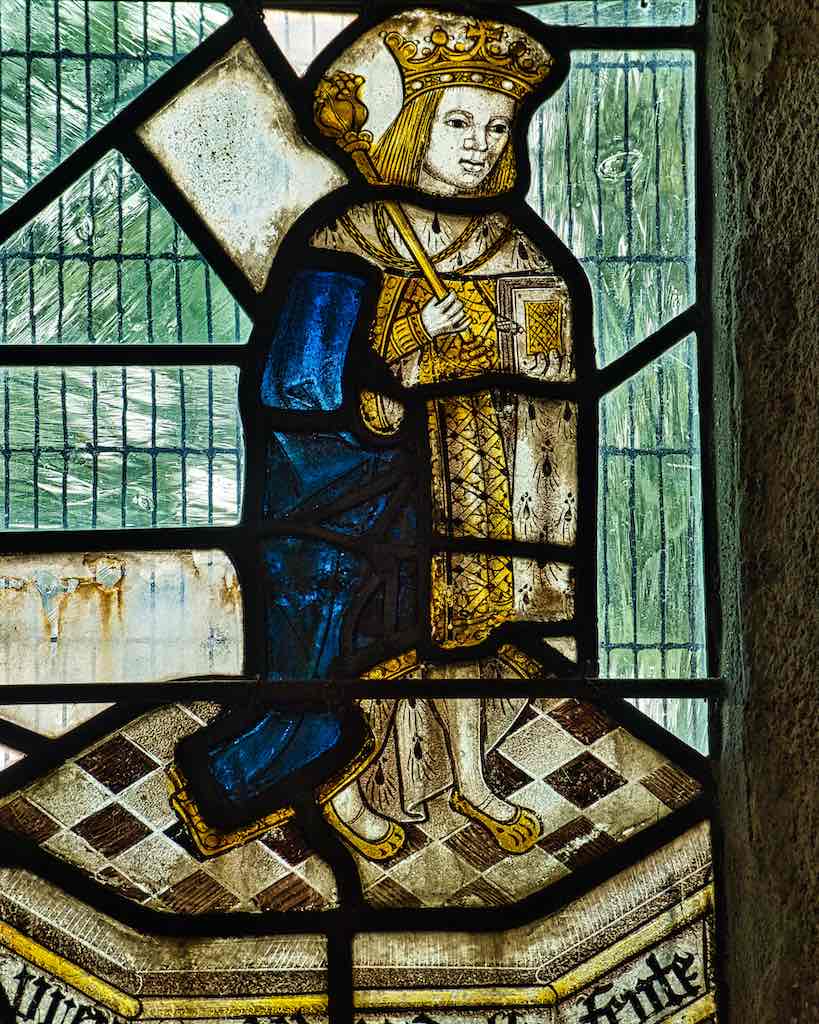
Medeival-Stained-Glass-16th-Century-Edward-Fifth-Figure-Coldridge

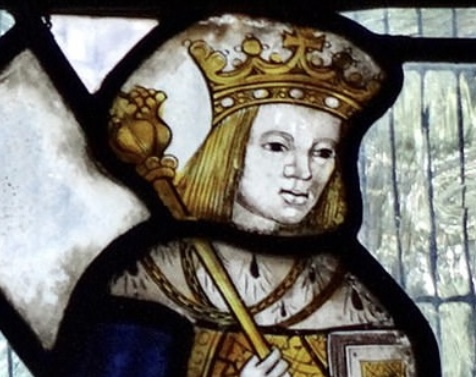
Stained glass image of Edward V.  Coldridge Church, Devon,  

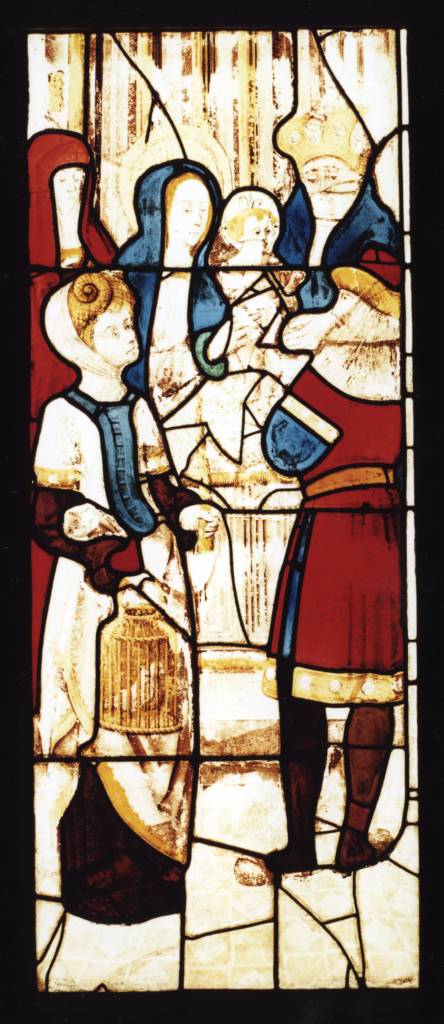
This wonderful old church in Devon contains some little gems including a charming portrait of the young Edward V (b.1470) in a stained glass window,  king for such a short while.  This portrait has recently been restored and verified as being early 16th century and a genuine rare portrait of Edward V by medieval glass experts Holy Well Glass.  See my post which compares the remarkable likeness between Edward to his grandfather, Richard duke of York.

The story of Edward and his brother, Richard of Shrewsbury (b.1473) is well known and their disappearance still a matter of great debate and  well documented elsewhere so I won’t go into it here.    Over the centuries his ‘murder’  –  many historians and their lackeys insist since he disappeared ergo he must have been murdered! –  has been discussed interminably and, in the main, attributed to his uncle, Richard III.  However more enlightened historians, plus an ever burgeoning band of Ricardians and amateur researchers, have taken up the cudgel on Richard’s behalf and disputed that hackneyed and, frankly,  now extremely boring version of events and instead sought to find a more plausible answer.   Whatever the truth is, and personally I think they were separated and then taken to places of safety, it is hard not to feel sympathy towards the young boy who for eleven weeks was king only to be informed this was not actually the case.  For all his short life up until 1483 when the sudden death of his father,  Edward IV,  changed everything so drastically, he had been shielded from the harsh realities of life and utterly indulged as heir to the throne.   Even while still a tiny child his wardrobe was extravagant.  A surviving account records clothing being delivered for his use not later than November 1472:  

five doublets priced 6s 8d,  two of velvet –  purple or black  – and three of satin,  two being  green or black,  five long gowns price 6s 8d,  three being satin –  purple,  black and green and the others of black velvet;  two bonnets,  price 2s,  one of purple velvet lined with green satin and the other of black  velvet lined with black satin;  and a sixth,  even more splendid long gown cloth of gold on damask priced £1 (1) .   

When they broke the news to him and reality kicked in – there was to be no coronation, no crown and a complete and utter loss of status – it must have come as  a massive, massive shock and through no fault of his own.  Poor little blighter.  That fault and blame must land fair and square on his parents shoulders, particularly those of his father.  Yes the buck stops with Edward IV who kept his brains in his pants and a lot of people paid a heavy price for that…tsk.   Historian Michael Hicks in his biography of Edward V say as much:  

The blame rests firmly with Edward V’s father whose dishonourable conduct,  faithlessness and duplicity as much as his sexual immorality was two decades later to place in doubt the title of a son who had not then even been born’ (2 ). 

Not surprisingly because of the window – which is in the Evans chapel –  and a tomb with a beer stone effigy of John Evans upon it, the intriguing theory has evolved that this ancient church could be the final resting place of the disappeared Edward V who was John Evans incognito.   Clues abound including a Yorkist emblem, the Sunne in Splendour, in a window and several Yorkist Roses carved on wooden bosses.  

TELEMMGLPICT000280247840_trans_NvBQzQNjv4Bq1zPfz5GIcOQjfqmZGh-d0XyUesFH2oVwqDbDxMdqBnM

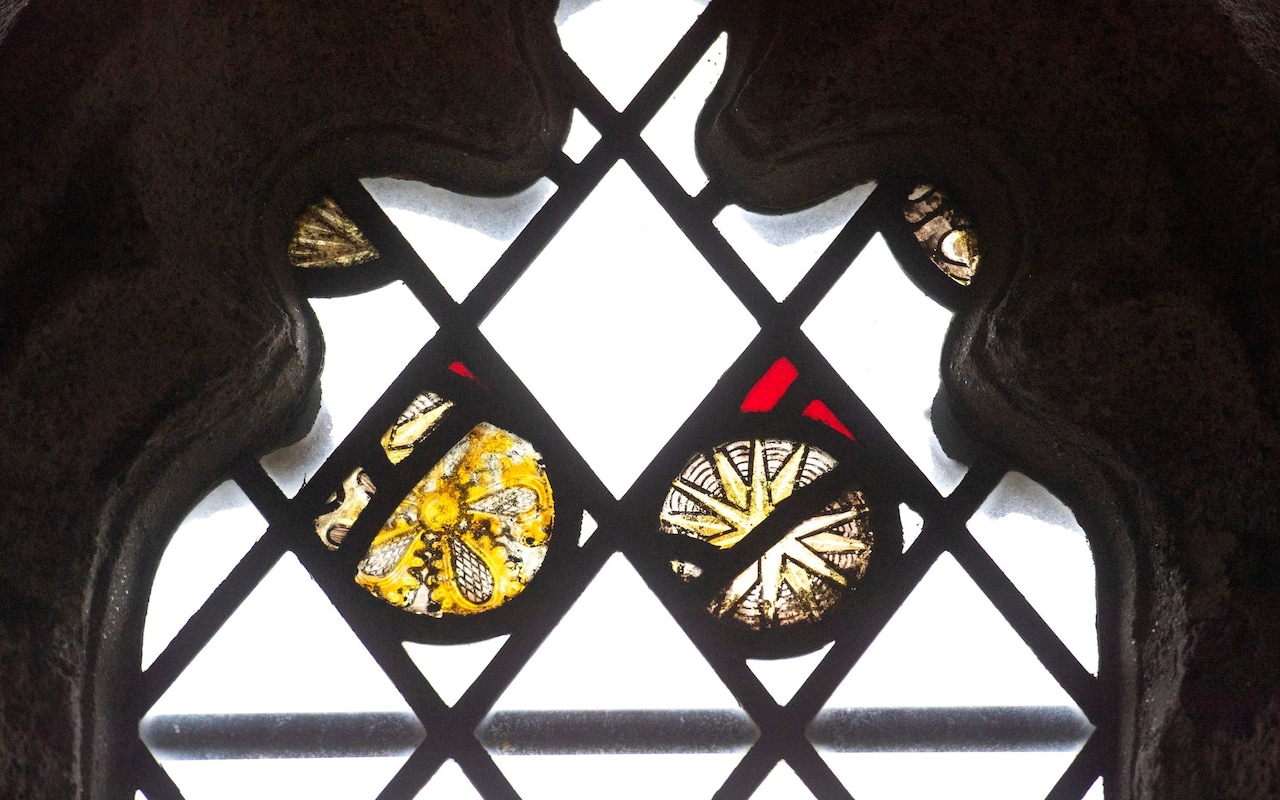
A Sunne in Splendour, a Yorkist symbol, in one of the windows in the church.  Photo John Dike.

0000000churche5window 3

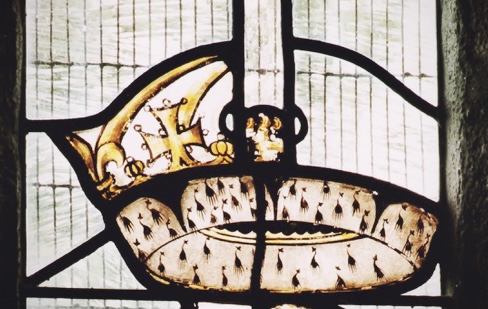
 The large closed crown that hovers above Edward’s head would have at one time been in a different window possibly on top of a royal standard.   Note the deer in the ermine.  Was this a nod to John Evans’s  – alias Edward V – occupation as  Parker of the deer park at Coldridge.  Photo John Dike.

John Evans who died c.1511,  was said to have came from Wales – thus the name Evans which is Welsh –  EVans – Edward V –  one time Prince of Wales – get it? – please keep up at the back dear reader.   It should also be remembered that Ludlow, where Edward spent most of his life up until 1483,  was then in the Welsh Marches and not Shropshire as it is today.   The effigy is  wearing chainmail under his robe and although it’s unclear,  its thought that  John turned up in Coldridge circa 1485 some time after the battle of Bosworth.  IF he had been Edward he would  then have been around fifteen years old.   There is however reason to believe  that he had arrived earlier in 1484.   His mother Elizabeth Wydeville had emerged from sanctuary at Westminster accompanied by her daughters on the 1st March of that year.  She had reached an agreement with Richard III and, according to Polydore Vergil, wrote to her son Thomas Grey, Marquess of Dorset, who had owned Coldridge prior to it being confiscated by Richard,  who was then in France with Henry Tudor, telling him to return home as the king would pardon and treat him well.  This he was prevented from doing by Henry and his followers.  Just  two days later on the 3 March  a trusted follower of the king, Robert Markenfield, was sent from Yorkshire to Coldridge.  Why? Was this move to enable Markenfield to keep a close eye on the young lad, who had been king Edward V for such a short time, and who had been secreted away at Coldridge the former property of his half brother,  Thomas Grey?  And was Edward’s  removal to Coldridge  part of the agreement betwixt Elizabeth and Richard?  Certainly Elizabeth’s later involvement in the Yorkist rebellion of 1487 indicates that she clearly knew at least one of her sons had survived. 

Robert Markyngfeld/the keping of the park of Holrig in Devonshire during the kinges pleasure…  Harleian Manuscript 433. Vol.1.

Coldridge seems of a sudden to have become a hotbed of activity because as well as Markenfield being sent there it was also  at the same time granted to one of  Richard’s loyal followers, Sir Henry Bodrugan.    Following the defeat and death of Richard III at Bosworth in August 1483 Coldridge would be returned to Edward V’s half brother, Thomas Grey when he finally returned from France.  Did this enable Edward V to continue to live out his life in Coldridge in obscurity living as John Evans, keeper of the deer park, now back in Thomas Grey’s ownership?

Later in February 1487 Elizabeth Wydeville, after much of her dignity and status had been restored,  would suddenly and inexplicably be sent to live out the rest of her life in Bermondsey Abbey after a royal council meeting had been called to discuss the Yorkist rebellion erroneously known as the  Lambert Simnel rebellion.   Thomas Grey would be sent to the Tower where he remained until the rebellion was put down.  Surely there is no stronger indication than this that Elizabeth, and Thomas Grey,  believed that at least one of her sons still lived – and was this son, Edward V, now living incognito as John Evans at Coldridge?

Turning back to the windows it is indeed strange and as the author of an article on the Devonchurchland  website (and what a beauty of a website!) points out  why would a small church ‘in a gritty little village lost in the boondocks of Devon’  have such a wonderful royal and extremely rare window?      

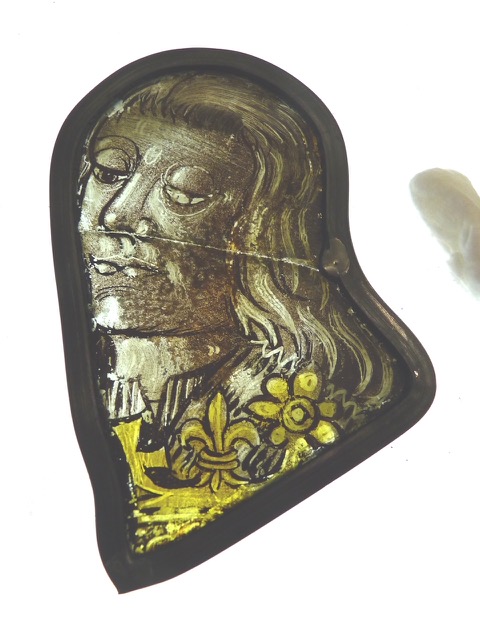
There is also a medieval stained glass portrait of a man who is holding an open crown very similar to the one Edward is wearing  – you can clearly see the fleur-de-lis at the bottom of the portrait.   If you look closely you can also spot an ermine collar. Ermine would of course only been worn by the nobility.    How strange!   Is this a portrait of John Evans, who if he was indeed Edward,  would have been around 41 when he died.  

holyw1

Medieval portrait of a man.   Restored by Holy Well Glass. He appears to be looking down at an open crown which is almost identical to the one in the image of Edward V.   Is this man the mature John Evans/Edward V? Compare to the image of the young Edward below.  Photo thanks to John Dike and Holy Well Glass. 

Screenshot

The early 16th century stained glass portrait of Edward V.  Confirmed by experts including Holy Well Glass and the late Beatrix Cresswell to be genuine.  

IMG_7666

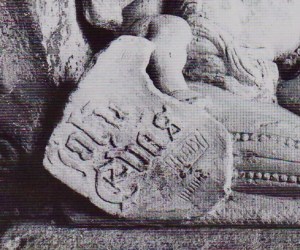
John Evans, his effigy in the Evans Chapel, gazing at the window depicting the young Edward V. The effigy, depicted wearing chainmail, has an angel at his head carrying a shield inscribed with his name ‘John Evas’ (sic). 

There is a shield which is being held by a chubby cherub which bears the inscription John Eva’s – the letter ‘n’ is missing although there was more than enough room for it.  It’s obviously intentional.  Is it just merely another coincidence or could the explanation be  that ‘Evas’ is Latin for ‘escape’.  Well ponder on that for a bit dear reader…..

The shield with inscription ‘John Evas’ – Evas is latin for ‘escape’…. Photo thanks to John Dike

Apparently according to the article,  and thank goodness for it,   there are ‘folk looking into it, one of them the lady who discovered Dick’s body in that car park’.   So lets hope the indefatigable Philippa Langley and her teams do indeed get to the bottom of this mystery and no doubt the late Dr John Ashdown Hill will be cheering her on.  Meanwhile John Evans’ effigy gazes in perpetuity,  at the portrait in the window –  believed by some to be that of himself in his younger days – to this very day.

However back to the church.  These are just a few of the many delightful photos I have taken from Devon Churchland, after being alerted to this amazing website by a post on the  Medieval Buildings Facebook page – thank you, thank you thank you!     

image

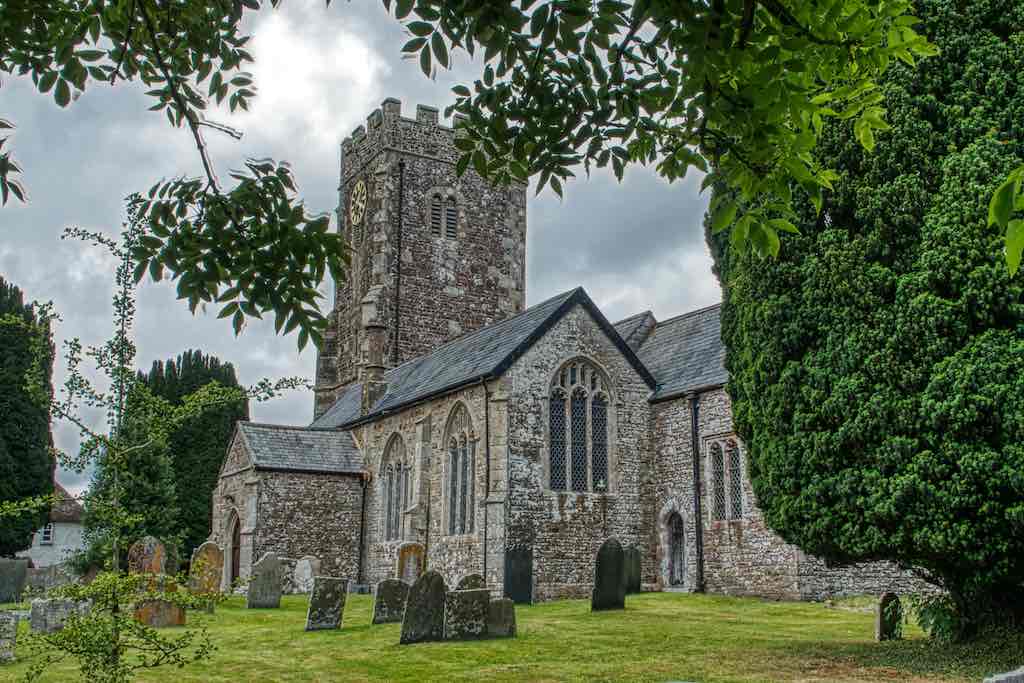
Coldridge Church of St Matthew under a glowering Devon sky.

image

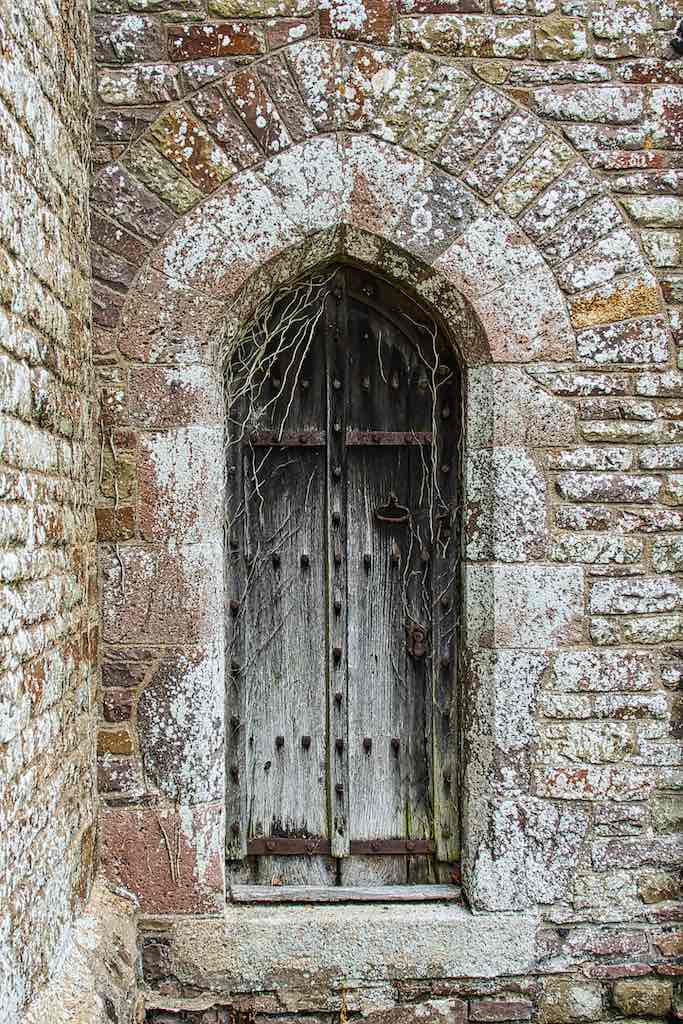
Ancient priests door

image

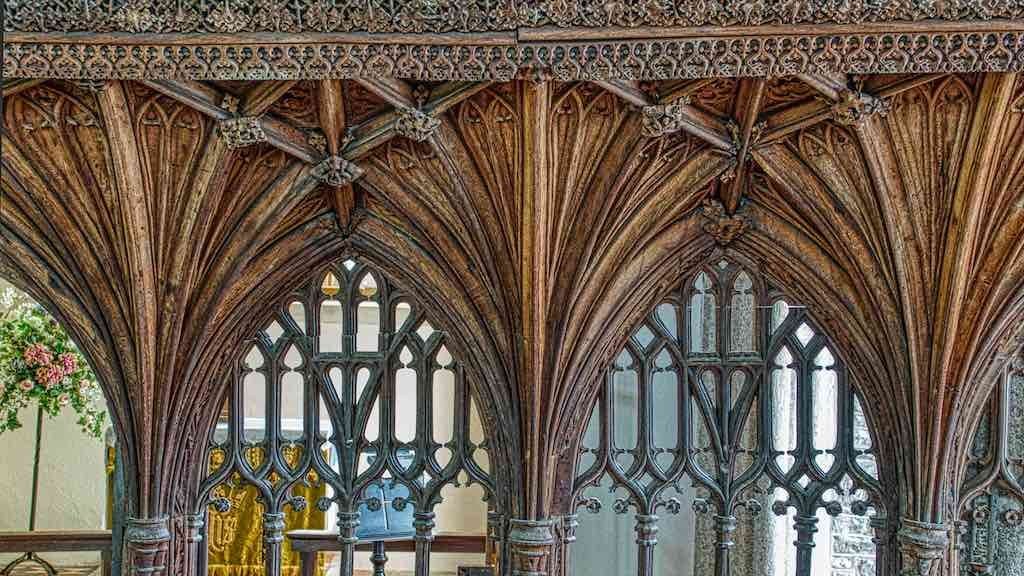
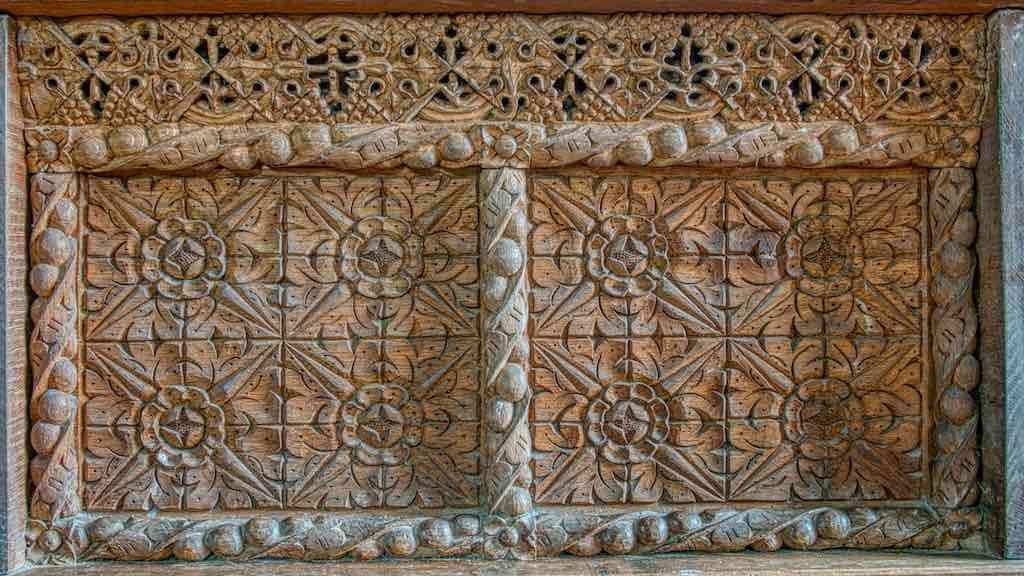
Carving in the Rood screen

image

Another view of the Rood Screen

image

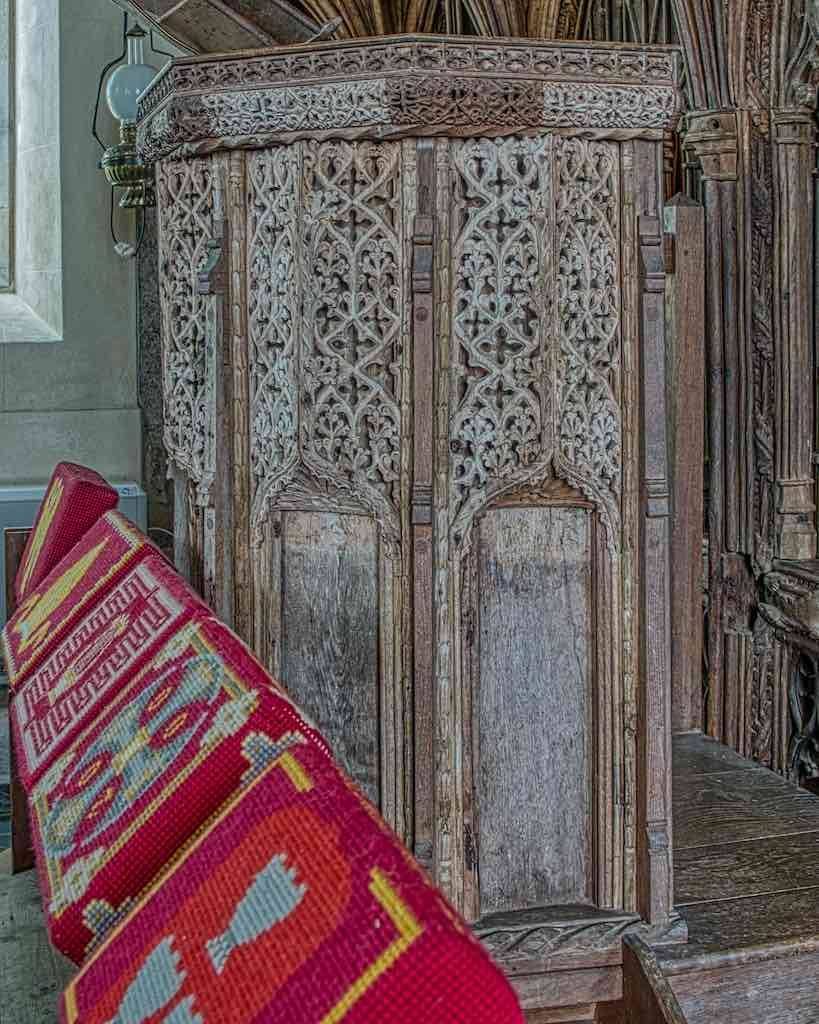
Medieval pulpit.  Once possibly gilded.  Can you imagine?

image

Detail of the Pulpit carving..

image

Close up of the fine carving…just no words!

image

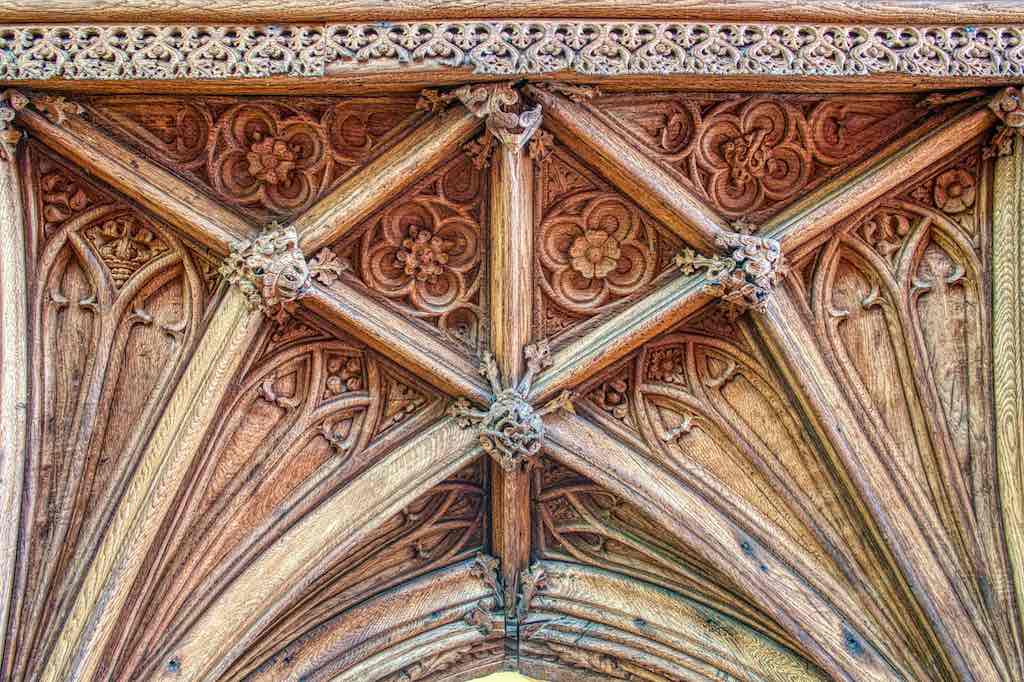
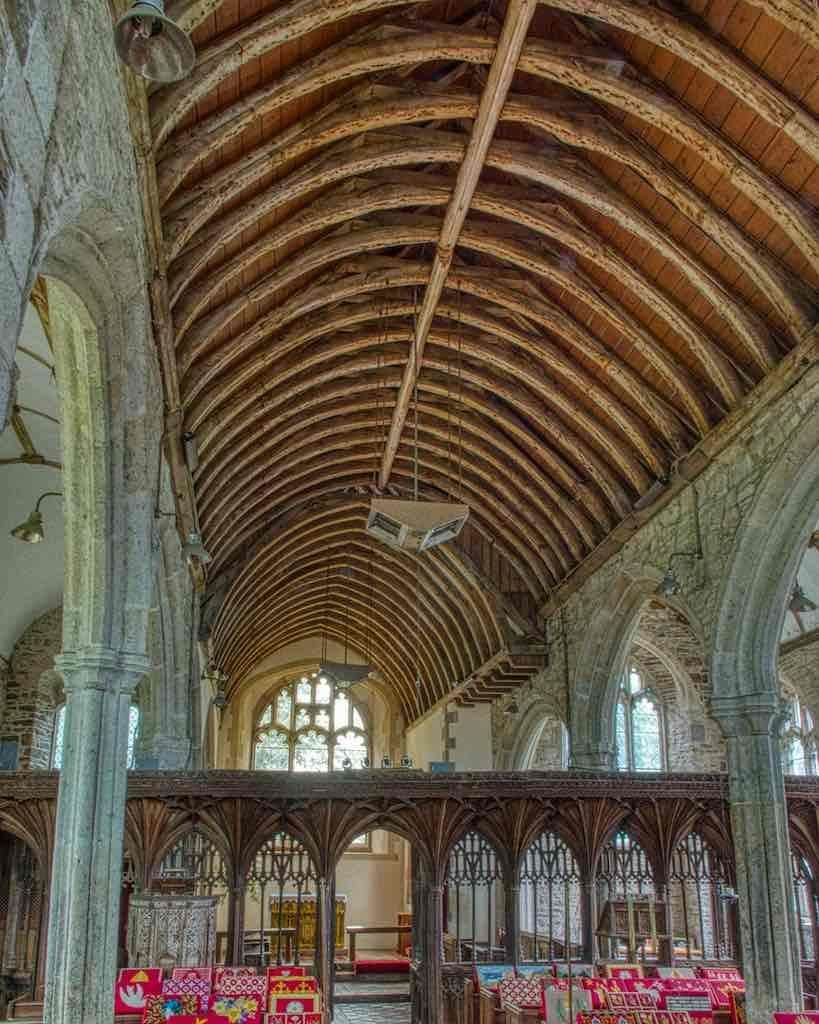
Wooden ceiling of the church

image

Screen carved by Breton craftsmen – rare.image

image

image

Medieval benchends..

image

Examples of the numerous wooden roof bosses.  Note what could be the White Rose of York.

image

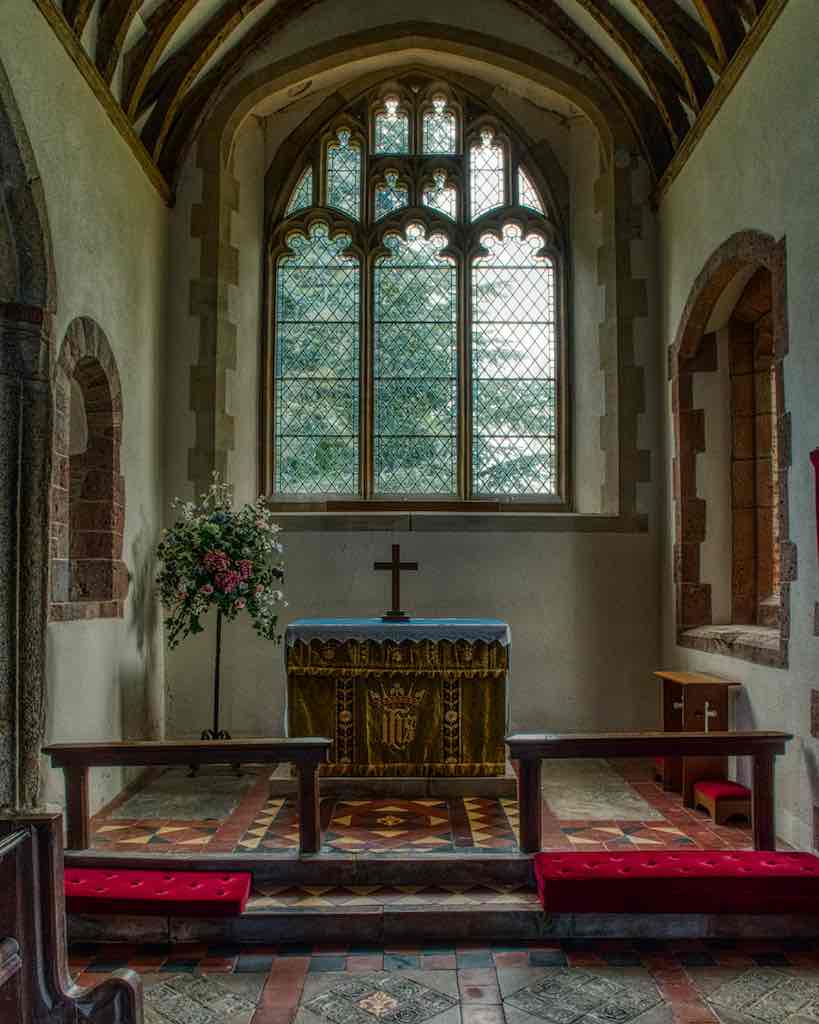
The alter with east window above

image

The lectern.

IMG_7664

IMG_7667

Could these portraits and the effigy be one of the same person – Edward V?

holyw1

If John Evans was indeed Edward what were his thoughts on the young man known as Perkin Warbeck who claimed to be Edward’s younger brother Richard? Would Warbeck’s brutal fate in 1499 have strengthened his resolve to remain incognito especially if he liked his head where it was – on top of his shoulders? And finally did Elizabeth Wydville who died in 1492 in Bermondsey Abbey go to her grave with the knowledge that at least one of her sons was safe and living in rural Devon on his half-brother’s property?
(1)  Edward V, The Prince in the Tower, p.63.  Michael Hicks.

(2) Ibid p.48

If you have enjoyed this post you might like Edward of Middleham ‘Son to Kyng Richard and the Mysterious Sheriff Hutton Monument’

James Tyrell Child Killer or Provider of a Safe House

MARKENFIELD HALL & THE MARKENFIELD BROTHERS, THOMAS AND ROBERT

A PORTRAIT OF EDWARD V AND THE MYSTERY OF COLDRIDGE CHURCH…Part II A Guest Post by John Dike.

EDWARD, EARL OF WARWICK – HIS LIFE AND DEATH.

The English Medieval Cathedral

image

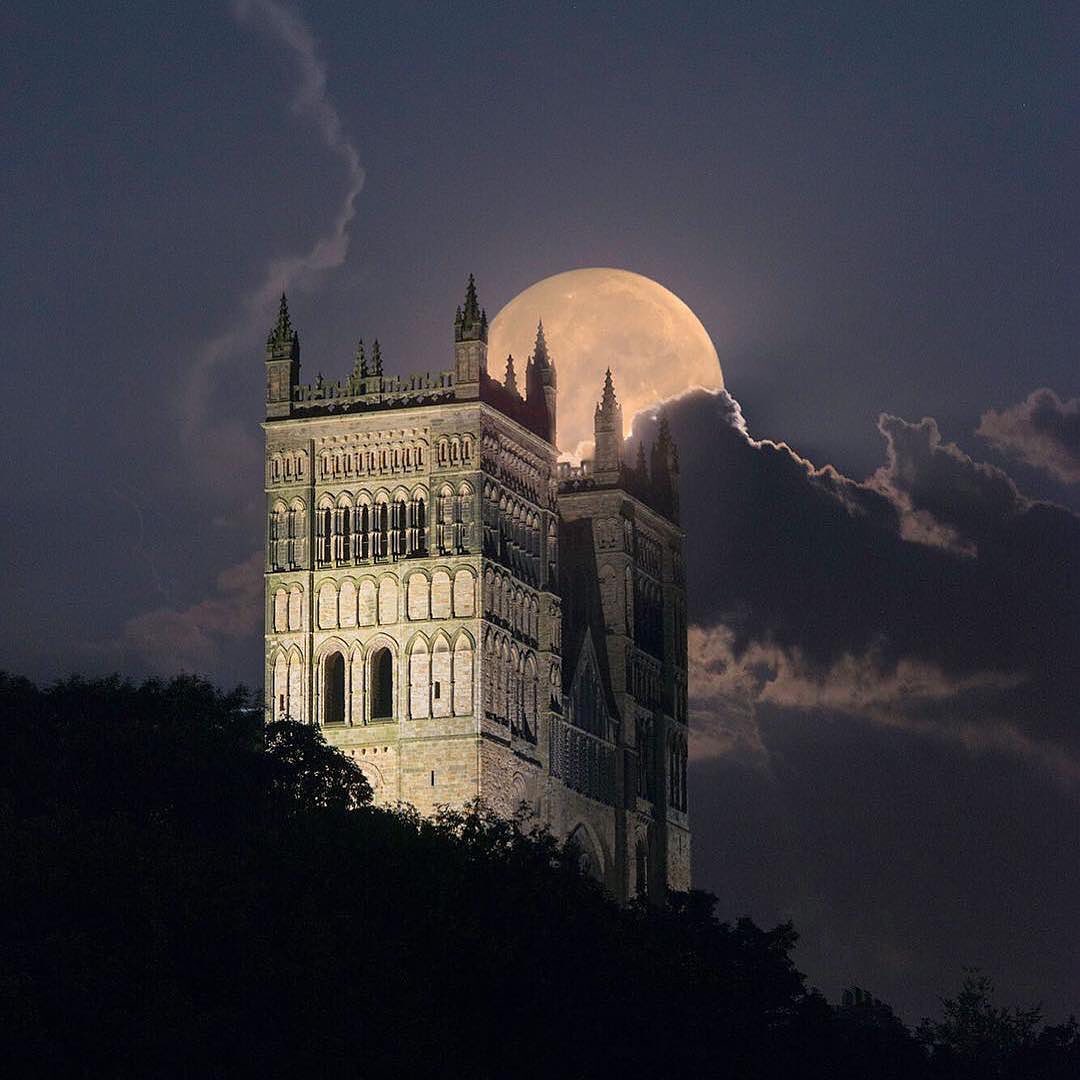
Durham Cathedral in the moonlight..

A familiar sight to both medieval royalty and commoners alike our Cathedrals soar above us, centuries old,  constant, enduring, and kind of  reassuring.   There is nothing more thrilling as you approach a cathedral city than the first glimpse of their cathedral appearing on the horizon.   So to all that toiled to build these wonders – some of whom would have lost their lives – the architects, artisans, workmen, carpenters, stonemasons, labourers, roofers and any I have forgotten, thank you, bravo, we salute you.

As we draw to the end of the year, and thank God for that, here are some of the best of the stunning  photos of the year mostly from the Association of English Cathedrals although some are from other sources.

image

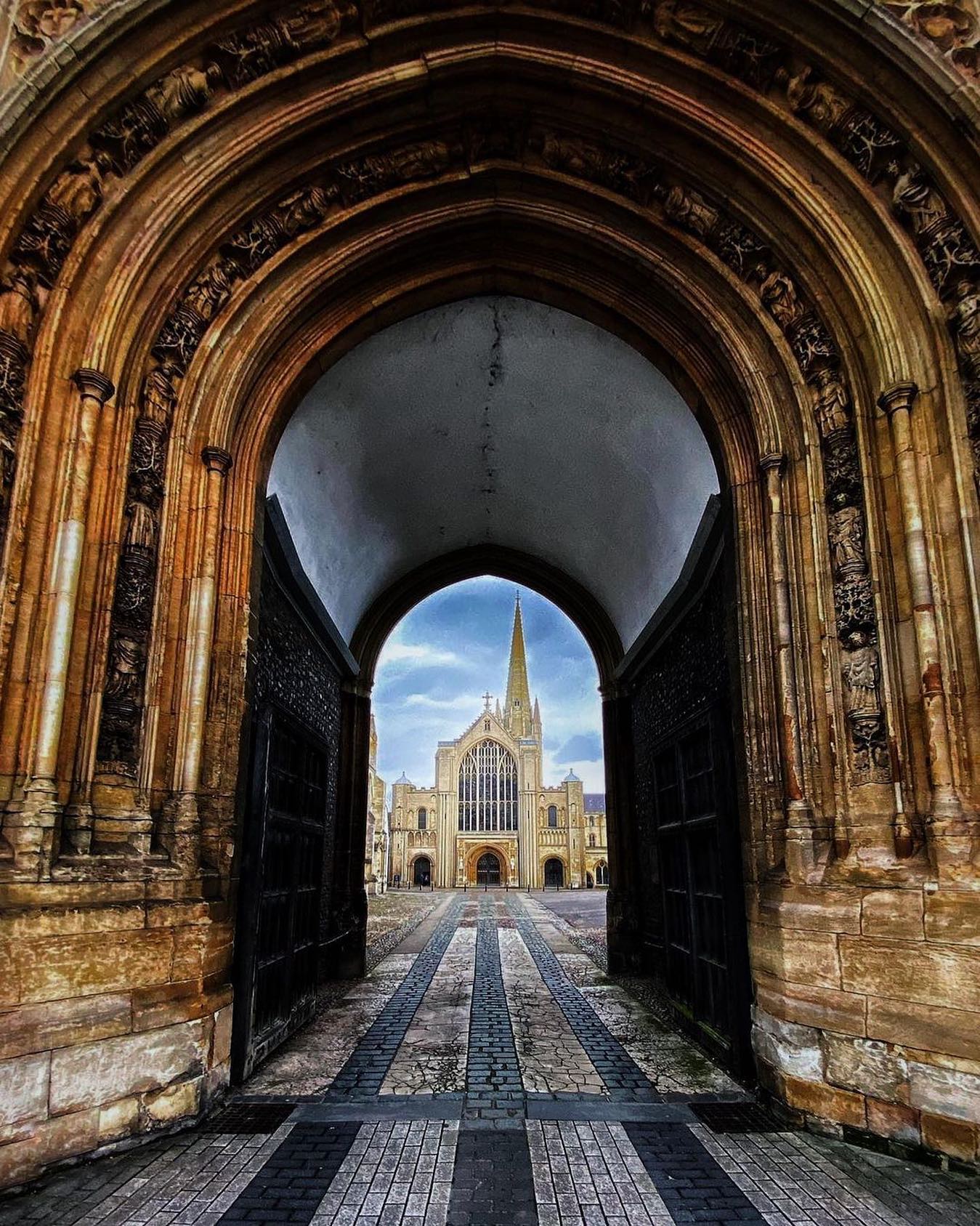
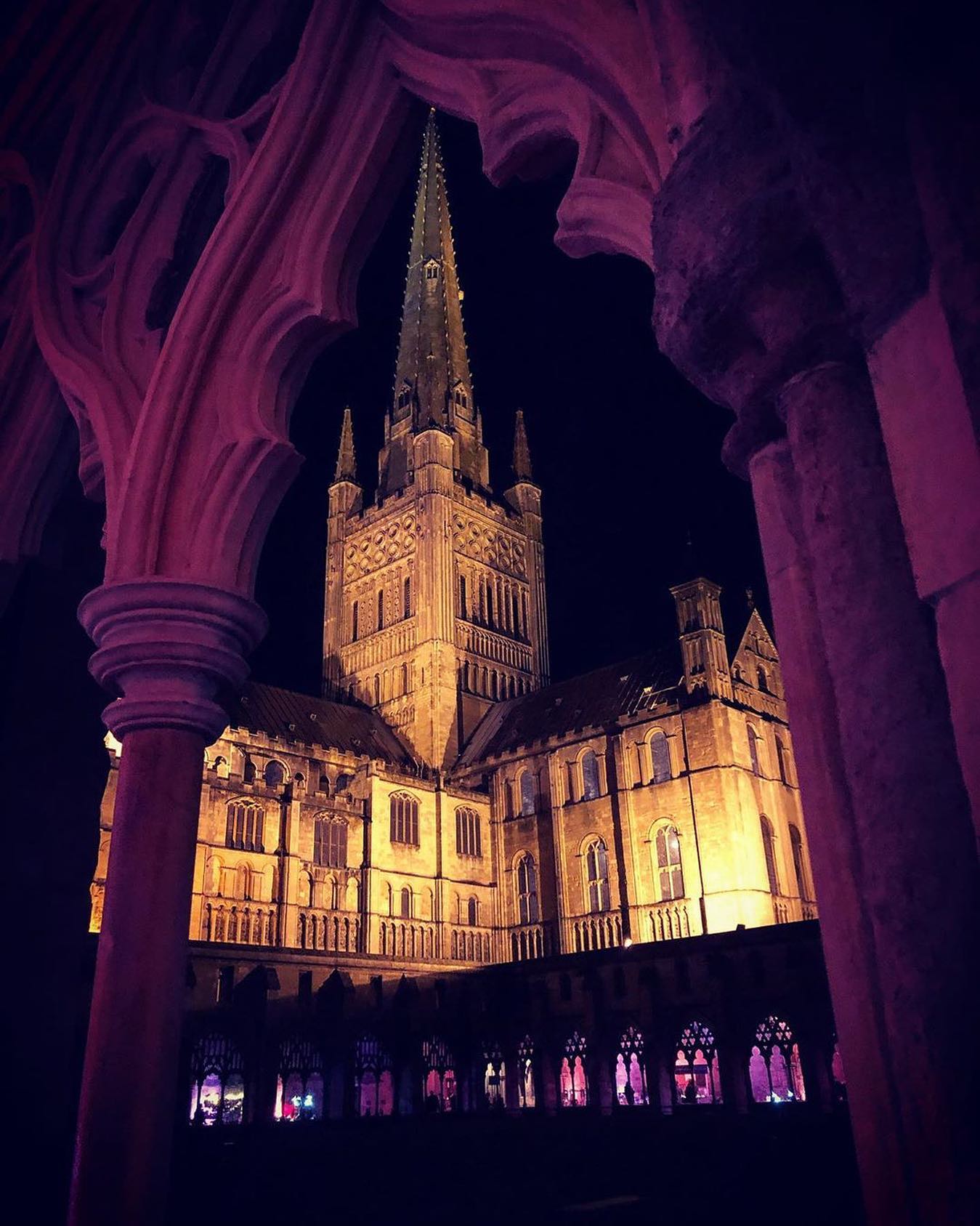
A tantalizing glimpse of  Norwich Cathedral through an ancient gateway.

132014776_10158927155536667_1554271987729048784_o

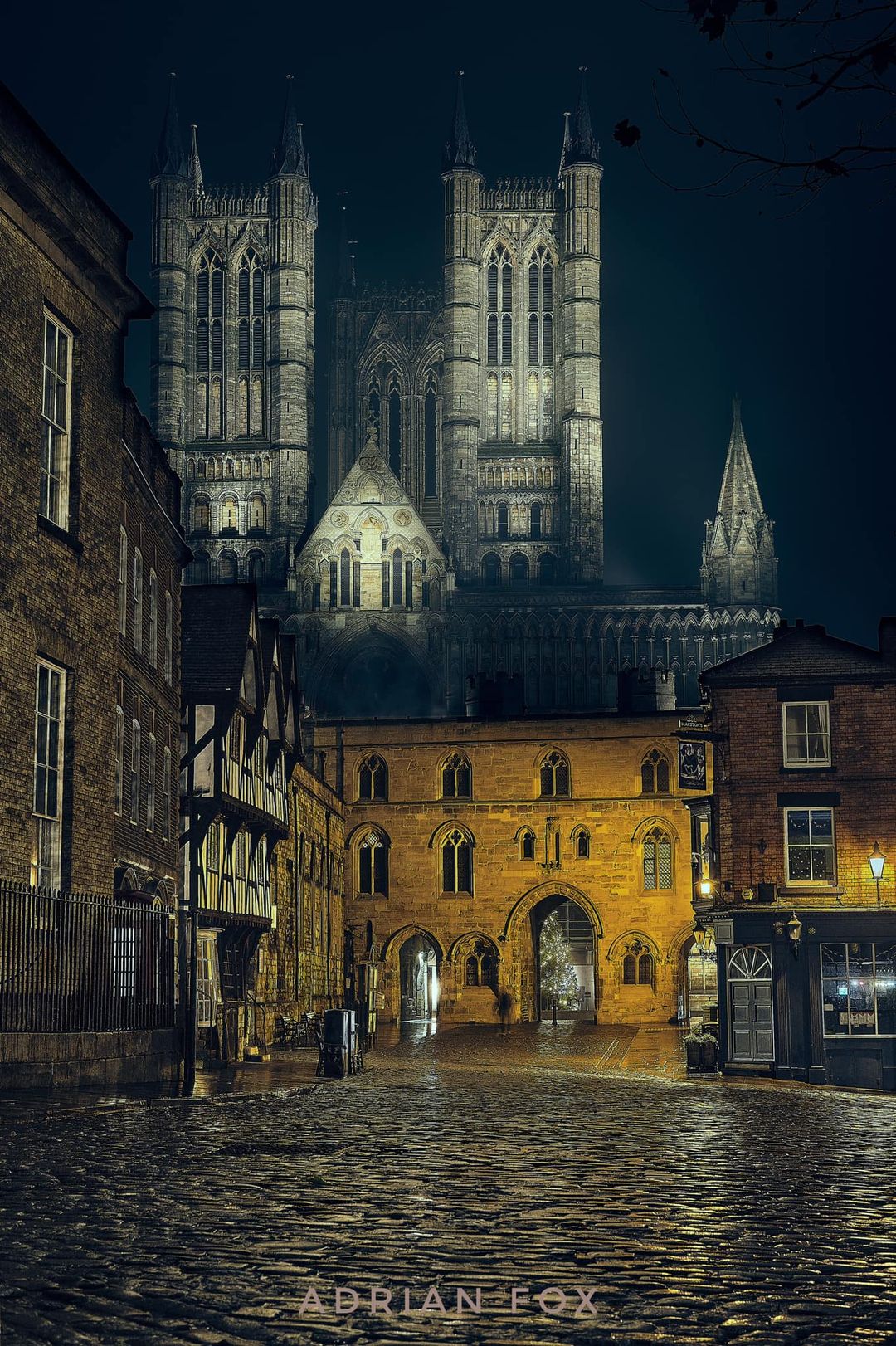
This wonderful view of ‘Lincoln breaking through the mist…..’ Thanks to Adrian Fox for this wonderful photo..
image

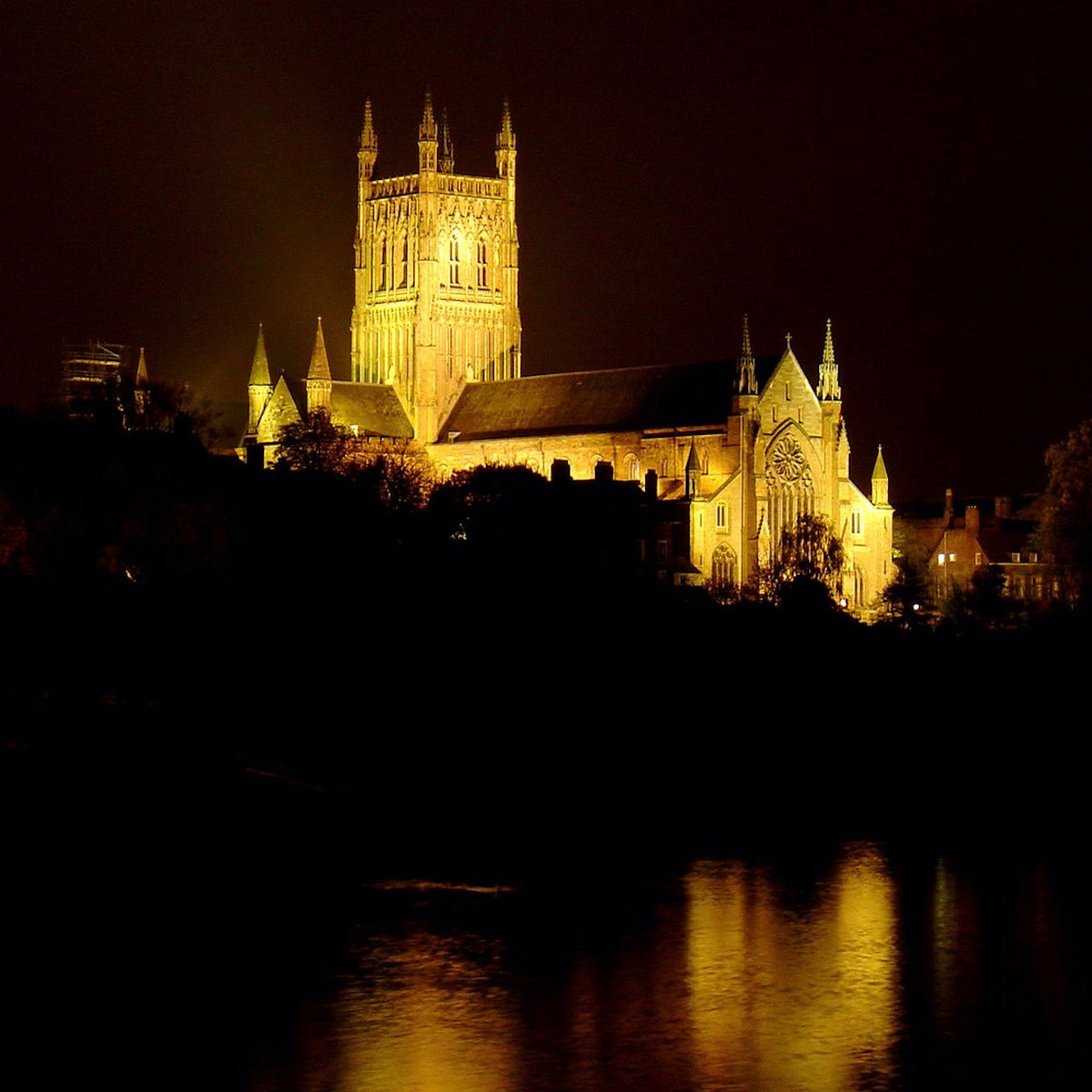
Worcester Cathedral at night..

image

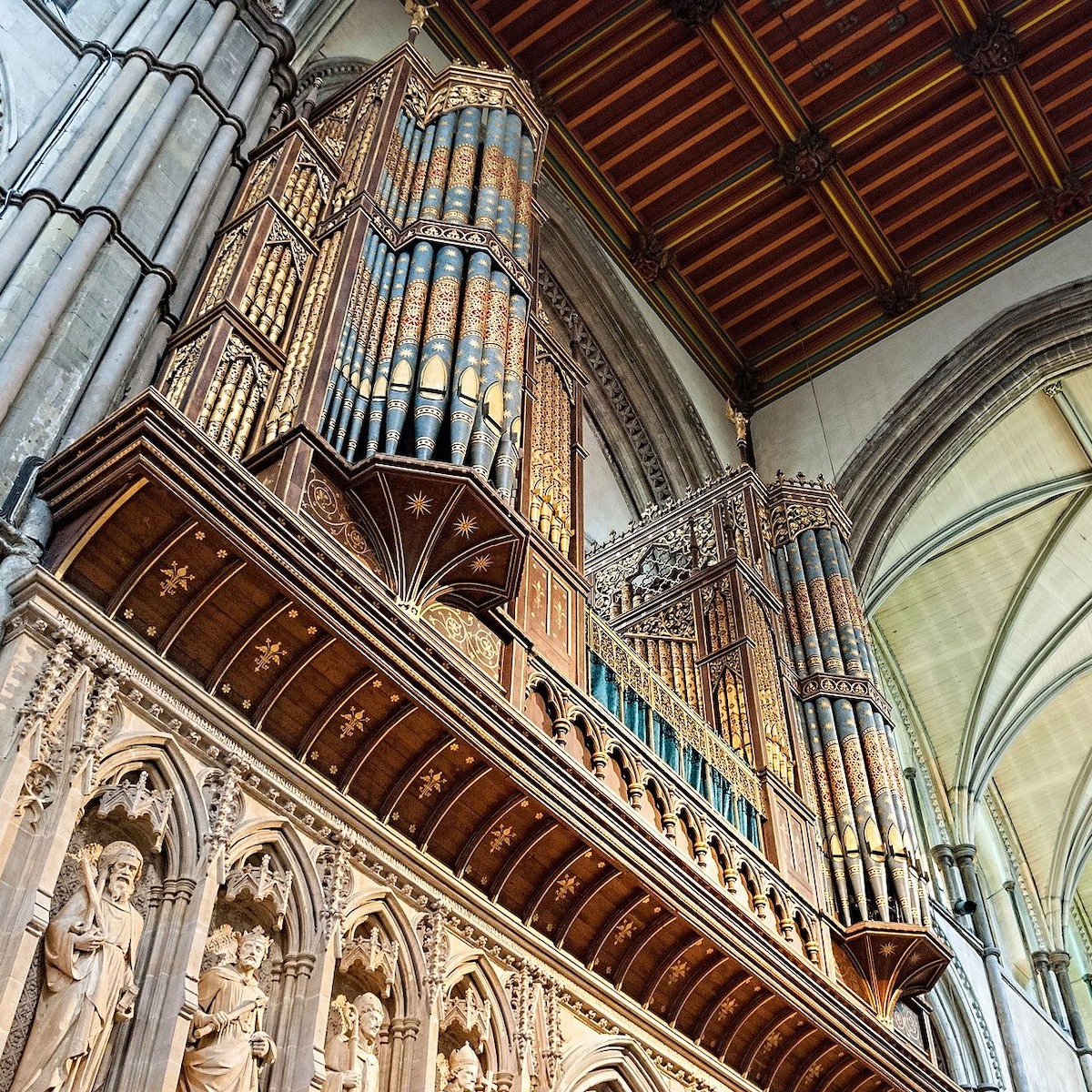
The Pipes of Rochester Cathedral

image

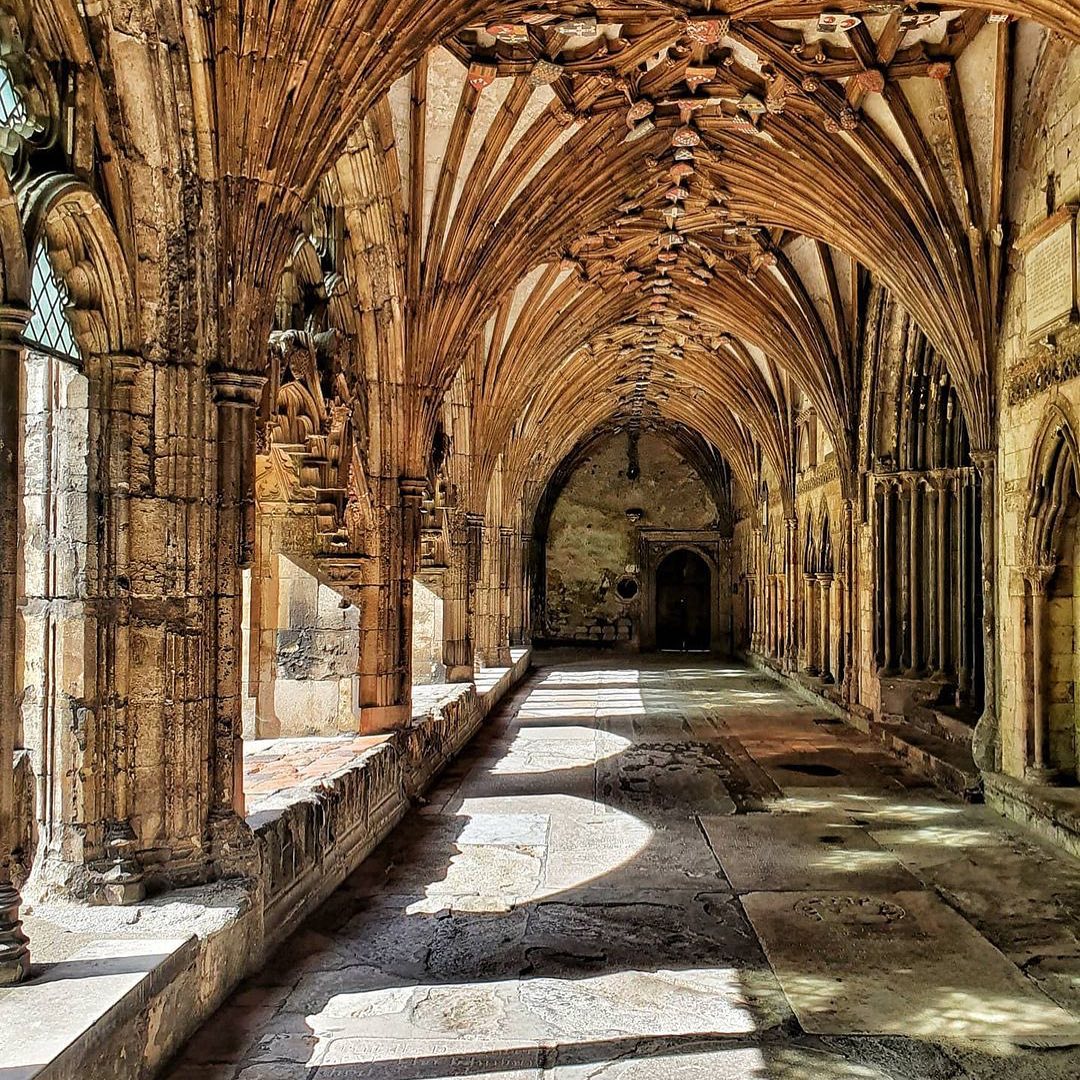
Canterbury Cathedral…no words needed

image

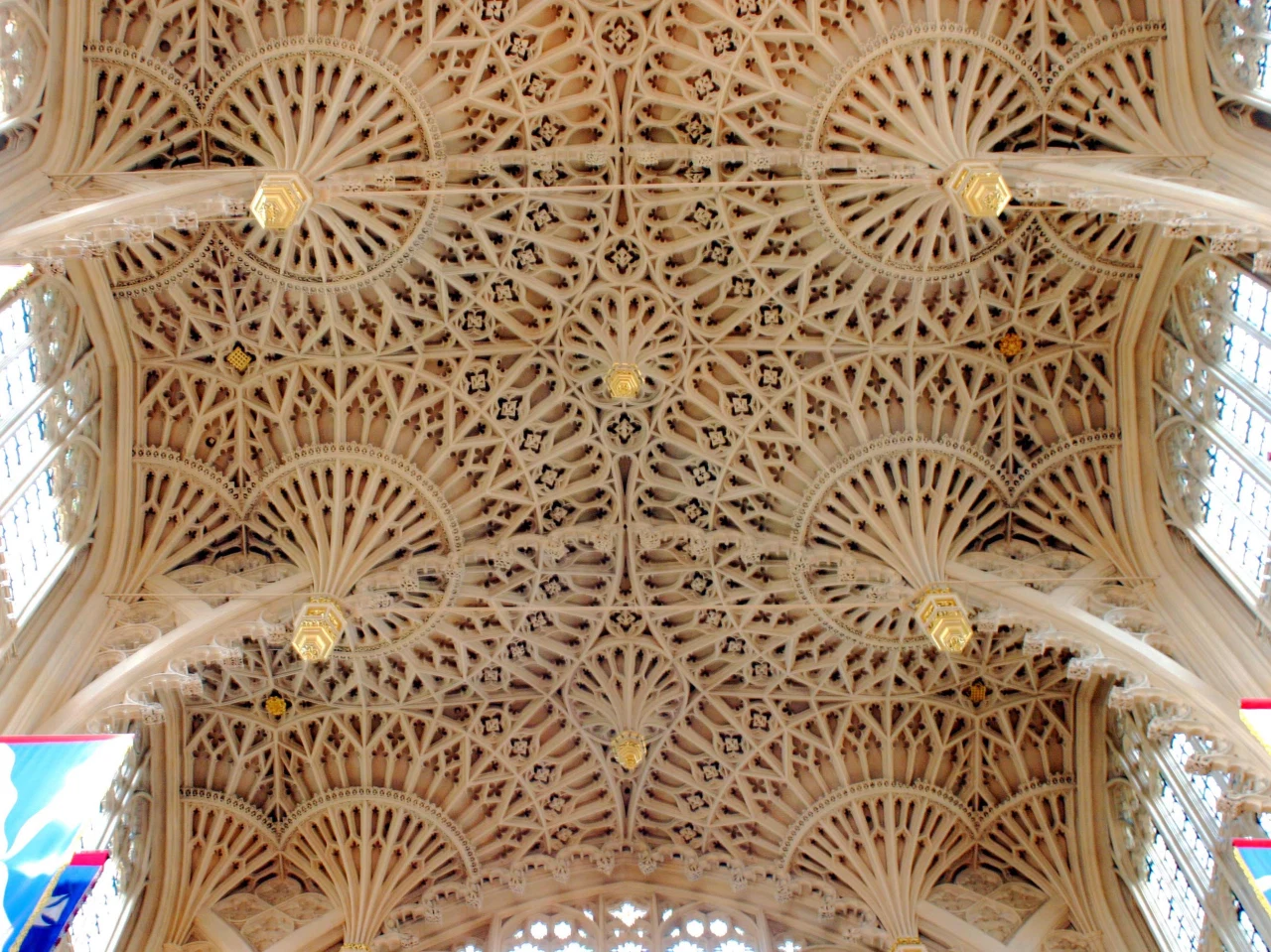
Fan vaulting Henry VII’s Lady Chapel Westminster Abbey

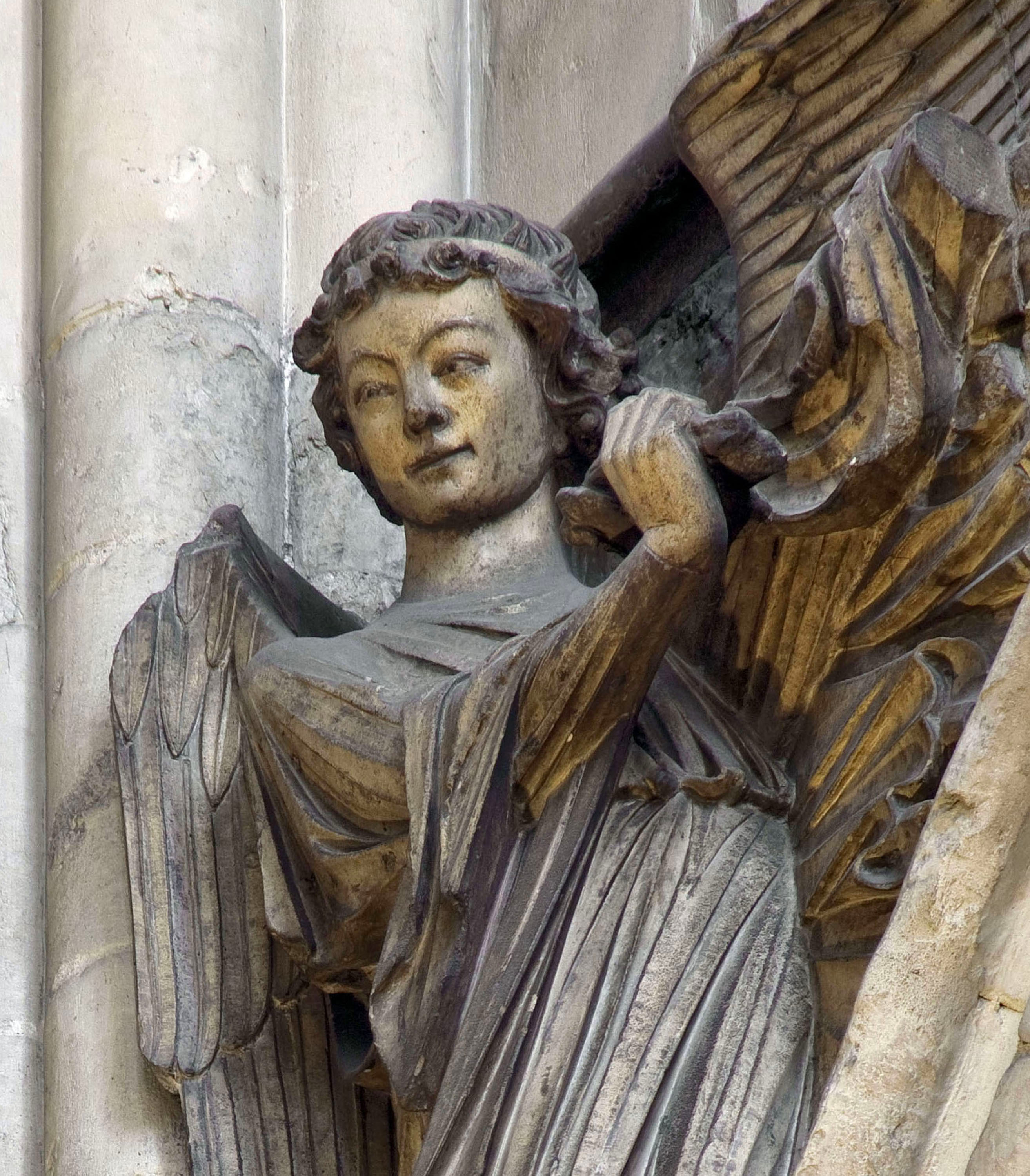
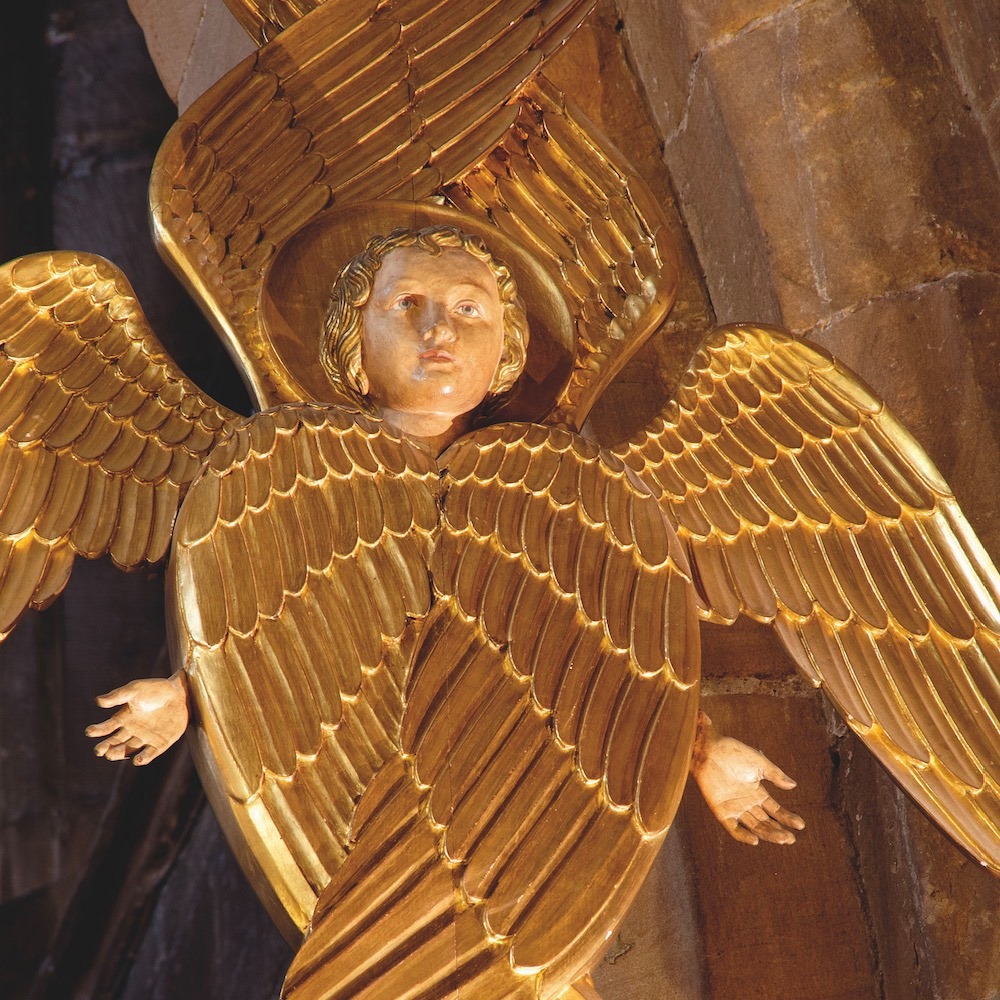
Westminster Abbey censing angel, south transept east angel, deta

Censing Angel – one of four.  Westminster Abbey.  Described as ‘supreme examples of English medieval art’.  From ‘The Glory of Westminster Abbey’.

IMG_7654

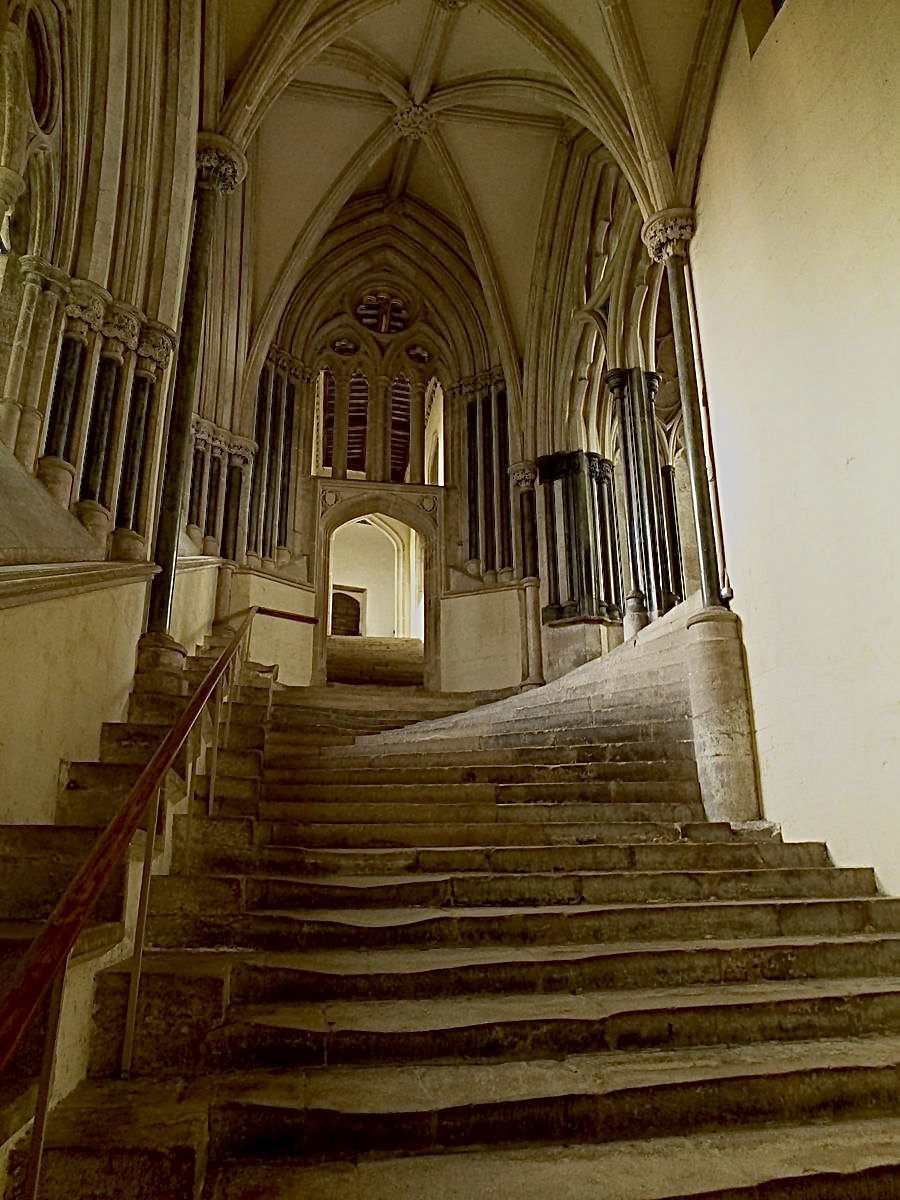
A mysterious door beckons at the top of these well worn steps at Wells….

image

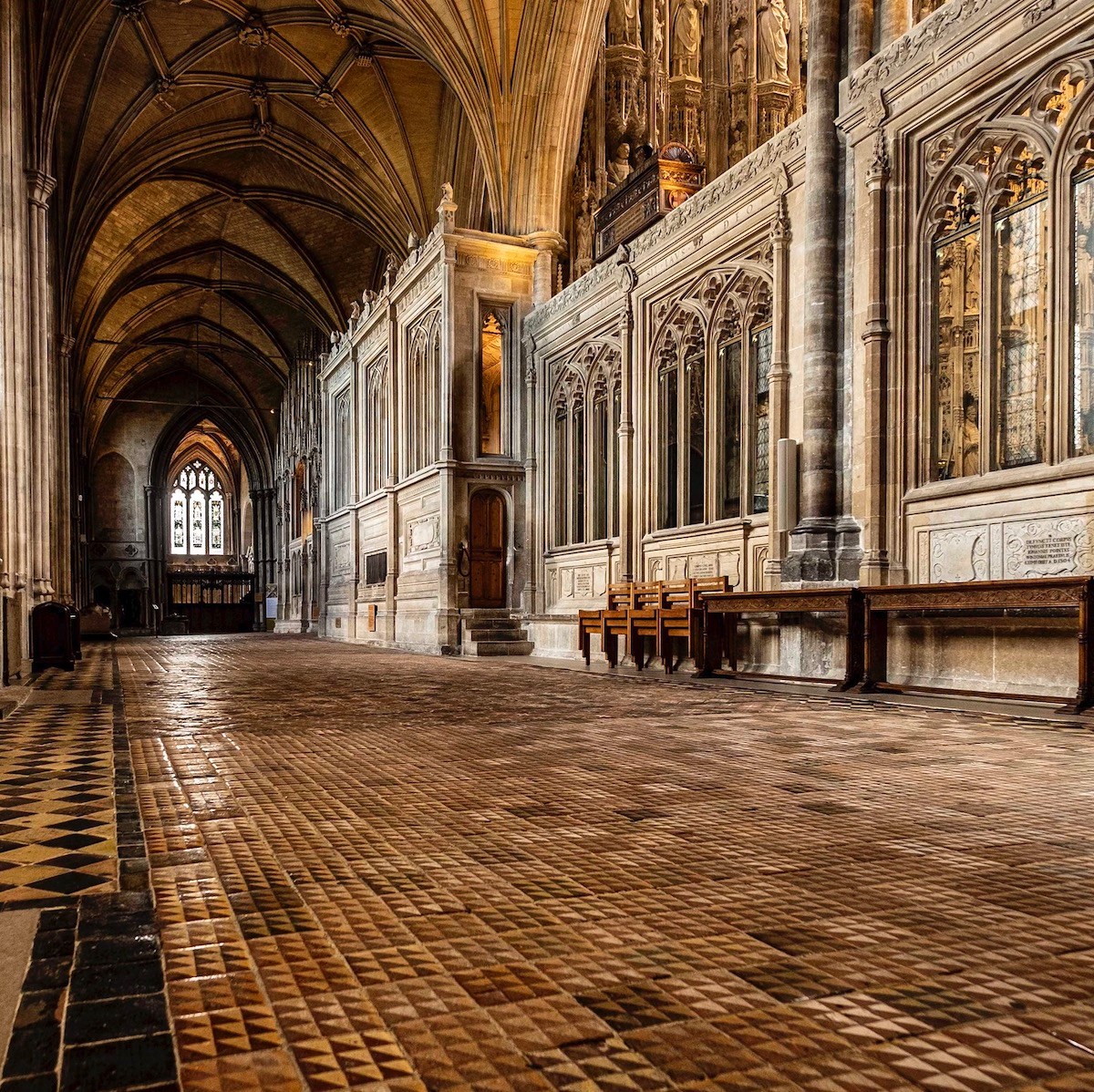
Winchester –  sublime

image

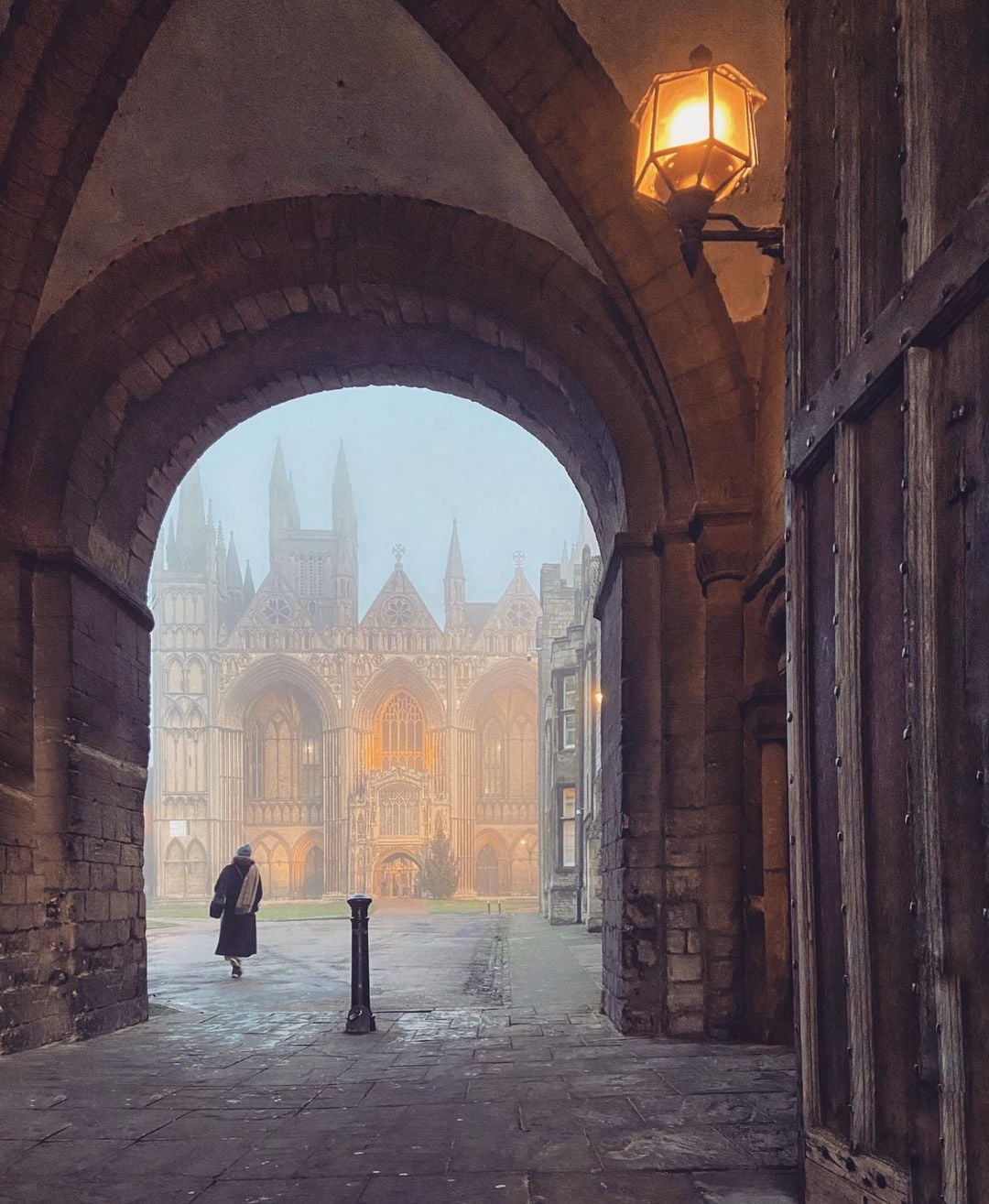
Peterborough..

image

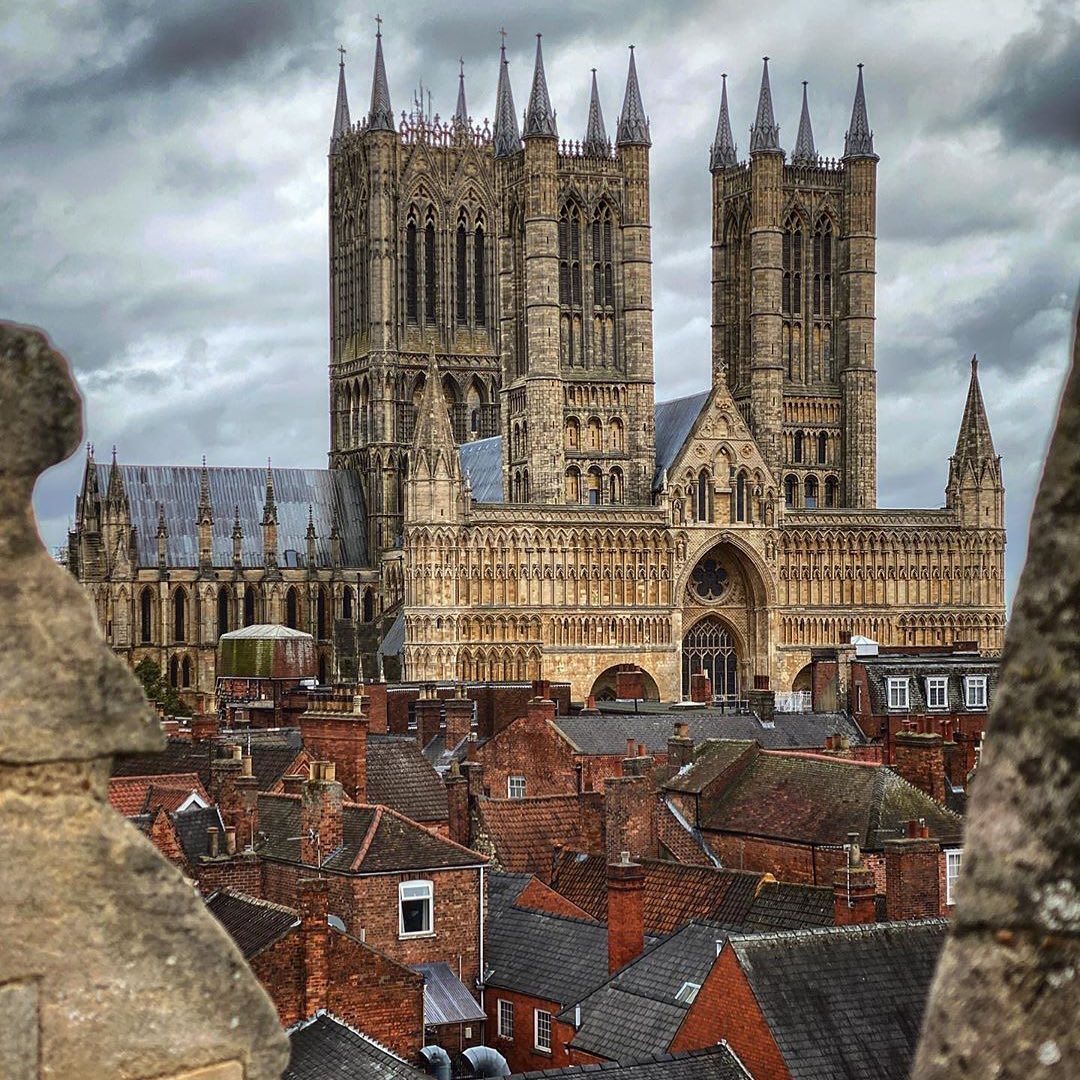
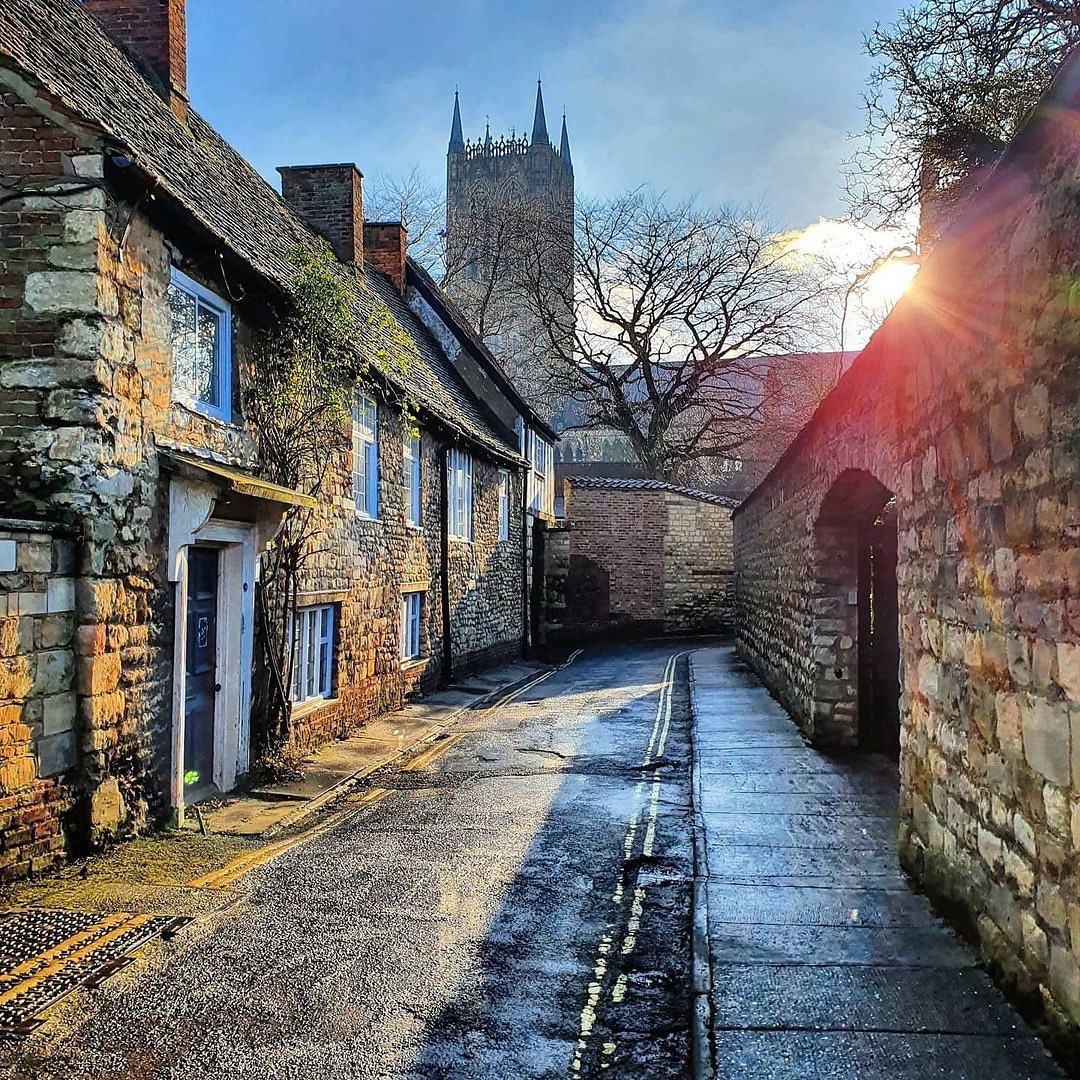
Lincoln soars above the city rooftops 

image

Another view of Lincoln .  Photo reposted from @italiangirlabroad

image

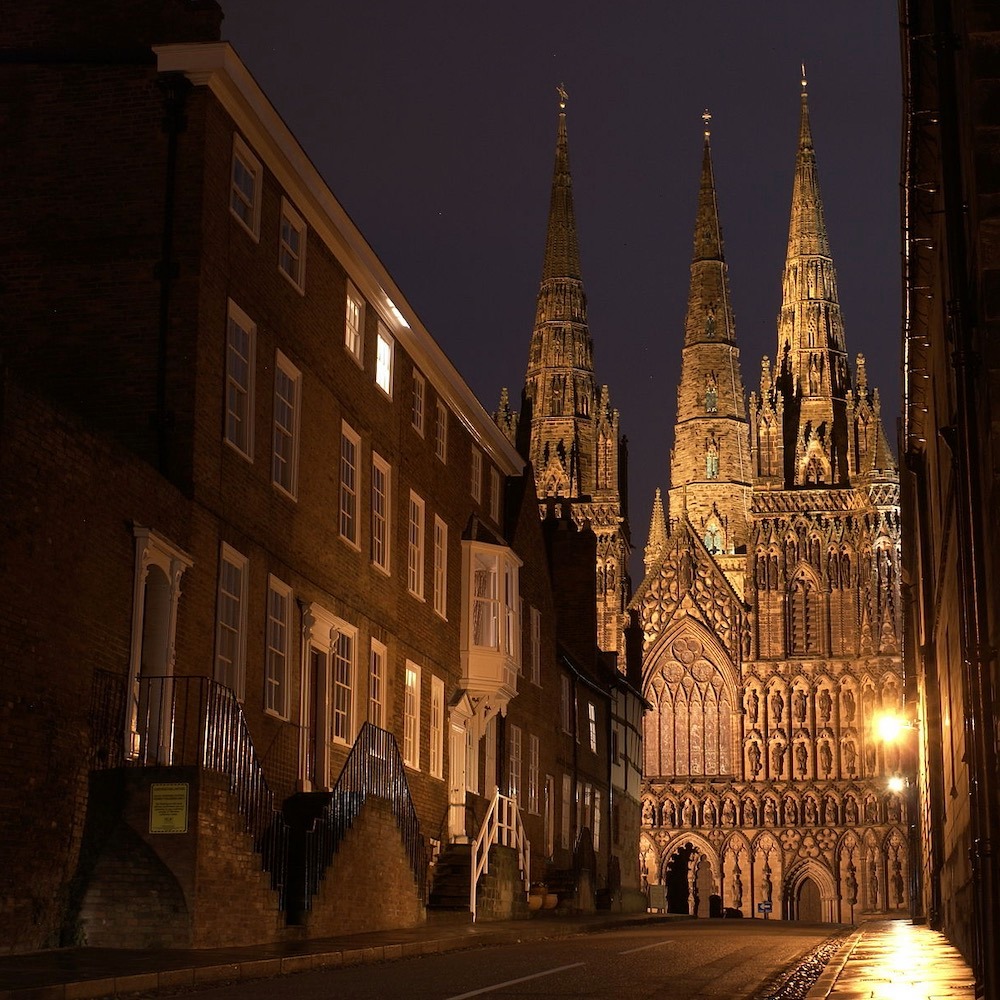
Lichfield at night..image

Wakefield…

image

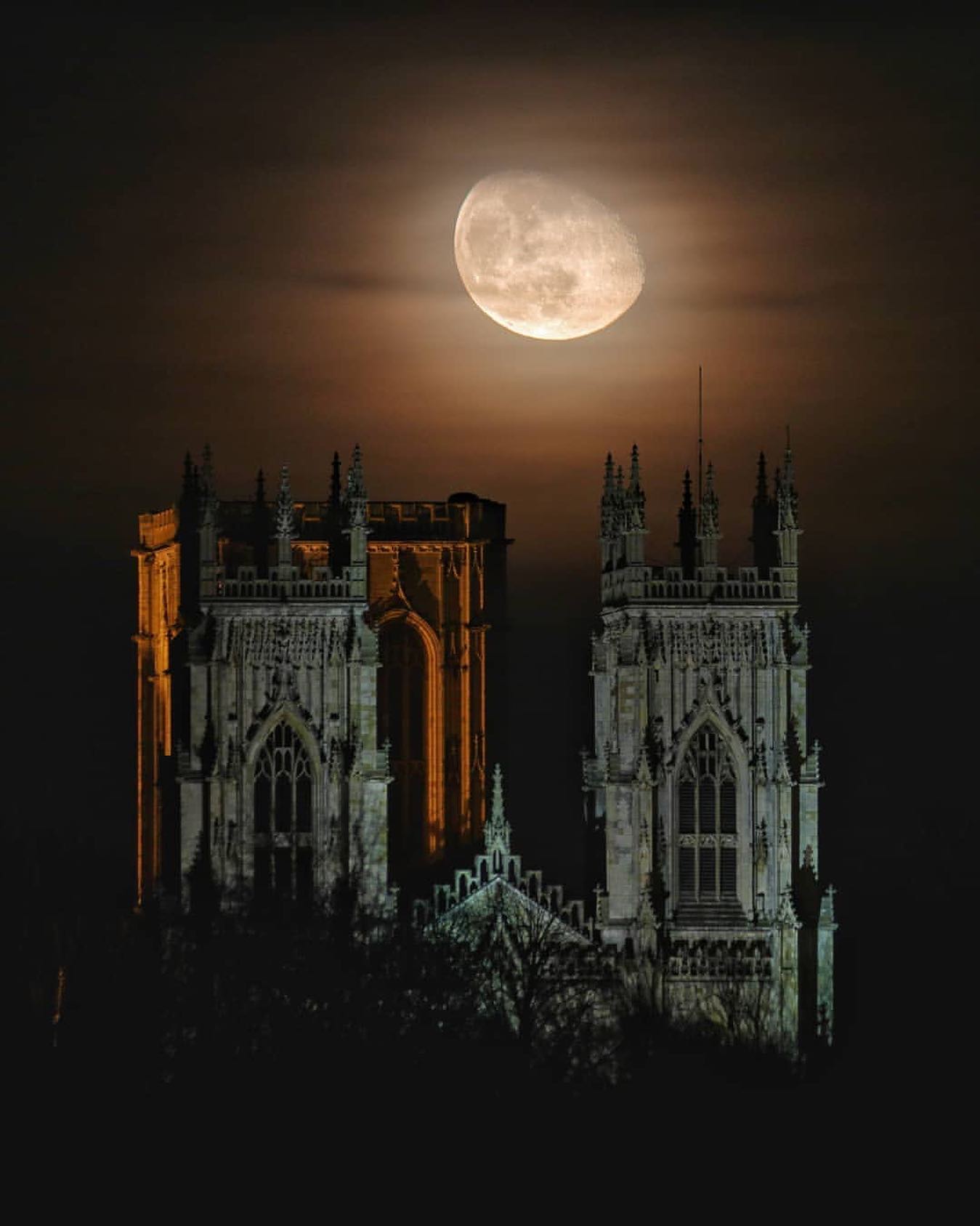
York Minster by moonlight.

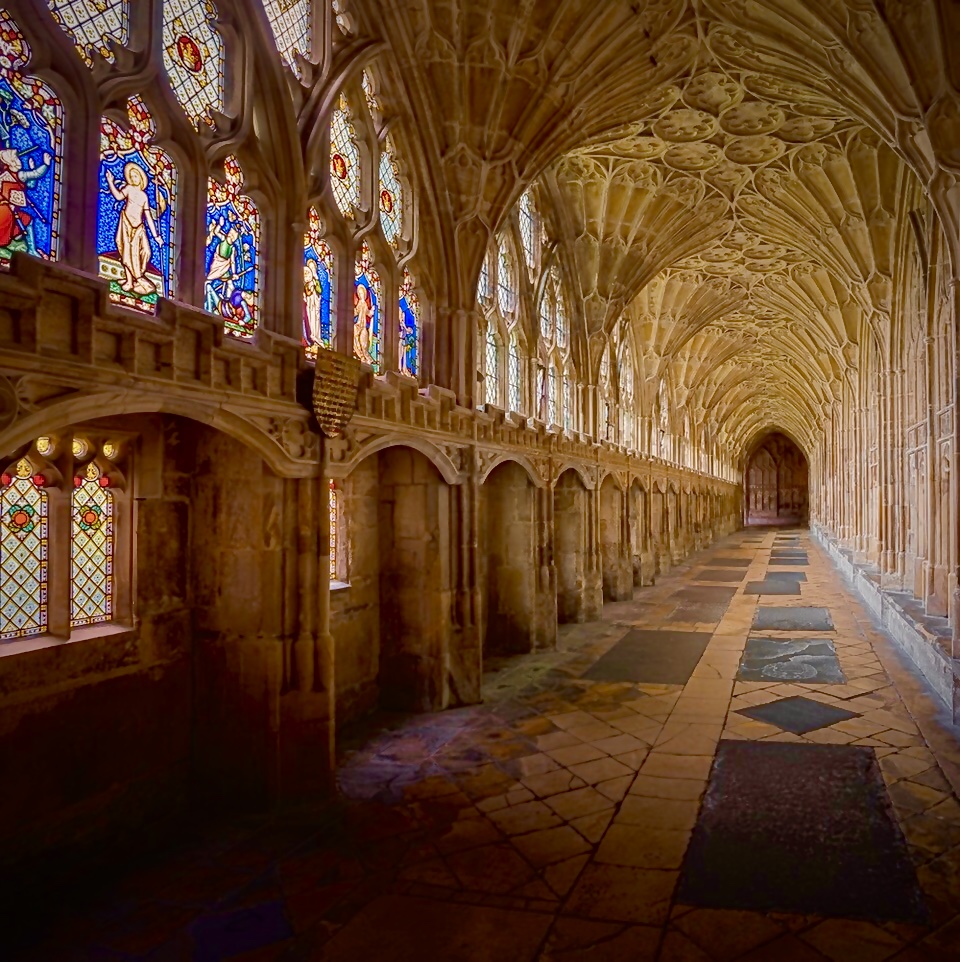
103365604_626239941327737_8605571530063681780_o

Gloucester…

image

St Edmundsbury

image

Norwich at night.

image

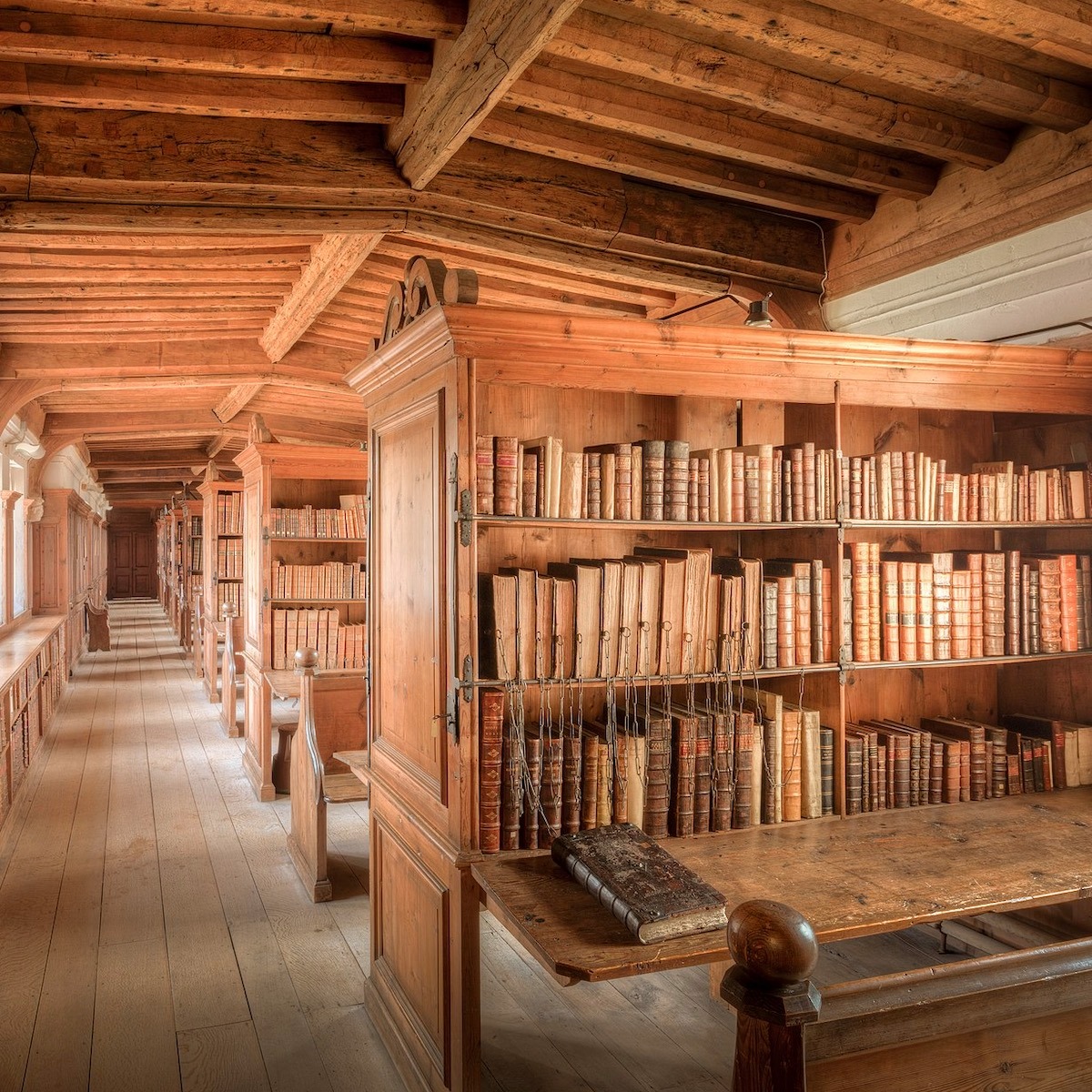
Wells Cathedral Library..

image

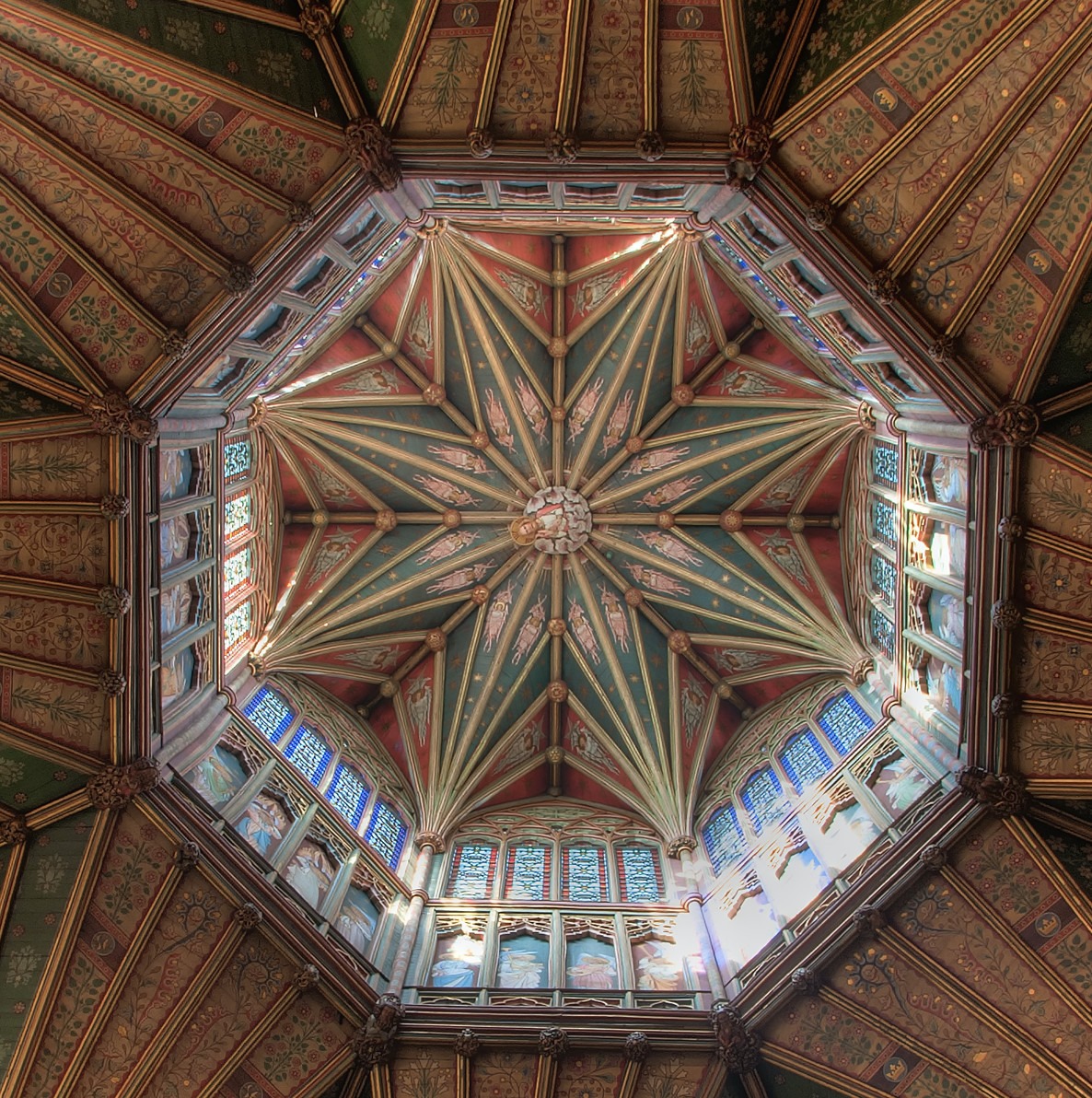
Ely Cathedral..

132269654_3847049422013162_5140650407099894124_o

Peterborough…….

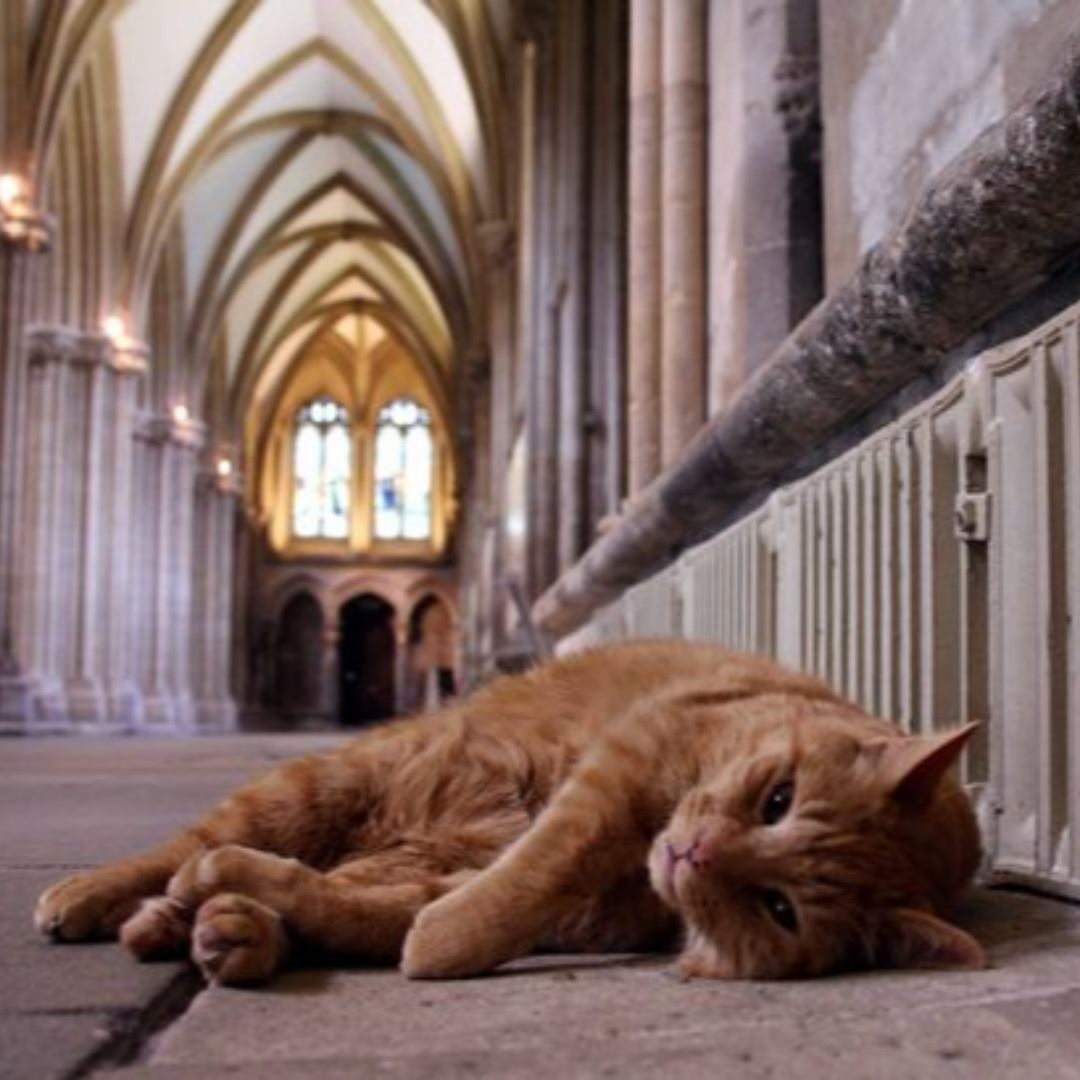
And last but not least, thanks to all the Cathedral cats who keep the pews warm for us, keep the mices away and can be relied upon to always provide a warm welcome:

image

One of the Cathedral Cats.   This is Louie of Wells.  Sadly passed away last year.  

image

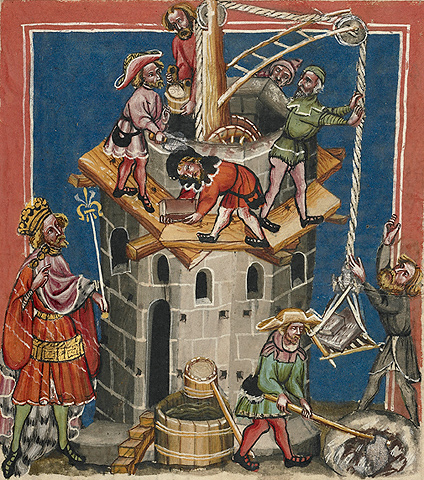
The Construction of the Tower of Babel.  German.  Unknown artist..

If you liked this post you might like

Cheyneygates, Westminster Abbey Elizabeth Woodville’s pied-à-terre

Canterbury Cathedral and the Royal Window

The Coronation Chair and the Stone of Scone.


ROYAL PECULIARS AND THEIR PECULIARITIES

Untitled

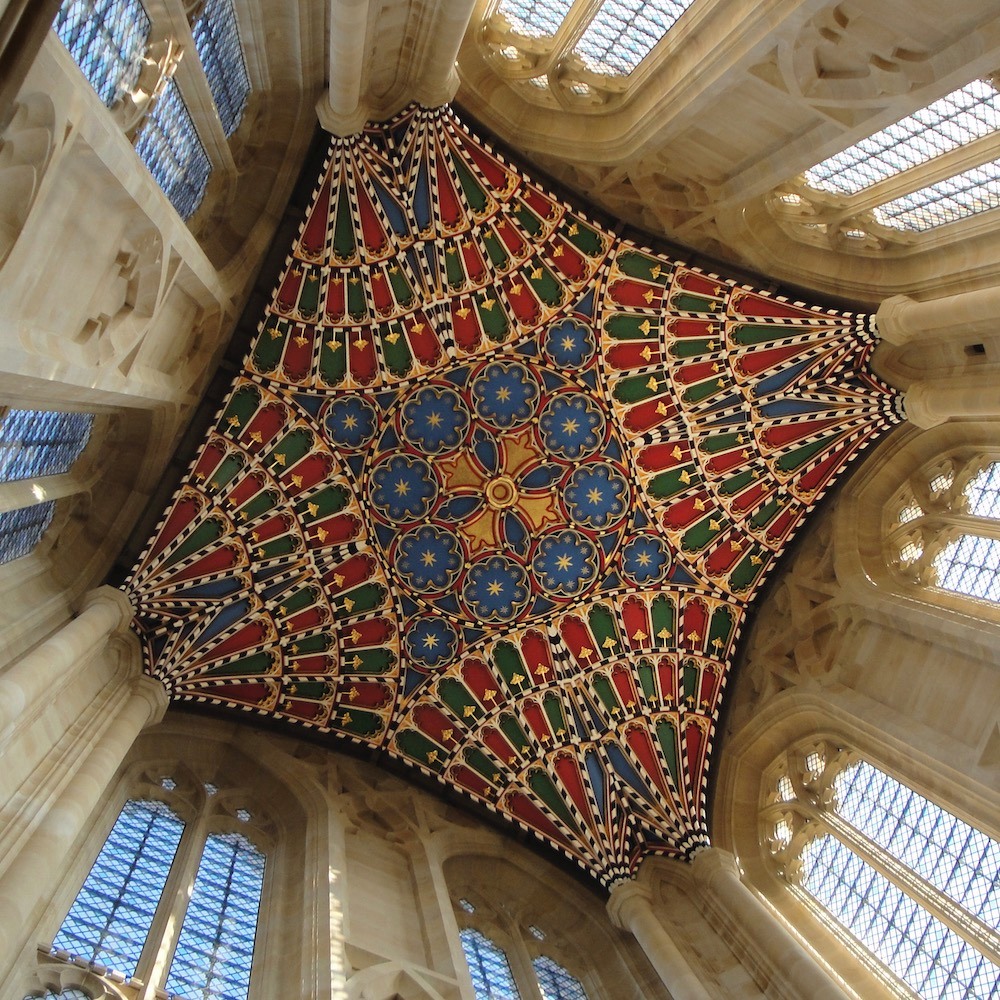
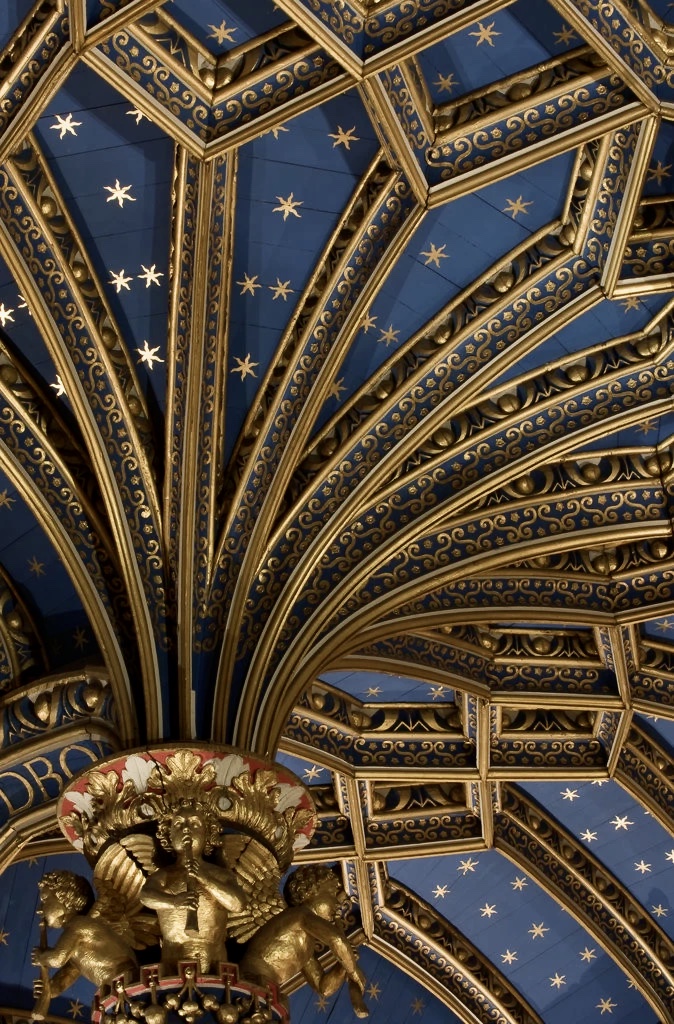
The glorious ceiling of the Chapel Royal, Hampton Court.  Photo James Brittain . Historic Royal Palaces.

 The main reason, and perhaps the only reason,  why the bones in the urn in Westminster Abbey supposedly to be those of the sons of Edward IV known as the Princes in the Tower, Edward of Westminster and Richard of Shrewsbury   cannot be re-examined is because the Abbey is a Royal Peculiar and is thus owned by the Queen who has refused to give permission for this to happen.     Are there any more Royal Peculiars?  Yes there are – fortunately  none of them have mysterious urns containing even more mysterious bones that are crying out to be examined and maybe help towards solving a 500 year old mystery and proving Richard III innocent of the heinous crime of having his brother’s sons murdered in the Tower of London.  They are :

St George’s Chapel, Windsor

24877212042_bd1d91512b_b

The glory that is St George’s Chapel, Windsor.

Edward IV,  father to Edward of Westminster, for a short while Edward V,  and Richard of Shrewsbury, lies buried here as once did the boys mother Elizabeth Wydville although her remains are now lost.  Another two of Edward and Elizabeth’s children were interred here, Mary  aged 15 and her brother, three year old George.

 The Chapel Royal, Hampton Court

IMG_7637

IMG_7636

Details of the Chapel ceiling. Photos chapelroyalhamptoncourt.org

Originally built by Cardinal Wolsey.  What can be seen of the chapel today is the result of two major refittings by Henry VIII with little of the Wolsey decor remaining.   For an interesting link to the chapel click here.
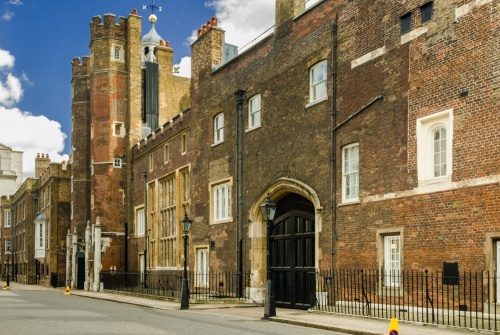
Chapel Royal St James Palace

Built around 1530 by Henry VIII on the site of a leper hospital run by the Augustinian order of  monks.   What became of them and their patients?   Altered in 1837 with much of the  Tudor interior decor swept away.    Original ceiling said to have been painted by Hans Holbein.  Bomb damaged from the War has been repaired and now the chapel is used regularly by the royal family including Diana Princess of Wales lying in repose there prior to her funeral in 1997 and lately  the christening of Prince Louis.

image

The rather austere facade of the Chapel – see the window between the tower and the black gate.
The Queen’s Chapel of the Savoy,

Built where John of Gaunt’s Savoy palace once stood until it was destroyed in the Peasants Revolt 1381.     Henry VII left instructions in his will for the creation of  a charitable foundation to be known as the  ‘Hospital of Henry late King of England‘ which was completed in 1515 to provide a night’s lodging for 100 ‘pour and nedie men as well as ‘rogues and masterless menwho had fallen on hard times.   Dissolved in 1771 and falling into a poor state it was  finally demolished in the 19th century.   All that remains today  is the Chapel of St John the Baptist, now known as The Queen’s Chapel of the Savoy.  For more information on the Chapel click here

image-10

The Queen’s Chapel of the Savoy as it stands today.  Repaired in 1723 and hemmed in by modern builds the Chapel stands as one of the remarkable  survivors of Old London.  

The Chapel of St Peter ad Vincula 

Original chapel may have been built around 1100, possibly even earlier,  and would have originally stood outside the perimeter of the Tower of London.  The one we see today built around 1519 after the previous one was destroyed by fire in 1512.  Interior dates from 1876 after yet another fire in 1841.    Burial place of some of Henry VIII’s better known victims including two wives,  Anne Boelyn and Catherine Howard, hapless Lady Jane Grey and her husband, Sir Thomas More and Margaret Pole, Countess of Salisbury, one of the last Plantagenets.  An interesting link can be found here.  

IMG_7650

Yeoman Warder Moira Cameron standing in the nave of the Chapel Royal of St Peter ad Vincula.

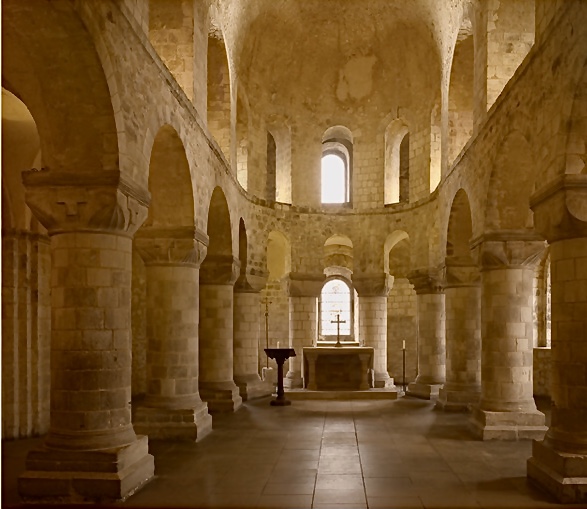
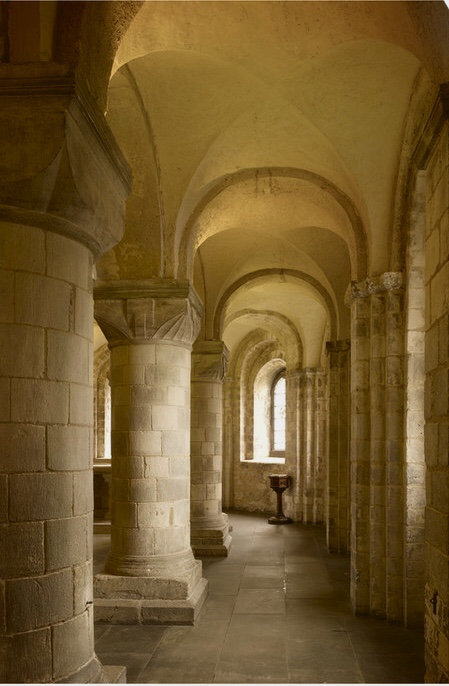
St John the Evangelist in the Tower of London 

IMG_7633

The stunning simplicity of the Chapel.  Photo James Brittain

IMG_7635

Photo James Brittain

IMG_7634

Photo James Brittain

This chapel, stunning in its simplicity, is 900 years old.  From here in 1381 Simon Sudbury Archbishop of Canterbury and Lord Chancellor was dragged out and taken to Tower Hill where he was beheaded by the mob during the Peasants Revolt.   It was also here in 1503, after her death in childbirth while she was in residence at the Tower that Elizabeth of York’s body lay in repose before her burial in Westminster Abbey.   Connected to what were then the Royal Apartments this beautiful chapel has been used for prayer by all monarchs while resident in the Tower.  Astonishing!

For an interesting link click here.

The Royal Foundation of St Katharine.

image-7

The Chapel and Hospital of St Katherine’s prior to demolition.  

Today nothing remains of the  ancient church founded by Queen Matilda, wife of King Stephen in 1147 having been demolished in 1825 to build St Katherine’s Docks.   Matilda described the Foundation as My hospital next to the Tower of London”.   Stood close to the Tower of London.  When in use as a hospital it is probable the patients would be cut off by a screen when services were being held. The Royal Peculiar survives to the present day as the Royal Foundation of St Katharine To read more about the history of St Katherine’s  click here.  

If you have enjoyed this post you might like – 

The Priory of St John at Clerkenwell and a visit by Richard III

The Bones in the Urn again!…a 17th Century Hoax?

‘RECENT INVESTIGATIONS REGARDING THE FATE OF THE PRINCES IN THE TOWER’ by L E Tanner and William Wright 1933

ELIZABETH TALBOT, VISCOUNTESS LISLE, LADY ELEANOR BUTLER’S NIECE

petrus_christus_-_portrait_of_a_young_woman_-_google_art_project

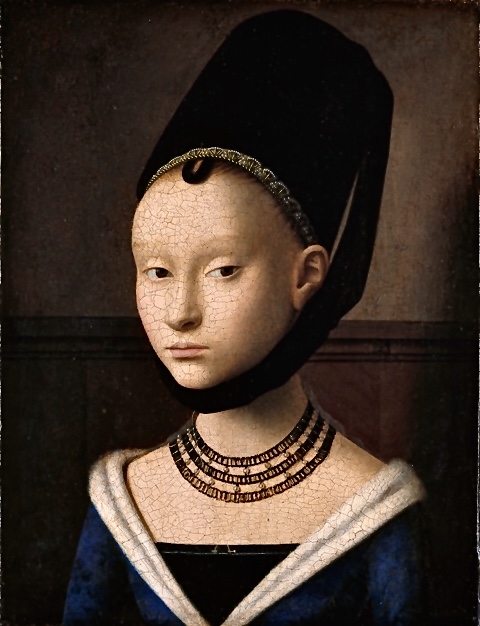
Possible portrait of Elizabeth Talbot, Viscountess Lisle c1468 Petrus Christus of Bruge Gemäldegalerie, Berlin.  Note the gleam of the pearls, the pattern of the brocade gown and the little gold pin used for pinning the fine lawn partlet onto the bodice.  How delicious!

Could this charming portrait  be of Elizabeth Talbot, Viscountess Lisle –  Lady Eleanor Butler/Boteler nee Talbot’s niece –  as  suggested by the late historian John Ashdown-Hill?  Elizabeth was born about 1451 and would have been around 16 when she sat for this portrait if this is indeed her.  John,  a historian who delved deep,  based his suggestion upon the  fact that there was once an inscription on the now lost original frame identifying the sitter as a member of the Talbot family.  This is also been confirmed by a letter dated 1824 written by Gustav Waagen,  Director of the Berlin Museums who gave his interpretation of a lost Latin inscription identifying  the sitter as “a niece of the famous Talbots” (eine Nichte des berühmten Talbots).   It is known that Elizabeth Mowbray, nee Talbot, Duchess of Norfolk,  took some of the Talbot family children with her when she travelled to Flanders for the marriage of Margaret of York to Charles the Bold in 1468. 

Portrait_of_a_young_girl_Petrus_Christus_1

IMG_7629

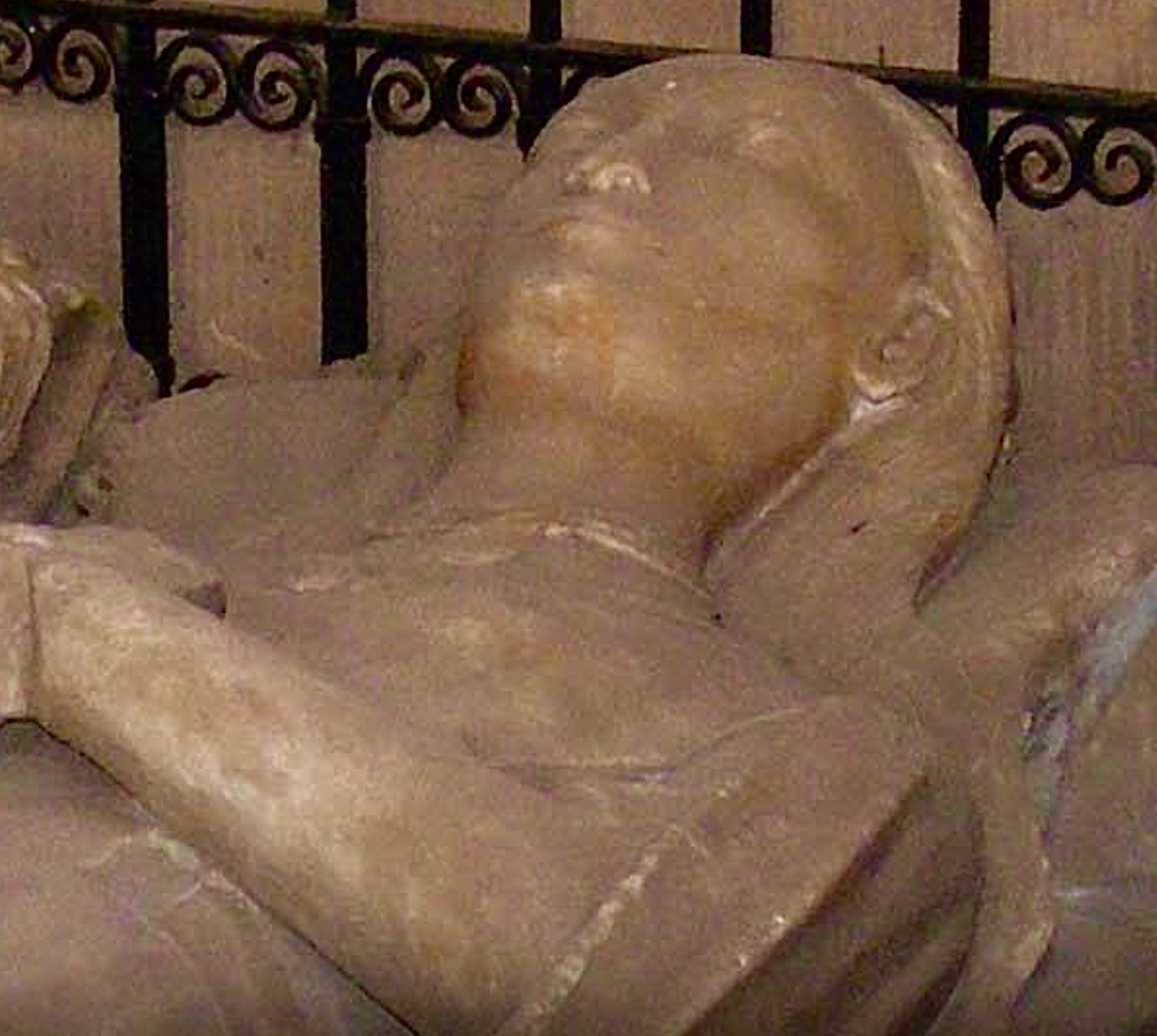
Close up of the effigy.  Photo Kate Keens

IMG_7622

There are clearly similarities between the portrait and effigy.   Effigy photo from John Ashdown-Hill’s book Eleanor the Secret Queen.

It’s interesting to compare the portrait with Elizabeth’s monument in St Mary’s Church, Astley,  where she was buried with her husband Edward Grey who was created Viscount Lisle by Richard III in 1483.  This is where it gets interesting because Edward Grey was the brother of Sir John Grey,  first husband of Elizabeth Wydeville,  bigamous wife to Edward IV.   As our Elizabeth was the niece of Lady Eleanor Butler (Elizabeth Wydeville’s very own personal nemesis) who was true wife of Edward IV, things get very intertwiney.  Elizabeth  would have still been a child when Sir John Grey met his death for Lancaster at St Albans 1461  and it’s highly unlikely she met him.  However  her other aunt Elizabeth Talbot, Mowbray Duchess of Norfolk, would surely have recalled the time when Elizabeth Wydeville had been Lady Grey but she unfortunately left no indications of her thoughts on the bigamous Wydeville marriage and its disastrous results although she must have had them aplenty.  
image

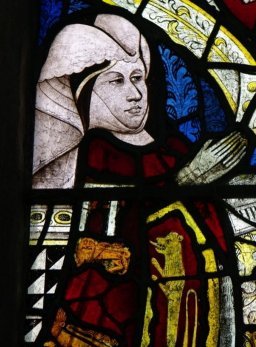
Elizabeth Talbot Duchess of Norfolk.  Described as ‘a very beautiful English lady’  by a bystander who saw her in Flanders.  Edward IV treated her appallingly in her widowhood. Stained glassed window Long Melford church (1)

Elizabeth, dying in 1487,  predeceased her husband who died in 1492 who requested in his will to be buried next to her in St Mary’s  Church,  Astley :  My body to be buried in the new tomb in the new chapel of our Lady, by me began,  in the College of Astley where the body of Elizabeth lieth (2).    His monument has been destroyed while Elizabeth’s has been moved and now lies inexplicably betwixt the monuments of Cecilia Bonville, Marchioness  of Dorset and Edward Grey, Lord Ferrers of Groby d.1457, father to John and Edward Grey (3)

img_7596

The monuments of Cecilia Bonville Marchioness of Dorset, Elizabeth Talbot Viscountess Lisle and Elizabeth’s father in law Edward Grey Lord Ferrers of Groby  St Mary’s Astley.     Photo Caroline Irvine.

Viscount Lisle was treated well by Richard after the failure of the Wydvilles to gain control of the young Edward V.   Bore the Rod with the Dove Richard’s Coronation.   May have withdrawn from Richard prior to Bosworth.  He was well received by Henry Tudor (4).

image

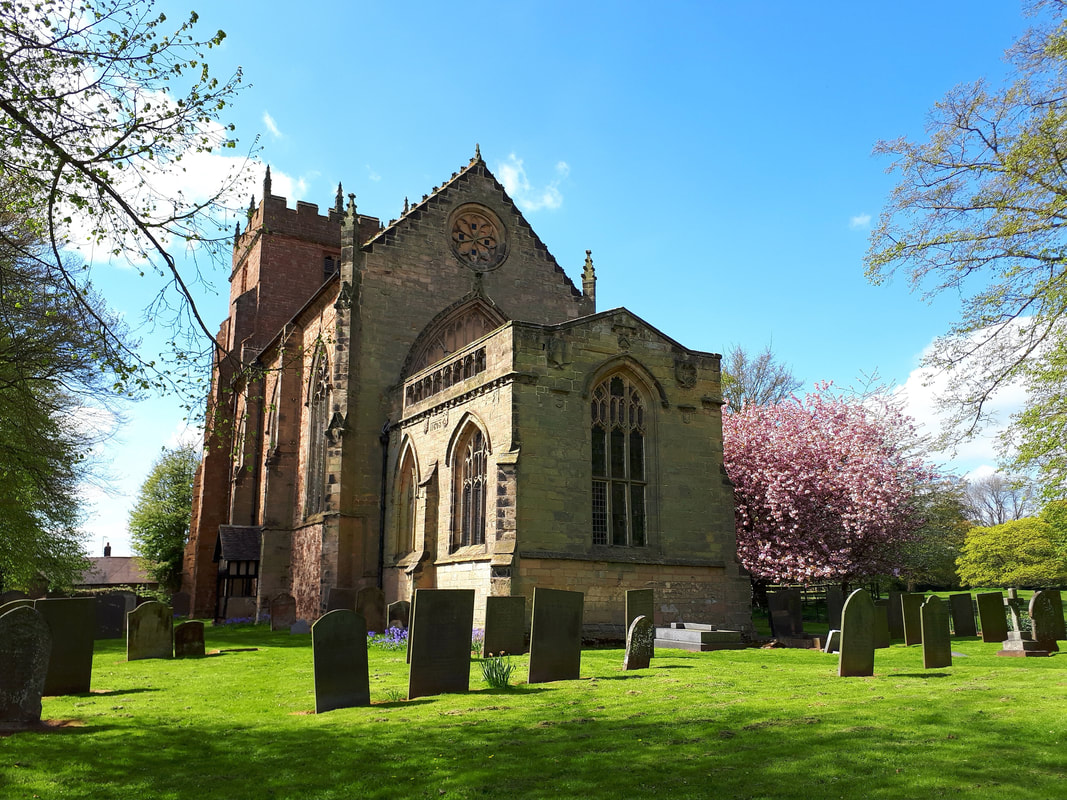
St Mary’s Church Astley, Warwickshire.   Mausoleum to the Grey Family.

Portrait_of_a_young_girl_Petrus_Christus_1


  1.  Olivier de la Marche described Elizabeth as  ‘duchesse de Norfolk, une moult belle dame d’Angleterre’ Eleanor the Secret Queen p.236 .  John Ashdown-Hill.
  2. Testamenta Vetusta p.410
  3. There is some confusion as to whether the third monument/effigy is that of  Edward Grey Lord Ferrers of Groby,  Elizabeth’s father-in-law or her husband Edward Grey Viscount Lisle.   According to W E Hampton it is the former and that Viscount Lisle’s monument has been destroyed.   See his Monuments of the Wars of the Roses p.314.  John Ashdown-Hill has attributed the monument to be that of his son Edward Viscount Lisle.
  4. Memorials of the Wars of the Roses p.314.  W E Hampton. 

THE TRIAL OF RICHARD III – PART TWO

CURSES

The two QCs prepare to do battle
Following on from my earlier post.  The day had dawned – the trial commenced.  Because of the length of the trial I only give snippets here which stand out and which I think are the most pertinent/funny/excruciating.

The judge addressed the jury as to whether  Richard III was  responsible for the alleged murder of his brother, Edward IV’s sons,  Edward and Richard known as the ‘Princes in the Tower’.   The judge pointed out that Richard, killed at the battle of Bosworth ‘is beyond the power and jurisdiction of this or indeed any other human court.  What you are invited to do today in these proceedings is to pass a historical judgement upon him. He stands in a sense indicted at the bar of history.  The charge against him as you’ve just heard is one of the greatest charges in the calendar of crime –  murder’.  Mr Dillon had,  in the absence of the defendant had already entered in a firm voice the plea  My Lord, the plea is one of Not Guilty‘.  

Mr Russell for the  prosecution set the historical scene, the ‘unpopular’ Wydeville marriage, the death of King Edward, the taking of his heir into Richard’s care, the Wydvilles ‘disarray’,  the eventual disappearance of both Edward’s sons and the discovery of bones at the Tower in the 17th century, which is so well known I need not go into it here.

The first witness for the Prosecution was Jeffrey Richards, lecturer in history at Lancaster.      Questioned by Mr Russell, Mr Richards enlarged further on the circumstances of the times i.e  the building up of the now all powerful Wydevilles ‘ who were in control of the court, the council, the late kings treasure, the fleet and what is the most important of all the two princes who through they hoped to rule England’ .  Mention was made of the famous letter to York in which Richard asked for aid against the queen and her adherents.  Mr Richards perception of this was the troops from York were needed to cow and threaten London.  The upcoming Coronation was used as a ‘pretext’ to prise Richard of Shrewsbury, the youngest prince,  out of Sanctuary.   Now Richard could secure his position.  Only he didn’t.  This was on account the princes represented a focus for rebellion.  However moving on – in the interim Margaret Beaufort plotted with the boys mother for a marriage between their offspring which in Mr Richards view  Elizabeth would not have done unless she ‘knew her sons were dead’.
Mr Dillon questioned Mr Richards asking him his opinion of More and what would he say to the statement that ‘More  is full of probable false facts and is too discredited to build on

Mr Richards: No I don’t think that is so.

Mr Dillon: You do not accept that statement?

Mr Richards: No not entirely .

Mr Dillon: I take it from the statement served which you have provided for my learned friend for the prosecution.  These are your very own words that I have in typing before me.

Mr Richards: Can you repeat them?….(I know… me neither!) 

Mr Dillon then went on to repeat them..

Mr Richards: Yes…..  well I wrote that in the early stages in my research, since then I have re-read More  and I don’t stand in entirely by that…. Ouch!

Asked  why he thought Elizabeth would surrender her children to Richard if she  believed  he had murdered her two sons he responded ‘Because she was a canny political old bird and she knew she needed to survive’.

witness

To be fair Mr Richards has never been A Mother – but would it be so onerous to at least try to imagine?

Next to be called was Dr Jean Ross senior lecturer in anatomy at the Charing Cross hospital medical school. Dr Ross had seen and examined Professor Wright’s 1933  report on the bones.  Concluded  ages of the bones at the time of death were consistent with 12 and 10 years old and some evidence they were ‘possibly’  blood related.  Inconclusive as per usual.

 Then came the turn of Dr Tony Pollard

Dr Pollard asserted the precontract was a ‘tissue of lies’ quoting Croyland who described it as ‘the colour for this act of usurpation’.  Everyone knew this was the case – ‘except for Stillington!’ interjected the Judge.

Dr Pollard : This bad wicked Bishop as Commynes  called him

Mr Dillon – I respectfully suggest that he is not a bad or wicked Bishop at all…

frighred rabbit

lol

looks to heaven for assistNCE
Dr Pollard : You have thrown in so many different things it’s very difficult to know where to start.

Mr Dillon then touched upon the issue of all the chroniclers were southerners or like Mancini reporting southerners perceptions.  

Mr Dillon:  There is not a single northern chronicler. One of the things that marks the whole of this period is the fear of the south of the barbarians or aliens from the north and the distrust from those of the north for those of the south.   One of the things that one finds is a substantial prejudice running through Croyland…..Henry VII was visiting York and there was an uprising there.  The Chronicler reported ‘Although by these means peace was graciously restored still the rage of some of the malignants was not averted but immediately after Easter sedition was set on foot by these ingrates in the north whence every evil takes its rise’.

Dr Pollard:   Splendid stuff isn’t it..

Mr Dillon:  Isn’t it and this is even although the king was staying in those parts I mean the impertinent northerners when the king is  there,  daring to rise!’

Dr Pollard: That’s very fair.

Then the pièce de résistance of the Prosecution was called – Dr David Robert Starkey – drum roll …

Dr Starkey begun as he meant to go on…

Mr Russell: Did you hear what Dr Pollard said about the precontract?

Dr Starkey:   Yes I agree with everything that he said.   It is clearly a concatenation of lies, rumour and absurdity.   But we can go very much further. It is not merely a   concatenation of absurdity it was a red herring and was known to be.

Questioned on Thomas More Dr Starkey will brook no criticism – 

Dr Starkey :  The criticisms of More on the whole are very small minds attacking a very big one.  

He then goes on to relate the ludicrous More story of  the page advising Richard while he is sitting on the toilet (really Sir Thomas!)  of whom he could rely  to do the dirty deed…’out  there beyond the lavatory door there is lying on a pallet mattress the man  James Tyrell who will do the deed for you’.   This is dear reader, despite the fact that Richard had known Tyrell for many years.  Tyrell had been in Richard’s service since 1471 after he was knighted by Edward IV  after the Battle of Tewkesbury.  Dr Starkey attempted to twist the story asserting that either the page or Tyrell was a  gentlemen of the stole.  However Rosemary Horrox has written Thomas More’s elaborately circumstantial account which is, however, demonstrably inaccurate in detail, notably in the lowly status assigned to Tyrell before the murder  I know! You couldnt make it up! however onwards...

Referring to these Tudor stories the defence questioned Dr Starkey who suggested they would now be called Tudor Propaganda

Mr Dillon:   I thought I might say Tudor legend

Dr Starkey I’m sure you would sir yes

Mr Dylan does that sound better to you

Dr Starkey:  It won’t be the first time you’ve misused a word

Mr Dylan:  I dare say

Dr Starkey : Nor the last

Mr Dillon: I see – then if this small lawyer’s mind may ask you some questions about the topics on which you have given evidence

Mr Dillon, brave man, then points out some problems with More’s account…

Dr Starkey :  And I think you would be wrong

Mr Dillon: May I finish the question

Dr Starkey: No sir…… The statement has gone on so long I am now entirely unclear as to the question.

starkey

The ‘Daggers’ look….takes a lot of practice…yikes!

starky getting thiursty

After returning to his seat Dr Starkey gets an attack of thirst.  “Water, water gasped Dr Starkey..this Death Stare look is hard work..”


Next to be called was Lady Wedgwood – and for the defence.  Medieval Art historian and a Fellow of the Society of Antiquaries. Responsible for mounting the exhibition on Richard III at the National Portrait Gallery in 1973 and for gathering together almost all  known portraits of Richard, mounting to nearly 30, most of them duplicates and not originals.  

Mr Dillon questioned Lady Wedgwood on the Thomas More description of Richard quoting ‘ill featured limbs, crook backed, his left shoulder much higher than his right…also a withered limb’.  

Lady Wedgwood:  That is I claim was an exaggeration.  The first record of that is a written one where it is accepted that there was some disparity in the shoulders. 

Lady Wedgwood held up a portrait from the Royal Collection at Windsor which under X ray  can be seen the shoulder line has been tampered with including the links in the collar –

shoulder

The mouth has also been altered as well as the face more lined and narrowed eyes  c.1530

Numerous portraits were also discussed including an infra red photograph of  the ‘Broken Sword’ portrait with alterations including a ‘hump’ back as well as a withered hand.  

lady

Lady Wedgwood and the Broken Sword Portrait from the Society of Antiquaries

Next to be called was Anne Sutton, archivist,  fellow of  Society of Antiquities, editor of the Ricardian and co-editor of the Coronation Records of Richard III.  Called for, among other things, her knowledge and understanding of the pre-contract.

AS

Anne Sutton. 

Mr Dillon:  it’s been described – this question of the pre-contract  – as being simply a pretext used by Richard to seize the throne for himself.   Do you agree with that assessment?

Miss Sutton:  No. 

Mr Dillon:  It has been described by one of the witnesses and I hope I have the language right as a red herring, do you agree with that assessment?

Miss Sutton: No.  It’s the crux of the matter .

Mr Dillon : Referring to the pre-contract as reported in Croyland….  could this  private, clandestine marriage,  not celebrated in church,  with no publication of banns  have been a valid ground for objecting to the validity of the marriage between  Edward and Elizabeth subsequently and leading to the bastardisation of their children?

Miss Sutton:  yes the two things together

Mr Dillon:  Was adultery taken very seriously in fact in mediaeval times.  

Miss Sutton:  Oh yes it was a heinous crime

Mr Dillon when there was a question of succession raised

Miss Sutton:  yes undoubtedly .  

Following further discussion on the legalities of the pre-contract Mr Dillon played a blinder.

Mr Dillon:  It is said by Dr Starkey that once proclamation had been made of Edward as King Edward V then all questions of illegitimacy would have been wiped out.  Do you agree with that?

Miss Sutton I think it’s true of Dr Starkey’s period but he is forgetting the reign of Henry VIII and the great increase of the theory of the absolute king so the situation was entirely different in 1483…

starks

Cue soundtrack from Jaws….

Miss Sutton pointed out only the act of the annointing and the coronation could have wiped out the illegitimacy.  Then followed some robust questioning by Mr Russell which led to Autumn Rebellion 

Mr Russell : A lot of the south of England and Wales supported that rebellion to free the princes whether or not they were bastards

Miss Sutton:  There were a lot of people involved in that rebellion who had their own personal axes to grind … touché!

The last witness to be called, Mr Jeremy Potter, Chairman of the Richard III Society and as seen earlier to be among those who first suggested the Trial of Richard III.  Mr Potter made many a good point: 

JM

Mr Potter:  Richard behaved impeccably. The reason why he has a bad reputation is that the Tudors had to say that he was being hypocritical and deceitful.  If he behaved badly they would have said look how badly he behaved.   Since he behaved very well they said he must be a hypocrite…. The real peculiarity of Richard is that he is the only king of England who has came from the north with northern support, his northern affinity to claim the throne. This naturally upset southerners,  men of Edwards household who lost their jobs to these intruding northerners, savages from places like Yorkshire….when the Woodvilles  made a pre-emptive strike for power this naturally put Richard on his mettle.  It become clear that the sensible thing was that Richard should become king.  A boy king would have been a disaster.  Nobody wanted a boy king.   It would’ve started the Civil War over again.   If Richard had been made  Protector he was open in two or three years time to the vengeance of the Woodvilles and not only Richard himself but everyone who has supported him.

Mr Potter touching on the pre-contract pointed out that:

Stillington  was probably right. Stillington was a man of considerable importance, had been Chancellor of England for seven years under Edward IV which was the number one job equivalent to the Prime Minister today and so Stillington was very far from being a nobody.  He had fallen out with Edward IV and been imprisoned at the time of Clarence’s disgrace.   Some historians assume the reason for this was that Stillington told Clarence some years earlier of this pre-contract which would’ve made Clarence heir to the throne and not the boys and was the reason for Clarence’s execution.

Mr Potter also pointed out that Clarence’s heir, Edward of Warwick, was alive at the time and as attainders could be reversed was in much the same position as the ‘princes’.  

Mr Potter:  And what happened to Edward of Warwick?   We  know he was well treated by Richard , kept in Yorkshire in a royal nursery with Edward IVs daughters ,even made Richard’s heir at one time.   He survived Richard’s reign quite happily but immediately after Bosworth put in the Tower of London by Henry Tudor and judicially murdered some years later.   So we do know what happened to one nephew who had a very good claim to the throne, as good as the two princes once they’ve been declared illegitimate.

Further debate followed with Mr Russell questioning Mr Potter on the Hastings execution possibly without a trial.  

 Mr Russell: … but very much a barrack room trial over a very short space of time if it took place at all  yes?

Judge:  Killing without trial was not an unusual event in these days I gather

Mr Potter: No it become commoner when the Tudors were on the throne

Judge : That’s a good tu quoque if I may say so!

There then followed summaries by both QCs and also the Judge.  The Jury were then invited to retire to consider their verdicts.  Which they did.  Of course they reached the right and fair verdict which was Not Guilty.  Brief notes were given as to how they reached the not guilty vote including –

 MR RICHARDS  Traditional historical  statement of events but without strong expression of belief  in Richard guilt.
DR POLLARD noted Mancini could not make categorical statement re Richard’s guilt.   Mancini an Italian without much knowledge of English was considered unreliable.  Pre N|contract  seen as decisive area debate.  Little  doubt cast upon marriage of Edward IV and Eleanor

DR STARKEY encouraged to shoot from the hip by defence barrister.  Dynamics of confrontation overshadowed his evidence.  

MISS SUTTON undermined contention that Richard III had motive for killing princes. Satisfied  jury on marriage of Eleanor Butler and Edward IV.   Richard’s consequent legal and moral justification in taking throne and his lack of motive for murder on grounds that the princes were bastards.

MR POTTER Established favourable impression of Richards character.  General conduct appeared reasonably decent and honest.   Impressive loyalty to brother,  quality of rule.  Elizabeth Woodville’s apparent reconciliation with Richard suggested she believed him innocent.  

LADY WEDGEWOOD Compelling evidence that Richard’s portraits have been purposefully tampered with and altered over the ages to show him in a malignant light.  

Factors in favour of the prosecution.   Throne gave Richard strong motive to dispose of Princes.   Execution of  Hastings showed preparedness to be ruthless.   Impossible for anyone who was not a close associate of Richard to have killed the princes while they were kept in the tower.

Factors in favour of the defence  Princes might easily have been killed without Richard’s knowledge or approval. Lack of direct accusation. Richard’s general conduct. Edwards pre-contract of marriage to Eleanor Butler. General feeling that information about Richard was distorted or biased.

So there we have it.  The common sense of a mixed jury from all walks of life came through and thank goodness for that.  

I have to give immense thanks to Richard Drewett and Mark Redhead for their book The Trial of Richard III from which I have drawn heavily for my two posts.  

Loyaulté me Lie

For those who would like to view the trial for themselves it is available on Utube

For those who have enjoyed these posts you might be interested in my post on William Lord Hastings


THE TRIAL OF RICHARD III, PART 1

The statue of Justice, Old Bailey, London.

Way back in  1980 the late Jeremy Potter,  Chairman of the Richard III Society,  and producer Richard Drewitt discussed King Richard III at length and an idea was born.    That was to put Richard  on trial for a heinous murder he had been  held responsible for over the centuries,  that of the murder of his brother Edward IVs young sons.   I’ve always found this strange as is it not the responsibilty for the accusers to prove the guilt of someone and not the other way around?  Anyway, this ‘germ‘ of an idea took root and after numerous obstacles the trial finally took place and was recorded on the 21 February 1984.

The judge was Lord Elwyn Jones of Llanelli and Newham, who had served as Lord Chancellor in 1974-79 and had acted as a prosecutor at the war crimes trial at Nuremberg.  Lord Elwyn Jones made the comment ‘As the great historian Lord Acton wrote history is a judgement seat and Richard III is to be tried before the bar of history’.  jusdge

Lord Elwyn Jones of Llanelli and Newham

The services of two Queen’s Council  of the highest calibre were secured who received permission from the  Bar Council to appear with the instructions they were to remain anonymous and not to wear their wigs although permission was granted for them to be able to wear their black gowns. To preserve their anonymity the council for the prosecution used his mother’s maiden name of Russell and the defence counsel chose Dillon ‘a treasured family name’.  The researchers met frequently with Mr Russell, not so much with Mr Dillon,  partly because he was ‘busy with cases in distant parts of the country and partly because he preferred to play his cards close to his chest. So much so that during the trial he made at least one telling point that had not emerged in discussions with any of the witnesses, the production team or even from the literature of the period‘.  Both barristers were supplied with copies of all relevant contemporary documents such as the Second Continuation of the  Croyland Chronicle and Mancini’s De Occupatione Regni Anglie per Riccardum Tercium, The  Usurpation of King Richard III with assessments of their value and significance.  

goodi

Mr Dillon QC Defence Barrister.  

They also received background dossiers on the leading characters in the drama.   As the  barristers begun to develop their cases they requested briefs on questions that were puzzling them such as the taking of sanctuary in the 15th century, the power of Parliament at the time, the consequences of attainder and the autumn rebellion of 1483.  The stage was beginning to get set…

x1080

Mr Russell QC the Prosecution Barrister..

What of the witnesses?   Academic historians were approached although first attempts proved discouraging.   The first Tudor expert they approached, Professor Geoffrey Elton,  refused to have anything to do with the programme on the grounds that ‘as far as he and most historians were concerned Richard III  was a gangster who had killed the princes‘ and thus further debate was pointless.  Not all historians were so unhelpful with many taking the time and trouble to cooperate with the researchers.  Among these were Dr A L Rouse, Dr Rosemary Horrox, Dr C A J Armstrong (Mancini’s editor), although Professor Ross was unwell at the time so he was asked to prepare a statement.   However one of Ross’ former students,  Dr Tony Pollard, author of The Tyranny of Richard III stepped up to the plate and was one of the first recruits to the team of witnesses for the prosecution team. Dr David Starkey followed – oh the joy! – as did historian .Jeffrey Richards.

deathstare

The Starkey Death Stare….

prosectiom

The witnesses for the prosecution.

 However in a perfect balance the defence had that redoubtable, stalwart of Ricardians, Jeremy Potter, Chairman of the Richard III Society and  author of Good King Richard? Authors spoken to included Dr Arthur Kincaid, Audrey Williamson and Elizabeth Jenkins.  Many experts were consulted including Professor Charles Wood, Dorothy Mitchell,  the Rev Barrie Williams, Isolde Wigram and Carolyn Hammond.  Keith Dockray agreed to speak in Richard’s defence although ‘on balance he felt the weight of historical evidence pointed towards Richard guilt‘.   He emphasised that Richard after 10 years in the north was regarded with extreme hostility by southerners such as the Croyland Chronicler and the nobility of the south who were ‘inspired by fear of an invasion of northerners and not through a deep concern for the welfare of the princes’.  Mr Dillon decided the night prior to the trial not to call Mr Dockray explaining that  although he had much useful information in the event of the prosecution asking him directly did he believe Richard had murdered the princes, he could not be expected to lie which could have proved a tad awkward.  This was greeted with good grace by Mr Dockray but happily at the end of the day all was not lost as much of the information he had supplied would go on to be used by the defence in their cross examining.  Anne Sutton editor of the Ricardian and co-editor of the Coronation of Richard III the Extant Documents was thought the best suited to handle the technical questions regarding the  precontract and although at first reluctant finally rallied to the cause which must have been a massive relief – well for the defence that is.   Art historian Dr Pamela Tudor Craig,  later Lady Wedgewood,  was asked to tackle the question of Richard’s image over the centuries. Peter Hammond, co-editor of the Coronation of Richard III the Extant Documents and The Children of Richard III was asked to join the defence team because of his ‘encyclopaedic knowledge’ of the subject.  

The Setting.  A replica of Court Four at the Old Bailey was built in a studio  at London Weekend’s Southbank Television Centre which had the added advantage of making the lawyers feel at home.

The Jury.  Twelve  members of the public without any specialist interest in or knowledge of mediaeval history were required. However it was realised that a jury member who might become bored because of  a lack of interest in history  might possibly lose  interest and thus ‘fail to absorb information’.  Also it was realised   an attempt to minimise any ‘geographical bias’ would be needed as it was feared that a wholly London based jury might be unsympathetic to an alleged murderer from the north of Trent.  Love it!  A balance was also needed between young and old,  social classes as well as the sexes as it was pointed out that Richard III had a particular appeal for women.  Therefore a questionnaire was devised by London Weekend’s market research department which was hoped would weed out those wholly  unsuitable and a telephone research company made calls to all parts of the country and a short list was made of around 30 potential jurors.  This list was whittled down by such reasoning as a solicitor with his professionalism might dominate the jury room, no more than one teacher should be allowed and, wait for it, a travel agent was rejected because he was very well informed about the Tudors and it was thought this might prejudice him against a Plantagenet.

The final members of the jury was selected :

1. An Indian born hospital doctor from Wales 

2. An estate agent from South London.

3. A farmer from Nottinghamshire

4. A bookseller from Stroud Gloucestershire

5. A builder from Sussex

6. A company director from Sheffield

7. A student from Leicester

8. A Health Survey administrator from Bristol

9. A housewife from Nottinghamshire

10. A teacher from Lancashire

11.  A typist from Gloucester,  and finally

12. A housewife from Lancashire

All the jury were in the dark as to what the trial was about only that it had historical interest although one of their number  was let in on the secret by one of ‘those founts of uncanny though not necessarily reliable information –  a London taxi driver’….

This image has an empty alt attribute; its file name is j-1.png

The twelve members of the jury…

Finally the trial began at 2:30 pm and  seven and a half hours later the jury had reached its verdict.  The resulting 4 hour programme was shown on Channel Four on Sunday 4 November 1984.

THE TRIAL

The Clerk to the Court : The court will rise. The charges are that King Richard III  did in or about the month of August 1483, in the Tower of London, murder Prince Edward, Prince of Wales, and Prince Richard, Duke of York.

The judge addressed Mr Dillon – “I understand that you represent King Richard III  in these proceedings?“.   Mr Dillon replied ‘My Lord I do’.  The judge  replied ‘In view of his inescapable absence what is your plea on his behalf?’.   Mr Dillon responded ‘My Lord, the plea is one of not guilty‘.  And thus the trial of King Richard commenced and,  if a  long dead king was  unable to defend himself ,  there were others who would be more than willing to  take up the cudgel on his behalf. 

TO BE CONTINUED…


THE ANCIENT TREES OF GREENWICH PALACE HUNTING GROUNDS

image

THE ANCIENT OAK TREE KNOWN AS THE ‘ELIZABETH’ OAK.  With thanks to Spitalfieldlife for this photo.  

In the words of Sir John Howard,  Duke of Norfolk, Richard III’s loyal friend, I get  as wode as a Wilde bullok‘  when I read yet another tedious reference to Henry VIII stayed here, Elizabeth I stayed there,  blah blah blah,  especially in places that predate  the Tudors and already had a history before their unfortunate arrival on the scene.    So what if Henry,  that hateful, monstrous cruel tyrant and medieval Pol Pot stayed there with his gammy leg?   I care not.  What about the Magnificent Plantagenets!?  Tell me they stayed anywhere and you have my attention.   This daft belief  of thinking the World and his Wife are only interested in somewhere as long as Henry danced there with the unfortunate Anne Boleyn,  you know,  the wife he had judicially murdered,  or kipped there for a couple of nights along with his gammy leg –  well la di dah di dah –  is tiresome and leaves me cold.  Even the ancient trees that were part of the hunting grounds of Greenwich Palace, favourite residence of  Lancastrian nobility and Yorkists queens, that have survived over the centuries and were there well before Fat Henry have been been hijacked.  Duh!  Whats wrong with mentioning  King Richard III may have danced with his Queen, Anne Neville,  below a tree that was ancient in his time or rested in its shade as he enjoyed a day’s hunting…hmmmm?  

img_6036

One particular tree,  now known as the Elizabeth Oakstanding in a dell in the midst of the hunting park,  would definitely  have been there in 1483 as it is said to date from the 12th century.  Anyway rant over and back to the wonderful old oaks and sweet chestnuts of Greenwich Park.

large.jpg
 

A print by an unknown artist now in the National Maritime Museum, Greenwich depicting the Palace c 1487

The beautiful Palace of Greenwich is long gone.  In 1433, Henry V’s younger brother Humphrey Duke of Gloucester, built a glorious palace there and was also granted a licence to  ’empark 200 acres of land, pasture, weed, heath and furze’ part of which was used for hunting. It was also became known as  Placentia or the manor of Plesaunce , and was popular with our medieval kings and queens with many memorable events taking place there. Richard III visited there with his queen, Anne Neville immediately after his Coronation in 1483 spending several days there. He would have remembered how he had spent part of his childhood there with his siblings, Margaret and George. Edward IV granted it to his queen Elizabeth Wydeville, who seems to have used it as a kind of royal nursery and it was there their daughter Mary died at the age of 15 in May 1482. Anne Mowbray, child bride of Richard of Shrewsbury and Elizabeth Wydvilles’ daughter in law, had predeceased Mary in that very same place in November 1481 aged 8.

45.75_05
 Cicely Plantagenet one of the daughters of Edward IV who lived at Greenwich Palace.

It was demolished in the days of Charles II who probably tired of it medievalness and wanted to build something brand spanking new. He made a start but never quite finished it but it is thanks to Charles for the number of ancient trees, mostly Sweet Chestnuts, which have survived to this day in the park. However lurking among those 17th century trees are some much older including the one known as the Elizabeth Oak‘ because Elizabeth I was supposed to have sat beneath its shade. Her father, Henry VIII, despot extraordinaire, is said to have danced beneath it with Anne Boleyn but I suppose the ‘Henry Oak‘ does not have the same ring about it. Hmmmm – a great deal of pain and suffering would have been avoided if only a large branch had snapped off and landed on his pate launching him off this mortal coil then and there. Unfortunately it did not happen and we are where we are.

For an interesting post with numerous photos of the old Sweet Chestnut trees click here. The stunning photos below as well as the photo of the Elizabeth Oak are all from this article, Old Trees in Greenwich Park.

Continue reading “THE ANCIENT TREES OF GREENWICH PALACE HUNTING GROUNDS”