LLWYN CELYN, A MEDIEVAL HOUSE RESTORED.

IMG_5299.JPG

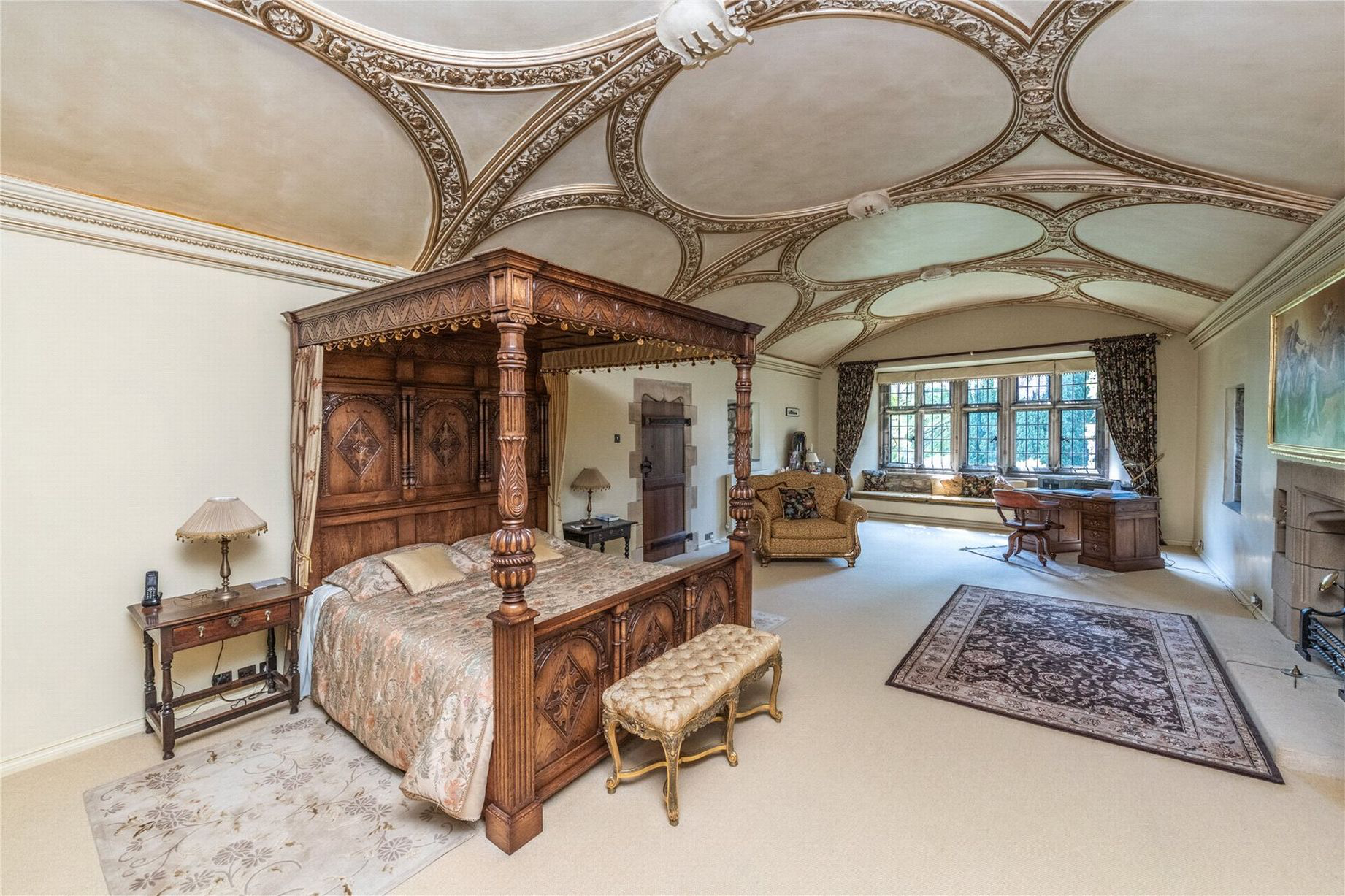
One of the restored rooms in Llwyn Celyn which is at Cwmyoy, nr Abergavenny.

Llwyn Celyn, which means Hollybush in English, built in 1420,  has been in continuous occupation since 1480 to 2014 when brothers Trevor and Lyndon Powell left the property.  Its thought provoking to think that the original tenants of this property may well have sat at the dining room table discussing the tumultuous events known as the Wars of the Roses particularly those of 1483 – 1485 which covered the death of one king, Edward IV, to the death of another,  his brother,  King Richard III at Bosworth.  Oh! if only those walls could speak.

IMG_5298.JPG

Two of the three ogee-headed door heads.  The farmhouse retains its original timbers on the ground floor.

After falling into semi dereliction, Llwyn Celyn, which was built on the edge of the estates of the Augustine Priory of Llanthony,  was lovingly and painstakingly restored  by the Landmark Trust Charity.   The renovation   (aided  by a grant from the National Lottery) cost over £4m and took two years to complete.

4854318-6252457-image-a-13_1539000001790.jpg4854314-6252457-image-a-18_1539000250260-1.jpg

4854312-6252457-image-a-25_1539000428054.jpg4854304-6252457-image-a-31_1539000452571.jpg

4854306-6252457-image-a-20_1539000255079.jpg

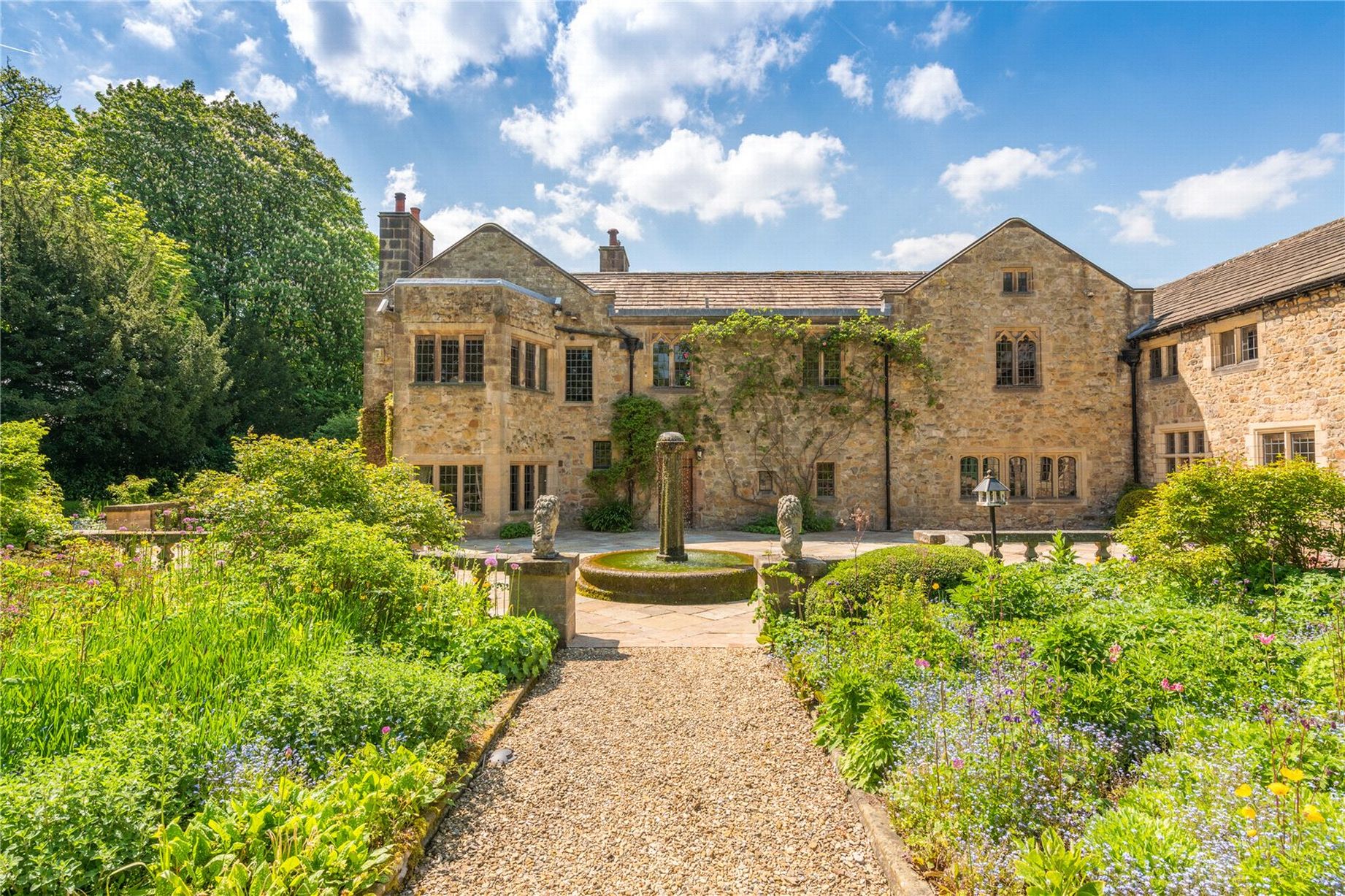
The farmhouse is situated at Cwmyoy, near Abergavenny, Monmouthshire.

IMG_5352.jpg

The above photos are thanks to the Landmark Trust who are now renting out the property for holiday lets.  There is more information to be found here.

RICHARD III, WHITE SURREY AND HIS OTHER HORSES

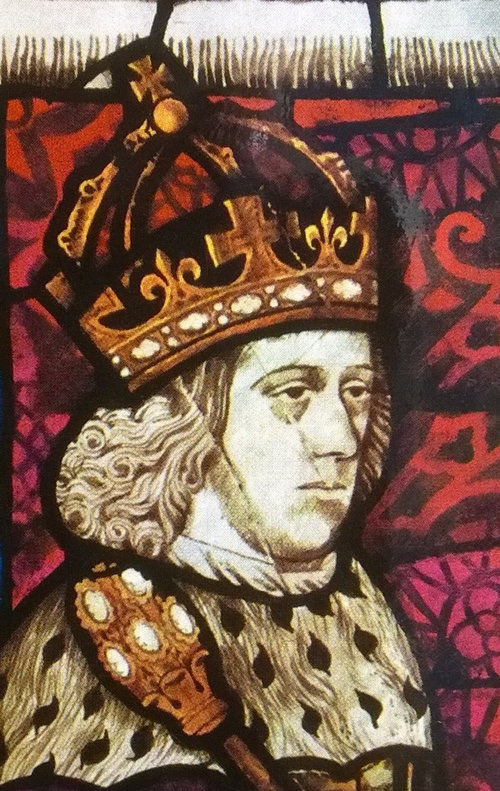
IMG_5875.jpgStained glass depiction of King Richard and his legendary horse, White Surrey.

As we now know sadly, Richard, did not own a horse called  White Surrey or, as he has sometimes been called, White Syrie  (1).  But  Richard did own horses aplenty and we are fortunate lists of these horses have survived – see below (2).  What I know of horses you could put on a postage stamp but the late John Ashdown-Hill explains in his book ‘The Mythology of Richard III‘  that liard or lyard are grey horses which could be described as white.  So therefore it can clearly be seen that Richard did have grey horses which could appear white.  If one of these horses was not called White Syrie – well – he should have been!   John goes on to explain it was once believed ‘that a horse called White Syrie was actually listed in a 15th century manuscript’  – see below  – ‘however this proved to be a misreading.  There is therefore no 15th century surviving evidence of the name of the horse that Richard rode in his last battle (3)’

THE NAMES OF HORSE BEING AT GRISSE IN HAVERING PARC

First Liard – trotting

Liard Clervax of Croft  – ambling

The Whit – ambling

Baiard Babingtone – ambling

Liard Strangwisse – Ambling

Baiard Rither – Ambling

Liard Cultone – trotting

The litille Whit of Knaresburghe  – ambling

My ladies grey gelding (name unknown) – Ambling

Liard Carlile – trotting

Liard Norffolk – Ambling

THE NAMES OF HORSES BEING AT GRISSE IN HOLDERNESSE

Liard Mountfort – ambling

Powisse Tomlynsone

IMG_5870.jpg

THE NAMES OF HORSES BEING AT HARDMET AT NOTTINGHAM 

Liard Danby – Ambling

Liard hoton – Ambling

The gret grey that came from Gervaux -ambling

Baiard Culton – trotting

Blak Morelle – Trotting

The Whit of Gervaux  – Ambling for my lady

The Walssh (hoby) nag – for my lady ambling

Jak

Liard Bradshare – ambling

The gret Bay Gelding of Gervaux  ……. (John Ashdown-Hill suggests this horse is a candidate for the  very horse  Richard rode into battle being stabled at Hardmet (Harmet) in Nottingham)

Lyard Say

Beyard Chambreleyne

The Blak of Holderness – trotting

Beyard Chamberlain

Liard Bowes

Alas no White Surrey or Whyte Syrie – it’s a great shame that the name of Richard’s horse  he rode into battle that day is lost to us  for,  without a doubt,   he would have been magnificent and as such surely deserves recognition.

IMG_5865.jpg

IMG_6212.JPG

Armour for man and horse circa 1480.  Wallace Collection..

1.White Surrey Peter W Hammond.  Article in Richard III Crown and People p285

2. British Library Harelean  Manuscript p.4.5 Vol 1. Ed by Horrox and Hammond.

3. The Mythology of Richard III p117.118 John Ashdown-Hill.

Elizabeth Wydeville – Serial Killer?

IMG_6008.JPGElizabeth Wydeville The Royal Window Canterbury Cathedral.

Yes,  the title of this  post is a serious question.   Although prima facie it may appear absurd, after all we are talking about a real actual Queen, not a monster from a Grimms’ fairy story, I think it may be worthwhile to give some actual consideration to this question and its  plausibility.

IMG_4380.JPG

Edward IV, the Royal Window Canterbury Cathedral.  Did a careless remark made to his wife unwittingly bring about the death of  the earl of Desmond?

Lets take a look at the first death that Elizabeth has been associated with – that of Thomas Fitzgerald Earl of Desmond.  The first port of call for anyone interested in this would be the excellent in-depth  article co-written by Annette Carson and the late historian John Ashdown-Hill both of whom were heavily involved with the discovery of King Richard III’s remains in Leicester.  Here is the article.

Their assessment goes very deep but to give a brief summary – Desmond was executed on the 15th February 1468 by his successor, John Tiptoft, Earl of Worcester,  a man known for his cruel, sadistic nature and dubbed The Butcher of England by his contemporaries.   The execution was immediately followed by  armed rebellion – the Earl’s elder sons raised their standards and drew their swords to avenge their father’s murder  – which was swiftly followed by  King Edward, both alarmed and displeased in equal measures,  promising  that if the Desmonds laid their arms down they would be pardoned. Edward also assured them that he had neither ordered the execution or had any knowledge of it whatsoever. This begs the question if it was not Edward who gave Tiptoft the go ahead to execute Desmond  – as well as,  it is said,  his two small sons – then who was it? This was swiftly followed by extremely  generous grants to James, Desmond’s oldest son,  despite the Act of Attainder against his father.  Included in these grants was ‘the palatinate of Kerry, together with the town and castle of Dungarvan.  This grant may be thought to signify that in Edward’s view an injustice had been done’. This was as well as an ‘extraordinary priviledge’   Agreement was also reached that Desmonds were free to choose not to appear in person before Edward’s deputy or the council in Ireland but to be able to send a representative instead. Clearly Edward had grasped that the Desmonds were, understandably, extremely wary of putting themselves in the hands of the Anglo Irish authorities.

IMG_4865.JPG

Richard Duke of York.  His wise and just reputation in Ireland survived long after his death.  

Various explanations  have been given as to why Tiptoft had Desmond executed.  It was given out that he had been guilty of ‘horrible treasons and felonies as well as alliance, fosterage and alterage with enemies of the king, as in giving them harness and armour and supporting them against the faithful subjects of the king‘ as well as the ludicrous charge of plotting to make himself King of Ireland,

Upon Tiptoft’s arrival in Ireland in  September 1467 he had initially co-operated with Desmond and other Irish lords.  This was unsurprising as Edward IV was on extremely friendly terms with the Irish lords.    This friendship had carried over from his father, Richard,  Duke of York’s time in Ireland where he had been held in high regard and in fact Desmond’s father, James, had been George Duke of Clarence’s godfather.   However on the opening of Parliament on the 4th February a bill was immediately brought forward  attainting Desmond and others including his brother in law, the Earl of Kildare. Desmond was removed from the Dominican friary at Drogheda on the 14th February and swiftly executed. The others managed somehow to avoid arrest and execution until Edward, finding out what had occurred, pardoned them. This also adds to the strength of the theory that the execution had been carried out without Edward’s knowledge. This might be a good point to mention that Desmond had indeed been in England around the time of Edward’s ‘marriage’ to Elizabeth  and when much chatter was going on regarding her unsuitability as a royal bride.  There is a surviving 16th century account of Edward, while  having an amicable chat with Desmond, asked him what his thoughts were regarding Edward’s choice of bride.  It is said that Desmond at first wisely held back but pushed by Edward did admit that it was thought widely that the King had made a misalliance.  This was relayed, foolishly,  by Edward to his new bride, perhaps  oblivious in those early days of  her capabilities. A spiteful, vindictive Elizabeth had stolen the seal from her husband’s purse as he slept and had written to Tiptoft instructing him to get rid of Desmond.  This begs the question of whether Tiptoft himself may have been unaware that the order did not emanate directly from the King.  The rest is history and a dark and terrible day at Drogheda.

Moving forward some 16 years later in 1483 we have an extant letter from Richard to his councillor the Bishop of Annaghdown in which he instructs the said Bishop to go to Desmond’s son, James,  and among other things to demonstrate  (shewe) to him that the person responsible for the murder of his father was the same person responsible for the murder of George Duke of Clarence (1).     As Annette Carson and Ashdown-Hill point out, this is a ‘ highly significant analogy‘ because, in 1483, Mancini  had written that contemporary opinion was that the person responsible for Clarence’s death was no other than Elizabeth Wydville.  Mancini pointed out that  Elizabeth, no doubt having discovered that her marriage to Edward was a bigamous one –  he already having a wife – namely Eleanor Butler nee Talbot, at the time of his ‘marriage’ to her,  had

‘concluded that her offspring by the king would never come to the throne, unless Clarence was removed and this she easily persuaded the king’ (1).

It is highly likely that Clarence, who perhaps was of a hotheaded nature, had also become aware that Edward and Elizabeth’s marriage was null and void having been informed of this fact by Bishop Stillington.  Stillington was imprisoned and Clarence  met the same fate as Desmond – an execution regularly described by historians, of all views  as a judicial murder.

IMG_2534.JPGGeorge Duke of Clarence from the Rous Roll. George was only 28 years old when he was executed in what has been described by some historians as a ‘judicial murder’

It should also be remembered that shortly before his arrest Clarence had been widowed. Clarence had insisted that his wife, Isobel Neville, had been murdered – poisoned he said.  One of the acts he was accused of at his trial was of trying to remove his small son, Edward, out of England and to safety abroad. He obviously genuinely believed that Isobel had indeed been murdered, why else attempt to get his son out of harms way? This story has been told in many places including  Ashdown-Hill’s books, The Third Plantagenet as well as his bio of Elizabeth, Elizabeth Widville Lady Grey.    If Isobel was indeed murdered, the truth has been lost with time,  it can safely be said that Clarence was a victim to Elizabeth’s malice although of course Edward has to take equal blame for that. Hicks, and Thomas Penn, are among the historians who  have described Clarences’ execution as ‘judicial murder’.  Hicks in his bio on George,  states that the trial  held before a Parliament heavily packed out with Wydeville supporters was fixed. George stood not a chance and was led back to the Tower to await his fate.  He did not have to wait too long.  Penn writes His brothers life in his hands, Edward pondered the enormity of his next, irrevocable command. A week or so later, with Parliament still in session, Speaker Allington and a group of MPs walked over to the House of Lords and, with, all decorum, requested that they ask the king to get on with it‘.  Insisting that the king order his own brother’s liquidation was hardly something that Allington would have done on his own initiative. The source of the nudge could be guessed at (2).  As Penn points out Speaker Allington’s  effusions about Queen Elizabeth and the little Prince of Wales were a matter of parliamentary record; the queen had awarded him handsomely appointing him one of the prince’s chancellors and chancellor of the boy’s administration’.  Thus George Duke of Clarence was toast and it appears the second victim to the malignity of the Wydeville queen. Later it was written by Virgil that Edward bitterly regretted his brother’s ‘murder’ for thus it is described by Penn – and would often whinge when asked for a favour by someone that no-one had requested a reprieve for George (not even the brothers’ mother??? Really Edward!).

IMG_5163.jpg

Elizabeth Wydville, The Luton Guildbook.  Cicely Neville, her mother in law is depicted behind her. Cicely’s feelings on one of her son’s bringing about the death of another son are unrecorded.

Another damning point against Elizabeth is that Richard III in the communication mentioned above, granted permission to  James, Desmond’s son,  to ‘pursue by means of law those whom he held responsible for his father’s death’.   Both Edward and Tiptoft were dead at this time but Elizabeth was still alive and demoted from Queen to a commoner. As it transpired James did not pursue the matter at that time and a year later it was all too late – Richard was dead and Elizabeth having been  reinstated as Queen Dowager was the new king’s mother-in-law.   Further evidence regarding Elizabeth’s guilt came to light 60 years later in the 16th century in the form of a memorandum addressed by James 13th Earl of Desmond, Desmond’s grandson, to the privy council.  In an attempt to get property that had been removed from one of his ancestors returned to him James referred to the great privilege that was awarded to his earlier Desmond relatives, that of not having to appear before Anglo Irish authorities that had been granted by Edward IV because the 7th Earl of Desmond had been executed because of the spite and envy of Elizabeth Wydeville”.   This memorandum also contained the earliest written account of the conversation between Edward IV and Desmond regarding Elizabeth’s suitablity as a royal consort,  the repeating of which to Elizabeth had resulted in Desmond’s murder.

It’s now not looking good for Elizabeth at this stage. There are other names, other deaths,  that begin now to  look rather suspicious. After all if Elizabeth could be involved with two deaths could there have been more?

The next deaths that need consideration are those of Eleanor Butler and her brother in law, the Mowbray Duke of Norfolk.  According to Ashdown-Hill,  who has researched Eleanor in depth, her death occurred while her family and protectors, particularly her sister Elizabeth Duchess of Norfolk, with whom she appears to have been close, were out of the country attending the marriage celebrations of Margaret of York to Charles the Bold, Duke of Burgundy. This marriage had been ‘pushed forward’  by Elizabeth Wydeville (3). Of course her death may have been the result of natural causes although it’s not hard to imagine Edward and Elizabeth breathing massive sighs of relief. However karma is a bitch, as they say, and the spectre of Eleanor would later arise with tragic results and the complete fall of the House of York.

Whether Eleanor died of unnatural causes of course can now never be ascertained.   However Ashdown-Hill has compared her death to that of Isobel Neville (4).  Certainly it was unexpected and must have caused shock and grief to her sister on her arrival back in England – presumably the Duchess may not have left England and her sister if she had been seriously ill and close to death.  In actual fact Eleanor died on the 30th June 1468 while Elizabeth Talbot only begun her trip back to England from Flanders on the 13th July.  Coupled with this, two of the Norfolk household were executed around this time through treasonous activity but nevertheless this must have caused disconcertment and fear to the Duke and Duchess following on so soon from Eleanor’s death. Very sadly, the Duke himself was to die suddenly and totally unexpectedly. The now Dowager Duchess of Norfolk,  bereft of her husband and sister, found herself forced to agree to the marriage of her very young daughter,  the immensely rich heiress,  Anne Mowbray, to Elizabeth Wydeville’s youngest son, Richard of Shrewsbury.  This was much to her detriment being forced to accept a diminished dower in order to supplement the revenue of her young son in law.  She thereafter lived out her days in a ‘great’ house in the precincts of the Abbey of the Minoresses of St Clare without Aldgate, poorer but surrounded by loyal and loving friends most of whom had also suffered at the hands of Edward IV and the Wydevilles (5).

In summary, I’m confident that Elizabeth was deeply implicated in  the executions of Desmond, an entirely innocent man, and Clarence whom she feared because he knew or suspected the truth of her bigamous marriage.   Could there have been others? The hapless Eleanor Talbot perhaps?  Of course she was not a murderess in the sense that she actually and physically killed anyone but she did indeed ‘load the guns and let others fire the bullets’ as they say. There is little doubt that Richard Duke of Gloucester came close to being assassinated on his journey  to London and close to the stronghold of the Wydevilles at Grafton Regis, in 1483. This was down to the machinations of the Wydevilles including of course the fragrant Elizabeth who by the time he arrived in London had scarpered across the road from Westminster Palace, loaded down with royal treasure, and taken sanctuary in Westminster Abbey , a sure indication of her guilt in that plot. Richard, in his well known letter, had to send to York for reinforcements:

“we heartily pray you to come to us in London in all the diligence you possibly can, with as many as you can make defensibly arrayed, there to aid and assist us against the queen, her bloody adherents and affinity, who have intended and do daily intend, to murder and utterly destroy usand our cousin the Duke of Buckingham, and the old blood royal of this realm” (6).

After that dreadful day at Bosworth in August 1485, and a bit of a tedious wait, Elizabeth now found herself exulted once again being mother to the new Queen. She would, one have thought, reached the stage where she could at last rest on her now rather blood soaked laurels. Wrong! She was soon  found to be involved in  the Lambert Simnel plot,  which no doubt if successful would have resulted in the death of her daughter’s husband, Henry Tudor. Whether her daughter, Elizabeth of York, would have approved of this is a moot point and something we shall never know although surely she would hardly have welcomed being turfed off the throne and her children disinherited and my guess is that relationship between Elizabeth Snr and Jnr became rather frosty after that. Henry Tudor, who was many things but not a fool,  took the sensible  decision to have his mother in law ‘retired’ to Bermondsey Abbey, no doubt to protect her from herself but more importantly to protect himself from Elizabeth and her penchant for plots that mostly ended up with someone dead. And there at Bermondsey, a place known for disgraced queens to be sent to languish and die, she lived out her days no doubt closely watched, Karma having finally caught up with her.

IMG_3995.JPG

Terracotta bust of Henry VII. Elizabeth’s son-in-law.  Henry prudently had Elizabeth ‘retired’ to Bermondsey Abbey. 

IMG_6009.jpg

John Tiptoft Earl of Worcester.  Effigy on his tomb.  Tiptoft’s propensity for cruelty did not deter Edward from appointing him Lord Deputy of Ireland in 1467 nor did it dissuade Elizabeth to involve him in her plotting to bring about the death of Desmond.  

If you enjoyed this post you might like:

The Abbey of the Minoresses of St Clare without Aldgate and the Ladies of the Minories

ELIZABETH TALBOT, VISCOUNTESS LISLE, LADY ELEANOR BUTLER’S NIECE

GEORGE DUKE OF CLARENCE, ISOBEL NEVILLE AND THE CLARENCE VAULT

Cheyneygates, Westminster Abbey, Elizabeth Woodville’s Pied-à-terre

THE MYSTERIOUS AFFAIR AT STONY STRATFORD by ANNETTE CARSON

ELIZABETH WYDEVILLE, JOHN TIPTOFT AND THE EARL OF DESMOND

(1) Harleian Manuscript 433 Vol 2 pp108.9

(2) The Usurpation of Richard III Dominic Mancini. Ed. C A J  Armstrong.

(3 ) The Brothers York Thomas Penn p405

(4) Elizabeth Widville Lady Grey p87 John Ashdown Hill

(5) Ibid  p124 John Ashdown Hill.

(6) The Ladies of the Minories W E Hampton.  Article in The Ricardian 1978

(7) York Civic Records Vol.1.pp 73-4.  Richard of Gloucester letter to the city of York 10 June 1483.
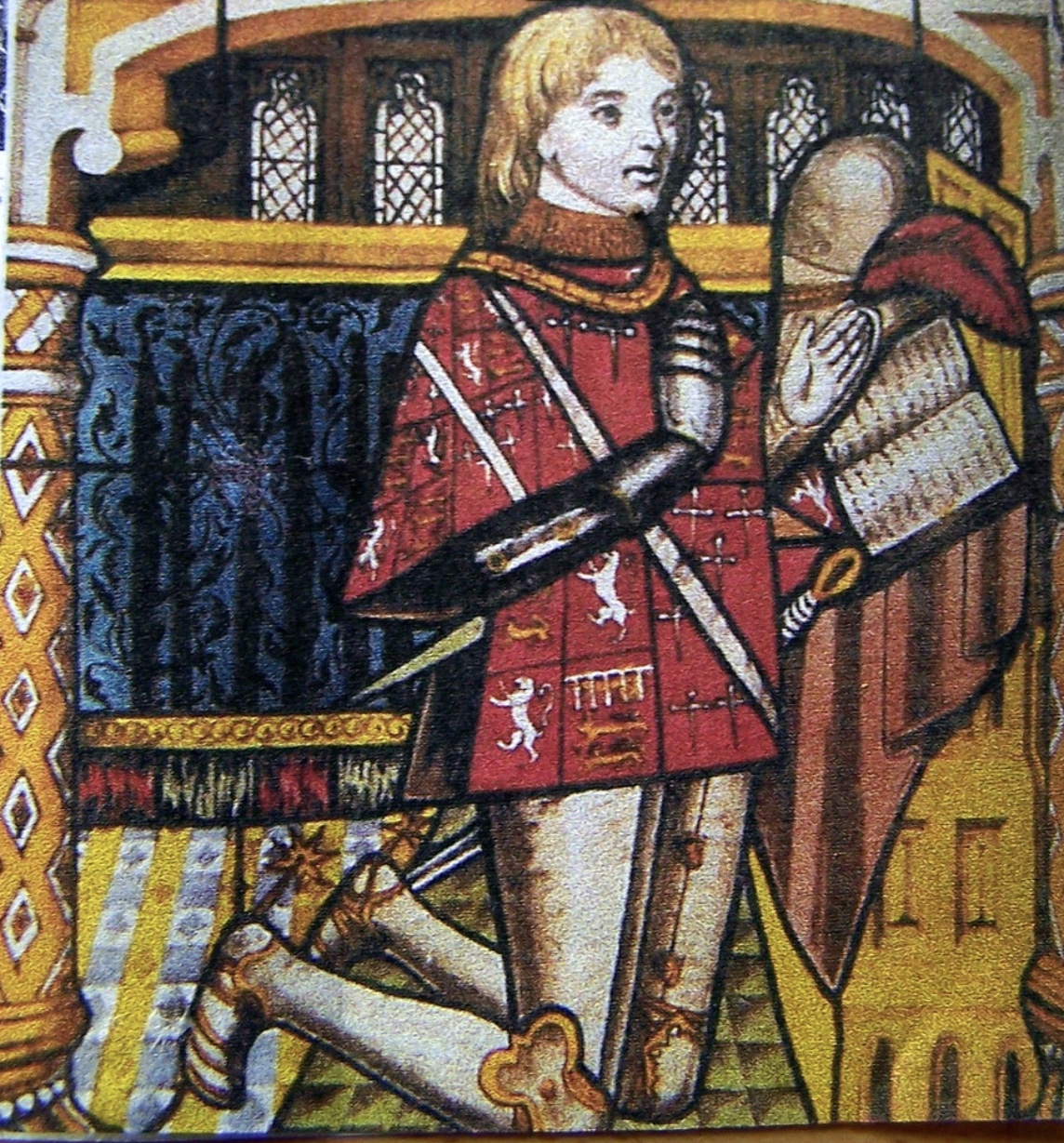
Ralph Boteler, Lord Sudeley, father-in-law to Lady Eleanor Talbot.

image.png

The arms of Ralph Boteler, Lord of Sudeley ..

 Take a trip to the lovely Cotswold town of Winchcombe and there you will find Sudeley Castle, the Boteler family seat in Gloucestershire.  Some of those that lived in the castle are well known such as Queen Catherine Parr and the unfortunate Lady Jane Grey.    Their stories are well documented elsewhere and I won’t touch upon them here as I want to focus on an earlier owner,  Ralph Boteler, Lord of Sudeley (c.1391-1473)  who became father-in-law to Lady Eleanor Boteler, or Butler as she is more commonly known, nee Talbot,  when she married Ralph’s son Thomas.  After Thomas’ death in 1459, possibly as a result of wounds sustained at the Battle of Blore Heath,  Eleanor married the young Edward IV  clandestinely.    This secret precontract would later prove to be the catalyst for the fall of the House of York.

However to get back to Ralph who from aristocratic stock led both an interesting and  illustrious life.  In 1413 aged about 23 Ralph and his elder brother William joined Henry V’s expedition to France both fighting at Agincourt.  William was later to die of wounds received in battle but Ralph continued to campaign in France for another 20 years, although not continuously as indicated by his marriage to Elizabeth Hende and the birth of their son, Thomas in 1420.(1) It is very probable that Ralph would have met John Talbot Earl of Shrewsbury,   Eleanor’s father during his stays in France.   Among the numerous  titles he held were Baron Sudeley, Captain of Calais,  Royal Standard Bearer for Life, Lord High Treasurer of England and Chamberlain of the King’s Household.  In 1423 he became a councillor to the infant Henry IV and his mother,  Alice,  became Henry’s governess.  in 1430 he was made a Chamber Knight of the King, one of the royal intimate personal staff,  and part of the bodyguard at the 10 year old king’s coronation in the Notre Dame  16th December 1431.(2)

On his final return from France Ralph rebuilt Sudeley,  including the nearby beautiful St Mary’s Church.  Ralph was also a generous benefactor to St Peter’s Church, in Winchcombe, enabling it to be rebuilt in 10 years after the earlier church  fell into disrepair.

IMG_5986.jpg

John Talbot, lst Earl of Shrewsbury – father to Eleanor Boteler/Butler nee Talbot.  Both `John and Ralph fought in France.

As Eleanor was only a child of about 13 when she married Thomas, who was a fair bit older than her at about 28, their marriage would not have been consummated immediately  and therefore she would have lived with her in-laws at Sudeley for the first few years of her marriage.  It would seem an affection grew between her and her father in law, for later, after the death of Thomas,  it would appear that she either persuaded her second, secret husband,  the young Edward IV,  to act generously towards her former father in law, or he did so to make his new bride happy for within 6 months of their marriage, which took place around February 1461, Edward issued a grant –

‘exemption for life of Ralph Botiller, knight, Lord of Sudeley, on account of his debility and age from personal attendance in council or Parliament and from being made collector assessor or taxer….commissioner, justice of the peace, constable, bailiff, or other minister of the king, or trier, arrayer or leader of men at arms, archers, or hobelers. And he shall not be compelled to leave his dwelling for war’.

Three months later Edward further granted ‘Ralph four bucks in summer and six in winter within the king’s park of Woodstock’. ( 3 ) Sadly all this good will evaporated on the death of Eleanor on 30th June 1468.  Historian John Ashdown-Hill described this volte-face as a ‘hostility’ resulting in Ralph having to surrender his properties, including Sudeley, which went in the main, to the voracious relatives of his new and bigamous ‘wife’, Elizabeth Wydeville.  For following a pardon granted to Ralph on the 17 December 1468,  six months after  Eleanor’s death,  when two properties Griff and Burton Dassett, taken earlier by Edward,  were returned to him, Ralph was induced to issue the following grant:

Know all men present and to come that I, Ralph Boteler, Knight, Lord Sudely, have given, granted and by this my present charter have confirmed to Richard, Earl Rivers, William, Earl of Pembroke, Anthony Wydevile, Knight, Lord Scales, William Hastings, Knight, Lord Hastings, Thomas Bonyfaunt, Dean of the Chapel Royal, Thomas Vaughn, one of the Esquires of the King’s body and to Richard Fowler, the castle domain and manor of Sudeley, with all its belongings in the county of Gloucester, and all lands, rent etc., in Sudeley, Toddington, Stanley, Greet, Gretton, Catesthorp and Newnton and also the advowson of the church or chapel of Sudeley, to hold the same to them and their assignees’ (4)

After his arrest and on his way to the Tower of London Ralph looked down on Sudeley and and said 

“Sudeley Castle, you are the traitor and not I”

Edward, not content with taking the best of Ralph’s properties, (at the time of his death he seems to have been  in possession of at least some manors in Warwickshire, Worcestershire and Gloucestershire)  according to historian John Ashdown-Hill,  also sent him to prison where he died 2nd May 1473 (5).  People (and history)  will have to judge for themselves the true reason Edward took such a heavy hand with Ralph after Eleanor’s death and whether it was because of his loyalty to the Lancastrian cause or something else.     Ralph then aged 80 had supported the short Readeption of Henry VI in 1471 and as the king’s standard bearer bore the Sword of State in front of royal processions in London,  or did it perhaps have something more to do with Ralph being privy (or a reminder)  to the illegality of the Wydeville marriage or even perhaps a bit of both?

However,  for the people of Winchcombe today Ralphs memorials are still around.  “St Peters, St Mary’s Sudeley, and the tower of the old church at Gretton.  He was a man of integrity and loyalty, particularly to the Lancastrian kings, whom he served at home and abroad.  A good measure of the affection in which he was continued to be held is the request of John Beaufitz,  for many years Ralph’s deputy at Kenilworth in his will of 1506,  30 years after Ralphs death,  that the Abbot of Kenilworth should remember the souls of Ralph and his lady at Mass. Ralph gave generously to many religious institutions and he was, above all a peace lover and community builder. We can be proud of our founder and benefactor”. (6)

img_5984.jpg

Sudeley Castle, Winchcombe, Gloucestershire.  Rebuilt by Ralph Boteler.

IMG_5987.jpg

St Peter’s Church, Winchcombe.  Ralph Boteler gave generously enabling the church to be rebuilt after the original one fell into a ruinous state.  It was here in the family vault that Ralph was laid to rest in 1473.

IMG_5985.jpg

St Mary’s Church Sudeley Castle..

(1) Ralph Boteler, Lord Sudeley c.1391-1473 Jo Stevinson 2003.  Distilled from a much larger work The Records of Ralph Boteler c.1391-1477 Lord Sudeley compiled from contemproary state records, chronicles and collection of letters.  John Stevinson

(2) Boteler, Ralph, First Baron Sudeley A C Reeves ODNB

( 3 ) Elizabeth Widville, Lady Grey p38 CPR 1461-1467, pp.72,191.  John Ashdown-Hill.

( 4)  Eleanor: The Secret Queen p150.   Close Roll 8 Edward IV,  no.3. dorso, 23 February 1469.              John Ashdown-Hill.

(5)  Elizabeth Widville Lady Grey p51.  John Ashdown-Hill.

(6) Ralph Boteler Lord Sudeley c.1391 1473.  Builder of Sudeley Castle and Church and the principal contributor to Saint Peters Church.   Veteran Commander in Henry V and IVs wars. Treasurer of England, Chamberlain and Steward of the Royal Household.  A booklet from St Peter’s Church.  Jo Stevinson 2003.

THE MYSTERIOUS DEATH OF EDWARD IV

IMG_4702.jpg

Edward IV 1442-1483 Society of Antiquaries of London

For a king whose reign is otherwise well documented it is curious that the cause of Edward’s death remains a mystery.  It would also appear his death was unexpected.  It seems he was first taken ill at the end of March and despite having access to some of the best medical care available at the time, died around the  9 April  1483 at his Palace of Westminster(1).   According to the Croyland Chronicler Edward had taken to his bed around  ‘Easter‘  –  Easter Sunday being the 30th March  – with his  death being reported to the Mayor and minuted on the 9th April in the Acts of Court of the Mercers Company:

“… Lord Audley and the Lord Berkeley now early this morning by the ascent of the Kings Council sent unto the Mayor for to show and give knowledge that the king is passed out of this present life this last night’

Prior to his sudden death and before growing corpulent things had gone swimmingly well for Edward in the looks and physique department.

Mancini –  ‘He was wont to show himself to those who wished to watch him and he seized any opportunity that the occasion offered of revealing his fine stature more protractedly and more evidently to onlookers however in food and drink he was most immoderate, it was his habit so I have learned,  to take an emetic  for the delight of gorging his stomach once more,  for this reason he had grown fat in the loins’ although  he was a tall man and very fat though not to the point of deformity 

More reported  – ‘ he was of visage lovely,  of body mighty, strong and clean made ‘  later  however  ‘he was of youth greatly given to fleshly wantonness from which health of body in great prosperity and fortune without a special grace hardly refraineth’

After that all went downhill for Edward.  Philippe de Commines sums it up neatly, rather too neatly perhaps

‘and in the flower of his age his excesses reached his kidneys and he died rather suddenly of a stroke

Mancini however  attributed his illness to a cold caught while fishing  while the Croyland Chronicler wrote

‘he was affected neither by old age nor by any known kind of disease which would not have seemed easy to cure in a lesser person’

–  in other words the doctors didn’t have a name for the illness that sent Edward to his grave.  How strange.  Rumours abounded of death by poisoning some even going so far as to blame it on a gift of wine from the French king.  Molinet ascribed it as the result of eating a salad after he had become overcome by heat (in April! in England!!)  which caused a chill, others said it was an apoplexy and/or sadness brought  on by the Treaty of Arras. Malaria was also suggested.  Later,  Sir Winston Churchill in his History of the English Speaking Peoples,  would put it down fair and square to debauchery.  But at the end of the day , as Richard E Collins in his excellent treatise  points out most people at the time seemed more  concerned with what happened AFTER Edward’s death, rather than what caused it.

IMG_4707.JPG

The Old Palace of Westminster where Edward died 9 April 1483.  St Stephens Chapel where Edward’s body lay in repose is shown in the centre of the picture

R E Collins’ entertaining  treatise  on Edward’s death  was included in Secret History the Truth about Richard III and the Princes and from which I have drawn heavily here.   He had a considerable knowledge of medical matters and having done some very thorough research into the death of Edward presented his findings to other medical professionals for their opinions.  They all concluded

‘…that the cause of death which best explained all the known facts was poison, probably by some heavy metal such as arsenic’.

First of all an attempt to solve the mystery  was to run though Edward’s symptoms beginning with the timescale.  Given that the Croyland Chronicler wrote that Edward took to his bed around Easter and since Easter Sunday was on the 30 March

We are dealing with a period of around 10-12 days from inception to death.  If peoples behaviour was anything to go by his death came as a surprise to the Court’.

As Edward’s body was laid out naked for viewing,  Collins is able to rule out death caused by violence, there being no traumas/injuries, accidental or deliberate, no puncture wounds, bruises etc.,  Furthermore there were no marks to be seen of specific diseases such as mumps, smallpox, measles, scarlet fever, chicken pox, bubonic plague, typhus, enteric fever.  Other non-infectious conditions that mark the skin are also able to be ruled out such as purpuras (blotches caused by bleeding under the skin) which can be caused by leukaemia, haemophilia, plague and alcoholism.  Thirdly there was not the  ‘wasting’ caused by cancer, unrelated diabetes, septicaemia or starvation caused by malabsorption.

IMG_7066.JPG

Locket containing lock of Edward’s hair.  Royal Collection Trust

image

Edward from the Royal Window, Canterbury Cathedral

Anything sudden such as a massive coronary, stroke, pulmonary embolism or a perforated ulcer can be ruled out due to the timescale.  Long drawn out conditions such as ulcerative colitis, diverticulitis and cancer can also be ruled out.

Collins then considers the contemporary sources beginning with Sir Thomas More, who writing 30 years after the event makes no comment on the cause of death save ‘he perceived his natural strength was so sore enfeebled that he despaired all recovery’.  More, as was his wont, wrote a pages long speech delivered on his deathbed.  Collins who had been present at  least on 200 natural deaths had personally never heard a deathbed speech.  However as we know More never lets facts stand in the way of a good story.  The Crowland Chronicler also gave no cause while Vergil wrote that ‘he fell sick of an unknown disease.  The only definite accounts actually come from those who were least likely to be in the know such as Mancini and de Commines,  Mancini puts Edward’s death down to a mix of ‘sadness‘ plus a cold he caught while on a fishing trip.  According to Collins this does not add up as the suggestions of Edward dying of grief cannot be taken seriously and as for the chill he would not have been able to indulge in such a frivolity during Holy Week – therefore the latest this trip would have been taken place was the 22 March –  which would mean that Edward hung around in a fever for 10 days without treatment which is also unlikely.  Collins add ‘Mancini is remarkably popular with those who dislike Richard and it is sad to proclaim that their supporter is a speaker of Rubbish – priceless!  De Commines ascribes his death to apoplexy and ‘while it is possible to have a stroke 10 days apart, the second proving fatal, it is quite impossible to believe that no-one expected him to die after the first, but obviously they didn’t’.

IMG_7076.JPGYet another lock of Edward’s hair –  Society of Antiquaries of London

Untitled

The English chronicler Hall later wrote

whether it was with the melancholy and anger that he took with the French king…or were it by any superfluous surfeit to which he was much given, he suddenly fell sick and was with a grevious malady taken, yes so grievously taken, that his vital spirits begun to fail and wax feeble’.

Basically Hall didn’t know how Edward died either.

Collins makes the observation that

Medieval physicians had at best a poor understanding of medicine and at worse a ridiculous and dangerous one.  This represented a falling away from the common sense views and practices of the Greeks, which if they could not cure much knew how not to make a patient worse.  In 1483 most medieval practices were designed to do just that – make the patient worse that is – and they succeeded well.  Almost any condition was treated by drawing off a pint of blood or more and administering emetics and laxatives to ‘purge evil humours’.  Such a regime is seldom good for a sick person and will often kill rather than cure by dehydration if you go slowly or by shock if quickly.  Only rarely did they have a treatment that was effective, one case in point is apoplexy where bleeding will reduce the blood on the cerebral vessels…medieval medicine was more often more dangerous than the disease and most people avoided doctors ifthey could.  Despite this medieval doctors were rarely at a loss for a diagnosis and the terms they used are a joy to read – Chrisomes, Frighted, Griping-in-the-Guts (a small town in Gloucestershire?), Head-moult-Shot, Rising of the Lights Lethargy and meagrome‘.

Collins points out it may well be worth be listening to Crowland,  as he may have been present at Westminster at the time and spoken to physicians about the case, when he said that Edward was affected by ‘no known disease‘.

Untitled

However whatever it was – dead he was – and after his body was washed and left clad only in a loincloth for about 12 hours for the curious to see he was taken to St Stephen’s Chapel to lay in respose for a further 8 days.  After that he was taken to St George’s Chapel Windsor and finally laid to rest in the beautiful tomb that was in the process of being built.(2)

24877212042_bd1d91512b_b

St Georges Chapel, Windsor, final resting place for Edward IV

As to why someone would want to send Edward to an early grave by poisoning, that dear reader is another story.   Anyone who is interested in this theory would do well to read (if they have not already done so) The Maligned King by Annette Carson, who also covers this theory thoroughly in chapter 1.

Untitled

Footnote: Edward’s early  demise was to prove the death knell of the House of Plantagenet.  Less than  three years later the end came with the death of Edward’s able brother King Richard III brought down by treachery at Bosworth.  For Edward’s death had brought about a great rattling of  a massive skeleton in his closet.  It transpired that his marriage to Elizabeth Wydeville had been a bigamous one – for soon after his accession to the throne he had married  Lady Eleanor Butler neeTalbot, daughter to the great John Talbot, Earl of Shrewsbury and thus a lady of noble birth.  This set about a great unstoppable and tragic chain of events.  After the death of Edward,  Elizabeth herself after spending many tedious months in sanctuary at Cheyneygates, Westminster, found herself once again elevated to high status as mother to the new Queen, Elizabeth of York.  Unfortunately this happy scenario did not last long before she was sent to retirement in Bermondsey Abbey where  in June 1492 she popped her clogs and was given a cheap funeral in an even cheaper wooden coffin.  It was said she was involved in the erroneously named  ‘Lambert Simnel‘ rebellion which indicates she knew at least one of her sons still lived.

IMG_4709.JPG

ELIZABETH WYDEVILLE.  Artist Unknown.

Rex

Edward’s signature

  1. There is some debate about the correct date of death.  John Ashdown-Hill suggests Edward died either Tuesday 1 April or Saturday the 5th April ‘most probably the 5th’.  John Ashdown-Hill The Private Life of Edward IV p209
  2. The Death of Kings Clifford Brewer T.D. F.R.C.S p98

If you have enjoyed this post you might like:

 BERMONDSEY ABBEY AND ELIZABETH WYDEVILLE’S ‘RETIREMENT’ THERE

Elizabeth Wydeville – Serial Killer?

MARY PLANTAGENET – DAUGHTER OF EDWARD IV & ELIZABETH WYDEVILLE – A LIFE CUT SHORT

The Coronation Chair and Stone of Scone

29665071_186064298678639_5979226349843636598_o.jpg

Westminster Abbey –  site of Coronations since 1066.  Photo  @Association of English Cathedrals

A crucial part of coronations in Westminster Abbey is the moment the monarch is crowned with the Crown of St Edward and invested with the royal regalia while seated on what is now commonly known as the  Coronation Chair although the correct name is St Edward’s Chair.  This ancient Chair was named after Edward the Confessor and from the late 13th century until 1996 encompassed the Stone of Scone.

IMG_3723.JPG

The Chair with the Stone of Scone intact 

In 1296 when  Edward I,  aka Longshanks, returned from Scotland he brought with him the Stone of Scone, also known as the Stone of Destiny,  symbolic of Scotland’s sovereignty,   which he had removed from Scone Abbey, giving it into the care of the Abbott of Westminster Abbey on the 18 June 1297.  Edward, not for nothing known as the Hammer of the Scots, wished to hammer it home in no uncertain terms that from now on it would be English and not Scottish monarchs who would now be crowned whilst sitting on this stone – a large block of Lower Old Red Sandstone.  He gave instructions that a chair should be constructed to house it and thus this wonderful chair was created.  Master Walter of Durham (c.1230-1305) King’s Painter, whose extraordinary skills also included carpentry, was commissioned  to build and decorate the chair for which he was duly paid 100 shillings.

image

Some of the exquisite original punch decorated gilding depicting birds, acorns and oak leaves  still survives inside the left arm of the chair.   Photo Westminster-Abbey.org.

IMG_9589

The border was once decorated with coloured glass.  How it must have shimmered in the glow of hundreds of candles…photo thanks to Stuff About London blog.

Since 1308 every royal derrière has sat on this glorious chair while being crowned except for Edward V, who disappeared before his coronation took place,  Edward VIII whom abdicated and Mary II,  whose coronation being a joint one,  had a special chair built for her use.  St Edward’s chair was made of oak which was gilded, inlaid with glass mosaics and decorated with images of birds, acorns, flowers and foliage some of which have survived up until today.  Up until the 17th century the monarch would sit on the actual stone – with presumably a cushion for comfort? –  until a wooden platform was added .  The four gilt lions were made in 1727 to replace the originals, which themselves,  were not added until the 16th century.

The Stone itself has in recent times undergone several adventures.  It was stolen, or rescued, depending upon which way you look at it,  by four Scottish students from the University of Glasgow  on Christmas Day 1950 – in the process of which they managed to break it in half after it crashed to the floor although, to be fair,  it may have been already been weakened/broken by a bomb placed on the chair by suffragettes in 1914.   After various shenanigans and a tip off,  the Stone, which in the interim had been repaired by a stonemason who thoughtfully left a message inside the Stone while doing so,  was later discovered in April 1951 on the site of the High Altar at Arbroath Abbey.   After being kept in a vault for a time it was eventually returned to Westminster Abbey and replaced in the chair in February 1952.  This was not the end of the Stone’s peregrinations for in July 1996, Prime Minister John Major, announced that it was to be returned to Scotland.  This was duly done and the stone now rests in Edinburgh Castle only to be returned to Westminster Abbey for coronations.

IMG_3726.JPG

The chair as it is today minus the Stone of Scone.  Note the grilles containing the now  empty quatrefoils.

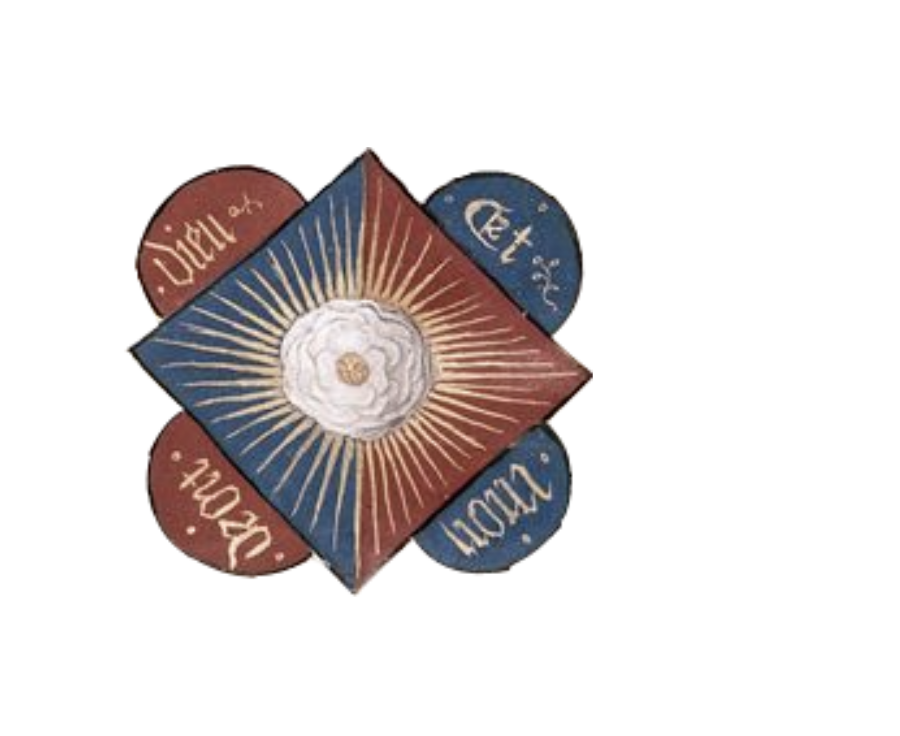
Originally the lower part of the chair had a grille on all four sides decorated with quatrefoils  each of which had a painted heraldic shield at the centre.  By 1820 all the shields were gone as well as the grille which held the quatrefoils at the front of the chair.  Once these shields had been removed over time the stone itself would become damaged by the gouging out of fragments for souvenirs.    The grille we see today is a replacement. 

image

The Stone of Scone today.  The damage caused by souvenir hunters gouging out scrapings of dust can clearly be seen.  The areas of damage line up with where the missing heraldic shields once covered the Stone.   Photo Historic Scotland.

post-1_image13-2.jpgA drawing c.1780 showing the grilles surrounding the stone containing the quatrefoils with their heraldic badges intact.  Artist John Carter.  Image Dean and Chapter of Westminster Abbey. 

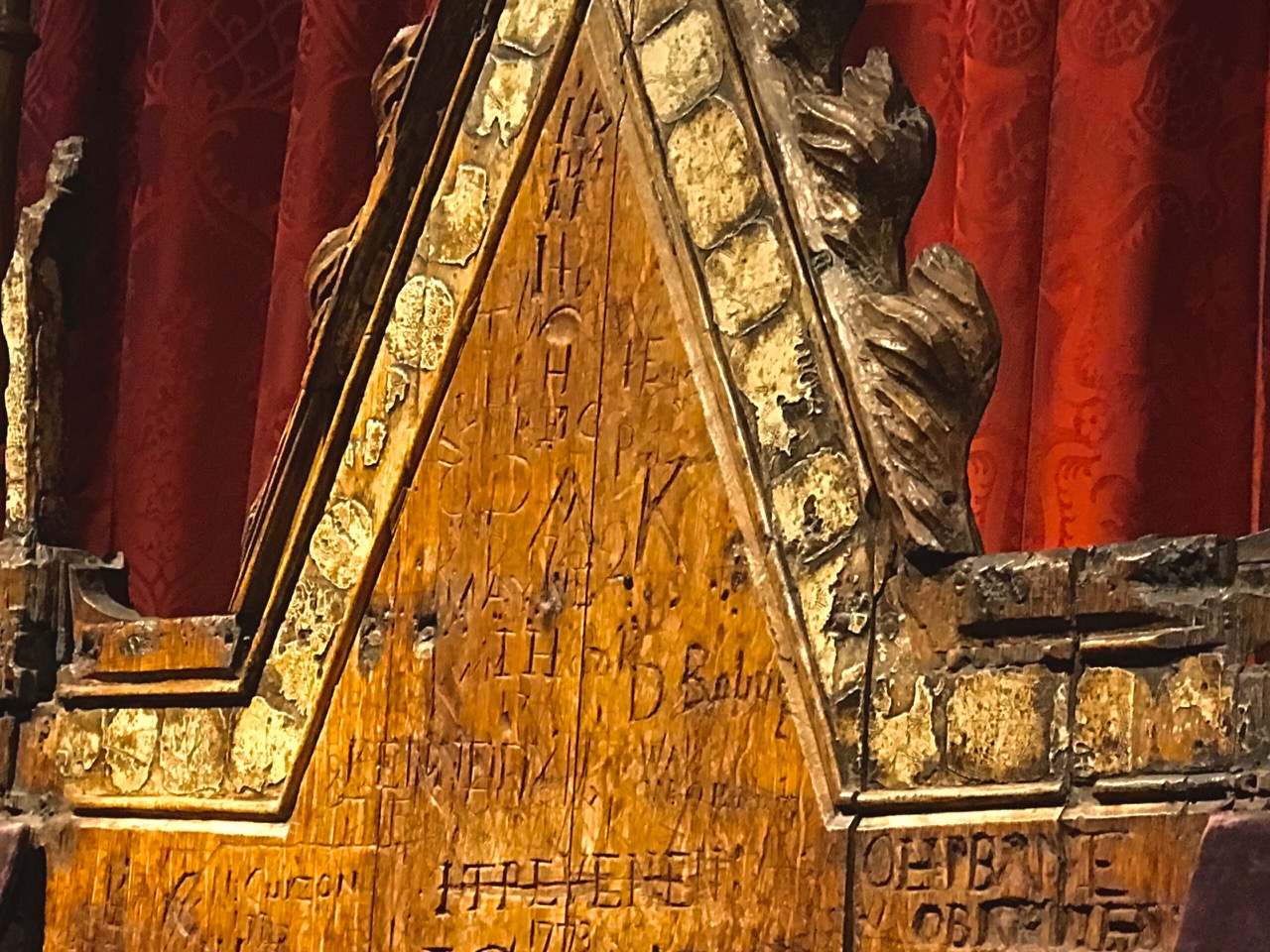
This  wonderful and irreplaceable chair has been also been disgracefully abused in comparatively recent times including numerous graffiti mostly carved in the 18th and 19th centuries by the pupils of Westminster School – it’s baffling why some sort of action was not taken by the Abbey authorities to put a stop to  this long-term systematic abuse of the chair  –  one graffito could perhaps be forgiven but on such a large scale? Were they simply allowed to just carry on? – but I digress.    The schoolboys were not alone in carving graffiti on the chair with one visitor  carving  “P. Abbott slept in this chair 5-6 July 1800” (1).

IMG_9587

Examples of the 18th and early 19th century graffiti…

The schoolboys from Westminster School were not the only culprits to wreak vandalism on the chair.   Some Bright Spark at the Office of Works thought it was a good idea for hideous dark brown varnish to be applied to the chair in 1887 for Queen Victoria’s Golden Jubilee which, quelle surprise, caused a public outcry.   If this was not depressing enough further damage was caused to the gilding when the varnish was removed.  As mentioned above the Suffragette bomb in 1914 damaged the left land pinnacle of the chair while also damaging the stone.   Further damage occurred when the Scottish Nationals wrenched the stone from the chair in doing so  they smashed the front rail and further weakened the frame (2).   Despite all this wanton vandalisation the chair has still managed to survive intact in all its glory and I’m sure should the shades of our past kings and queens – as well as that of Master Walter –  all who would have seen the chair in pristine condition – ever return to the Abbey, they  would still be able to recognise it and recall the glorious day of their coronations.

Westminster-Abbey-660x350-1487928668.jpg

Westminster Abbey North Front.  Photographer unknown.

Should you wish to delve further into the chair everything you need to know can be found in this excellent article The Coronation Chair: anatomy of a medieval throne can be found here.

1.  (Westminster-Abbey.org)

2. The Coronation Chair: anatomy of a medieval throne. 

If you liked this post you might also be interested in:

THE MONUMENTAL EFFIGIES OF GREAT BRITAIN : CHARLES A STOTHARD

THE GRAFFITI OF THE TOWER OF LONDON

AVELINE de FORZ – AN EARLY PLANTAGENET BRIDE & HER TOMB IN WESTMINSTER ABBEY.

The Coronation Feast of King Richard III and his Queen

St Stephen’s Westminster – Chapel to Kings and Queens

Murder and mayhem in medieval London

IMG_5516.jpgHere is a link to an interesting map and article on the murder hotspots of medieval London.  Click on a dot and details pop up of that particular murder.

Most of the culprits either just simply disappeared pronto or skedaddled into sanctuary and  frustratingly the outcomes are not shown.  The vast majority of the victims were male,  sadly one a small  child,  John de Burgh, aged 5 years old who died after being ‘cuffed‘ after he stole a small amount of wool which he had hidden under his hat.    One of the more audacious was the murder of the gatekeeper of Newgate Gaol, Nicholas at Mill, who was stabbed to death by two men who broke into Newgate to do so.

Its seems you were quite vulnerable if you were a clerk in holy orders, several of them being bumped off.  Although priests seemed to be susceptible to ending up as murder victims  they could actually give as good as they got with one priest, Alan de Hacford murdering Walter de Anne, the man he shared his lover, Alice de York with,  after finding Walter and Alice sitting together.  For reasons unknown Alice aided and abetted Alan, the pair of them fleeing afterwards.

IMG_5517.jpg

Loud music then as now could lead to altercations with fatal results.   In May 1324, Thomas Somer,  a minstrel.   incensed Thomas of Lynn, by playing outside his home after dusk.  The householder Thomas chased Somer intending to bash him with a door-bar.  After Thomas caught Somer and struck him, the musician pulled out a knife and fatally injured Thomas.

IMG_5518 2.jpg 

In this picture its the turn of musician to get it…

A few of the culprits were female including a fishmonger stabbed to death by his mistress.  Surprisingly she didn’t batter him to death  with a piece of cod! – joking – while another woman, a prostitute by the name of Agnes ‘Houdy Doudy’ killed another woman, Lucy,  the pregnant wife of Richard de Barstaple, by ‘striking her on the belly with fists and knees’.  Yet another woman, a beggar known as Nicola from Cardiff,  drowned her 3 month old baby,  Alice,  while ‘surreptitiously pretending to wash the child’ in a ditch.

Reasons for people getting murdered varied quite a bit from a suicidal man, John Pentyn,  bashing his would be rescuer over the head  with an iron stave to Roger Styward,  who as a result of throwing eel skins in the street,  received a fatal kicking.  Servants died protecting their masters belongings.  A violent altercation about a horse led to a murder while a planned gang rape ended in complete and utter mayhem.

Royalty was not exempt from the fallout of murder – John Gremet a groom of the kitchen of Queen Philippa – was murdered by another royal servant, Peter Tremenel.

A total of 142 murders are detailed sourced from the Coroners’ Rolls and credit and thanks to Prof Eisner at the Institute of Criminonology, University of Cambridge.   Enjoy!


DID RICHARD III LOVE ANNE NEVILLE – ‘MOST DEARLY BELOVED CONSORT’?

FullSizeRender 3.jpg

A King and Queen.   Dated c 1480s – could these paintings be based upon Anne and Richard? The Eton Wall Paintings

Queen Anne Neville died on the 16th March 1485 less than a year after her small son Edward who had died some time in April 1484.  The Croyland Chronicler tells us that she first fell ill shortly after Christmas 1484.

‘In the course of a few days after this, the queen fell extremely sick and her illness was supposed to have been increased still more and more because the King entirely shunned her bed, declaring it was by the advice of his physicians he did so,  Why enlarge?  About the middle of the following month upon the day of the great eclipse, which then took place, Anne, before named departed this life and was buried at Westminster with no less honours than befitted the internment of a queen’ (1).

Thanks to the contemporaneous accounts given by the Croyland Chronicler  and the Acts of Court (2) we have a good insight into the events that followed almost immediately  the death of the Queen i.e.  rumours that Richard, in his eagerness to marry his niece, Elizabeth of York, hastened the death of his wife with the aid of poison.  His denial was  made publically,  in a clear and loud voice‘ in the Great Hall of the Priory of the Knights Hospitaller of St John, Clerkenwell on Wednesday the 30th March 1485.

…where as he in the grete Hall there in the presens of many of his lordes & muche other people shewde his grefe and displeasure aforsaid & said it neuer came into his thought or mynde to marry in suche maner wise nor willyng or glad of the dethe of his quene but as sorye & in hert as hevye as man myght be…’ (3).

The Croyland Chronicler,  disapproving of Richard as per usual,  and never missing an opportunity to have a poke,  wrote that he was pushed into making the denial by Sir Richard Ratcliffe and William Catesby adding, rather slyly,  it was not what he really wished himself, although it’s unclear and a mystery how Croyland was privy to these most private thoughts of Richard – but I digress. This is all well documented elsewhere, including the plans afoot for Richard to marry  Joanna of Portugal, the daughter of Alfonso V of Portugal and I shall not go into it here except to comment on those dark, insidious rumours.

612px-St_Johns_Gate.jpg

The Gate House of the Priory of the Knights Hospitaller of St John at Clerkenwell.

I would have thought, hopefully , that nowadays, the idea that Richard poisoned Anne is now perceived as ridiculous, a complete and utter nonsense.  However, not entirely so.  Indeed Prof Hicks in his biography of Anne declared in a chapter headed ‘Past her Sell By Date‘ that ‘she was unwell, languishing and died, unattended and indeed unregretted by her husband“.   What?  Anne the Queen, daughter of the great Richard Neville aka The Kingmaker – died a lonely death, cruelly neglected by her uncaring husband?   What a cruel outrage.  And where was Richard at that desperately sad time?  One way to find out – check the late Rhoda Edwards wonderful little book – The Itinerary of King Richard III 1483 – 1485(5) And there we have it – the truth of the matter.  From the onset of Anne’s fatal illness, soon after Christmas 1484 to her death on Wednesday 16 March 1485 Richard never left the Palace of Westminster, where she lay dying, except for a total of II days when he was at Windsor.

I would say that there could be no stronger indication than this, that, yes, Richard did love his wife and was loyal to her to the end.  He could have gone elsewhere, made his excuses, got away from it all but he didn’t.  He stayed with her until the day she died – finally leaving Westminster on Thursday 12 April – never to return.  Five months later, he too was dead. And thus ended one of the perhaps most tragic stories of all from those turbulent times.  A young family, child,  mother and father all dead in a space of 18 months along with the hopes and dreams of promising new starts.

Clearly Richard  gave to Anne the loyalty that he was to find so disastrously lacking in others to himself. A sweet, personal reminder  of the closeness of the couple exists in Richard’s expenses, when as Duke of Gloucester, were  included the following items

…the same, for certain cloth bought for the use of the most dear consort of the said duke, London 3 December 1476   £10.8.4

Thomas Cole of London, skinner, for certain furs delivered by command of the said duke to his most dearly beloved consort, London 4 December 1476   £19.7.11.

John Knotte of London, mercer, for silk cloth and other things delivered to the aforesaid consort, London 6 December 1476 £20.12.11

Henry Ivy for the furring of various garments for the use of the said dear

consort (6)

IMG_7100Arms of Queen Anne Neville @ British Library

Those wishing to visit the Abbey to pay their respects at her grave will be unable to find one although the general location is known.  The Westminster Sacrist’s Roll record the payment of ₤42.12 for her burial but no further accounts of the funeral have survived nor a monument.  The Great Chronicle of London, written in the 1530s records that Anne was buried south of the High Altar –  by the South dore that does ledyth Into Seynt Edwardys Chapell’.  A late 16th century list of Westminster burials also records her burial on the south side of the Sanctuary.  According to Stow,  Anne was buried  south of the Westminster Vestry while Crull claimed her grave stood in the south choir aisle (7). The lack of a gravestone or monument might be explained by either Richard’s own death a short  five months later at the Battle of Bosworth on the 22 August 1485 or perhaps due to the confined space between the High Altar and the sedilia (priests seats).

in 1960 an enamelled shield of arms with a brass plate was placed on the wall of the south ambulatory as near to the grave site as possible, by the Richard III Society.    The brass plate is inscribed with the words

ANNE NEVILL

1456-1485

QUEEN OF ENGLAND

YOUNGER DAUGHTER OF RICHARD EARL OF WARWICK CALLED THE KINGMAKER WIFE TO THE LAST PLANTAGENET KING RICHARD III  

 ‘In person she was seemly, amiable and beauteous and according to the interpretation of her name Anne full gracious’

REQUIESCAT IN PACE.  

This beautiful quotation is taken from the English Version of the  Rous Roll.

IMG_7101

Brass plate and enamelled shield of arms given by the Richard III Society Westminster Abbey

Neville-Rous-Roll.jpg

Anne from the  English version of the Rous Roll in royal robes, wearing  Queen Edith’s crown and carrying an orb and sceptre.  Hands emerging from the clouds proffer her the crowns of Lancaster and York.  British Library.

  1. The Crowland Chronicle Continuations 1459-1486 p.175 ed.Pronay and Cox
  2. Richard lll The Road to Bosworth, P W Hammond & Anne F Sutton, Acts of Court pp 173-4.
  3. The Crowland Chronicle Continuations 1459-1486 p.177. ed.Pronay and Cox.
  4. Anne Neville Queen to Richard lll, Michael Hicks, Chaper 7, Past Her Sell by Date, p.212.
  5. Itinerary of King Richard lll  1483-1485, pp29, 30, 31, 32, 33.  Rhoda Edwards.
  6. Some Expenses of Richard Duke of Gloucester The Ricardian Vol 6 pp 266-269 R Horrox and A F Sutton
  7.  Royal Tombs of Medieval England. Mark Duffy p.265

If you have enjoyed this post you might also be interested in:

If your enjoyed this post you might also like:

ANOTHER PRECIOUS FIND TO ADD TO THE MIDDLEHAM JEWEL AND RING.

The Sisters Neville – Isobel, Duchess of Clarence and Queen Anne Neville, Daughters to the Kingmaker.

Anne Beauchamp Countess of Warwick – Wife to the Kingmaker

THE ETON CHAPEL WALL PAINTINGS – A PORTRAIT OF QUEEN ANNE NEVILLE?

EDWARD OF MIDDLEHAM ‘SON TO KYNG RICHARD’ & THE MYSTERIOUS SHERIFF HUTTON MONUMENT

CROSBY PLACE – HOME TO THE DUKE AND DUCHESS OF GLOUCESTER 1483


IMG_4834.PNG

The arms of Richard III in Crosby Hall 

On June 5th 1483 the Duchess of Gloucester arrived in London and joined her husband at Crosby Place (1).  She had left both her small son and and  home at Middleham to join her husband, who had been staying  until then, with his mother at Baynards Castle,  and on her arrival they would have had much to catch up on covering the drastic events which had taken place since she had last seen Richard.  Much has been written about these events elsewhere and I would like to focus here on the place that would be their  home for a short while, Crosby Place, and the man that built it.

IMG_2397.JPG

A print of Crosby Hall before the extra floor was added.

Crosby Place was built by Sir John Crosby,  died 1475, in Bishopsgate on land he had leased from Alice Ashfed,  prioress of the Convent of St Helens,  on a 99 year lease for an annual rent of £11.6s.8d, on land previous used for tenements/messuages.

Sir John , a soldier, silk merchant, alderman and MP, came from a staunch Yorkist family and was knighted by Edward IV at the foot of London Bridge (Bridge Foot) on 21 May 1471 after having driven off the  attack  on that bridge by the Bastard of Fauconberg.

He lies with his first wife Agnes. died 1466, in St Helens church, Bishopsgate, where their  splendid effigies, well preserved, he with a  Yorkist collar and Agnes with two dogs at her feet can still be seen,  His second wife , Anne nee Chedworth,  was related to Margaret Chedworth, John Howard Duke of Norfolk’s second wife, Anne’s father being Margaret’s uncle.  At the time of Sir John writing his will,  Margaret, his wife’s cousin was living with them.  Anne his second wife survived him and married John Rogers esquire, which probably accounts for her being buried elsewhere and her effigy not added to the tomb (2)2433266727_7742d31a61_o.jpg

Sir John Crosby and his first, wife Agnes.  Their effigies  on their tombs, St Helens, Bishopsgate.

IMG_6820


IMG_6819

drawing by Stootard 1817 British Museum.jpg

Sir John Crosby and his first wife, Agnes, drawn by Stothard c1817 British Museum

Sadly, Sir John, who died in 1475 did not live long to enjoy his stunning home which was completed in 1470,  and  described by Stow as ‘built of stone and timber, very large and beautiful and the highest at that time in London’(3)

There is some debate as to whether the house was then either rented to Richard Duke of Gloucester or purchased by him.   Stowe wrote that Richard had ‘lodged’ there although there are others of the vein that Richard had purchased it (4) .  However I am confident enough to say that I go along with Richard only leasing it.   For surely if it had belonged to Richard it would have been taken by Tudor when he usurped the throne and gifted  to either one of his acolytes or his mother who was known for her acquisitiveness. Certainly  Sir John’s will provided unconditionally that his wife,  Anne, should have the lease of Crosby Place for her life.  It would seem that Anne was pregnant at the time of Sir John’s death (see his will) and  that this son, John was  dead by 1476 and dying without issue,  Crosby Place etc., then was left to Sir John’s cousin, Peter Christmas,who also died without issue (5) and thus Crosby Place passed out of the hands of the Crosby family.

IMG_2398.jpg

Old drawing of the oriel window 


IMG_4833.PNG

The Oriel window in Crosby Hall today.  Modern glass and repainted


IMG_4832.PNGThe Oriel window repainted

In the 17th century it became the home of the East India Company until a disastrous fire in 1672, the first of several,  left only the Great Banqueting Hall and Parlour surviving.  These buildings then slowly declined after that until in 1910 the Hall was saved from demolition  and removed brick by brick to its present location in Chelsea, finally passing into private ownership in 1989.

Returning to the past,  after Anne Neville’s arrival in London , Richard seems to have spent his time between his mother’s house Baynard Castle and Crosby Place, using Crosby Place for meetings.  It has been speculated that it was at Crosby Place that Richard was offered the crown by the Three Estates rather than at Baynard’s Castle.

1) Richard III Paul Murray Kendall p207

2) The Merchant Classes of Medieval London 1300-1500 p336 Sylvia Thrupp, (1948)

3) A Survey Of London John Stowe p160 Sylvia Thrupp

4)  Memorials of the Wars of the Roses W E Hampton p120

5) Crosby Hall, a Chapter in the History of London Charles W F Goss 1907

Useful Shakespearean Insults for every Occasion….

shakespear

William Shakespeare @Abdul Rahim

One, or two,  of these  may come in useful the next time you find yourself lost for words…….

“Villain, I have done thy mother”

(Really rude and should only be used in the event you don’t mind your lights being punched out..)

Titus Andronicus (Act 4, Scene 2)

“You scullion! You rampallian! You fustilarian! I’ll tickle your catastrophe!”

(A good chance of getting arrested for this one….)

Henry IV Part 2 (Act 2, Scene 1)

“Thou leathern-jerkin, crystal-button, knot-pated, agatering, puke-stocking, caddis-garter, smooth-tongue, Spanish pouch!”

Henry IV Part 1 (Act 2, Scene 4)

“Thou art as fat as butter.”

(Oh dear…..)

Henry IV Part 1 (Act 2, Scene 4)

. “There’s no more faith in thee than in a stewed prune.”

Henry IV Part 1 (Act 3, Scene 3)

“Peace, ye fat guts!”

Henry IV Part 1 (Act 2, Scene 2)

(Short and to the point..one of my favourites..)

image

“His wit’s as thick as a Tewkesbury mustard.”

Henry IV Part 2 (Act 2, Scene 4)

“Away, you three-inch fool! “

(A bit below the belt !)

The Taming of the Shrew (Act 3, Scene 3)

“Thou art a boil, a plague sore”

King Lear (Act 2, Scene 2)

“That trunk of humours, that bolting-hutch of beastliness, that swollen parcel of dropsies, that huge bombard of sack, that stuffed cloak-bag of guts, that roasted Manningtree ox with pudding in his belly, that reverend vice, that grey Iniquity, that father ruffian, that vanity in years?”

Henry IV Part 1 (Act 2, Scene 4)

“Where got’st thou that goose look?”

Macbeth, Act 5, scene 3

“You Banbury cheese!”

The Merry Wives of Windsor, Act 1, scene 1

“You whoreson cullionly barber-monger!

(Handy for when your unhappy with your haircut)

King Lear, Act 2, scene 2

“Sweep on, you fat and greasy citizens!”

As you Like it,,

“No longer from head to foot than from hip to hip. She is spherical, like a globe. I could find out countries in her.”  

(Ouch!)

The Comedy of errors..

“I scorn you, scurvy companion. “

Henry IV, Part 2

“I desire we may be better strangers…”

(How to win friends and influence people….)

As you Like it..

“You are now sailed into the north of my lady’s opinion, where you will hang like an icicle on a Dutchman’s beard”

Twelfth Night, Act 3, Scene 2

“I am sick when I do look on thee.”

(A handy one after what seems like a lifetime in lockdown…)

A Midsummer Night’s Dream. Act 2, Scene 1

“Thou clay-brained guts, thou knotty-pated fool, thou whoreson obscene greasy tallow-catch!”

Henry IV Part 1 Act 2, scene 4

“Thou sodden-witted lord! Thou hast no more brain than I have in mine elbows”

Troilus and Cressida  Act 2, Scene 1

“He has not so much brain as ear-wax”

Troilus and Cressida Act 5, Scene 2

“Away, you mouldy rogue, away!”

Henry IV, Part 2, Act 1

“Her face is not worth sunburning ..”

(A tad bit harsh this one…)

Henry V Act 5 Scene 2

“Thou art a base, proud, shallow, beggarly, three-suited, hundred-pound, filthy worsted-stocking knave; a lily-liver’d, action-taking, whoreson, glass-gazing, superserviceable, finical rogue; one-trunk-inheriting slave; one that wouldst be a bawd in way of good service, and art nothing but the composition of a knave, beggar, coward, pandar, and the son and heir of a mongrel bitch…”

(A bit of a mouthful this one..not a good idea if you get your words muddled when annoyed..)

King Lear, Act 2, Scene 2

Of course, conversely,  it may prove prudent  in some circumstances ,  to heed some of the great man’s advice … “Give thy thoughts no tongue!”

20140922_164427

William’s statue in Southwark Cathedral.  Note the details of the Cathedral and the Globe Theatre behind him.  Henry McCarthy 1912.  

image

image

Shakespeare’s Monument, Holy Trinity Church, Stratford upon Avon

Many thanks to William Shakespeare, playwright and poet and good egg…